Kamran Faqir is a volunteer investigative journalist and writer committed to exposing hidden truths and amplifying underreported stories. Driven by social justice, he brings sharp insight and fearless truth-telling to independent journalism. NUJ registered.
Original Article Date Published:
Article Date Modified:
Listen to this article
Help support our mission, donate today and be the change. Every contribution goes directly toward driving real impact for the cause we believe in.
GENEVA/WASHINGTON — As a third round of indirect talks between the United States and Iran convenes in Geneva, attention remains focused on uranium enrichment levels, centrifuge cascades, and breakout timelines. But beneath the technical language of non-proliferation lies a far more explosive fault line: Iran’s steadfast refusal to negotiate its ballistic missile program.
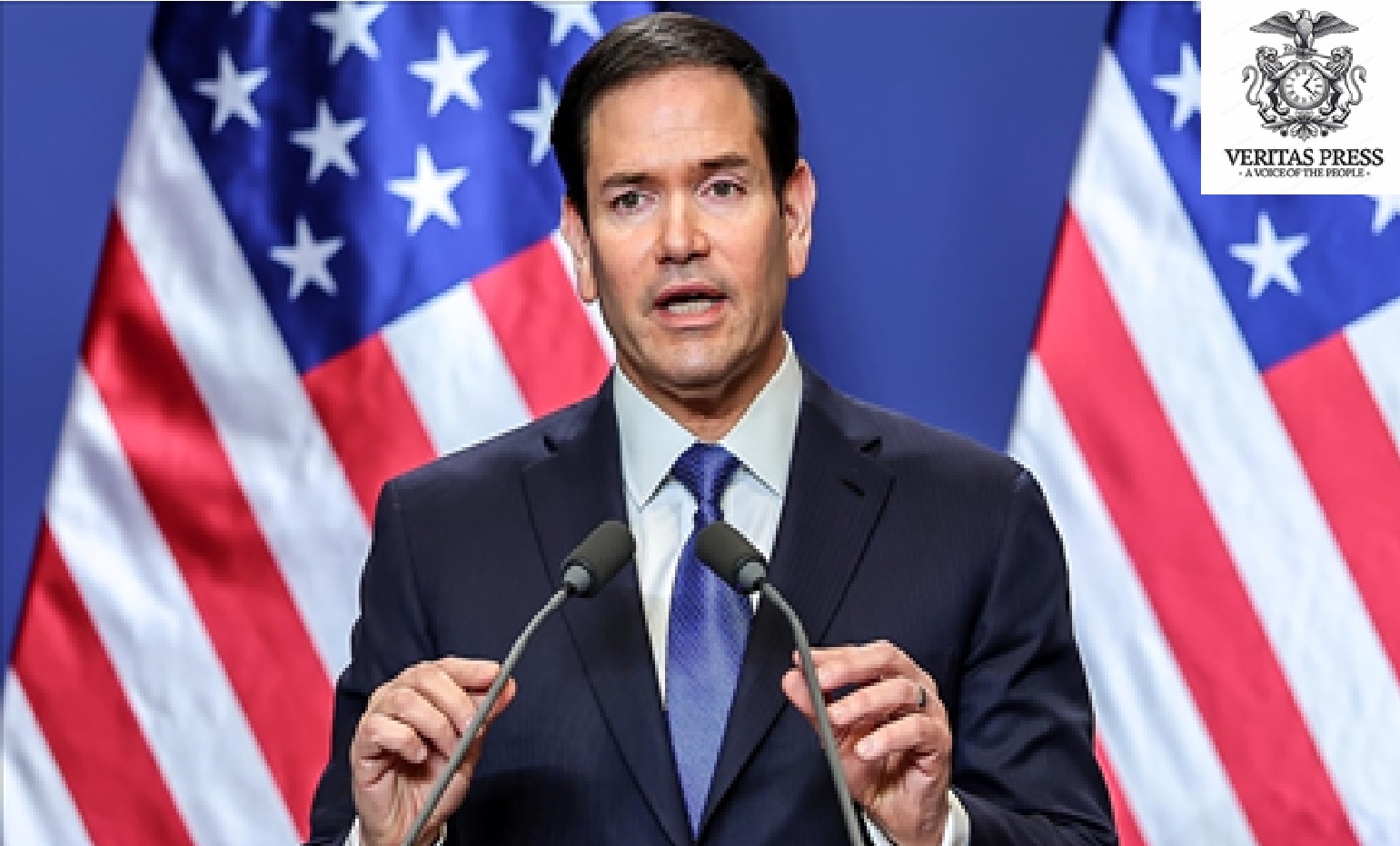
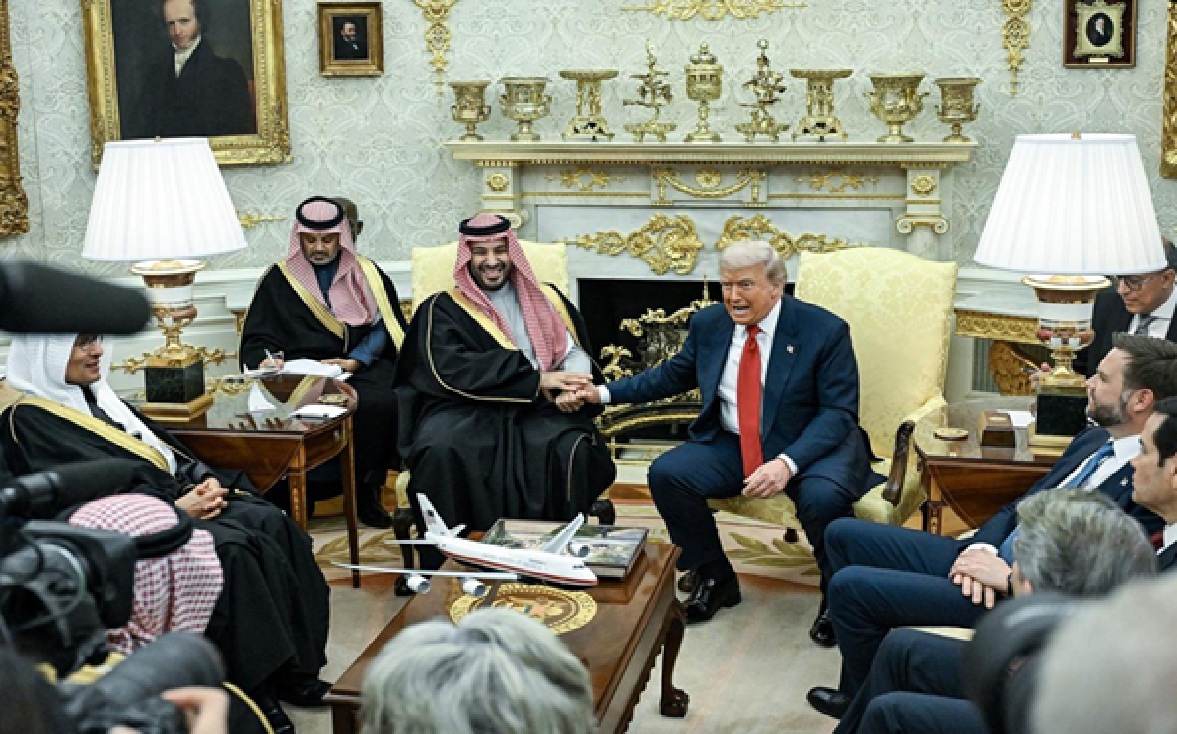
U.S. Secretary of State Marco Rubio has repeatedly framed that refusal as “a big problem.” Speaking ahead of the talks, Rubio warned that Tehran is developing missile capabilities that could extend beyond the Middle East, asserting that Iran seeks intercontinental ballistic missiles capable of striking U.S. territory.
“It’s also important to remember that Iran refuses, refuses, to talk about the ballistic missiles to us or to anyone,” Rubio said.
That statement exposes a deep strategic disconnect. For Washington, the missile and nuclear programs form a single threat architecture. For Tehran, the missile arsenal is the backbone of its deterrence doctrine, a sovereign capability forged under sanctions and isolation and therefore non-negotiable.
The disagreement is not procedural. It is existential.
The ICBM Claim And The Distance Gap:
President Donald Trump has asserted that Iran is “working to build missiles that will soon reach the United States of America,” elevating the missile issue from regional deterrence to homeland defence.
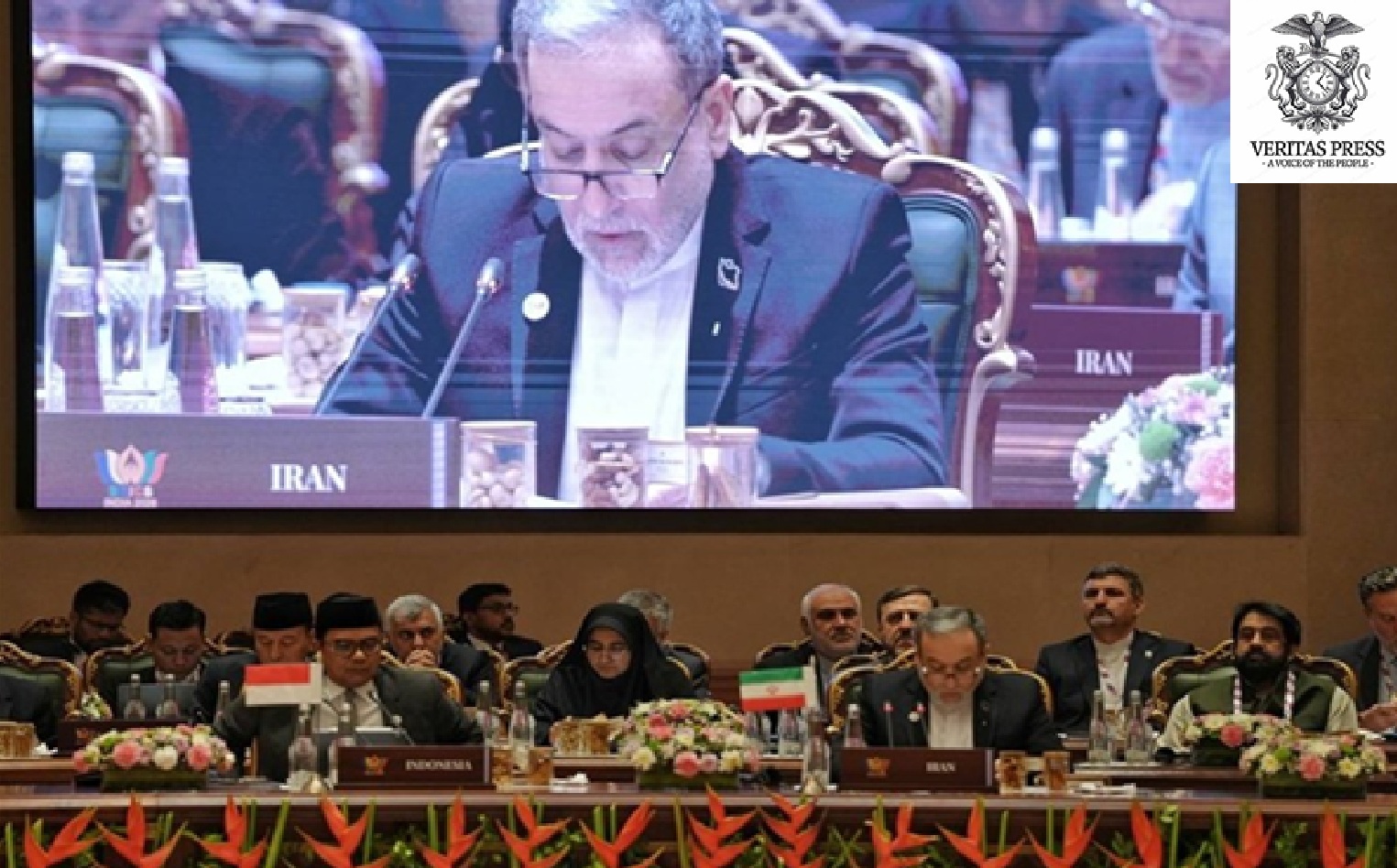
Iran’s Foreign Minister Abbas Araghchi flatly rejected that claim, stating that Iran has “deliberately limited” its missile range to roughly 2,000 kilometres for defensive purposes.
That range puts Israel and U.S. bases in the Gulf within reach but leaves the American mainland thousands of miles away. Even U.S. intelligence assessments historically place Iran’s maximum tested range well below intercontinental capability.
The gap underscores a deeper question: is this dispute about imminent threat, or negotiating leverage?
Iran Has Not Refused Talks, It Has Rejected Preconditions:
Despite repeated Washington characterisations, Iran has never refused negotiations outright. Tehran has consistently signalled readiness to engage in “fair and reciprocal” dialogue, including indirect talks with the United States.
What Iran rejects is a framework in which missile disarmament is treated as a precondition. From Tehran’s perspective, linking missile constraints to nuclear concessions transforms diplomacy into strategic rollback. For Washington, separating the two leaves what it considers a critical security gap. This structural clash sits at the heart of Geneva.
The First Line Of Defence:
For Iran, ballistic missiles are not symbolic instruments of prestige. They are the country’s primary deterrent.
Iran’s conventional air force is ageing and technologically constrained. Decades of sanctions have limited access to modern aircraft and integrated air defences. Ballistic missiles, domestically produced, mobile, and survivable, compensate for that asymmetry. They provide the ability to impose retaliatory costs on adversaries with far superior conventional capabilities.
If Iran were to relinquish or severely restrict its missile arsenal, it would effectively dismantle its first line of defence. Without long-range strike capability, Tehran would face a U.S.-Israeli posture including advanced stealth aircraft, regional bases, naval strike groups, and layered missile defences. The June 2025 U.S.-Israeli strikes on Iranian nuclear facilities reinforced a long-held lesson in Iranian doctrine: credible deterrence is non-negotiable.
Under that logic, missiles are not bargaining chips. They are insurance.
A Military Sword Over Geneva:
The diplomatic choreography in Geneva unfolds under extraordinary military pressure. The United States has deployed two carrier strike groups, advanced fighter squadrons, and additional air defence systems, the most significant U.S. posture in the region since 2003. Israel has likewise increased readiness following last year’s hostilities.
The shadow over the talks is the 12-day conflict in June 2025, when U.S. and Israeli forces struck Iranian nuclear facilities in coordinated operations. Though large-scale escalation was avoided, the precedent was set: military action is no longer hypothetical.
Rubio emphasised that while Iran is “not enriching right now,” it retains the infrastructure and technical capacity to resume quickly. Vice President JD Vance reinforced the message, warning Tehran to take Trump’s threats “seriously” and highlighting the president’s authority to use force.
This dynamic creates a classic preemption dilemma: the closer Washington believes Iran is to a threshold it cannot reverse, the stronger the incentives for military action, even absent violations. Diplomacy, in this environment, occurs under a ticking clock.
The Regime Change Shadow:
Iran’s reluctance is amplified by political rhetoric from Washington and Tel Aviv. While official U.S. policy does not formally declare regime change as a goal, senior American figures have repeatedly emphasised support for political transformation inside Iran. Israeli officials have similarly framed the Islamic Republic’s leadership as destabilising and illegitimate.
In Tehran’s strategic calculus, that rhetoric matters. Negotiating away its primary deterrent while facing powerful adversaries who openly question the regime’s legitimacy is not de-escalation. It is exposure. Without missile capability, Iranian leadership fears becoming vulnerable not just to strikes on infrastructure, but to coercive pressure aimed at political destabilisation aligned with U.S.-Israeli foreign policy interests.
Iranian strategists often point to the fate of Muammar Gaddafi as a cautionary example. In 2003, Libya dismantled its weapons programs and sought normalisation with the West. Less than a decade later, NATO intervened during domestic uprisings, and Gaddafi was overthrown and killed. Whether the historical analogy is fully accurate is secondary: it shapes Iranian risk calculus.
Domestic Pressure In Tehran:
Internal politics further narrow Tehran’s flexibility. Supreme Leader Ali Khamenei presides over an economy strained by sanctions, inflation, and youth unemployment. Waves of protest have exposed fractures in society and legitimacy challenges.
In such an environment, surrendering a flagship defence program carries profound symbolic consequences. The missile arsenal is portrayed as a sovereign achievement built under technological isolation. Ceding it under foreign pressure could be interpreted as capitulation. For a regime already navigating internal strain, the political cost may outweigh the economic relief of sanctions.
Strategic Impasse, Or Designed Deadlock?
Rubio is correct: the missile issue is a “big problem.” But the more consequential question is whether it is structurally engineered to be one.
For Washington, linking ballistic missiles to the nuclear file broadens the definition of threat. For Tehran, it would mean dismantling its primary deterrent while facing adversaries that retain overwhelming conventional superiority and that have not hesitated to use force. The June 2025 strikes reinforced a central tenet of Iranian doctrine: credible deterrence cannot be surrendered.
The missile paradox is clear: the very capability the U.S. insists must be negotiated is the one Tehran believes guarantees survival. The more pressure applied, especially under visible military encirclement, the less feasible the Iranian concession becomes.
If talks collapse over missiles, Washington can argue that Iran refused to address the “full spectrum” of threats. Tehran will counter that it was prepared to negotiate, but not to disarm under coercion. Both narratives are internally consistent.
Geneva’s Structural Contradiction:
Meanwhile, U.S. forces remain forward deployed. Iran continues rebuilding nuclear infrastructure damaged in last year’s strikes. Mistrust deepens. The margin for miscalculation narrows.
The missile dispute is not peripheral. It is the central contradiction. Washington sees Iran’s arsenal as a threat multiplier; Tehran sees it as the only credible guarantee against coercion. Each side’s security doctrine negates the other’s.
Unless addressed directly, through security guarantees, phased regional frameworks, or mutual de-escalation, Geneva risks becoming less a venue for compromise than a procedural step toward confrontation.
When the capability one side demands be surrendered is the very capability the other believes ensures its survival, negotiations are not merely difficult.
They are structurally incompatible.
That is the missile paradox.
And it may yet sink the deal.
Conclusion: Diplomacy Under Siege – The Missile Paradox And The Shadow Of War.
The Geneva talks are not merely negotiating uranium levels and centrifuge cascades. They unfold under the shadow of overwhelming military force, historical precedent, and asymmetrical power. U.S. and Israeli capabilities dwarf Iran’s conventional forces. Forward-deployed carrier strike groups, stealth fighters, and layered missile defences create a coercive environment in which Tehran’s decisions are continuously scrutinised and threatened.
Iran’s missiles are not an abstract “problem” for Washington; they are the linchpin of its survival doctrine. To demand their negotiation under threat is to ask Iran to voluntarily surrender its primary deterrent while facing adversaries who openly invoke regime change and hostilities. That is not diplomacy. That is strategic pressure masquerading as negotiation.
From Tehran’s perspective, each missile is a shield against coercion, a guarantee that its sovereignty is not arbitrarily violated. To give them up would be to invite vulnerability: to U.S. and Israeli military action, to political destabilisation campaigns, and to erosion of domestic legitimacy. The lessons of Libya, where unilateral disarmament preceded regime overthrow, and of June 2025, when U.S.-Israeli strikes hit Iranian nuclear facilities, are vivid: surrender does not guarantee survival. It can invite annihilation.
Washington’s insistence on linking missiles to the nuclear file turns negotiation into a procedural trap. By framing Iranian deterrence as a “problem” rather than a security calculus, U.S. policymakers manufacture justification for failure, and, if failure occurs, for escalation. Meanwhile, evidence of U.S.-Israeli planning indicates that war is a live contingency, pursued under disputed or exaggerated pretexts, with military and political pressure designed to create conditions favourable to intervention. Tehran, for its part, is prepared to negotiate, but only within a framework that does not demand strategic self-abdication.
The result is a deadlock baked into the structure of diplomacy itself. Geneva becomes less a venue for compromise than a theatre in which coercion, mistrust, and structural asymmetry define the agenda. The missile paradox is not merely a policy dispute: it is a test of whether diplomacy can survive when one side’s security logic is treated as unacceptable and the other’s coercive leverage as inevitable.
If this contradiction remains unresolved, the consequences extend beyond failed talks. They point toward a future in which diplomacy is pre-empted by the very pressures it was meant to alleviate, a region perpetually on the brink, with missiles as both lifeline and lightning rod, and Iranian sovereignty and deterrence caught in the crossfire of U.S.-Israeli strategic imperatives.
The missile paradox is ultimately a warning: diplomacy cannot succeed when it demands the impossible, the surrender of survival itself. And in a landscape where U.S. and Israeli forces openly signal readiness for war under questionable pretexts, failure in Geneva may not be an accident; it may be the objective.
For The Secure Submission Of Documentation, Testimonies, Or Exclusive Investigative Reports From Any Global Location, Please Utilise The Following Contact Details For Our Investigations Desk: enquiries@veritaspress.co.uk or editor@veritaspress.co.uk
Popular Information is powered by readers who believe that truth still matters. When just a few more people step up to support this work, it means more lies exposed, more corruption uncovered, and more accountability where it’s long overdue.
If you believe journalism should serve the public, not the powerful, and you’re in a position to help, becoming a DONATOR or a PAID SUBSCRIBER truly makes a difference.
DONATION APPEAL: If You Found This Reporting Valuable, Please Consider Supporting Independent Journalism.
Help Support Our Work – We Know, We Know, We Know …
Seeing these messages is annoying. We know that. (Imagine what it’s like writing them … )
Your support fuels our fearless, truth-driven journalism. In unity, we endeavour to amplify marginalised voices and champion justice, irrespective of geographical location.
But it’s also extremely important. One of Veritas Press’s greatest assets is its reader-funded model.
1. Reader funding means we can cover what we like. We’re not beholden to the political whims of a billionaire owner. We are a small, independent and impartial organisation. No one can tell us what not to say or what not to report.
2. Reader funding means we don’t have to chase clicks and traffic. We’re not desperately seeking your attention for its own sake: we pursue the stories that our editorial team deems important and believe are worthy of your time.
3. Reader Funding: enables us to keep our website and other social media channels open, allowing as many people as possible to access quality journalism from around the world, particularly those in places where the free press is under threat.
We know not everyone can afford to pay for news, but if you’ve been meaning to support us, now’s the time.
Your donation goes a long way. It helps us:
Keep the lights on and sustain our day-to-day operations
Hire new, talented independent reporters
Launch real-time live debates, community-focused shows, and on-the-ground reporting
Cover the issues that matter most to our communities, in real time, with depth and integrity
We have plans to expand our work, but we can’t do it without your support. Every contribution, no matter the size, helps us stay independent and build a truly people-powered media platform.
If you believe in journalism that informs, empowers, and reflects the communities we serve, please donate today.
Kamran Faqir is a volunteer investigative journalist and writer committed to exposing hidden truths and amplifying underreported stories. Driven by social justice, he brings sharp insight and fearless truth-telling to independent journalism. NUJ registered.
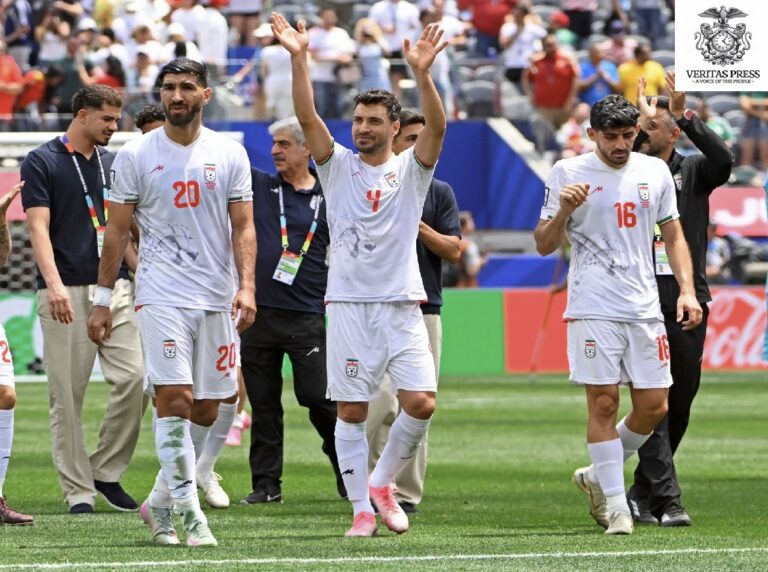
SEATTLE, TEHRAN — The U.S. Department of Homeland Security (DHS) will allow Iran’s national football team to enter the country 48 hours before their critical World Cup match against Egypt on Friday, a modest concession in a tournament where Team Melli’s travel conditions have sparked claims of oppression and competitive disadvantage.