Kamran Faqir is a volunteer investigative journalist and writer committed to exposing hidden truths and amplifying underreported stories. Driven by social justice, he brings sharp insight and fearless truth-telling to independent journalism. NUJ registered.
Original Article Date Published:
Article Date Modified:
Listen to this article
Help support our mission—donate today and be the change. Every contribution goes directly toward driving real impact for the cause we believe in.
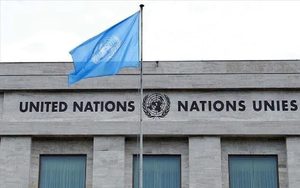
In the complex tapestry of Middle Eastern geopolitics, cartography is often the sharpest weapon. In February 2026, a digital file deposited at the United Nations in New York reignited a smouldering fire in the northern Persian Gulf, pitting Baghdad against Kuwait and drawing a decisive line in the sand by the Gulf Cooperation Council (GCC).
On February 21, 2026, the Iraqi Ministry of Foreign Affairs announced it had deposited a new set of maritime coordinates and an updated map with the UN Secretary-General, formally delineating its territorial sea, exclusive economic zone (EEZ), and continental shelf. While Baghdad framed the move as a routine technical update under the 1982 United Nations Convention on the Law of the Sea (UNCLOS), Kuwait saw it as a direct challenge to its sovereignty, a diplomatic ambush that has unified the Gulf states against Iraq and exposed deep fissures in Iraq’s domestic legal and foreign policy apparatus.
The Coordinates Of Conflict:
Iraq’s submission, delivered in two tranches on January 19 and February 9, 2026, was designed to supersede its previous filings from 2011 and 2021. Using the World Geodetic System 1984 (WGS-84), Baghdad defined its maritime zones, including “straight baselines” that push its maritime claims outward. To Kuwait, the issue is not the act of filing, but the geography of the claim.
Kuwait contends that the Iraqi coordinates infringe upon its sovereignty over two specific maritime features: Fasht Al-Qaid and Fasht Al-Aij (also referred to as Fisht Al-Eid and Fisht Al-Eij).
In a strongly worded protest on Saturday, the Kuwaiti Foreign Ministry summoned Iraqi Chargé d‘ Affaires Zaid Abbas Shanshal, delivering a formal memorandum that rejected what it described as “Iraqi claims affecting Kuwait’s maritime sovereignty and related water elevations.” The Ministry insisted these areas are “not subject to any dispute” and fall under Kuwait’s “full sovereignty”.
The Gulf’s Red Line: A Unified Bloc.
If Iraq’s strategy was to present the Gulf states with a fait accompli, the response over the following 48 hours proved them wrong. Far from isolated, Kuwait’s protest became a rallying cry for the GCC.
Qatar was among the first to respond, announcing its “full solidarity” with Kuwait. The Qatari Foreign Ministry explicitly rejected the Iraqi filing, stating it “infringes upon the sovereignty of the State of Kuwait over its maritime areas and its fixed and stable maritime elevations”.
The United Arab Emirates (UAE) expressed “deep concern and denouncement,” urging Iraq to respect “fraternal and historic ties” and adhere to UNCLOS and bilateral agreements.
Saudi Arabia brought a unique weight to the argument. Riyadh noted it was “closely monitoring” the situation because the Iraqi list included areas adjacent to the Saudi-Kuwaiti Divided Zone, a region where the two kingdoms share natural resources. Riyadh categorically rejected any claims by a third party in that zone, framing the Iraqi move as a violation of Kuwaiti sovereignty that directly impacts Saudi interests.
Bahrain and Oman completed the wall of opposition, urging Iraq to prioritise “historical relations” and the “principles of good neighbourliness”.
Egypt, extending the Arab consensus, offered its support for resolving the dispute through dialogue, expressing “deep concern” and backing Kuwait’s territorial integrity.
Baghdad’s Defence: The 2014 Counter-Narrative.
Facing a unified diplomatic front, Iraqi Foreign Minister Fuad Hussein took to the phones. In a conversation with his Omani counterpart Badr Al Busaidi, Hussein shifted the narrative. He argued that the current disagreement stems from an action taken by Kuwait in 2014.
Hussein claimed that Kuwait had deposited its own maritime maps and baselines with the UN over a decade ago without consulting Baghdad. From Iraq’s perspective, its February 2026 submission is not an act of aggression, but a sovereign correction, a necessary clarification of its own maritime zones to counter a unilateral Kuwaiti move that Iraq never agreed to.
This tit-for-tat dynamic reveals a fundamental breakdown in bilateral communication. For twelve years, from 2014 to 2026, a “baseline gap” existed in the UN archives, with both nations effectively operating on different cartographic assumptions. Iraq insists it seeks a “legal solution grounded in international norms,” but its decision to file unilaterally, rather than negotiate first, has been interpreted by the Gulf as a provocation.
The Khor Abdullah Complication: Iraq’s Constitutional Quagmire.
To understand why Iraq chose this path, one must look beyond the coastline and into the legal labyrinth of Baghdad.
At the heart of the dispute lies the Khor Abdullah waterway, Iraq’s strategic artery to the Gulf. In 2012, Iraq and Kuwait signed an agreement to regulate navigation in this waterway, which was ratified by Iraq’s parliament in 2013 as Law 42. For a decade, it served as the basis for maritime cooperation.
However, in September 2023, Iraq’s Federal Supreme Court dropped a legal bombshell: it annulled the ratification of the Khor Abdullah agreement. The court ruled that the law was unconstitutional because it had not secured the required two-thirds parliamentary majority for ratifying international treaties.
This ruling created a catastrophic legal void. While the executive branch in Baghdad (the Prime Minister’s office) insists that international obligations remain binding, the legislature and judiciary have effectively declared the framework governing the waterway null and void. The political fallout was immediate. In April 2025, independent MP and former transport minister Amir Abdul Jabbar Ismael filed a criminal complaint against Prime Minister Mohammed Shia al-Sudani under Article 329 of the Iraqi Penal Code (abuse of power), alleging that al-Sudani instructed ministries not to forward the court’s ruling to the UN and the International Maritime Organisation, effectively hiding the annulment to maintain the status quo with Kuwait.
A Deeper Investigative Critique: The Strategy Of Ambiguity.
The 2026 UN submission must be viewed as the culmination of this domestic chaos.
1. The “Sovereign” Smokescreen Baghdad frames its UN deposit as a “sovereign right” under UNCLOS. While technically true, the critique lies in the substance. International law expert and former Iraqi MP Sheikh Latif Mustafa noted that the 2023 court ruling means the treaty “cannot be reinstated unless the court reverses its decision or parliament reapproves the agreement”. Neither has happened. By filing new coordinates, Baghdad is attempting to rewrite the rules of engagement without the domestic legal consensus required to make those rules stick. It is a foreign policy move designed to solve a domestic legal failure, and it has backfired spectacularly.
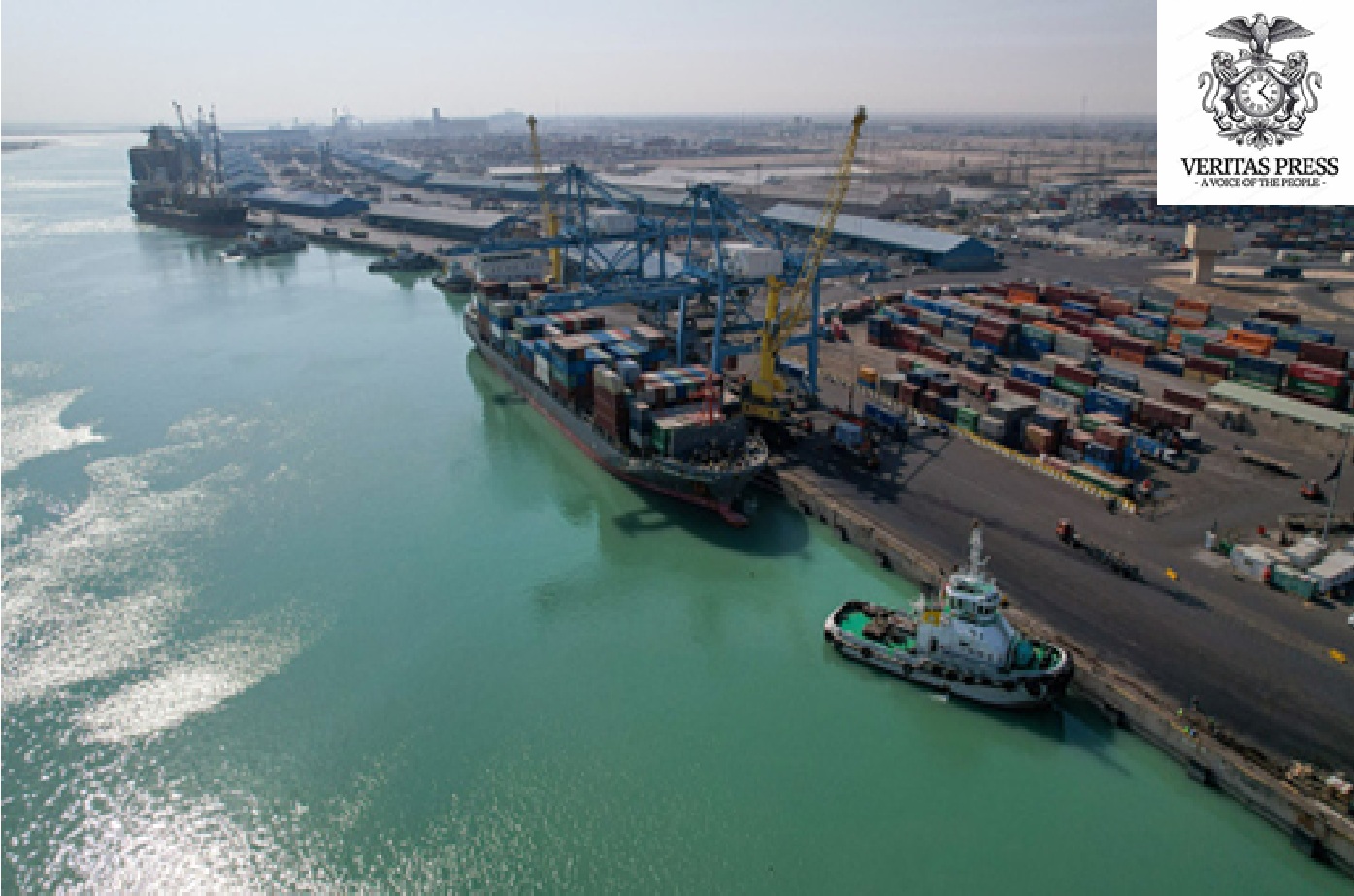
2. The Grand Faw Port Dilemma Critics within Iraq, including former officials, warn that any negotiation beyond the UN-demarcated marker 162, the final point established under UN Security Council Resolution 833 (1993), could undermine Iraq’s sovereignty. More importantly, it could affect access to the Grand Faw Port, Iraq’s mega-project designed to transform it into a regional transportation hub. If Iraq concedes certain maritime zones or accepts a boundary that limits its deep-water access, the economic viability of Faw could be jeopardised. The hardline stance in the UN filing may be a preemptive negotiation tactic to protect Faw, but it has come at the cost of regional trust.
3. The “Baseline” Hypocrisy Iraq’s criticism of Kuwait’s 2014 filing is politically convenient but legally weak. If Kuwait submitted its baselines in 2014 and Iraq remained silent for twelve years, accepting the status quo, Iraq’s sudden objection appears opportunistic, timed to coincide with the void left by the 2023 Khor Abdullah ruling. It suggests that Iraq is not merely “clarifying” its maps, but actively redrawing them to maximise leverage in a post-2023 legal landscape.
Conclusion: Navigating Uncharted Waters.
The unified Gulf response, from Riyadh to Doha, Abu Dhabi to Manama, serves as a stark warning to Baghdad. The GCC views the maritime order in the Gulf as inviolable. By challenging Kuwait’s sovereignty over Fasht Al-Qaid and Fasht Al-Aij, Iraq has inadvertently solidified the very Gulf unity that often eludes the bloc on other issues.
As of late February 2026, the ball is in Baghdad’s court. The Iraqi Foreign Ministry maintains that its coordinates are “precise” and that it remains committed to “resolving problems through negotiations and dialogue”. But after a decade of Kuwaiti silence, a 2023 court annulment, and a 2026 UN filing, dialogue will require more than diplomatic niceties. It will require Iraq to reconcile its domestic constitutional crisis with its international obligations, a task far more difficult than drawing lines on a map.
The waters of the Khor Abdullah remain calm, but the legal tsunami has only just begun.
For The Secure Submission Of Documentation, Testimonies, Or Exclusive Investigative Reports From Any Global Location, please utilise the following contact details for our investigations desk: enquiries@veritaspress.co.uk or editor@veritaspress.co.uk
Popular Information is powered by readers who believe that truth still matters. When just a few more people step up to support this work, it means more lies exposed, more corruption uncovered, and more accountability where it’s long overdue.
If you believe journalism should serve the public, not the powerful, and you’re in a position to help, becoming a DONATOR or a PAID SUBSCRIBER truly makes a difference.
DONATION APPEAL: If You Found This Reporting Valuable, Please Consider Supporting Independent Journalism.
Help Support Our Work – We Know, We Know, We Know …
Seeing these messages is annoying. We know that. (Imagine what it’s like writing them … )
Your support fuels our fearless, truth-driven journalism. In unity, we endeavour to amplify marginalised voices and champion justice, irrespective of geographical location.
But it’s also extremely important. One of Veritas Press’s greatest assets is its reader-funded model.
1. Reader funding means we can cover what we like. We’re not beholden to the political whims of a billionaire owner. We are a small, independent and impartial organisation. No one can tell us what not to say or what not to report.
2. Reader funding means we don’t have to chase clicks and traffic. We’re not desperately seeking your attention for its own sake: we pursue the stories that our editorial team deems important and believe are worthy of your time.
3. Reader Funding: enables us to keep our website and other social media channels open, allowing as many people as possible to access quality journalism from around the world, particularly those in places where the free press is under threat.
We know not everyone can afford to pay for news, but if you’ve been meaning to support us, now’s the time.
Your donation goes a long way. It helps us:
Keep the lights on and sustain our day-to-day operations
Hire new, talented independent reporters
Launch real-time live debates, community-focused shows, and on-the-ground reporting
Cover the issues that matter most to our communities, in real time, with depth and integrity
We have plans to expand our work, but we can’t do it without your support. Every contribution, no matter the size, helps us stay independent and build a truly people-powered media platform.
If you believe in journalism that informs, empowers, and reflects the communities we serve, please donate today.
Kamran Faqir is a volunteer investigative journalist and writer committed to exposing hidden truths and amplifying underreported stories. Driven by social justice, he brings sharp insight and fearless truth-telling to independent journalism. NUJ registered.
SEATTLE, TEHRAN — The U.S. Department of Homeland Security (DHS) will allow Iran’s national football team to enter the country 48 hours before their critical World Cup match against Egypt on Friday, a modest concession in a tournament where Team Melli’s travel conditions have sparked claims of oppression and competitive disadvantage.