Kamran Faqir is a volunteer investigative journalist and writer committed to exposing hidden truths and amplifying underreported stories. Driven by social justice, he brings sharp insight and fearless truth-telling to independent journalism. NUJ registered.
Original Article Date Published:
Article Date Modified:
Listen to this article
Help support our mission—donate today and be the change. Every contribution goes directly toward driving real impact for the cause we believe in.
In a landmark 6–3 ruling that reasserted Congress’s constitutional control over taxation, the US Supreme Court struck down the bulk of President Donald Trump’s sweeping “Liberation Day” tariffs, declaring that the 1977 International Emergency Economic Powers Act (IEEPA) does not authorise a president to impose tariffs.
Within hours, Trump retaliated politically, if not legally, announcing a blanket 10% global tariff on all imports, invoking a different and largely untested statute: Section 122 of the Trade Act of 1974.
The decision marks the most significant judicial check on Trump’s second-term executive power and sets the stage for an escalating confrontation over trade, constitutional authority, and the limits of presidential emergency powers.
A Constitutional Rebuke: “Congress Alone” Holds The Tariff Power.
Writing for the majority, Chief Justice John Roberts underscored what the Constitution makes explicit: the power to levy taxes and tariffs belongs to Congress.
The Court held that:
IEEPA contains no reference to tariffs
Congress has historically delegated tariff authority only in clear, limited, and specific terms
The president cannot rely on ambiguous emergency language to assume core taxing powers
The justices invoked the “major questions doctrine,” emphasising that extraordinary assertions of executive power require unmistakable congressional authorisation. The Court concluded Trump “cannot” point to such authorisation under IEEPA.
The ruling overturns Trump’s April 2, 2025, “Liberation Day” executive orders, Executive Order 14257 and related actions, which had imposed a baseline 10% tariff on nearly all countries and significantly higher “reciprocal” tariffs on major trading partners.
Trump’s Response: “More Powerful Than Ever”, Rather Than Retreat, Trump Lashed Out.
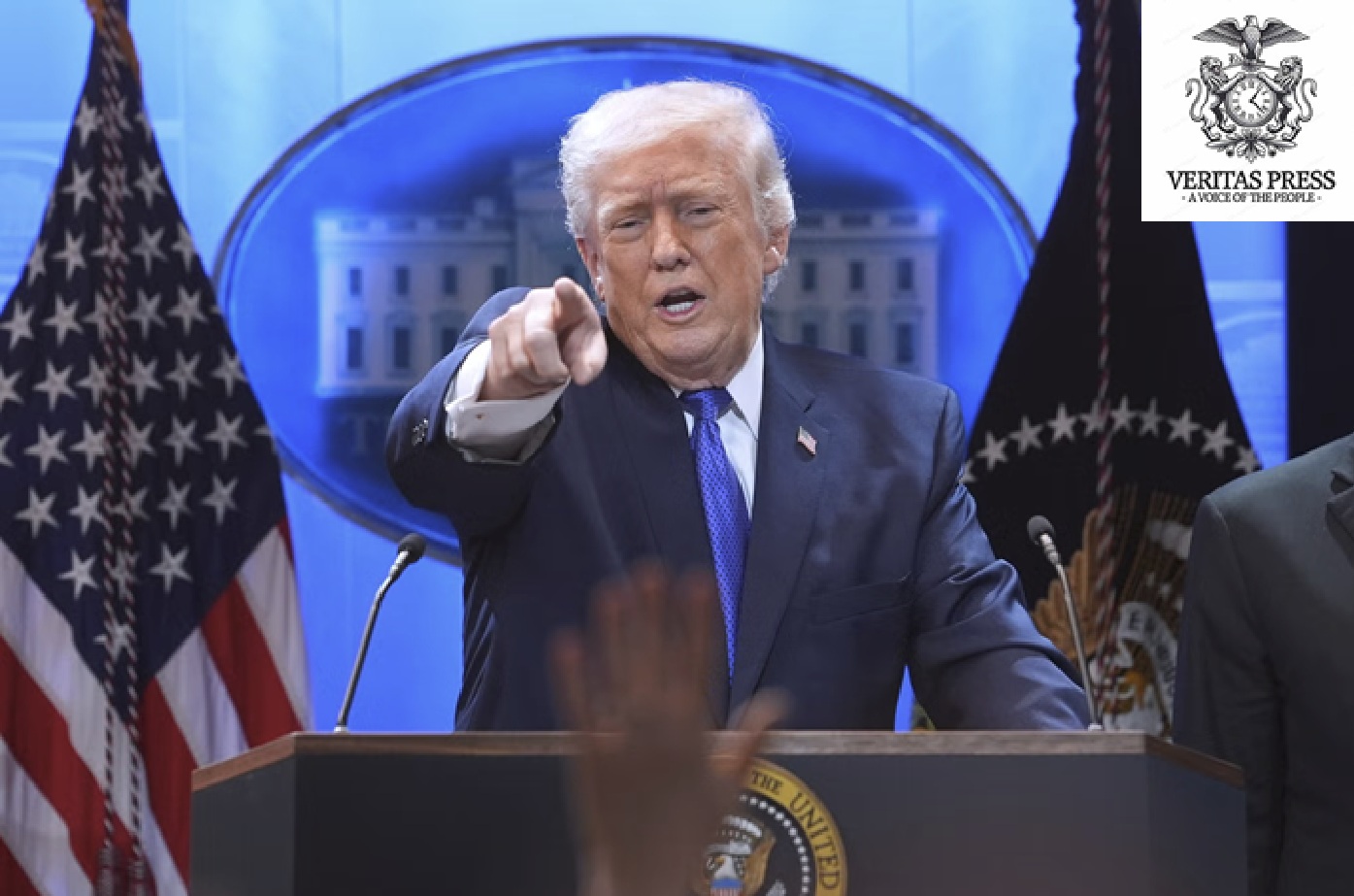
He branded the decision “ridiculous,” called dissenting justices “a disgrace to the nation,” and claimed, without evidence, that the Court had been “swayed by foreign interests.”
Then he announced:
“It is my Great Honour to have just signed… a Global 10% Tariff on all Countries… effective almost immediately.”
This time, he invoked Section 122 of the Trade Act of 1974, a provision that allows a temporary tariff of up to 15% for 150 days to address serious balance-of-payments deficits.
Crucially:
Section 122 has never before been used
It caps tariffs at 15%
It limits the duration to 150 days
It requires congressional consultation
Trump’s White House fact sheet states the new 10% tariff will take effect on February 24 and remain for 150 days. Exemptions include:
Critical minerals and energy
Pharmaceuticals
Aerospace products
USMCA-compliant imports from Canada and Mexico
Goods already covered under Section 232 or Section 301 actions
Refund Chaos: $133 Billion In Legal Limbo.
Since April 2025, the Treasury has collected approximately $133 billion under the invalidated tariffs. Some projections estimate potential refund liabilities of up to $175 billion.
Justice Brett Kavanaugh, who dissented, warned the refund process could become a “mess.”
Business groups are already demanding repayment. Retailers and importers argue they paid illegal duties and are entitled to restitution with interest.
The ruling did not directly order refunds, but the legal logic of the decision implies the tariffs were ultra vires, beyond executive authority. Multiple lawsuits seeking repayment are expected.
The Myth Of Emergency Tariff Power:
Trump’s legal team relied heavily on the precedent of a 1971 import surcharge imposed by President Richard Nixon. But historical scholarship and congressional records show Nixon did not rely on wartime emergency authority to impose that surcharge.
The confusion stems from decades of misinterpretation.
IEEPA was designed for sanctions against hostile actors, not broad-based taxation. It does not mention tariffs. In 1974, Congress explicitly created Section 122 to govern temporary balance-of-payments tariffs, precisely to prevent presidents from stretching emergency statutes beyond recognition.
Trade lawyer Leonard Shambon notes that congressional committees overseeing tariff authority never understood IEEPA to include such powers.
In effect, Trump attempted to bootstrap an economic sanctions law into a global trade weapon.
Three courts rejected that interpretation. The Supreme Court has now affirmed them.
Economic Fallout: Tariffs Failed To Shrink The Deficit.
The administration argued tariffs would:
Reduce the trade deficit
Rebuild American manufacturing
Generate trillions in revenue
Yet data cited by European policy adviser Agathe Demarais shows:
The US goods trade deficit grew 2.1% to $1.23 trillion in 2025
Imports rose 4.5%
Studies suggest that over 90% of tariff costs were borne by US firms and consumers.
The Yale Budget Lab estimates the average effective US tariff rate now stands at 9.1%,still the highest since 1946 (excluding 2025’s peak).
Markets reacted positively to the Court’s decision, with Wall Street rising modestly on hopes of policy normalisation.
Global Reaction: Cautious, But Wary.
United Kingdom
The UK, which had negotiated preferential carve-outs under Prime Minister Sir Keir Starmer, is scrambling to determine whether those deals survive under the new Section 122 framework.
Officials say they expect Britain’s “privileged trading position” to continue, but legal uncertainty remains.
The British Chambers of Commerce warned the ruling does little to “clear the murky waters” for business.
European Union
EU officials called for “stability and predictability” and signalled renewed interest in trade talks, but remain sceptical that Trump’s shift in legal authority signals substantive moderation.
Canada And Mexico
USMCA-compliant goods remain exempt, for now. But Canadian officials warned of “new, blunter mechanisms” that could reassert pressure.
China
A fragile truce remains in place. However, Trump has signalled further Section 301 investigations that could escalate tensions again.
Treasury’s Counterargument: Leverage Through Embargo.
Treasury Secretary Scott Bessent claimed the Court may have strengthened Trump’s leverage by affirming his authority under other statutes, including Section 232 national security tariffs and potentially full embargo authority.
He stated tariff revenue in 2026 would remain “virtually unchanged.”
Yet this posture underscores the core issue: the administration is now searching statute by statute for alternate legal bases to achieve the same policy outcome rejected under IEEPA.
Separation Of Powers In The 250th Year:
The ruling lands in the symbolic 250th anniversary year of the United States, a moment when constitutional separation of powers is under renewed stress.
The Constitution assigns tariff power explicitly to Congress. For decades, lawmakers delegated limited authority to presidents for specific circumstances.
Trump’s “Liberation Day” order was the first attempt in modern history to impose sweeping, across-the-board tariffs without explicit congressional authorisation.
The Supreme Court has now drawn a boundary.
Whether Congress will reassert itself as a co-equal branch remains unclear.
What happens next?
Section 122 tariffs remain in place for 150 days.
The administration is launching fresh Section 301 investigations.
Refund litigation looms.
Midterm elections could reshape congressional appetite for trade confrontation.
Businesses face continued uncertainty.
Trump declared foreign nations are “dancing in the streets, but they won’t be dancing for long.”
Yet the deeper question is domestic: can a president unilaterally redefine economic emergency to expand executive taxation power?
For now, the answer from the Supreme Court is no.
But the trade war and the constitutional battle behind it are far from over.
Conclusion:
At its core, this legal battle was never just about tariffs. It was about whether a president can transform political disagreement into a national emergency, and then convert that declaration into unilateral taxing authority that the Constitution deliberately withholds from the executive branch.
Article I is clear. The power to “lay and collect Taxes, Duties, Imposts and Excises” belongs to Congress. Tariffs are taxes. That allocation was not accidental; it was a structural safeguard designed to prevent the concentration of fiscal power in one person.
Even the Trump administration acknowledged before the Supreme Court of the United States that the president has no inherent authority to impose tariffs. Its defence depended entirely on statutory delegation, principally the International Emergency Economic Powers Act (IEEPA).
But IEEPA was enacted as a sanctions law, not a taxation statute. It was crafted to freeze assets and restrict transactions during genuine national security crises involving hostile actors. It does not mention tariffs. It was never presented to Congress as a trade statute. For nearly five decades, it was never used to impose across-the-board import taxes.
Stretching IEEPA into a global tariff mechanism was not a creative interpretation. It was an attempt to convert emergency sanctions authority into peacetime taxation power.
The administration’s declaration of a “trade deficit emergency” only magnified the constitutional strain. Courts found no sudden currency collapse, no financial panic, no trade shock. The trade deficit was longstanding and structural, economically controversial, yes, but not a legally cognizable emergency. Redefining routine economic conditions as crises would allow any president to bypass Congress whenever consensus proves politically inconvenient.
The Court’s reliance on the major questions doctrine underscored that actions of vast economic and political consequence require clear congressional authorisation. Imposing sweeping global tariffs affecting trillions of dollars in trade qualifies. IEEPA contains no such explicit delegation.
Historical precedent provided no refuge. The administration invoked Richard Nixon’s 1971 actions, but Nixon relied on different statutory authority tied to balance-of-payments controls, not the emergency sanctions law. Congress responded in 1974 by creating Section 122 of the Trade Act, narrowly authorising temporary tariffs capped at 15 percent for no more than 150 days. That provision exists precisely because lawmakers did not believe general emergency statutes already granted tariff authority.
If IEEPA Allowed Global Tariffs, Section 122 Would Have Been Unnecessary.
After losing in court, Trump pivoted to Section 122. But that statute is limited by design, a short-term stabilising tool, not a vehicle for indefinite structural trade wars. Repeatedly rolling it forward to replicate the scale of the invalidated “Liberation Day” tariffs would likely trigger new legal challenges, especially if courts view such manoeuvring as an attempt to do indirectly what the Constitution forbids directly.
Now, in the wake of the Court’s ruling, Trump and some allies have floated a broader theory: that ongoing geopolitical instability and global conflict place the United States on a de facto wartime footing and that wartime conditions justify expanded executive trade authority.
That Argument Faces Even Steeper Constitutional Barriers.
The principal wartime trade statute is the Trading With the Enemy Act (TWEA). Enacted in 1917, it allows the president to regulate or prohibit transactions during formally declared wars. But TWEA has historically governed economic dealings with enemy nations, not imposed blanket tariffs on allied countries. Even during World War I and World War II, it was used to freeze assets and block transactions, not to construct universal tariff systems affecting friendly trading partners.
In 1977, Congress passed IEEPA precisely to separate peacetime emergency authority from wartime powers under TWEA, a reform that narrowed presidential latitude rather than expanding it.
More fundamentally, war does not rewrite Article I.
Even during wartime:
Congress declares war.
Congress raises revenue.
Congress regulates commerce.
Presidents may exercise operational military authority. But tariffs remain taxes, and taxation remains a legislative power unless explicitly delegated.
The Supreme Court of the United States emphasised that “the Framers did not vest any part of the taxing power in the executive branch.” That structural principle does not evaporate during geopolitical tension.
The United States is not operating under a formally declared war that would activate full TWEA authority in the traditional sense. Even if the administration were to characterise supply chain disruptions, strategic rivalry with China, or currency imbalances as “economic warfare,” courts are likely to scrutinise such language carefully. Declaring a trade imbalance to be wartime does not automatically unlock unlimited tariff authority.
If “war” were broadened to include:
Strategic competition with China
Technology export controls
Supply chain vulnerabilities
Persistent trade deficits
Then virtually any trade dispute could be reframed as a national security conflict. That would allow the executive branch to bypass Congress whenever foreign economic behaviour is deemed hostile, effectively institutionalising permanent tariff governance through emergency rhetoric.
Courts have historically resisted that expansion, particularly where taxation is concerned.
Trump already relies on Section 232 of the Trade Expansion Act of 1962 for certain national security tariffs, but even that authority requires procedural findings and is sector-specific. It does not authorise universal baseline tariffs across all imports. Converting national security language into a global tariff system would likely trigger renewed judicial review.
The deeper constitutional question is not whether the president can respond to wartime threats. He can, within the limits Congress establishes.
The question is whether “war” or “emergency” can be invoked to override explicit constitutional assignments of power.
The Court’s recent ruling signals scepticism toward expansive readings of ambiguous statutes, especially when those readings concentrate economic authority in the executive branch and affect trillions of dollars in commerce.
If the administration attempts to sustain global tariffs under a wartime theory, it would confront two hurdles:
Statutory clarity: Does the law explicitly authorise tariffs?
Constitutional limits: Has Congress unmistakably delegated that power?
Absent clear answers to both, courts are likely to conclude that even wartime rhetoric does not grant unilateral global tariff authority.
The Legal Principle Is Now Unmistakable:
The president does not possess inherent authority to impose global tariffs, not in peacetime, not under a loosely defined economic “emergency,” and not under generalised wartime framing.
Unless Congress explicitly grants broader authority, any attempt to impose sweeping global tariffs through emergency or wartime theory would almost certainly provoke immediate constitutional challenge and potentially another judicial rebuke.
On the morning of 15 October 2025, two research organisations on opposite sides of the Atlantic published reports that, taken together, describe what may be the most significant convergence yet
A landmark medical journal article documents recurring sexual violence against Palestinians, including rape, genital torture, humiliation, and abuse of women and children.
In a dramatic escalation of cross-border hostilities, Yemen’s Armed Forces have announced a series of high-profile military operations deep inside Saudi Arabia, targeting strategic oil infrastructure and civilian airports, marking
As Storm Chandler devastates Somerset and a new Flood and Drought Resilience Taskforce convenes, ministers promise £4.2 billion and a “one-stop shop” for flood advice, but shadow ministers, activists and
Kamran Faqir is a volunteer investigative journalist and writer committed to exposing hidden truths and amplifying underreported stories. Driven by social justice, he brings sharp insight and fearless truth-telling to independent journalism. NUJ registered.
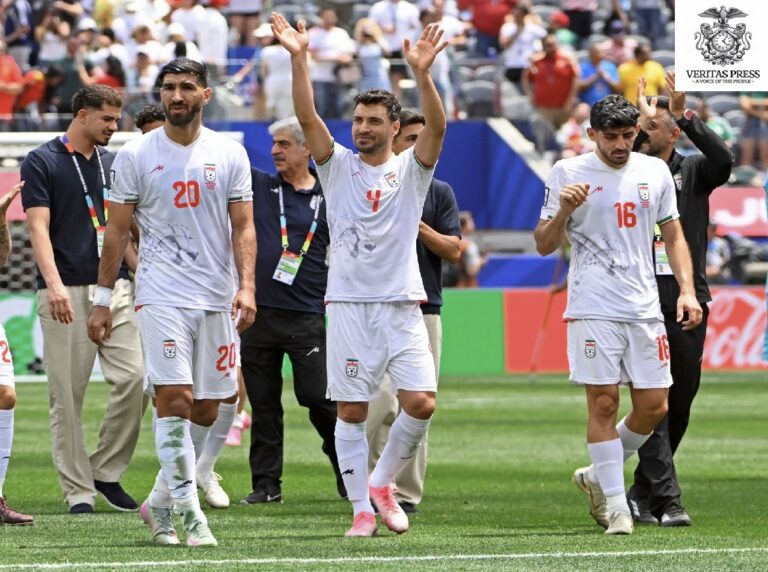
SEATTLE, TEHRAN — The U.S. Department of Homeland Security (DHS) will allow Iran’s national football team to enter the country 48 hours before their critical World Cup match against Egypt on Friday, a modest concession in a tournament where Team Melli’s travel conditions have sparked claims of oppression and competitive disadvantage.