







Help support our mission—donate today and be the change. Every contribution goes directly toward driving real impact for the cause we believe in.
GENEVA, Feb 18, 2026 – The veneer of diplomacy cracked in less than two hours. What was supposed to be a culmination of U.S.-brokered peace efforts in Geneva ended abruptly on Wednesday, leaving the fourth anniversary of Russia’s full-scale invasion looming like a shadow over a failed process.
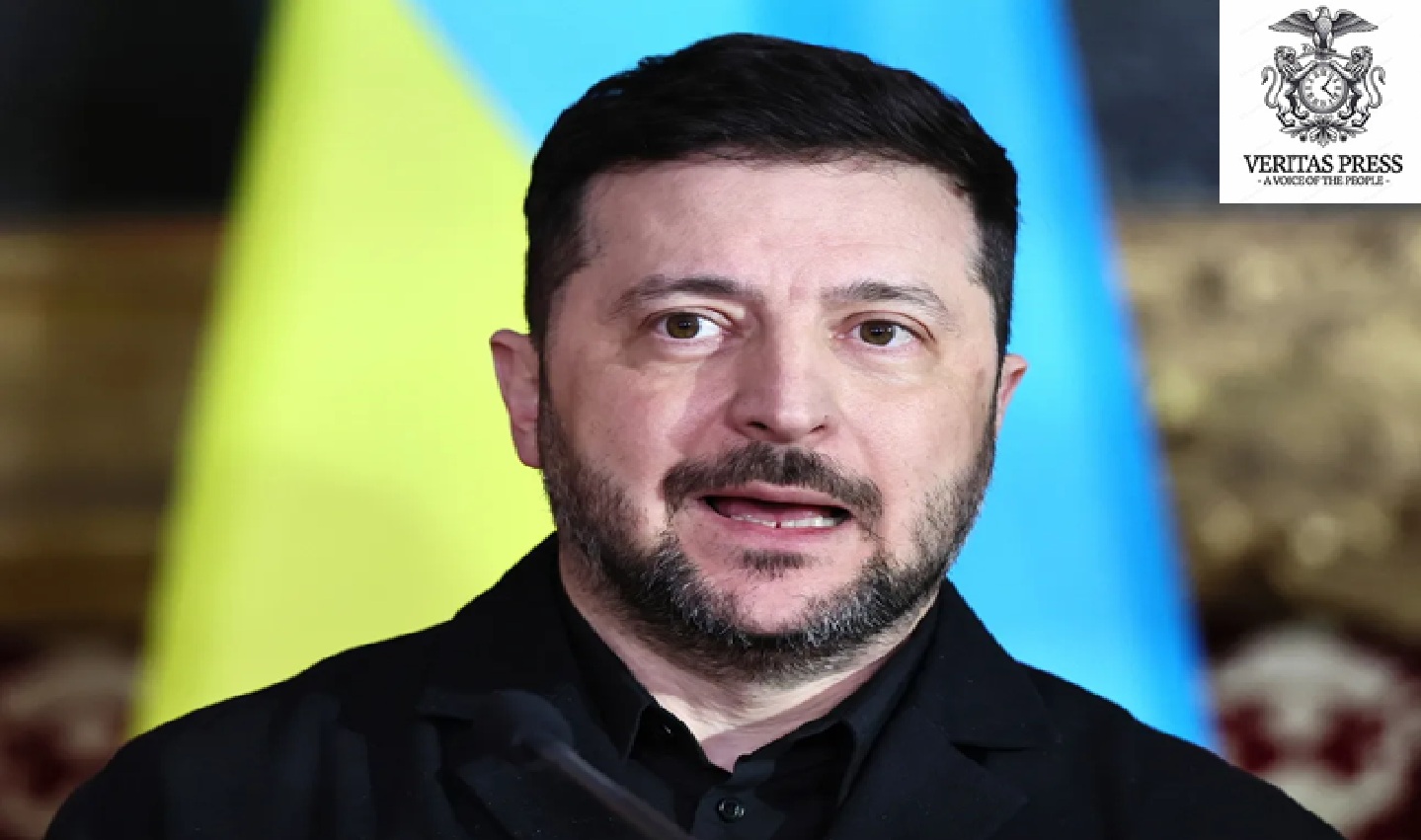
The talks, which President Donald Trump had optimistically previewed as “big talks” that would be “very easy,” instead devolved into a stark display of the unbridgeable chasm between Moscow and Kyiv. After a “very tense” six-hour session on Tuesday, the second day folded almost as soon as it began, with Ukrainian President Volodymyr Zelensky delivering a rare and pointed rebuke of the American leader’s tactics.
“Not Fair”: Zelensky’s Gamble In The Face Of Trumpian Pressure.
The diplomatic rupture was not just between the warring parties, but also between Kyiv and its most powerful ally. In an interview with Axios that landed like a bombshell just as negotiators convened in Geneva, Zelensky accused Trump of tilting the scales. He slammed the U.S. president’s public demands for Ukrainian concessions as fundamentally “unfair,” pointing out that it was Ukraine, not Russia, bearing the brunt of Washington’s ultimatums.
“I hope it is just his tactics and not the decision,” Zelensky said, attempting to rationalise Trump’s approach. He expressed frustration that Moscow’s unwavering demand for the entirety of the Donbas region, including territory its forces do not currently control, was being met with silence from Washington, while Kyiv was being told to “get moving” or risk losing its chance.
The tension on the ground mirrored the tension at the table. As delegations landed in Switzerland, Russian strikes continued to pummel Ukrainian energy infrastructure. CBC News reported that debris from Russian drones damaged civilian sites in Odesa, disrupting power and water supplies, a continuation of Moscow’s strategy to “weaponise winter”. Zelensky pointed to this ongoing violence as evidence that the Kremlin was negotiating in bad faith, using missiles as a counterargument to diplomacy.
The Two-Hour Session: A “Difficult But Businesslike” Dead End.
Inside the Geneva negotiation room, the atmosphere was reportedly as frigid as the weather outside. Following Tuesday’s marathon session, which sources told Axios became “stuck” due to maximalist Russian demands, Wednesday’s follow-up was shockingly brief.
Vladimir Medinsky, the ultra-conservative Kremlin adviser and lead Russian negotiator, emerged to tell reporters the discussions had been “difficult but businesslike.” He confirmed a new round would be held soon, offering no specifics.
While Ukrainian negotiator Rustem Umerov struck a cautiously optimistic tone, claiming “substantive” progress and “clarification” of issues, the brevity of the talks told a different story. U.S. Special Envoy Steve Witkoff, alongside Jared Kushner, acknowledged “meaningful progress” but refused to provide details, a stark contrast to the tangible prisoner exchange agreements announced after previous talks in Abu Dhabi.
The composition of the delegations themselves signalled an escalation of the stakes. Russia’s team was bolstered by the head of the GRU military intelligence agency, Admiral Igor Kostyukov, and Kirill Dmitriev of the Russian Direct Investment Fund, hinting at discussions that veered from technical ceasefires to geopolitical and economic spheres. On the Ukrainian side, the presence of Kyrylo Budanov, the formidable former spy chief now heading Zelensky’s office, underscored the life-and-death gravity of the security discussions.
A Deeper Investigative Critique: The Anatomy Of A Broken Process.
Beneath the surface of the diplomatic language lies a more disturbing reality: the “peace process” is being weaponised by all sides for different ends.
1. The Pressure Imbalance
Zelensky’s outburst to Axios was not merely a plea for fairness; it was a desperate attempt to correct a fundamental imbalance in the negotiation structure. While Trump has publicly mused about the ease of a deal, his administration’s rhetoric has created a perverse incentive for Moscow. By repeatedly suggesting that Ukraine is the obstacle, Trump provides the Kremlin with a powerful lever: wait it out, and the U.S. may force Kyiv to surrender what it cannot take on the battlefield. As Zelensky noted, it is politically and emotionally impossible for Ukrainians to vote to cede more land. “Emotionally, people will never forgive this. Never,” he told Axios. Yet, that is precisely the “deal” Trump’s team appears to be constructing.
2. The Battlefield vs. The Negotiating Table
There is a profound paradox at play. As the Irish Independent reports, Ukrainian forces managed to liberate over 200 square kilometres of territory in the days leading up to the talks, effectively wiping out Russia’s gains for the entire month of December. These tactical victories, aided by Ukraine’s successful blocking of Russian access to Elon Musk’s Starlink system, should have strengthened Kyiv’s hand.
Instead, they highlight the absurdity of the “territory for peace” argument being pushed by the Trump administration. If Ukraine is capable of taking back land, why is it being asked to give it away? Military analyst Emil Kastehelmi suggested to The Independent that these counter-attacks have a political edge, allowing Zelensky to present himself not as a supplicant, but as a leader of a “fighting force that can still conduct counter-attacks”. This reality clashes violently with the White House’s narrative of a war that must be hastily concluded, even at Ukraine’s expense.
3. The Medinsky Doctrine: History Repeating Itself
Putin’s decision to send Medinsky, the architect of the failed 2022 Istanbul talks, sent a clear signal. Medinsky is not a pragmatist; he is a historian known for screeds against the West. His presence indicates that Moscow is not interested in compromise. According to Izvestia, the discussions have moved beyond “technical security issues to include more sensitive political matters”, likely demands for a change of government in Kyiv and the recognition of Russian language dominance. This is not a negotiation for peace; it is a demand for capitulation, delivered through the mouthpiece of a man who sees Ukraine’s very statehood as a historical aberration.
The Midas Shadow: Corruption As A Vulnerability.
Complicating Ukraine’s defensive position is a simmering internal scandal. As the delegation fought for national survival in Geneva, the National Anti-Corruption Bureau (NABU) back in Kyiv was detaining former Energy and Justice Minister German Galushchenko. Part of the sprawling “Operation Midas” investigation, Galushchenko faces up to 12 years in prison for his alleged role in a $100 million money-laundering scheme linked to Zelensky’s associate Timur Mindich.
While Ukrainian anti-corruption officials tout this as proof of the system working, high-level officials are being held accountable, the timing is devastating. According to TASS, audio recordings released by NABU feature conspirators discussing how to flee the country. This scandal provides Moscow with potent propaganda to undermine Zelensky’s legitimacy (a favourite talking point of Putin) and gives the Trump administration a quiet justification for demanding distance from Kyiv’s “corrupt” establishment.
The Path Forward: A June Deadline Or A Frozen Conflict?
Despite the abrupt end to the Geneva round, the machinery of diplomacy grinds on. The U.S. has set a soft deadline of June for a settlement. Zelensky continues to push for a face-to-face meeting with Putin, believing it is the only way to break the territorial deadlock. He has even floated the idea of a mutual withdrawal to create a demilitarised “free economic zone”, a concept proposed by the Trump administration.
But the core issues remain unresolved:
- Territory: Russia demands the Donbas; Ukraine refuses to concede land its people are dying to defend.
- Security Guarantees: Ukraine demands a U.S. backstop; Russia views any NATO guarantee as a threat.
- Regime: Putin wants a friendly government in Kyiv; Zelensky’s survival depends on resisting Russian influence.
As the fourth anniversary of the war passes next week, the “Geneva Gamble” appears to have failed. The talks ended not with a breakthrough, but with a whimper, exposing a process where the mediator is blaming the victim, the aggressor is buying time, and the only progress made was agreeing to meet again to discuss having a discussion.
GENEVA — A United Nations fact-finding mission has concluded there are “reasonable grounds to believe”
Iran’s GDP is projected to contract by 5.4 to 6.1% in 2026, its worst performance
The Trump administration is preparing a $2.8 billion weapons package for Israel containing 40,000 2,000-pound

Film alleges mass civilian deaths are routinely built into military decisions amid Israel’s genocidal war

The Israeli rights group says violence, displacement, economic strangulation, and settlement expansion form part of

Houthi forces have captured the historic Red Sea port of Mocha and are advancing on
London’s historic sanctions against Israeli settlements mark a watershed moment in UK foreign policy, but
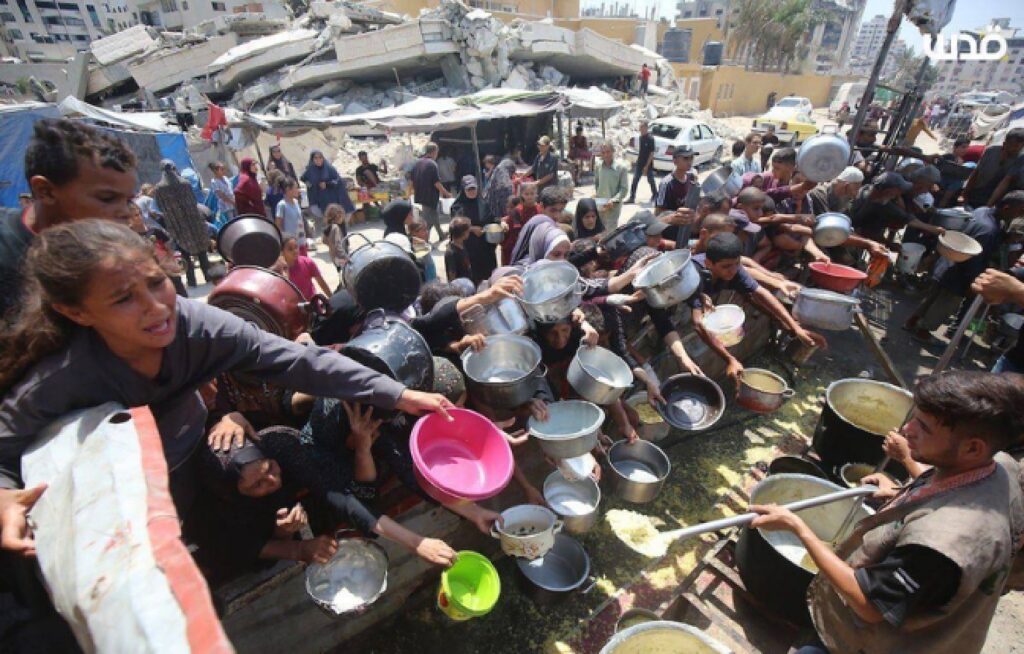
With 95% of Gaza’s population now wholly dependent on aid and more than 90% stripped
India calls for Kashmir and Ladakh to appear only on its official map after a
ISLAMABAD – In the high-stakes political theatre of Pakistan, the battleground has shifted from the