Kamran Faqir is a volunteer investigative journalist and writer committed to exposing hidden truths and amplifying underreported stories. Driven by social justice, he brings sharp insight and fearless truth-telling to independent journalism. NUJ registered.
Original Article Date Published:
Article Date Modified:
Listen to this article
Help support our mission—donate today and be the change. Every contribution goes directly toward driving real impact for the cause we believe in.
For decades, the suggestion that Jordan might ultimately serve as the Palestinian state circulated in Amman largely as a fringe anxiety, invoked occasionally in strategic circles, but seldom treated as an imminent policy trajectory. Today, that assumption is eroding. What once appeared speculative is increasingly analysed within Jordan’s political and military establishment as a plausible long-term outcome of regional transformation.
Yet an even deeper concern has begun to take hold: that the kingdom is not merely a potential destination for displaced Palestinians, but could itself become a territorial object within an expansionist geopolitical vision.
This fear does not arise from a single declaration or military movement. Rather, it emerges from the cumulative effect of legal restructuring in the West Bank, ideological shifts within Israeli governance, settlement expansion, military reorganisation, and the gradual weakening of the international constraints that once defined the region’s strategic order. Viewed individually, each development may be explained as tactical or defensive. Taken together, they suggest the outlines of a more consequential reconfiguration.
Jordanian planners increasingly describe this moment not as a crisis, but as a transition, the possible end of the buffer system that has structured Levantine geopolitics since 1967.
From Fringe Doctrine To Strategic Possibility:
The language of “Greater Israel,” long associated with ideological currents on Israel’s far right, has re-entered mainstream political discourse with unusual clarity. In August 2025, Prime Minister Benjamin Netanyahu spoke publicly of a historic and spiritual vision tied to territories extending beyond the internationally recognised boundaries of the state. Regional reactions were swift, but in Amman the remarks were read less as rhetoric than as confirmation of a trajectory already visible on the ground.
For Jordanian strategists, the central concern is not whether Israel intends territorial expansion in the classical sense. It is whether policy is converging around a demographic and geographic logic that ultimately renders Jordan indispensable to resolving the Palestinian question, not as a partner, but as a substitute.
The distinction is critical. A substitute is not negotiated with; it is structurally incorporated.
The Machinery Of Territorial Consolidation:
Across the West Bank, administrative and legal changes are reshaping the landscape with a quiet durability that military operations rarely achieve.
The February 2026 decision to transfer land registration authority to Israel’s Justice Ministry represents one such shift. Ottoman-era titles and Jordanian registries have long functioned as documentary anchors of Palestinian property claims. Altering the legal mechanisms governing those records does more than facilitate settlement activity; it changes the evidentiary terrain upon which future negotiations would rest.
This is a form of territorial consolidation that unfolds largely outside the theatre of international outrage. Demolitions produce images; registry reform produces precedents.
The deeper implication is temporal. Military occupations can, at least theoretically, be reversed. Legal transformations are designed to endure.
Parallel to this bureaucratic evolution is a physical one. Settlement growth continues to fragment Palestinian territorial continuity, while infrastructure projects, roads, security corridors, and barriers, increasingly define new spatial realities before diplomatic frameworks can respond.
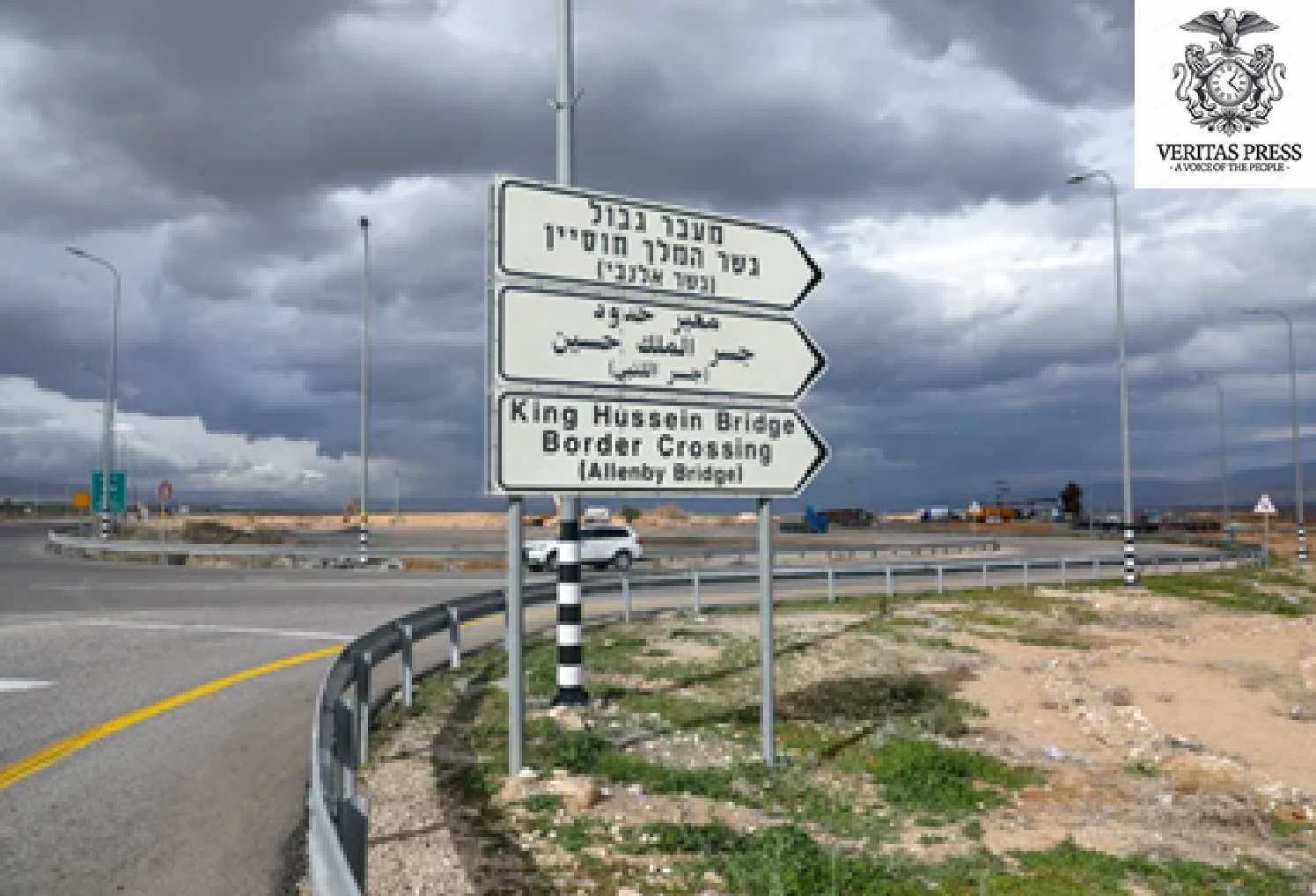
A recently announced barrier in the northern Jordan Valley illustrates this pattern. Officially justified as a counter-smuggling measure, its route cuts well inside the West Bank rather than tracing the international boundary. Analysts widely interpret such positioning as less about immediate security than about establishing future borders through infrastructure.
Territory, in modern conflicts, is often secured first by concrete and only later by law.
The Architecture Of Erasure:
If these developments appear incremental, their cumulative effect is not.
Land registries are not merely technical instruments; they encode historical presence. When legal frameworks governing ownership weaken, the question shifts from who owns the land to whose claim can still be enforced. This is displacement by documentation rather than expulsion.
Such processes rarely provoke a decisive international response because they operate within administrative language, reform, rationalisation, and jurisdictional adjustment. Yet over time, they can produce outcomes as irreversible as battlefield victories.
Jordanian analysts increasingly view this quiet transformation as a dismantling of the juridical bridge that once connected the kingdom to the territory west of the river. That bridge carried political significance long after Jordan relinquished formal claims to the West Bank. Its erosion, therefore, resonates not only legally but strategically.
Cartography As Strategy:
Military symbolism has reinforced these concerns.
Israel’s creation of a formation known as the “Gilead Brigade” might, in isolation, appear a matter of historical reference. But Gilead, in biblical geography, encompasses areas that lie within present-day Jordan. For security professionals accustomed to reading meaning into nomenclature, such choices are rarely considered accidental.
States communicate intentions through capabilities, but also through the maps they implicitly endorse.
Former Jordanian officials have warned that such developments reflect a gradual remapping of strategic imagination. Whether this represents planning, signalling, or merely ideological expression is almost beside the point; perceptions themselves shape defence postures.
Once planners begin preparing for a possibility, that possibility acquires operational relevance.
Ideological Migration Into Policy:
To understand why these signals now generate heightened alarm, one must examine the ideological evolution within Israeli politics.
Figures once relegated to the margins now occupy positions capable of influencing territorial policy. Among them is Finance Minister Bezalel Smotrich, whose opposition to Palestinian statehood and openness to annexation have helped shift the parameters of debate. His long-articulated argument, that Jordan could serve as the locus of Palestinian national expression, no longer circulates solely within activist circles.
Ideas rarely move directly from fringe to doctrine. They migrate gradually, first altering what is discussable, then what is plausible, and finally what is actionable.
Polling trends indicating growing parliamentary support for annexation reinforce the perception in Amman that the conceptual boundaries of the conflict are shifting eastward. Even absent formal policy adoption, the normalisation of such thinking changes the strategic environment.
More troubling for Jordanian planners is the possibility that these ideas are being absorbed, however subtly, into security calculations. Reinforced border positions, reserve formations, and expanded surveillance infrastructure can be justified defensively. Yet they also provide the architecture required should confrontation ever become policy.
Preparation does not guarantee intent, but it reduces the cost of acting on it.
The American Variable:
For most of its modern history, Jordan balanced geographic vulnerability with external assurance. The United States functioned as the ultimate stabiliser, viewing Hashemite continuity as integral to regional order.
That assumption now appears less reliable.
Washington’s strategic attention has increasingly shifted toward the Gulf, while domestic political dynamics have produced stronger alignment with Israeli security preferences. Neither change constitutes abandonment. Yet together they dilute the clarity of the guarantee upon which Jordan long depended.
The potential return of Donald Trump to the presidency sharpens this uncertainty. His previous peace initiative contemplated expanded regional roles in absorbing the consequences of a final settlement. In Amman, such proposals were read not merely as diplomacy but as indicators of American tolerance for demographic redistribution.
Strategic guarantees rarely collapse dramatically; they erode incrementally, until one day planners realise they no longer plan around them.
The resulting condition, described by some Jordanian analysts as existential isolation, is defined less by immediate threat than by the absence of dependable intervention should one arise.
Jordan’s Strategic Exposure:
External pressures alone do not explain the kingdom’s predicament. Jordan’s own strategic habits have narrowed its options.
Close alignment with the Palestinian Authority provided diplomatic coherence, but limited alternative channels of influence should governance in the West Bank deteriorate. Persistent adherence to the peace treaty preserved stability yet reduced the credibility of escalation threats.
Meanwhile, decades of absorbing refugee populations produced a demographic paradox: the more Jordan acted as a humanitarian buffer, the easier it became for critics to portray it as a ready-made Palestinian state.
Militarily, Jordan fields a disciplined force but lacks the scale required for sustained conventional conflict with Israel absent external backing. The reinstatement of compulsory service signals recognition of this vulnerability, though capability develops far more slowly than geopolitical change.
The End Of Strategic Ambiguity:
As administrative sovereignty deepens across the West Bank, Jordan faces narrowing choices.
It could accept large-scale displacement, risking gradual transformation into the very substitute state Israeli hardliners have imagined.
It could resist physically, inviting confrontation with a far stronger neighbour.
Or it could continue navigating the middle path, relying on diplomacy while hoping structural pressures ease.
For decades, this strategy preserved equilibrium. Increasingly, however, analysts question whether the space for neutrality is disappearing.
Buffers rarely announce their disappearance. They simply cease to absorb shocks.
The New Map:
What might the region resemble if current trajectories persist?
The maximalist vision historically associated with figures such as Rehavam Ze’evi envisaged Israeli sovereignty west of the Jordan River while the East Bank absorbed displaced Palestinians. In such a configuration, Jordan would not necessarily be annexed; it would be transformed.
The elegance of the idea, from a strategic standpoint, lies in its apparent compatibility with international demands. A Palestinian state would exist, just not in the territory most Palestinians claim.
For Jordan, the threat would arrive less as invasion than as cumulative pressure: demographic, economic, and political. States can survive military defeat more readily than they survive slow structural hollowing.
The Silence Problem:
Underlying Jordanian anxiety is a growing suspicion that, should such a transformation unfold, the international response would follow a familiar script: concern, condemnation, limited action.
The post-1945 prohibition on territorial acquisition has weakened through repeated exceptions. Each precedent subtly recalibrates expectations about enforcement.
In such an environment, sovereignty becomes less a legal condition than a strategic one, sustained ultimately by the capacity to defend it.
Approaching The Threshold:
As of early 2026, open conflict remains absent. The peace treaty formally endures. Diplomatic channels remain active.
Yet beneath this calm, structural forces continue to accumulate.
Land systems are being rewritten. Settlement corridors expand. Defensive lines are reinforced. Legislative groundwork advances. Strategic assumptions shift.
Within Jordan’s leadership circles, the recognition is spreading that the buffer separating the kingdom from existential risk may already be thinning.
The Unasked Question:
What happens when a state senses that its strategic environment is changing faster than its alliances can adapt? When does law weaken as a deterrent, and diplomacy yield diminishing returns?
These questions increasingly shape policymaking in Amman, even when unspoken publicly.
If allies hesitate, and international norms prove insufficient, survival ultimately returns to the oldest currency of international politics: power.
Should Jordan falter, be dismantled, transformed, or strategically neutralised, the final geographic barrier between the Mediterranean and Iraq would vanish. The regional system that has endured for half a century would give way to something less predictable.
The Final Reckoning
For now, Jordan watches.
“The world gives speeches… and Israel acts,” former Deputy Prime Minister Mamdouh al-Abbadi warned.
For decades, the kingdom relied on patience, diplomacy, and alliance management. Those strategies bought time. Time, however, may be the resource now in shortest supply.
The question is no longer whether Jordan will face a defining strategic choice.
It is whether that choice will be made deliberately or imposed by events already in motion.
And the answer may determine not only the survival of the Hashemite Kingdom, but whether the map of the modern Middle East is entering another era of revision, one in which buffers disappear, borders harden, and the space between possibility and inevitability grows dangerously thin.
Kamran Faqir is a volunteer investigative journalist and writer committed to exposing hidden truths and amplifying underreported stories. Driven by social justice, he brings sharp insight and fearless truth-telling to independent journalism. NUJ registered.
SEATTLE, TEHRAN — The U.S. Department of Homeland Security (DHS) will allow Iran’s national football team to enter the country 48 hours before their critical World Cup match against Egypt on Friday, a modest concession in a tournament where Team Melli’s travel conditions have sparked claims of oppression and competitive disadvantage.