Kamran Faqir is a volunteer investigative journalist and writer committed to exposing hidden truths and amplifying underreported stories. Driven by social justice, he brings sharp insight and fearless truth-telling to independent journalism. NUJ registered.
Original Article Date Published:
Article Date Modified:
Listen to this article
Help support our mission—donate today and be the change. Every contribution goes directly toward driving real impact for the cause we believe in.
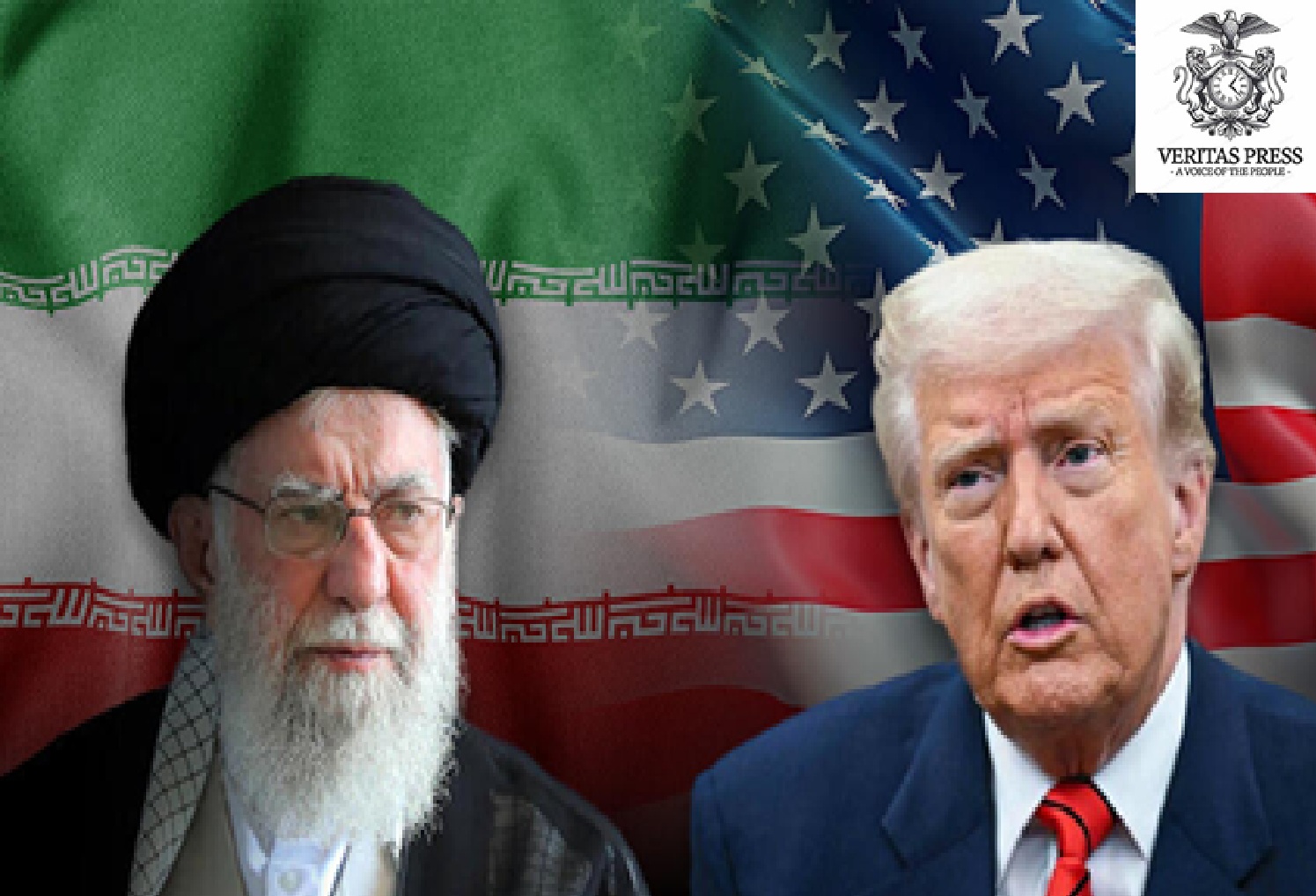
The emerging confrontation between the United States and Iran no longer resembles traditional crisis diplomacy. It is evolving into something more structurally dangerous, a strategic environment in which military readiness is not a contingency plan but an integrated instrument of negotiation.
As indirect nuclear talks resume in Geneva, the theatre surrounding them suggests a deeper transformation in great-power behaviour: diplomacy is no longer designed purely to prevent war. It is increasingly conducted inside a framework that assumes war must remain a credible possibility.
This is the logic of a pre-war doctrine.
Not preparation for imminent conflict, but the systematic arrangement of military, political, and alliance structures so that escalation becomes easier to enter and harder to exit.
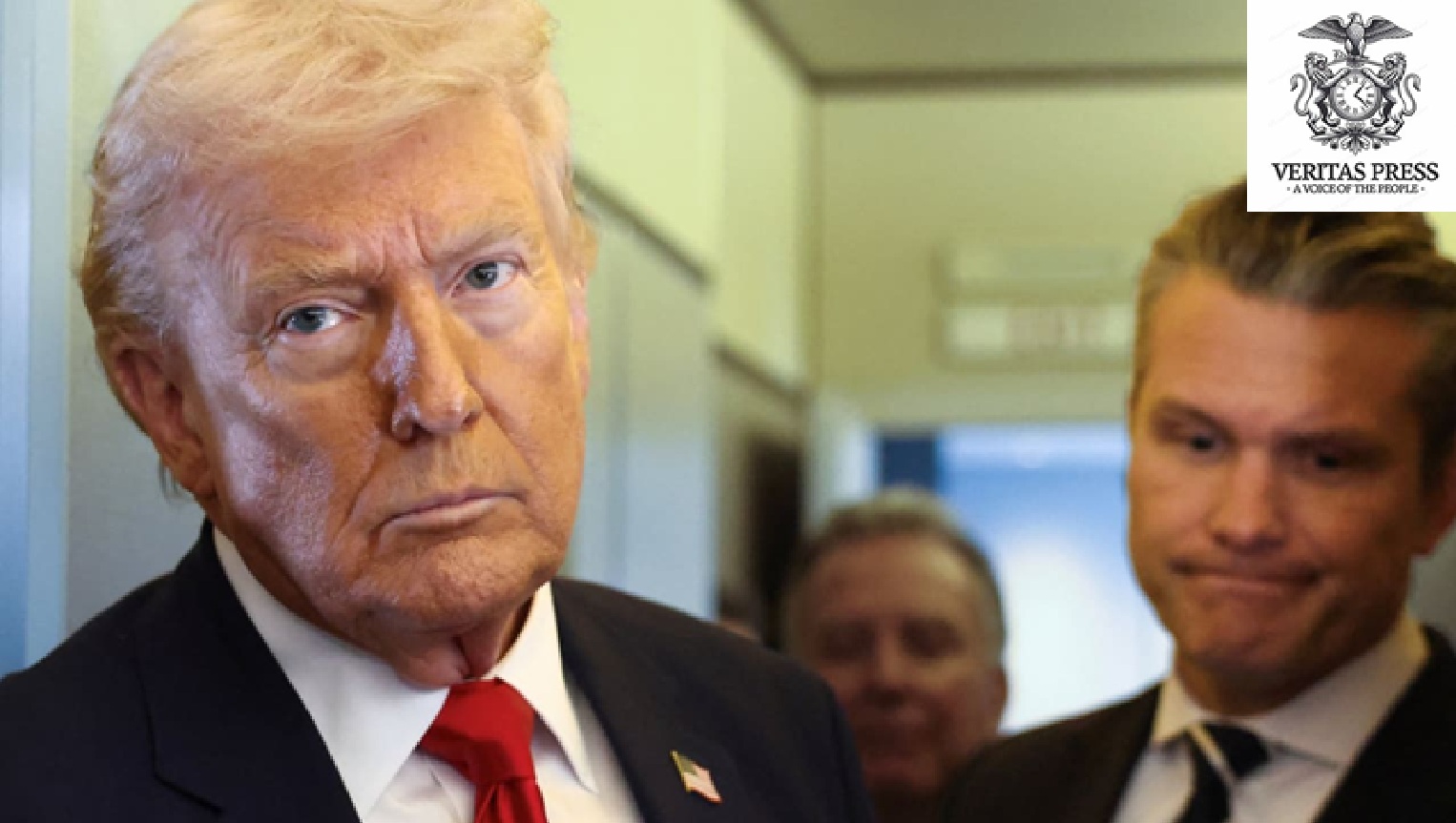
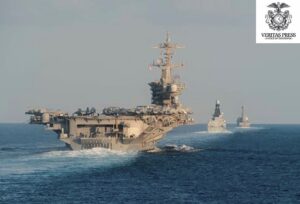
At the centre of this shift is Donald Trump, whose consideration of deploying a second carrier strike group to the region signals more than deterrence. Carrier deployments are among the clearest indicators of strategic seriousness available to modern states, floating airbases that compress response times and expand strike capacity across entire theatres.
You do not move such assets lightly.
Even the discussion of deployment alters adversary calculations.
Washington is therefore negotiating while visibly positioning itself for the possibility that negotiations fail, a posture that transforms diplomacy from a stabilising mechanism into a form of coercive bargaining.
War As Leverage:
The administration frames its military posture as defensive, intended to deter Iranian escalation and reassure regional allies. Yet from a structural perspective, the distinction between deterrence and compellence is beginning to blur.
Deterrence seeks to prevent action.
Compellence seeks to change behaviour.
When overwhelming force shadows negotiation, the implicit message is unmistakable: compromise is preferable to confrontation, but confrontation is prepared for nonetheless.
This produces a strategic paradox that has defined many great-power crises:
The stronger the threat becomes, the narrower the political space to de-escalate.
Visible military preparation generates what defence theorists often call a credibility trap. Once a state signals readiness at scale, backing down can appear strategically weak, even if restraint is the rational choice.
Wars frequently emerge from this reputational momentum rather than deliberate intent.
Iran’s Counter-Signal: Geography As Power.
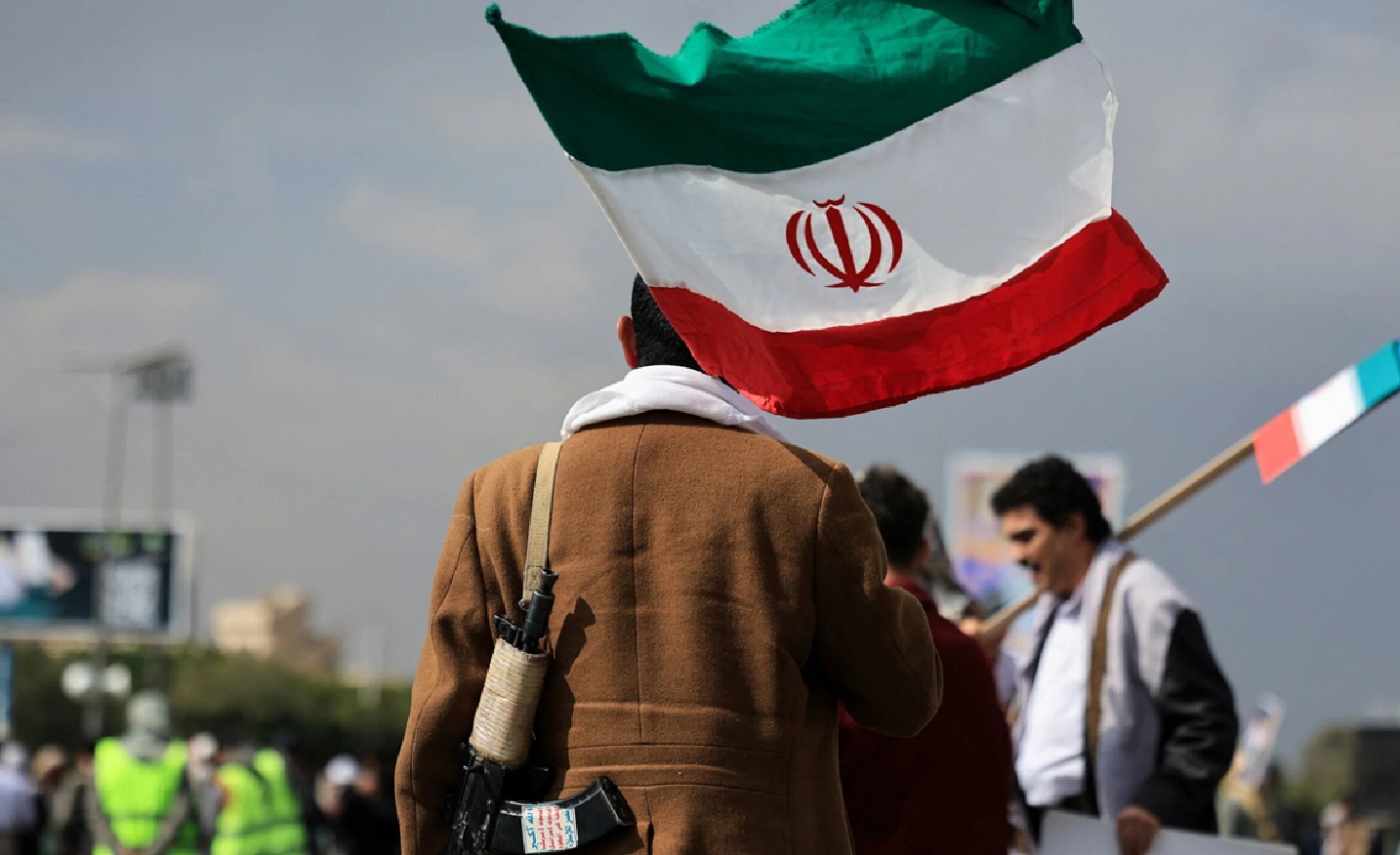
Tehran’s response has followed a familiar doctrine, signal resilience while avoiding outright provocation.
Naval drills near the Strait of Hormuz demonstrate less a desire for confrontation than a reminder of asymmetric leverage. Roughly a fifth of globally traded oil transits this narrow corridor. Iran does not need maritime dominance to exert influence there; it requires only the credible capacity to disrupt flows.
In strategic terms, this converts geography into bargaining power.
The message is calibrated but unmistakable: any conflict would not remain local. Energy markets would convulse. Inflationary shockwaves would ripple outward. External powers would be pulled into crisis management whether they wished to be or not.
Such signalling is classic deterrence, but deterrence conducted in crowded strategic space carries inherent danger. When both sides negotiate with one hand extended and the other near the trigger, mistrust becomes the operating language of diplomacy.
Israel’s Shadow, The Third Vector Of Escalation:
Hovering over this bilateral standoff is a decisive third actor: Israel.
For decades, Israeli security doctrine has treated the prospect of a nuclear-capable Iran not as a manageable risk but as an existential threshold that must never be crossed. This threat perception has historically translated into forward defence, covert disruption, persistent intelligence operations, and sustained pressure on Washington to maintain a hard containment posture.
From Israel’s viewpoint, such a strategy is preventative.
From a systems perspective, it acts as an escalation accelerant.
Because when one actor views compromise itself as dangerous, diplomacy becomes structurally fragile.
This triangular pressure dynamic, American force projection, Iranian deterrence, and Israeli red lines, is quietly reshaping the region into an interconnected escalation architecture.
Individually, each posture is defensive.
Collectively, they reduce strategic flexibility.
Security That Produces Insecurity:
What is unfolding increasingly resembles the classic security dilemma: measures taken by one state to enhance safety are interpreted as threats by another, prompting countermeasures that heighten overall instability.
Every carrier movement, naval drill, or suspected sabotage operation feeds a tightening feedback loop:
Threat perceptions intensify
Military readiness increases
Decision windows shrink
Diplomatic margins erode
Security begins to manufacture the very insecurity it seeks to prevent.
This is how regions drift toward conflict without any single actor choosing war.
The Multi-Front Risk Few Admit Publicly:
The gravest danger is no longer a contained confrontation.
Modern Middle Eastern conflict architecture is highly networked; crises rarely remain bilateral. Should direct hostilities erupt, escalation pathways could extend rapidly across maritime routes, cyber domains, missile exchanges, and aligned non-state actors.
Wars in such environments metastasise.
What begins as a precision strike can evolve into theatre-wide instability before diplomatic brakes engage.
If Israel were drawn directly into kinetic confrontation, whether pre-emptively or through retaliation, the probability of rapid conflict enlargement would rise materially.
Not inevitably.
But enough to reshape global risk calculations.
In strategic forecasting, probability matters more than intention.
When Strategic Conflict Becomes Ideological:
An under-examined danger lies not only in military escalation but in narrative transformation.
Conflicts initially justified through the language of counter-proliferation or counter-terrorism can acquire civilisational interpretations among regional audiences. Once wars are perceived as struggles over identity rather than security, they become harder to contain politically and psychologically.
Leaders may still speak the vocabulary of strategy.
Populations begin to hear something closer to an existential contest.
History shows that wars rarely start as ideological crusades, but many become so as mobilisation deepens and casualties mount.
The risk is therefore less the deliberate launch of a so-called holy war than a structural slide into a conflict that accumulates ideological meaning after ignition.
Few policymakers intend this outcome.
But strategic systems often generate dynamics beyond the control of those operating them.
America’s Strategic Constraint:
Washington faces a narrowing corridor of manoeuvre.
No administration can easily discount Israeli threat assessments without accepting alliance risk. Yet aligning too tightly with maximalist security horizons increases the danger of entrapment, being pulled into a confrontation shaped partly by another state’s red lines.
This produces a quiet tension inside American grand strategy:
Support allies, without inheriting every contingency they prepare for.
Once high-value assets are deployed forward, however, reassurance and war readiness begin to converge. Military posture acquires its own gravitational pull.
The map starts to dictate the policy.
Europe And The Fragmented Order:
Complicating matters further is the diffusion of global power. The diplomatic landscape that once enabled cohesive Western pressure has fractured, limiting Europe’s ability to enforce outcomes even when it can convene talks.
The result is a negotiation framework that looks increasingly multipolar, and therefore inherently harder to stabilise.
More actors.
More interests.
Less control.
Stability becomes a coordination problem rather than a bilateral agreement.
Escalation Density A Region Near Saturation:
The Middle East is approaching what some defence analysts describe as escalation density: multiple unresolved crises operating in close proximity, each capable of interacting with the others.
In such environments, additional military signalling does not merely deter adversaries.
It compresses reaction time.
Shorter decision cycles increase the probability of misinterpretation and misinterpretation has historically been the accelerant of major wars.
A radar anomaly.
An overflight misread.
A drill mistaken for preparation.
Large conflicts often begin not with aggression, but with error.
The Most Dangerous Illusion: Controlled War.
Advanced militaries frequently assume conflict can be tightly managed through precision strikes and calibrated retaliation.
Modern history offers little reassurance.
Wars expand.
Alliances activate.
Domestic politics harden.
Strategic planners may envision limited engagements; reality tends toward enlargement.
The belief in controllable war is, therefore, less a doctrine than a recurring miscalculation.
Trump’s Strategic Gamble, Strength Or Structural Risk?
Trump’s approach reflects a worldview in which visible strength restores deterrence credibility. Critics worry it risks normalising brinkmanship as routine statecraft.
The deeper concern is not any single deployment but the precedent it reinforces:
Military pressure is no longer the breakdown phase of diplomacy. It is becoming diplomacy’s operating environment.
This marks a profound shift in international behaviour, one closer to perpetual crisis management than durable resolution.
Stability Through Perpetual Instability:
The uncomfortable truth emerging from this confrontation is that neither Washington nor Tehran appears eager for full-scale war, yet neither is prepared to concede enough to eliminate the risk.
This produces the defining equilibrium of modern great-power standoffs:
stability maintained through continuous instability.
Carrier groups sail so they will not be used.
War games occur to prevent war.
Threats are issued in the name of restraint.
And yet each measure incrementally reorganises the strategic landscape toward readiness.
Not for tomorrow’s battle, but for the possibility that tomorrow’s diplomacy fails.
Conclusion: Negotiating At The Edge Of The Pre-War Era.
Taken together, American force projection, Iranian deterrence signalling, and Israeli threat intolerance, these are not separate developments. They are interacting pressures inside a single geopolitical system now showing visible strain.
No actor may actively seek regional war.
Yet the cumulative logic of their security strategies is making one more conceivable.
Not imminent. But increasingly plausible.
The most sobering lesson of pre-war environments is that they rarely feel like preludes while they are forming. Leaders speak of deterrence; militaries speak of readiness; diplomats speak of progress.
Only in retrospect does the pattern clarify.
Diplomacy conducted under the shadow of force can preserve peace, but it can also anesthetise decision-makers to rising danger. Because when negotiations unfold inside an escalation system, peace is no longer secured through trust. It rests instead on a far more fragile assumption: that every actor, at every moment of tension, chooses restraint over momentum and that no irreversible mistake is made in the narrowing space between signalling and war.
October 15, 2026 | Author : Kamran Faqir | Categories: Americas & North America, Asia, The South Pacific & Oceania, Business, Business & Finance, Middle East, World News
On the morning of 15 October 2025, two research organisations on opposite sides of the
October 14, 2026 | Author : Kamran Faqir | Categories: Asia, The South Pacific & Oceania, Business, Business & Finance, Economy, Middle East, World News
In a dramatic escalation of cross-border hostilities, Yemen’s Armed Forces have announced a series of
October 13, 2026 | Author : Kamran Faqir | Categories: Asia, The South Pacific & Oceania, Business & Finance, Europe, Public Opinion, UK News, World News
Britain’s Security Chief Reveals Terrorists Already Exploiting AI as State Threats Quadruple
Kamran Faqir is a volunteer investigative journalist and writer committed to exposing hidden truths and amplifying underreported stories. Driven by social justice, he brings sharp insight and fearless truth-telling to independent journalism. NUJ registered.
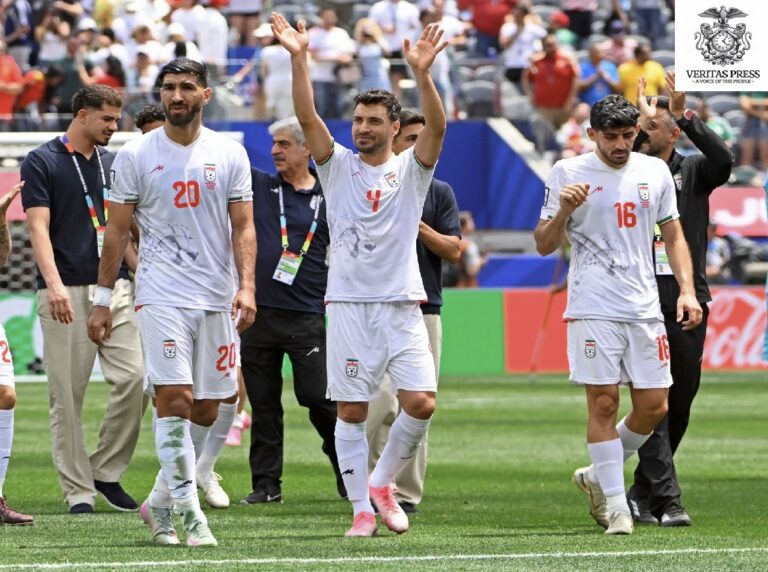
SEATTLE, TEHRAN — The U.S. Department of Homeland Security (DHS) will allow Iran’s national football team to enter the country 48 hours before their critical World Cup match against Egypt on Friday, a modest concession in a tournament where Team Melli’s travel conditions have sparked claims of oppression and competitive disadvantage.