


Help Support our mission—donate today and be the change. Every contribution goes directly toward driving real impact for the cause we believe in.
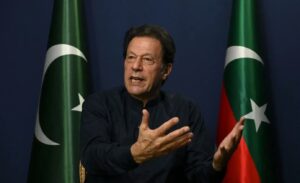
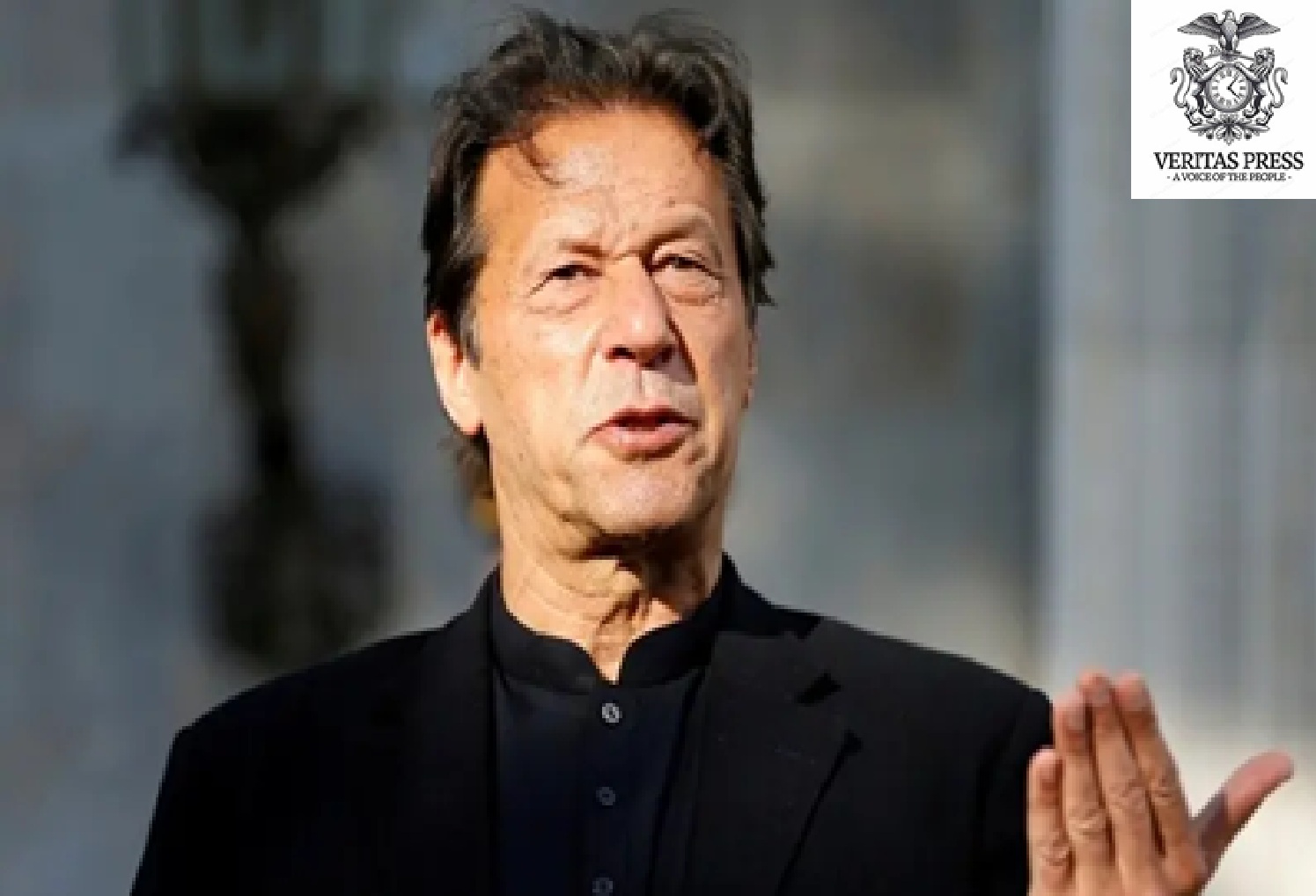
PAKISTAN – A wave of anxiety and solidarity has swept across Pakistan’s sporting and political landscape following the shocking revelation that incarcerated former Prime Minister and cricket legend Imran Khan has suffered severe, irreversible damage to his eyesight while in custody. The disclosure, made before the Supreme Court of Pakistan on Thursday, has prompted an outpouring of emotion from his former teammates, triggered a political firestorm, and forced the government to assure the public of immediate and comprehensive medical care.
The Medical Revelation:
The crisis came to light when Barrister Salman Safdar, appointed by the Supreme Court as a “friend of the court” (amicus curiae), met with the 73-year-old PTI founder at Rawalpindi’s Adiala Jail on February 10. Safdar’s subsequent seven-page report painted a dire picture of the former skipper’s health.
According to the report, Khan, who led Pakistan to its first Cricket World Cup victory in 1992, has been left with just 10 to 15 percent vision in his right eye. The report detailed that Khan had enjoyed normal 6/6 vision until October 2025. However, over the subsequent three months, he began experiencing persistent blurred and hazy vision. Despite repeatedly complaining to the former jail superintendent, Abdul Ghafoor Anjum, Safdar reported that “no action was taken by the jail authorities to address these complaints” beyond the provision of basic eye drops.
The situation culminated in a “sudden and complete loss of vision” in his right eye. A medical report dated February 6, 2026, diagnosed the condition as “right central retinal vein occlusion,” a blood clot that can cause severe and often permanent retinal damage. Safdar noted that Khan was “visibly perturbed and deeply distressed” during their meeting, his eyes watering as he described the delay in receiving specialised care. An ophthalmologist from the Pakistan Institute of Medical Sciences (PIMS) in Islamabad was eventually consulted, but by then, the damage was extensive.
Cricketing Fraternity Rallies Behind Its Leader:
The news has deeply shaken the cricketing world, with legends of the game, many of whom were led by Imran Khan or inspired by him, setting aside politics to appeal for humanity.
Former Pakistan captain Wasim Akram, a key strike bowler in the 1992 World Cup-winning squad, was among the first to speak out. In an emotional message, he said, “It is heartbreaking to hear our skipper Imran Khan going through health issues. I sincerely hope the authorities take this seriously and ensure he receives the best possible medical care.” He extended his prayers for Khan’s “strength, a speedy recovery and a full return to good health”.
Another pace great, Waqar Younis, made a heartfelt plea to separate politics from the duty of care owed to a national icon. “Putting politics aside, our national hero who gave us our greatest glory on the sporting field, built a cancer hospital that helped so many, including my own mother, who is suffering a health emergency and requires urgent treatment,” Younis stated. He humbly requested that the authorities ensure timely and appropriate treatment, signing off with the sentiment echoing across the nation: “Get well soon, skipper”.
Former captain Shahid Afridi, currently in Bahrain, emphasised that access to healthcare is a fundamental human right. He stressed that Khan and his family should be allowed to arrange treatment from wherever they deem appropriate, without any further delay.
The concern was echoed by the raw pace of Shoaib Akhtar, who revealed the irony of the situation. “The last 3 months I’ve been raising funds in the USA for Imran Khan’s Shaukat Khanum Cancer Hospital. I’m deeply saddened to hear the news of him losing vision in his eye,” Akhtar posted on X. “I hope he gets the best treatment and I’m wishing him a speedy recovery”.
Former captain and all-rounder Mohammad Hafeez called the news “disturbing” regarding the “undisputed legend of the game,” while Ramiz Raja described seeing Khan suffer as “an emotional meltdown,” hoping that “humanity prevails and suffering is reduced”.
Family’s Anguish And The Supreme Court’s Intervention:
Imran Khan’s family has expressed profound distress, directly attributing his health crisis to the conditions of his detention. His son, Kasim Khan, stated that his father has endured nearly 922 days of solitary confinement, which he described as the direct cause of the medical neglect. “This is the direct consequence of… medical neglect (denied blood tests), and the deliberate denial of proper treatment in jail,” Kasim posted on X. He claimed that he and his brother Sulaiman are still being denied visas to visit their father from the UK.
Following the submission of the medical report, the Supreme Court, led by Chief Justice of Pakistan Yahya Afridi, acted swiftly. The bench observed that “the issue of Imran’s health is most important” and that “intervention was necessary.” The court ordered the government to form a medical team to examine Khan immediately and directed the jail authorities to allow him phone contact with his sons, a directive that was fulfilled on Saturday.
Confirming the development, Imran’s sister, Aleema Khan, stated that the former premier spoke to his sons for approximately 20 minutes and was “extremely happy to hear their voices.” She reiterated the family’s demand for his immediate transfer to Shifa International Hospital in Islamabad, insisting that “specialist doctors must make every possible effort to restore his eyesight”.
Political Fallout And Government Assurance:
The news has intensified political tensions. Opposition parties, under the banner of Tehreek Tahafuz-i-Ayeen Pakistan (TTAP), staged a protest and sit-in outside Parliament in Islamabad, demanding Khan’s immediate hospitalisation. Lawmakers raised slogans, and the protest continued even as lights inside the Parliament House were reportedly turned off. Leaders like Mustafa Nawaz Khokhar criticised the government for cordoning off roads leading to the parliament, calling it a sign of weakness.
In response, the government has moved to contain the fallout. Parliamentary Affairs Minister Dr. Tariq Fazal Chaudhry assured the public that there would be “no negligence” regarding Imran Khan’s health. He stated that if Khan requests treatment at a specific facility, such as the Al-Shifa Eye Trust, arrangements will be made accordingly. “It is a medical issue,” he stressed, urging political parties to avoid politicising the matter.
PML-N Senator Rana Sanaullah, also the Prime Minister’s adviser on political affairs, addressed the matter on the Senate floor. He asserted that any deliberate delay in treatment would amount to “criminal negligence.” However, he contested the timeline presented by the PTI, claiming that Khan first complained of the eye issue in the first week of January and was provided medical care, including an injection on January 24. He maintained that describing the delay as spanning three to four months was a political narrative.
The State’s Custodial Cruelty And The Unanswered Question Of Human Rights:
The unified chorus of “Get well soon, skipper” from Pakistan’s cricketing legends has provided a rare moment of emotional consensus in a deeply fractured political landscape. Yet, beneath the genuine sorrow and heartfelt prayers for a national hero lies a far more sinister and legally consequential narrative, one that transcends the fate of a single individual and lays bare a potential pattern of state-led human rights violations against those in its custody.
The Constitutional And International Legal Framework:
The cricketing fraternity’s plea for “humanity” to prevail is powerful precisely because it highlights the state’s abdication of its most fundamental duty. Under Article 9 of Pakistan’s Constitution, all citizens are guaranteed the “security of person.” Article 14 explicitly declares the “inviolability of the dignity of man” as a fundamental right. These are not privileges granted by a benevolent government; they are enforceable constitutional rights that extend unconditionally to every prisoner.
Internationally, Pakistan is bound by the United Nations Standard Minimum Rules for the Treatment of Prisoners, the Nelson Mandela Rules, which mandate that prisoners receive healthcare equivalent to that available in the general community and that the denial or delay of essential medical treatment may amount to cruel, inhuman, or degrading treatment. The state’s custodial responsibility is, as one analyst put it, “absolute”.
Documented Evidence Of Violation:
Against this legal backdrop, the case of Imran Khan presents disturbing evidence of systematic rights violations. The report submitted to the Supreme Court by Barrister Salman Safdar, the court’s own appointed representative, alleges that Khan’s medical complaints were ignored for months by jail authorities. From October 2025, when Khan reportedly had normal 6/6 vision, to his eventual diagnosis with central retinal vein occlusion, a condition requiring “timely and specialised treatment to prevent permanent damage”, the state had ample opportunity to intervene. Instead, Khan was left with just 15% vision in his right eye.
This is not merely medical negligence; it is a potential violation of the right to life and dignity guaranteed by the Constitution. As constitutional experts have noted, when a prisoner suffers “serious and possibly permanent harm in custody,” the state must answer. The fact that the Supreme Court found it “necessary” to intervene underscores that the executive branch failed in its duty.
A Pattern Of Systemic Neglect, Not An Isolated Incident:
Perhaps most damning is the evidence that Khan’s case is not an anomaly but rather a symptom of systemic state failure. Senior PTI leader Shah Mahmood Qureshi, himself a prisoner, has alleged that he and other political detainees, including former provincial minister Mian Mahmoodur Rasheed and Dr. Yasmin Rashid, have been denied timely medical checkups due to the “unavailability of police security and jail guards”. This suggests a pattern where the state weaponises administrative inertia to deprive political prisoners of their basic rights.
The broader prison system in Pakistan reinforces this conclusion. A comprehensive investigation into Karachi Central Jail revealed that the facility operates at 355% of its designed capacity, with more than 70% of inmates being under-trial prisoners. The National Commission for Human Rights has documented that in Pakistani prisons, “medical care was almost absent,” with doctors confronting “queues of the sick with little medicine to offer”. The Constitutional promise of dignity is systematically violated behind prison walls, with the state outsourcing survival to prisoners’ families who must bring food and medicine to keep their relatives alive.
Political Imprisonment And The Suspension Of Rights:
The case of Imran Khan raises an even more troubling question: Does the state treat its political opponents differently from ordinary citizens? His son, Kasim Khan, has directly blamed “the regime in power, the Army Chief and the puppets enabling this cruelty,” alleging that Khan has endured 922 days of solitary confinement, a form of treatment widely condemned by international human rights bodies. Kasim has also stated that he and his brother continue to be denied visas to visit their father, a form of familial isolation that compounds the punishment.
The Pakhtunkhwa National Awami Party, in a formal statement, described the treatment of Khan as “not only inhumane but also contrary to democratic values and fundamental human rights,” emphasising that “safeguarding the life and health of any prisoner, particularly a national-level political leader, is the constitutional, legal, and moral responsibility of the state”. When political differences are allowed to interfere in humanitarian matters, when a leader’s health becomes a “tool of pressure or revenge,” the state crosses the line from governance into persecution.
The Government’s Deflection And The Need For Accountability:
The government’s response has been a masterclass in procedural deflection. Information Minister Attaullah Tarar’s assurance that “comprehensive medical records have been shared” rings hollow when the patient’s own family and personal physicians remain excluded from decision-making. Adviser Rana Sanaullah’s offer that Khan could see a specialist “if a better one is available” places the onus on a man in solitary confinement, whose vision is failing, to navigate the bureaucratic labyrinth that failed him in the first place.
This is not proactive care; it is reactive crisis management, dictated by court orders and international media pressure, not by a genuine duty of care. The state’s argument that “whenever Imran raised concerns, medical care was arranged” is contradicted by the timeline established in the Supreme Court report, a timeline that suggests months of indifference while a preventable condition became permanent disability.
Conclusion: The Measure Of A Democracy
Democracies are not judged by how they treat the powerful when they govern, but by how they treat them when they fall. By this measure, Pakistan’s institutions face a damning verdict. The deterioration of Imran Khan’s eyesight is no longer just a political issue; it has become a medico-legal document of the state’s internal condition. It lays bare the uncomfortable truth that in the relentless zero-sum game of Pakistani politics, a political opponent can be reduced to a statistic, their suffering a footnote until it becomes a headline.
The swiftness of the Supreme Court’s intervention and the volume of the public outcry have forced the state to act, but they have not yet forced it to answer. The question that lingers, long after the tributes from Wasim Akram and Shoaib Akhtar fade, is not merely whether Imran Khan will receive the treatment he needs. It is a far more profound and unsettling question for every Pakistani citizen, for every human rights monitor, and for every democratic nation watching: How did it come to this? How does a man go from lifting the World Cup for his nation to losing his sight in its custody, in violation of his constitutional rights and international law?
Until that question is answered with transparency, accountability, and meaningful reform of a prison system that routinely denies dignity to those it confines, the nation’s collective “get well soon” will remain a haunting echo of a deeper, unresolved sickness within the institutions meant to protect us all. The international community, human rights bodies, and democratic nations must continue to demand answers, for this is not merely the fate of one man; it is the test of whether Pakistan’s constitutional guarantees retain any force when they are needed most.
As the February 16 deadline arrives and the nation holds its breath, the world watches not just for a medical report, but for evidence that the rule of law and fundamental human rights still mean something in Pakistan.
GENEVA — A United Nations fact-finding mission has concluded there are “reasonable grounds to believe”
Iran’s GDP is projected to contract by 5.4 to 6.1% in 2026, its worst performance
The Trump administration is preparing a $2.8 billion weapons package for Israel containing 40,000 2,000-pound
Film alleges mass civilian deaths are routinely built into military decisions amid Israel’s genocidal war
The Israeli rights group says violence, displacement, economic strangulation, and settlement expansion form part of

Houthi forces have captured the historic Red Sea port of Mocha and are advancing on
London’s historic sanctions against Israeli settlements mark a watershed moment in UK foreign policy, but
With 95% of Gaza’s population now wholly dependent on aid and more than 90% stripped
India calls for Kashmir and Ladakh to appear only on its official map after a
ISLAMABAD – In the high-stakes political theatre of Pakistan, the battleground has shifted from the