Kamran Faqir is a volunteer investigative journalist and writer committed to exposing hidden truths and amplifying underreported stories. Driven by social justice, he brings sharp insight and fearless truth-telling to independent journalism. NUJ registered.
Original Article Date Published:
Article Date Modified:
Listen to this article
Help Support our mission—donate today and be the change. Every contribution goes directly toward driving real impact for the cause we believe in.
From airsoft rifles in primary-school programs to teenage participation in settler harassment, a growing body of reporting and expert analysis points to a deeply institutionalised pipeline that introduces militarism in childhood, reshaping identity, ideology, and attitudes toward Palestinians long before formal enlistment. Critics say the result is not merely preparation for defence, but the social engineering of a generation.
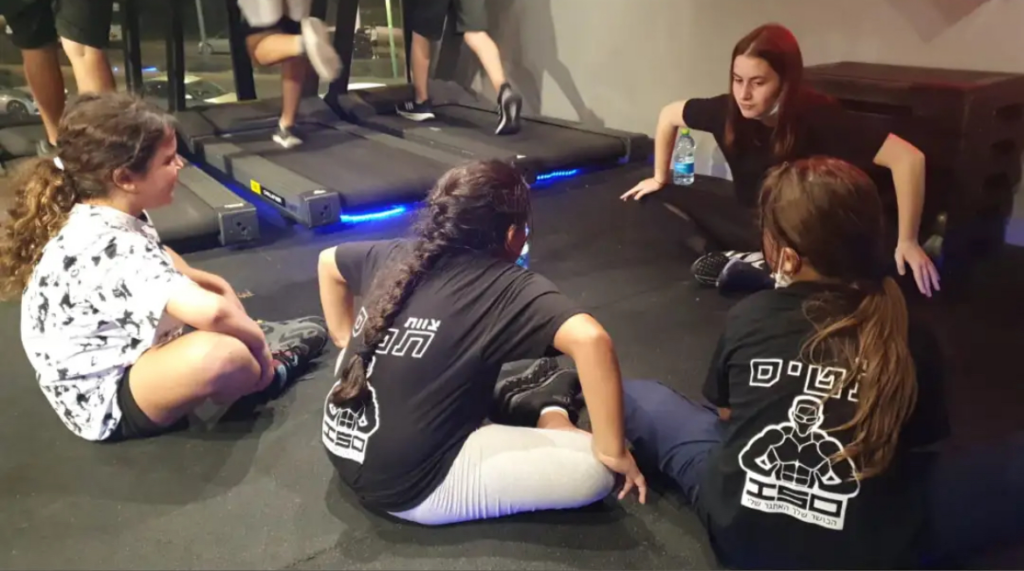
Across Israel, children as young as seven are exposed to military simulations, tactical exercises, and ideological messaging designed to normalise army service and cultivate loyalty to occupation objectives. Training centres advertise courses in combat skills, weapons handling, and military discipline, often alongside reservists, active soldiers, and adult volunteers. Visits to army bases, interactions with soldiers, and promotional materials depicting conflict zones further embed militarised culture into children’s everyday lives.
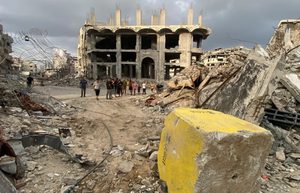
One particularly striking example features a trainer filmed amid the rubble of Gaza’s Khan Younis, using furniture and personal items from destroyed Palestinian homes, visuals that implicitly teach children to accept destruction and dispossession as routine.
Schools As Gateways To Militarisation:
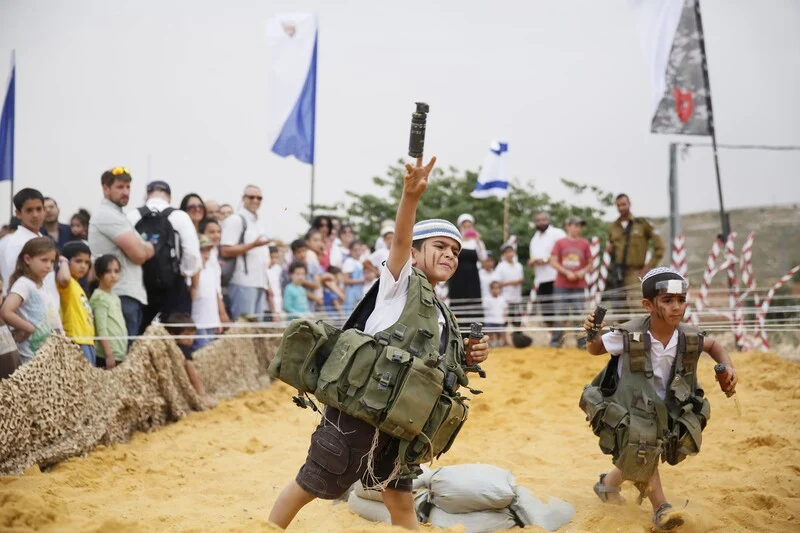
An Israeli boy wearing a military vest throws a mock grenade during a traditional military weapon display to mark the 66th anniversary of Israel’s “independence” at the occupied West Bank settlement of Efrat on 6 May 2014. Gali Tibbongali AFP
Youth militarisation extends deeply into formal education. Programs like Gadna and pre-military academies (mechinot) embed military exposure in schools, reaching tens of thousands of children annually. Gadna alone enrols ~19,000 youths per year, while broader pre-military initiatives engage over 41,000 students, supported by a ₪160 million defence budget.
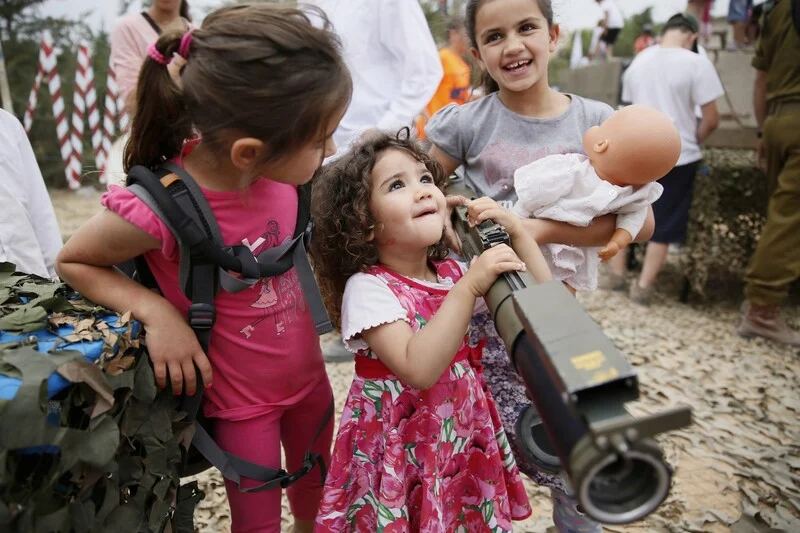
An Israeli child holds a rocket launcher as another holds her doll during a traditional military weapon display to mark the 66th anniversary of Israel’s “independence” at the occupied West Bank settlement of Efrat on 6 May 2014. Gali Tibbongali AFP
Courses range from single-day “Branches Day” introductions to months-long technical training in electronics, drones, and intelligence, often coordinated with soldiers and arms contractors. While students handle simulation weapons, some programs offer firearms instruction or exposure to paramilitary activities, such as supporting border policing operations. Participation is almost exclusively in Jewish schools, reinforcing ethnic and ideological separation from non-Jewish communities.
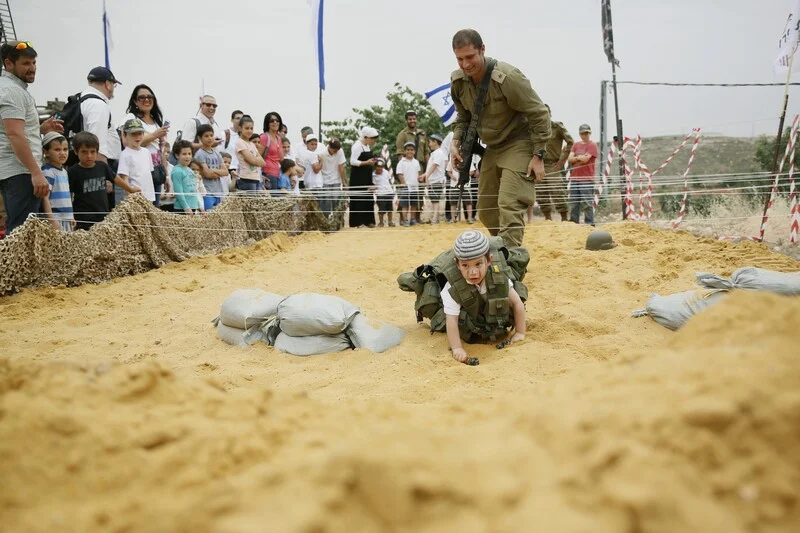
An Israeli boy wearing a military vest crawls on the sand during a traditional military weapon display to mark the 66th anniversary of Israel’s “independence” at the occupied West Bank settlement of Efrat on 6 May 2014. Gali Tibbongali AFP
Human rights observers argue this represents the social engineering of a generation in which children are systematically conditioned into ethnonational superiority narratives and taught to perceive non-Jews primarily through a lens of threat.
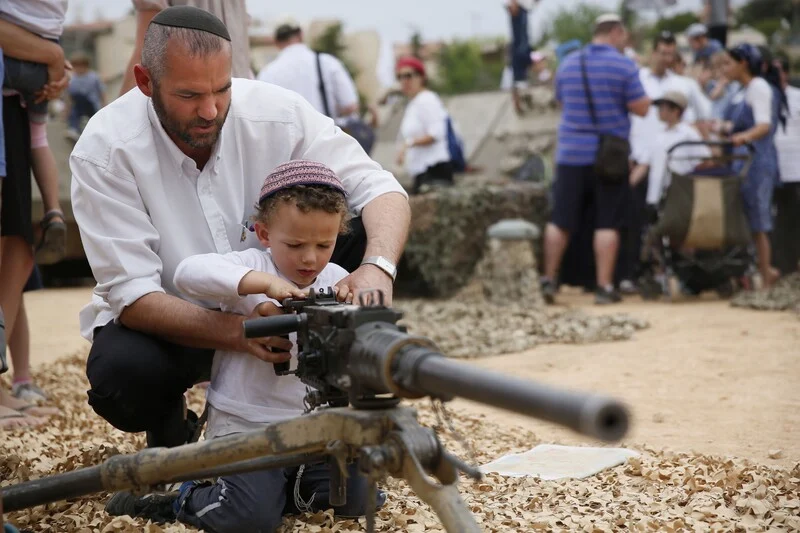
An Israeli man shows his son how to work a machine gun during a traditional military weapon display to mark the 66th anniversary of Israel’s “independence” at the occupied West Bank settlement of Efrat on 6 May 2014. Gali Tibbongali AFP
Indoctrination, Ideology, And “Poisoned” Loyalty:
Experts note that militarised training programs blend tactical instruction with ideological messaging. Children are inculcated with what the Israeli military calls “IDF values, obedience, combat readiness, and rigid “us versus them” thinking. Military rabbis and ideological instructors often reinforce narratives of entitlement and moral justification for occupation.
Psychologists describe the effect as early conditioning of loyalty and identity. Exposure from a young age primes children to accept military directives unquestioningly, cultivating the mindset described by soldiers as becoming “poisoned”, prioritising mission above law or ethics. Analysts warn these patterns can ripple through society, contributing to normalised aggression, tolerance for brutality, and systemic desensitisation to violence.
From Simulation To Occupation: Minors In Settler Violence.
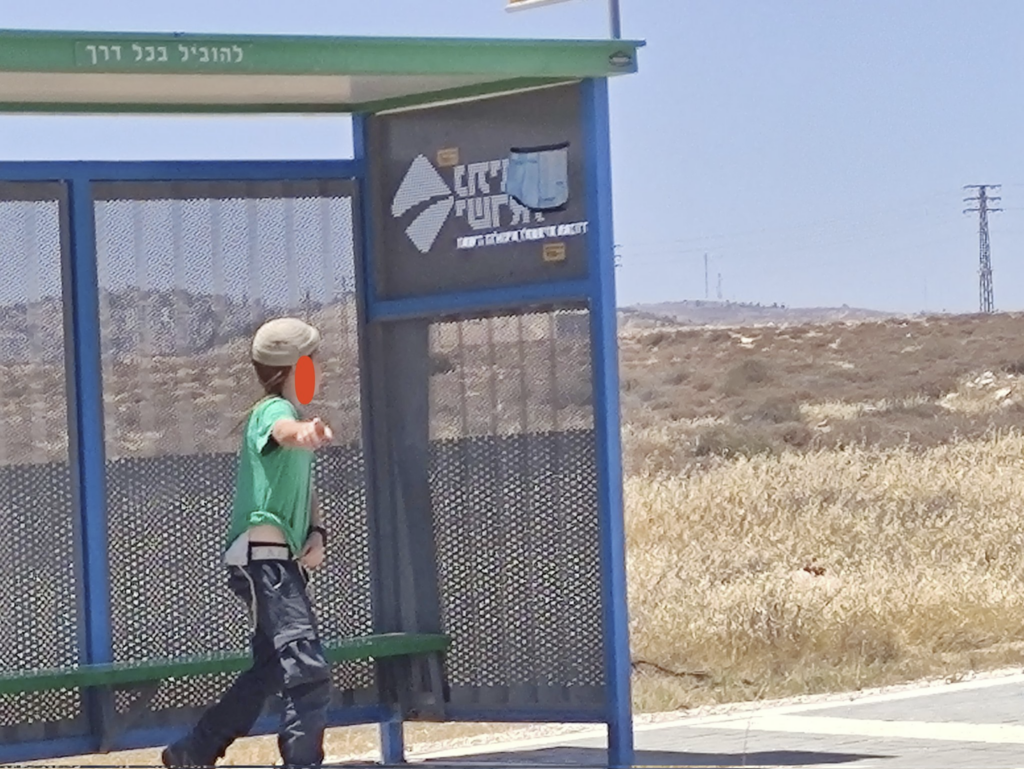
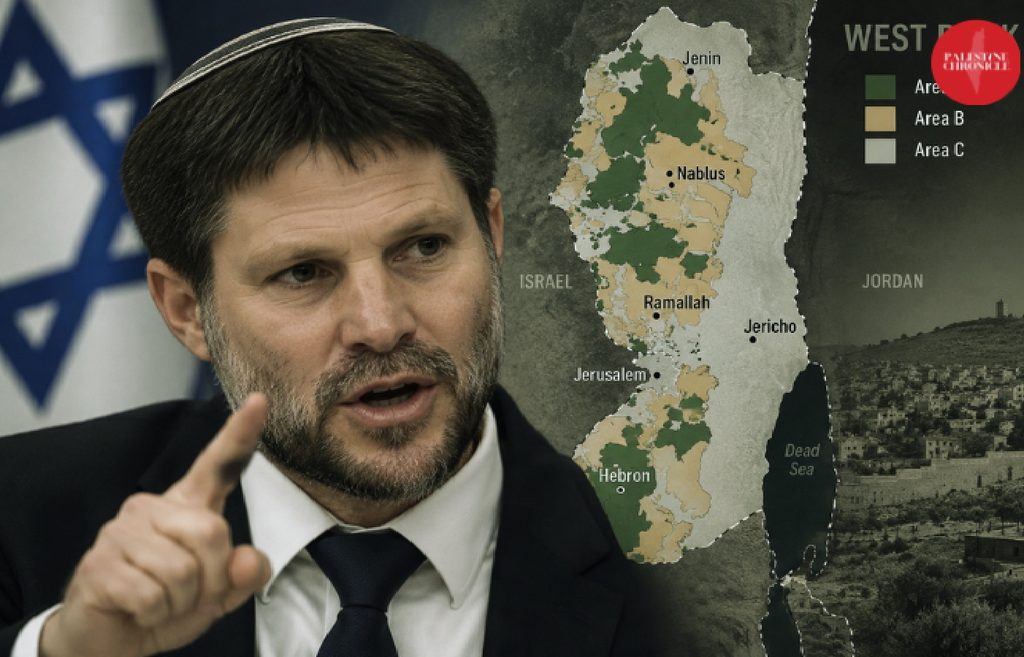
The militarisation pipeline extends beyond classrooms into the occupied West Bank. Investigations by Haaretz and NGOs show minors, sometimes under 16, engaged in harassment campaigns against Palestinian shepherd communities.
Documented actions include:
Trespassing and vandalism in Palestinian homes and compounds
Destroying fences, water tanks, and agricultural equipment
Driving ATVs and tractors to intimidate residents
Threatening civilians, often alongside armed adults
Observers describe a deliberate “division of labour”: minors exhaust communities with constant harassment, while adults escalate violence at key moments. These operations displace families, disrupt livelihoods, and consolidate settler control over land.
Between 2022 and late 2024, more than 70 Palestinian shepherd communities, roughly 700 families, 3,900 individuals, were forcibly displaced, according to Kerem Navot and B’Tselem. Israeli farms now control 700,000–800,000 dunams (198,000 acres), blocking Palestinian access to ancestral grazing and farmland.
Escalation Amid Conflict:
Since the Gaza war in 2024–25, incidents of settler violence involving minors have intensified. Reports document:
152 attacks in February 2025 alone, including the forced displacement of 15 families
Arson of mosques and agricultural infrastructure
At least 403 Palestinian children have been injured in West Bank attacks since 2023
Experts argue these figures reflect a structured, intergenerational system: children trained in militarism sustain daily occupation routines, while adults escalate strategic violence, effectively using minors as instruments of territorial expansion.
Cultural Militarisation And National Rituals:
Public life and cultural events reinforce early militarisation. Independence Day and settlement festivals include military-themed parades, weapons displays, and tactical competitions. Experts argue these rituals socialise children into war readiness, normalise armed identity, and obscure alternative civic or ethical narratives.
Such normalisation occurs alongside widespread propaganda framing Palestinian children and civilians as threats, cultivating fear and ethnonationalist loyalty from a formative age.
Strategic Logic: Youth As Territorial Instruments.
Analysts and human rights observers describe a systemic strategy: youth deployment supports settlement expansion, land control, and occupation logistics. Protective presence activists report a clear operational hierarchy: minors exhaust communities, while adults intervene to execute direct intimidation or displacement.
Statements from settler leaders explicitly link child shepherding and land domination, underscoring that minors function as tactical instruments of territorial control. Activists warn that this practice constitutes a structured militarisation of childhood, with long-term social, ethical, and psychological consequences.
Consequences: Trauma, Violence, And Systemic Indoctrination.
The militarisation pipeline shapes both Israeli and Palestinian societies:
Israeli children are conditioned to accept hierarchy, aggression, and the primacy of occupation.
Palestinian children face repeated trauma and displacement from the actions of militarised minors.
Researchers emphasise: children are not the architects of these systems. They are products of policy, ideology, and cultural reinforcement. From seven years old, minors are drawn into an ecosystem where obedience, aggression, and ethnonationalist loyalty are normalised, producing a generation primed for continued conflict rather than critical engagement or coexistence.
International Law And Psychological Consequences:
The systematic militarisation of children in Israel raises profound legal and ethical questions under international law. The UN Convention on the Rights of the Child (CRC) explicitly requires states to refrain from recruiting anyone under the age of 15 into armed forces and obliges signatories to protect children from exposure to conflict and violence. The Optional Protocol on the involvement of children in armed conflict further discourages any engagement with hostilities for minors under 18.
Legal experts argue that while Israel formally conscripts at 18, pre-military programs, airsoft combat simulations, and minors’ participation in settler harassment circumvent the spirit of these protections, exposing children to structured violence and occupation duties years before legal enlistment. Human rights observers suggest this constitutes a form of indirect recruitment and indoctrination, blurring the lines between civilian life and combat preparation.
Psychologists warn that early exposure to militarised environments profoundly shapes cognitive and social development. Research on child soldiers and militarised youth globally shows that repeated exposure to violence, hierarchical discipline, and “enemy” narratives:
Reduces empathy and promotes rigid in-group/out-group thinking
Normalises aggression as a socially sanctioned response
Increases the likelihood of desensitisation to human suffering
Embeds long-term ideological adherence to conflict-driven narratives
Applied to the Israeli context, minors trained in Gadna programs, pre-military academies, and settler outposts are at risk of internalising ethnonationalist superiority, adopting aggressive problem-solving strategies, and perceiving Palestinians through a persistent lens of threat. Observers warn that this conditioning is not incidental, but the result of an institutionally orchestrated pipeline that uses schools, youth programs, religious frameworks, and settler networks to cultivate a generation prepared psychologically and socially for occupation, domination, and militarised life.
In short, what begins with airsoft rifles in classrooms and ideological exercises in early childhood evolves into a comprehensive system of social engineering, producing a cohort whose values, identities, and perceptions are moulded by militarism, ethnic hierarchy, and normalised hostility toward non-Jews. The implications extend beyond the battlefield: they shape Israeli society, entrench occupation, and perpetuate cycles of violence that affect both Israeli and Palestinian communities for generations to come.
Kamran Faqir is a volunteer investigative journalist and writer committed to exposing hidden truths and amplifying underreported stories. Driven by social justice, he brings sharp insight and fearless truth-telling to independent journalism. NUJ registered.
SEATTLE, TEHRAN — The U.S. Department of Homeland Security (DHS) will allow Iran’s national football team to enter the country 48 hours before their critical World Cup match against Egypt on Friday, a modest concession in a tournament where Team Melli’s travel conditions have sparked claims of oppression and competitive disadvantage.