








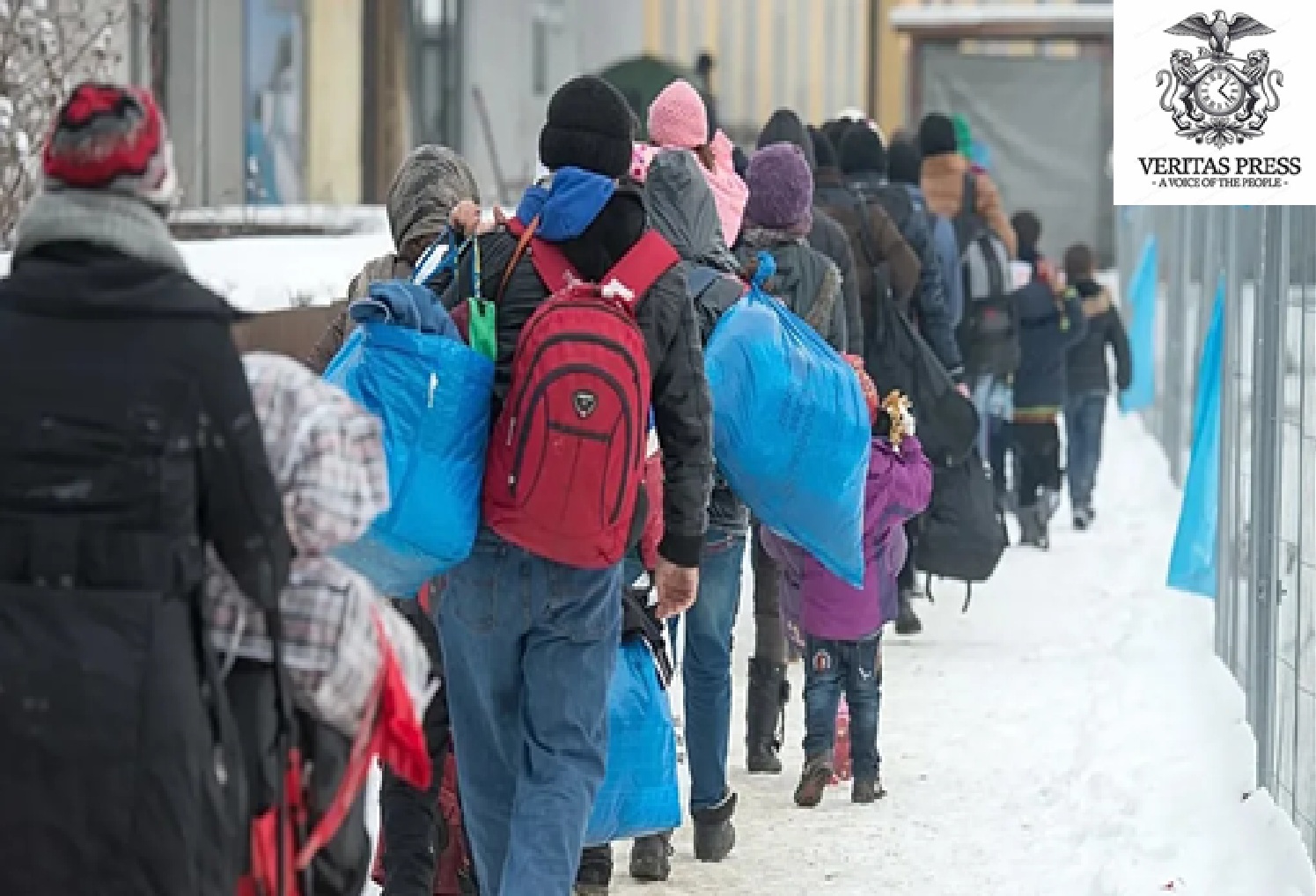

On 10 February 2026, the European Parliament voted to approve a major overhaul of the EU’s asylum framework, a change that allows EU member states to transfer asylum seekers to countries with which they have no established link before their claims are processed. The vote, part of updates to the Asylum Procedure Regulation (APR), removes the long-standing requirement that a meaningful connection exist between an applicant and the third country to which they might be sent.
Proponents say this gives member states far more flexibility to manage migration flows and reduce pressure on EU asylum systems. Critics, however, warn that the change undermines fundamental refugee protections, risks human rights violations, and signals a dangerous “offshoring” of asylum obligations, a trend that has parallels in the UK and the U.S.
What The Legislative Change Does:
Under the revised rules, EU countries can declare an asylum application inadmissible, meaning it will not be examined in EU territory, if one of the following conditions is met:
- There is a connection between the asylum seeker and a third country (previous residence, family links, etc.).
- The person transited through a third country before arriving in the EU.
- There is a formal agreement or arrangement with a non-EU “safe third country” ensuring the asylum request will be examined there.
Crucially, the requirement for an existing link between the applicant and the transfer country has been removed. Under the new rules, mere transit or an agreement between an EU state and a third country can justify transfer, even if the person has never set foot there.
The concept is now loosely comparable to offshore processing models previously pursued, but legally blocked, in the United Kingdom, such as the UK‑Rwanda plan, where asylum seekers would be sent to Rwanda for processing in exchange for financial incentives. Similarly, in the United States, proposals have emerged to send non-citizens to third countries rather than their home states, a model that shares many of the same legal and human rights concerns.
Safeguards And Limitations (On Paper):
EU legislators included formal safeguards meant to protect fundamental rights. For a third country to be deemed “safe,” it must:
- Protect asylum seekers from persecution and serious harm.
- Respect the principle of non-refoulement (not returning someone to danger).
- Provide access to a functioning asylum system with residence rights, education, and work permits.
However, these conditions are heavily contested. Human rights organisations say enforcement mechanisms are too weak and risk leaving vulnerable people in legal and physical limbo.
Importantly, the new provisions do not apply to unaccompanied minors, whose claims must still be assessed either in EU countries or states with which they have legitimate connections or through which they transited.
Political And Parliamentary Rift:
The vote split the European Parliament:
- 396 MEPs voted in favour
- 226 against
- 30 abstentions
Support came from the centre-right European People’s Party (EPP), allied with right-wing groups such as the European Conservatives and Reformists (ECR) and far-right factions like Patriots for Europe (PfE) and Europe of Sovereign Nations (ESN). Many centre-left and liberal MEPs, particularly from Socialists and Democrats (S&D) and Renew Europe, opposed the changes.
German EPP rapporteur Lena Düpont defended the reform as necessary to reduce chronic backlogs and prevent prolonged stays in EU asylum systems, framing it as consistent with international law.
But critics saw deeper risks. S&D MEP Cecilia Strada warned that removing the connection criterion could allow third countries to “blackmail” Europe for money in exchange for taking migrants, arguing the change is “not a good idea, not only for the fundamental rights of asylum seekers, but for our democracies.”
Human Rights And Civil Society Alarm Bells:
Civil society organisations, including the European Council on Refugees and Exiles (ECRE), have voiced sharp criticism. ECRE warned that the new rules heighten risks for vulnerable groups, from survivors of violence to LGBTQ+ people, and that access to adequate protection in third countries is often far from guaranteed.
Amnesty International called previous proposals to expand the “safe third country” concept a “cynical attempt to downgrade rights and offload asylum responsibilities,” arguing this shift would further weaken access to asylum, downgrade people’s rights, and increase the risk of refoulement and arbitrary detention.
Another concern is the removal of the automatic suspensive effect of appeals, meaning people could be transferred before a court examines whether the law was applied correctly. Critics say this undermines due process and could lead to irreversible harm before legal scrutiny.
Broader Context: Eu Asylum Policy Hardening.
This legislative change is part of wider efforts under the 2023 Pact on Migration and Asylum to tighten asylum rules, expand deportations, and accelerate returns:
- The EU is pushing an EU-wide list of “safe countries of origin”, including Bangladesh, Colombia, Egypt, India, Kosovo, Morocco, and Tunisia, which will allow quicker deportations and fast-track rejections for people from these states without thorough merit assessments.
- Member states and civil liberties bodies have been debating new return hubs and mutual recognition of return decisions to speed up deportations of failed asylum seekers.
- Courts like the Court of Justice of the European Union (CJEU) have clarified conditions under which countries are considered “safe,” but these protections may be tested by the new rules.
Comparative Perspective: UK And U.S. Approaches.
The EU’s new framework echoes trends seen in the UK and U.S., although with some differences:
- UK Rwanda Model: Bilateral agreement to send asylum seekers to Rwanda for processing. Blocked by the UK Supreme Court due to safety concerns and risks of refoulement. No transfers occurred, and legal challenges continue.
- U.S. Third-Country Proposals: DHS has suggested sending non-citizens to third countries, removing them from domestic asylum processes. Legal challenges and human rights concerns remain significant.
These parallels highlight a global pivot toward offshoring asylum responsibilities, often prioritising political expediency over legal and human rights safeguards.
Key concerns across all models include:
- Risk of violating the principle of non-refoulement
- Weak enforcement of safety and protection standards
- Undermined due process, especially with appeals suspended
- Potential exploitation by third countries for political or financial gain
Implications And Early Reactions:
Human‑rights groups warn the EU risks outsourcing its moral and legal obligations, a trend critics link to offshore models in other democracies. Such arrangements have historically been subject to abuse and limited oversight.
The reforms are not yet in force; they still require formal adoption by all 27 EU member states, after which many provisions are expected to take effect from mid‑2026.
Conclusion: A Pivotal Moment.
The European Parliament’s decision marks a fundamental shift in EU asylum policy, one that amplifies tensions between controlling migration and protecting people fleeing persecution. As implementation approaches and member states begin negotiating bilateral agreements with “safe third countries,” the measure is likely to remain a flashpoint in European politics, human rights advocacy, and legal debate, while mirroring a broader global trend of asylum offshoring in the UK and the U.S.
GENEVA — A United Nations fact-finding mission has concluded there are “reasonable grounds to believe”
Iran’s GDP is projected to contract by 5.4 to 6.1% in 2026, its worst performance

The Trump administration is preparing a $2.8 billion weapons package for Israel containing 40,000 2,000-pound

Film alleges mass civilian deaths are routinely built into military decisions amid Israel’s genocidal war

The Israeli rights group says violence, displacement, economic strangulation, and settlement expansion form part of

Houthi forces have captured the historic Red Sea port of Mocha and are advancing on
London’s historic sanctions against Israeli settlements mark a watershed moment in UK foreign policy, but
With 95% of Gaza’s population now wholly dependent on aid and more than 90% stripped
India calls for Kashmir and Ladakh to appear only on its official map after a
ISLAMABAD – In the high-stakes political theatre of Pakistan, the battleground has shifted from the