Kamran Faqir is a volunteer investigative journalist and writer committed to exposing hidden truths and amplifying underreported stories. Driven by social justice, he brings sharp insight and fearless truth-telling to independent journalism. NUJ registered.
Original Article Date Published:
Article Date Modified:
An investigation by Al Jazeera and the Palestinian Youth Movement reveals systemic use of European ports to transport goods, raising urgent legal and ethical questions for states and corporations.
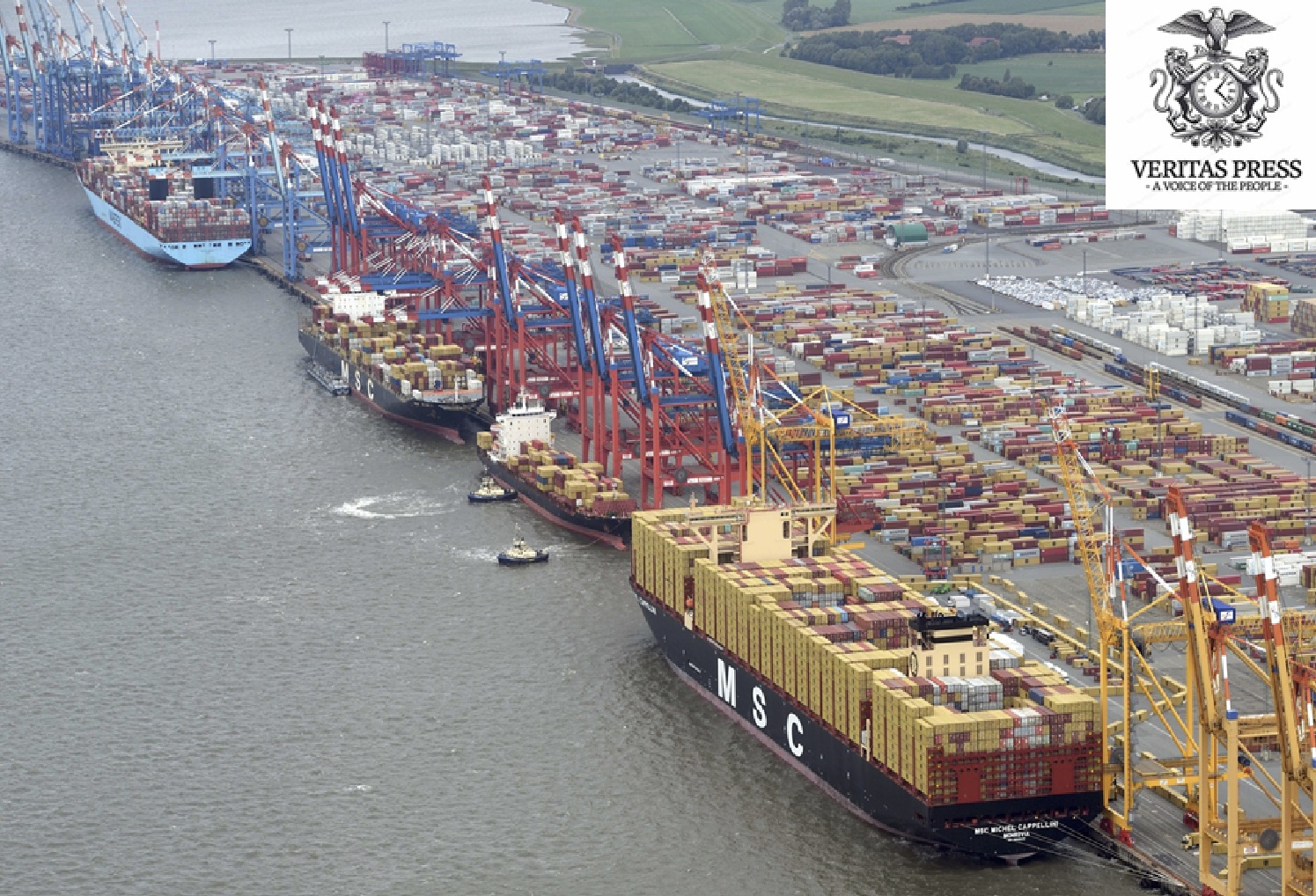
A joint investigation has uncovered that the world’s largest container shipping company, Mediterranean Shipping Company (MSC), is a key conduit for trade originating from illegal Israeli settlements in the occupied West Bank. The findings, based on an analysis of hundreds of commercial shipping documents, expose a significant gap between the international legal obligations of states and the on-the-ground reality of global trade networks that sustain settlement economies.
The Scale And Route Of Settlement Trade:
According to bills of lading obtained from U.S. import databases, MSC facilitated at least 957 shipments from companies based in Israeli settlements to the United States between January 1 and November 22, 2025. A striking 55% of these shipments (529) transited through European ports, leveraging the EU’s infrastructure despite the bloc’s official non-recognition of the settlements’ legality.
These figures represent only a fraction of the total trade, as comprehensive import/export data from Israel and most European nations is not publicly available. The shipments encompassed a wide range of goods, from food, textiles, and cosmetics to natural stone and industrial materials.
Legal Contradictions And Corporate Responsibility:
The trade flows directly contradict a landmark 2024 advisory opinion by the International Court of Justice (ICJ). The court advised that third states are under an obligation to “prevent trade or investment relations that assist in the maintenance of the illegal situation created by Israel in the Occupied Palestinian Territory.”
“Israeli settlements are widely considered illegal under international law, because they are built on occupied territory, in violation of the Fourth Geneva Convention,” said Nicola Perugini, a senior lecturer in international relations at the University of Edinburgh. “Commercialising products from these settlements effectively supports the illegal settlements. You cannot normalise the profits of an illegal occupation.”
While the ICJ opinion addresses state responsibility, the role of private corporations is under increasing scrutiny. In April 2025, the UN Human Rights Council called on corporate actors to cease activities contributing to settlement maintenance or expansion. Furthermore, the EU’s 2024 Corporate Sustainability Due Diligence Directive (CSDDD) mandates that large companies identify, prevent, and address human rights and environmental impacts in their value chains.
MSC, privately owned by Italian billionaire Gianluigi Aponte and his wife, Rafaela Aponte-Diamant, stated to Al Jazeera that it “respects global legal frameworks and regulations wherever it operates” and applies this “to all shipments to and from Israel.” Notably, MSC absorbed increased insurance premiums during the Gaza war rather than imposing surcharges and maintains vessel-sharing agreements with Israel’s ZIM Integrated Shipping Services.
Settlement Companies And Ties To Broader Industries:
The investigation traced shipments to several companies listed in the UN Human Rights Office (OHCHR) database of businesses operating in settlements. These include:
Extal: An aluminium solutions company, with all 38 traced shipments listing the Mishor Adumim industrial zone as its address. Extal holds partnerships with major Israeli defence contractors like Israel Aerospace Industries (IAI) and Rafael Advanced Defence Systems.
Ahava Dead Sea Laboratories: A world-renowned cosmetics brand, linked to 17 shipments, long criticised for its use of natural resources from occupied territory.
Maya: A wholesale supplier, with most shipments originating from Mishor Adumim.
A substantial volume of trade flowed from the Barkan Industrial Zone, one of the largest in the West Bank, established on confiscated Palestinian agricultural land.
Divergent International Policies And Recent Developments:
The investigation highlights a stark transatlantic policy divide:
United States: Under the Trump administration, policy shifted in 2019 to declare settlements not inherently illegal, a stance maintained since the 2025 election.
European Union: While officially considering settlements illegal and an “obstacle to peace,” the EU has not passed a bloc-wide ban on settlement goods. Products can be imported but must be specifically labelled and do not receive preferential tariffs.
Pressure is mounting within Europe. In June 2025, nine EU member states (Belgium, Finland, Ireland, Luxembourg, Poland, Portugal, Slovenia, Spain, Sweden) formally urged the European Commission to propose measures to halt EU trade with settlements. The Commission has not yet acted.
National measures are advancing, however, marking a significant development in early 2026:
Spain implemented a ban on importing goods produced in Israeli settlements as of January 2026. A critical loophole remains, as the ban does not explicitly address the transhipment of these goods through Spanish ports like Valencia, a major hub identified in the investigation.
Slovenia enacted a similar import ban in 2025.
Ireland, Belgium, and the Netherlands are drafting national legislation.
Sustaining The Settlement Project:
The trade is economically significant. UN estimates suggest settlements in Area C and East Jerusalem contribute roughly $30 billion annually to Israel’s economy. This stands in brutal contrast to the Palestinian economy, which has suffered an estimated $170 billion in cumulative losses since 2000 due to Israeli restrictions.
The findings emerge as Israel accelerates settlement expansion, most notably the controversial E1 plan near Maale Adumim. Israeli Finance Minister Bezalel Smotrich stated this project would “bury” the prospect of a Palestinian state. In August 2025, 21 countries, including Italy and Spain, condemned the plan.
Conclusion: A Test For International Law And Corporate Accountability
The investigation underscores a systemic reliance on global corporate networks to sustain illegal settlements. As Hugh Lovatt of the European Council on Foreign Relations noted, while the EU has a theoretical obligation to align policy with international law, action “comes down to a political decision.”
With the new Spanish import ban in effect but transhipment loopholes open, and with EU-level action stalled, the focus intensifies on corporate actors like MSC. The company’s operations, along with those of its peers, now face unprecedented legal and ethical scrutiny, testing whether international legal norms can prevail over entrenched trade practices that normalise occupation. The coming months will reveal whether European states are willing to enforce their own declared principles by regulating not just imports, but the very transit infrastructure that makes settlement trade possible.
Kamran Faqir is a volunteer investigative journalist and writer committed to exposing hidden truths and amplifying underreported stories. Driven by social justice, he brings sharp insight and fearless truth-telling to independent journalism. NUJ registered.
SEATTLE, TEHRAN — The U.S. Department of Homeland Security (DHS) will allow Iran’s national football team to enter the country 48 hours before their critical World Cup match against Egypt on Friday, a modest concession in a tournament where Team Melli’s travel conditions have sparked claims of oppression and competitive disadvantage.