Kamran Faqir is a volunteer investigative journalist and writer committed to exposing hidden truths and amplifying underreported stories. Driven by social justice, he brings sharp insight and fearless truth-telling to independent journalism. NUJ registered.
Original Article Date Published:
Article Modified Date:
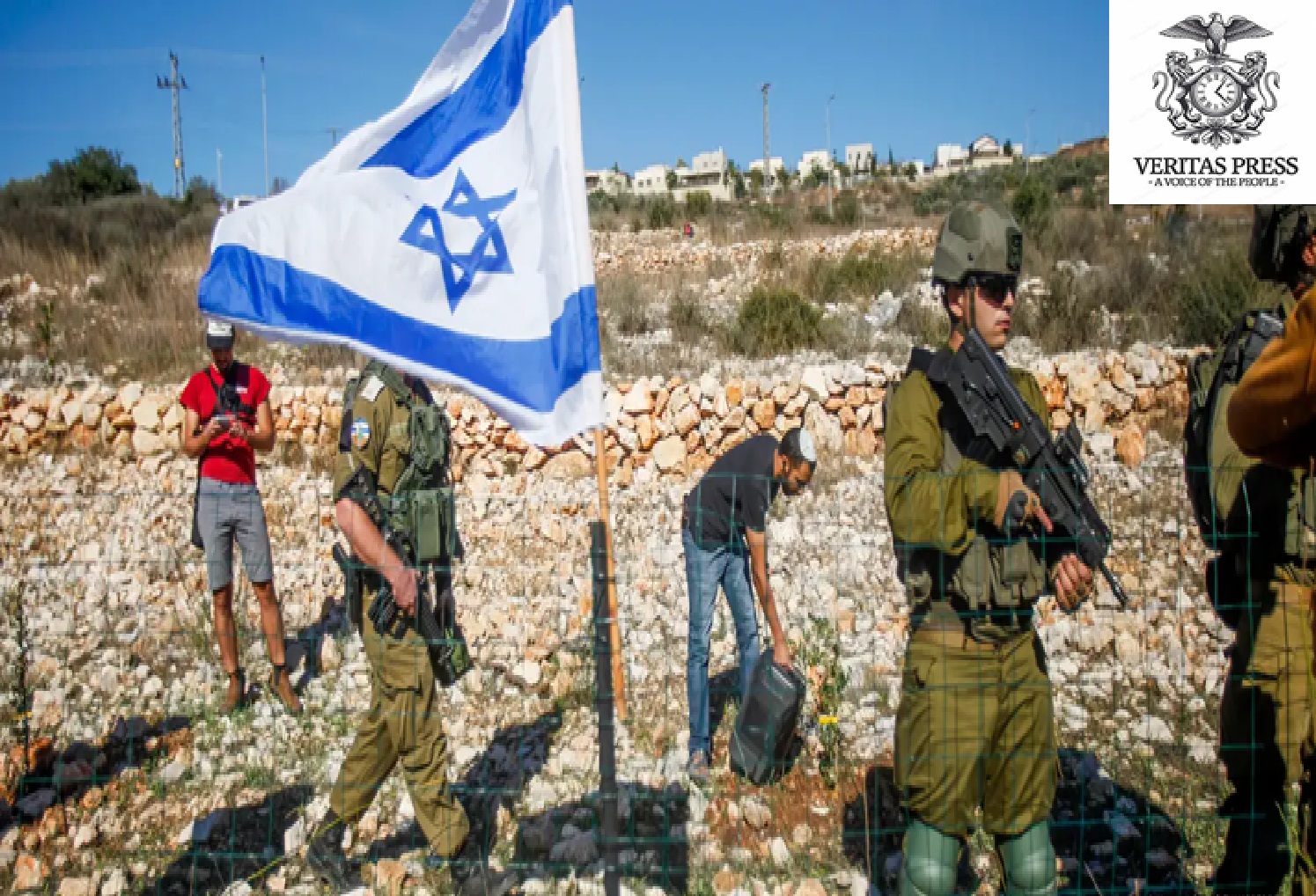
WEST BANK – Israel’s latest security cabinet decisions mark what analysts describe as one of the most consequential structural transformations of the occupied West Bank in decades, shifting from incremental settlement growth toward a coordinated state project that critics say resembles formal annexation in all but name.
Through legal overhauls, expanded enforcement powers, and institutional funding for radical settler networks, the Israeli government appears to be embedding long-term sovereignty across the territory Palestinians seek for a future state.
Palestinian President Mahmoud Abbas called the measures “dangerous” and equivalent to de-facto annexation, urging intervention from Washington and the United Nations.
Peace Now, an Israeli anti-settlement watchdog, warned the policy amounts to “an aggressive land grab” that grants Israel sweeping authority even in Palestinian-administered areas.
From Outposts To Institutions:
The newly approved policies, promoted by far-right Finance Minister Bezalel Smotrich, include lifting restrictions on land sales to Israeli Jews, opening registries to facilitate acquisitions, and transferring planning powers in Hebron to Israeli authorities.
Smotrich framed the initiative as transformative. According to the Financial Times, he hailed the policy as a “fundamental shift” that would effectively end the prospect of a Palestinian state.
The language reflects a long-standing ideological project among Israel’s settler leadership: replacing temporary occupation structures with permanent governance.
Critics argue that the measures institutionalise discrimination and further entrench Israeli sovereignty over territory widely considered illegal settlements under international law.
Funding Militancy? The “Hilltop Youth” Pipeline:
Beyond legal changes, Israeli media reports reveal extensive state investment in integrating extremist settler youth, long associated with “price-tag” attacks, into formal security frameworks.
Rather than treating these networks primarily as criminal actors, the policy appears designed to transform them into state-aligned personnel.
This approach echoes earlier findings from the Sasson Report, an official Israeli investigation that concluded state bodies had secretly diverted millions to support unauthorised outposts in what it called a “blatant violation of the law.”
Today’s critics say the difference is transparency: what was once covert is becoming policy.
Ministers Encouraging Expansion:
The ideological backdrop is hardly subtle.
At a settler outpost, National Security Minister Itamar Ben-Gvir urged activists:
“We have your backs, run to the hilltops, settle the land.”
Such rhetoric has alarmed diplomats and rights groups who fear it signals political protection for territorial expansion, even amid spiralling violence.
Smotrich himself has previously drawn global outrage for calling for the Palestinian town of Huwara to be “wiped out,” a remark condemned internationally and rejected by the U.S. State Department.
For analysts, these statements are not fringe outbursts but indicators of governing doctrine.
Palestinians: “They Are Erasing Our Geography”.
Palestinian officials say the policies form part of a coherent annexation strategy.
A Palestinian Authority minister warned that a prior settlement legalisation move was “another step to erase Palestinian geography,” raising alarms about the territory’s future.
On the ground, many Palestinians describe a reality already shaped by expanding infrastructure.
Watching bulldozers carve roads around his village, council member Ashraf Samara said:
“This is to prevent the residents from reaching and using this land.”
Such testimonies reinforce a widely held Palestinian view: annexation is not a future scenario but a present condition.
Violence And The Question Of Enforcement:
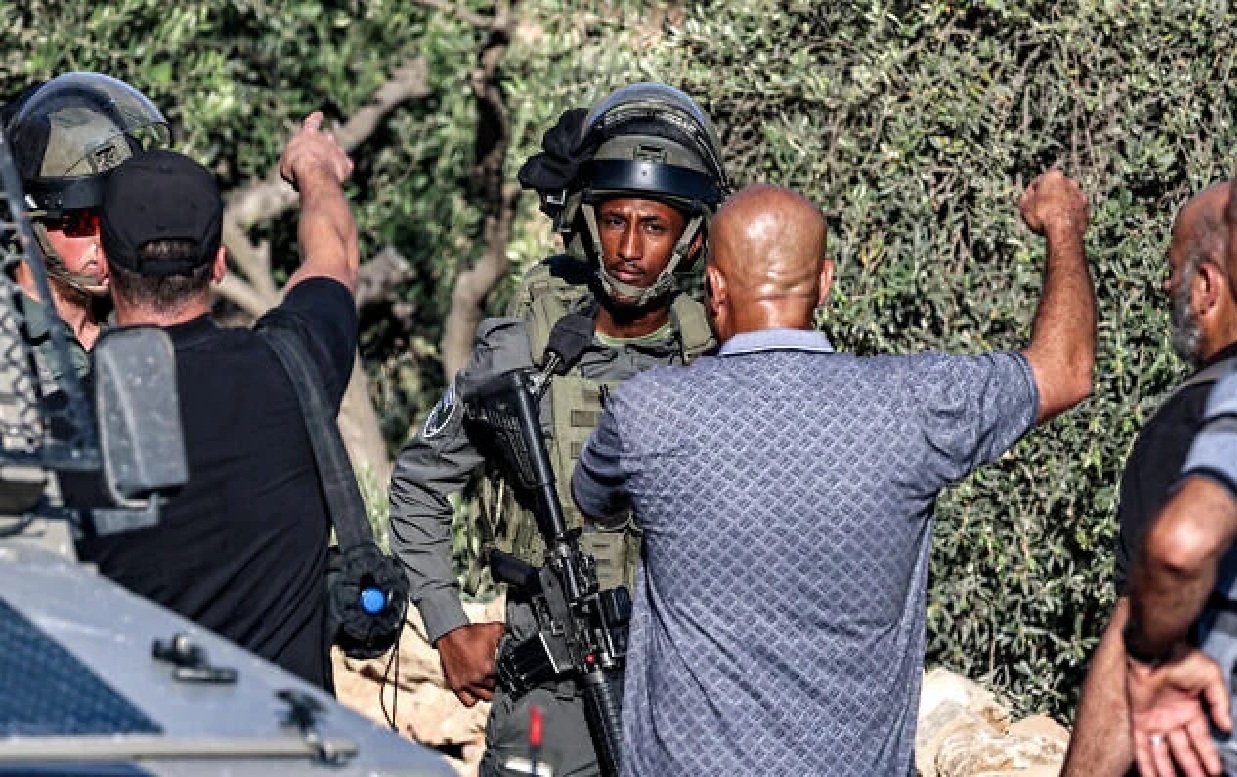
The legal overhaul comes amid persistent settler attacks.
In one West Bank village, resident Abdul Rahman recounted an assault involving dozens of settlers:
“We thought that the army would push them away, but we were surprised to see them coming in droves.”
Witnesses have also reported settlers attacking Palestinian villagers, activists and journalists with sticks and rocks during olive harvests, injuring multiple people, including Reuters staff.
Security officials have previously described some settler actions as “nationalist terrorism,” a characterisation fiercely rejected by far-right coalition members.
The tension underscores a core investigative question: Is enforcement weakening precisely as political support grows?
A Legal Earthquake In Oslo-Era Structures:
The cabinet decisions expand Israeli authority even into zones historically administered by the Palestinian Authority, including enforcement tied to environmental and archaeological claims.
The changes contravene longstanding agreements such as the Oslo Accords, analysts say, and permanently alter the territory’s administrative architecture.
Jordan, Hamas, and other regional actors have condemned the plan, while Palestinian officials warn it constitutes the “practical implementation of annexation.”
Netanyahu’s Coalition And The Annexation Horizon:
Prime Minister Benjamin Netanyahu’s government relies heavily on pro-settler parties that view the West Bank as integral to Israel based on historical and biblical claims.
The timing is geopolitically sensitive: the measures were approved days before Netanyahu was scheduled to meet U.S. President Donald Trump, who has opposed formal annexation but has not sought to curb settlement expansion.
For critics, this signals growing international tolerance, or at least limited deterrence.
Settlements And International Law:
Most world powers consider settlements illegal, and the International Court of Justice declared Israel’s occupation unlawful in a 2024 advisory opinion, a view Israel rejects.
Peace groups warn that the new policies could make a two-state solution effectively unattainable by fragmenting the territory beyond repair.
Investigative Analysis: From De Facto To Designed Reality.
Taken together, the developments suggest a strategic evolution:
The pattern has precedent. Settlement construction has surged under Israel’s far-right coalition, fragmenting Palestinian towns and cities from one another.
What distinguishes the current moment is coordination, ministries, legal frameworks, budgets, and political rhetoric aligning behind a shared territorial vision.
As one NGO assessment suggests, these are not isolated bureaucratic changes but deliberate measures “to permanently alter the status of the West Bank.”
The Strategic Endgame:
For Palestinians, the fear is existential: that the geographic basis of statehood is being dismantled piece by piece.
For the Israeli far right, the policies represent ideological fulfilment of the transformation of “Judea and Samaria” from contested land into irreversible Israeli space.
The result is a deepening asymmetry: expanding state-backed settlement power alongside shrinking Palestinian autonomy.
Whether this trajectory culminates in formal annexation may ultimately be a semantic question.
On the ground, many analysts argue, the map is already being redrawn.
Conclusion: Historical Continuum, From Imperial Promises To Territorial Engineering.
Many historians trace the structural origins of today’s territorial struggle to the early twentieth century, when European imperial diplomacy reshaped the political geography of the Middle East.
The 1916 Sykes-Picot Agreement divided former Ottoman Arab provinces into British and French spheres of influence, embedding external control into the region’s future borders. One year later, the Balfour Declaration committed Britain to supporting a “national home for the Jewish people” in Palestine, a pledge critics say was made without the consent of the Arab population that formed the overwhelming majority at the time.
Scholars emphasise that Zionist land acquisition began decades before Israel’s establishment, largely through legal purchases. Yet these transactions often displaced Palestinian tenant farmers, planting the seeds of a land conflict that has never fully subsided.
Palestinian historians and activists often describe this period as the beginning of a structural project of demographic transformation, one that evolved over decades from land purchases into territorial consolidation.
What distinguishes the current era, analysts argue, is the degree of state coordination behind settlement expansion.
“This is no longer a question of isolated ideological communities,” said one regional conflict researcher. “It increasingly resembles a territorial project backed by legal systems, infrastructure, and state protection.”
Palestinian officials and human rights organisations frequently describe settler activity as part of a long-term strategy to fragment Palestinian territorial continuity, through home demolitions, agricultural restrictions, land seizures, and the expansion of outposts that later evolve into recognised settlements.
Some activists go further, characterising violent settler networks as functioning within a permissive environment that enables displacement and property destruction.
“Settler attacks are not random,” a Palestinian community organiser told regional media. “They create fear, push families off their land, and then the outposts follow.”
Israeli governments have consistently rejected accusations of deliberate displacement, framing settlements instead as security buffers or expressions of historic and religious connection to the land.
But rhetoric from senior ministers has sharpened international concern.
Finance Minister Bezalel Smotrich has openly argued that expanding settlements helps prevent the creation of a Palestinian state. National Security Minister Itamar Ben-Gvir has urged supporters to “run to the hilltops” and expand Jewish presence, statements critics interpret as a political endorsement of irreversible territorial change.
For many analysts, such messaging is not merely ideological; it signals strategic intent.
Designing Irreversibility:
A growing body of policy experts now warns that the cumulative effect of settlements, bypass roads, military zones, and administrative fragmentation is steadily eliminating the geographic foundation required for a viable Palestinian state.
In other words, the issue may no longer be whether the two-state solution is failing, but whether it is being structurally dismantled.
“The map is being redrawn in ways that make partition increasingly impossible,” said a veteran Middle East analyst. “At a certain point, you don’t need to formally abandon the two-state solution, you physically prevent it from ever emerging.”
International observers have echoed similar concerns for years, warning that expanding settlement blocs divide Palestinian territory into disconnected enclaves while placing strategic land corridors under Israeli control.
From this perspective, settlement growth is not simply about housing, it is about permanence.
Critics argue that the strategy operates through incremental facts on the ground:
establish outposts
legalize them
connect them with infrastructure
extend civilian law
normalize Israeli administration
By the time diplomacy reacts, the territorial reality has already hardened.
Some settlers openly acknowledge this logic.
“We are here to ensure this land remains part of Israel forever,” one settler leader told local media, a view celebrated within parts of Israel’s political right but seen by Palestinians as confirmation that negotiations are being overtaken by unilateral geography.
For Palestinian families watching orchards uprooted or demolition orders arrive, the process is experienced less as abstract geopolitics and more as an immediate existential threat.
“They are erasing the possibility of our future state,” said a farmer whose land sits near an expanding settlement corridor.
Beyond Occupation, Toward A One-State Reality:
The deeper investigative concern now emerging among scholars is that the conflict may be drifting away from the long-promised model of partition toward a far more volatile configuration: a single territory under uneven systems of rights and governance.
If the territorial basis for Palestinian sovereignty disappears, experts warn, the international community may eventually face a stark reframing of the conflict, from a dispute over borders to a struggle over political equality.
That transition carries profound risks.
Two-state diplomacy has historically functioned as the central organising principle of peace efforts, regional normalisation, and Western Middle East policy. Its collapse would not simply mark a failed negotiation framework, it could trigger a generational recalibration of the conflict itself.
Several analysts now argue that the expansion trajectory appears designed to permanently foreclose the possibility of partition.
“Irreversibility is the strategy,” said one geopolitical scholar. “Once the land is fragmented enough, the two-state solution doesn’t collapse dramatically; it simply becomes unworkable.”
Hollow Concern, The Limits Of International Response:
Although international actors routinely voice alarm over settlement expansion, critics increasingly describe these responses as distant and ineffective.
Condemnations are issued. Statements are drafted. Yet enforcement remains elusive.
Human rights organisations argue that the persistent failure to uphold international law has created a permissive diplomatic environment, one further complicated by regional normalisation agreements that have reshaped geopolitical incentives.
“Concern without consequence is not deterrence,” noted one international law expert. “It risks signalling that violations can continue without meaningful cost.”
History suggests that prolonged ambiguity often hardens into political reality.
Investigative Closing Insight:
Seen across a century, from imperial agreements to modern cabinet decisions, the trajectory suggests less a series of disconnected policies than an evolving territorial doctrine.
Whether interpreted as security policy, ideological fulfilment, or strategic annexation without declaration, the direction of travel is becoming harder to ignore.
The critical question now confronting diplomats and analysts is no longer abstract:
If settlement expansion is rendering a Palestinian state geographically impossible, is the two-state solution quietly being buried, not through a single announcement, but through deliberate, cumulative design?
As bulldozers reshape hillsides and legislation reshapes authority, a stark possibility emerges:
By the time the world agrees on what to call it, annexation may no longer be a future scenario, but an accomplished fact.
And history may ultimately record that the end of partition was not declared at a negotiating table, but engineered, hilltop by hilltop.
Kamran Faqir is a volunteer investigative journalist and writer committed to exposing hidden truths and amplifying underreported stories. Driven by social justice, he brings sharp insight and fearless truth-telling to independent journalism. NUJ registered.
SEATTLE, TEHRAN — The U.S. Department of Homeland Security (DHS) will allow Iran’s national football team to enter the country 48 hours before their critical World Cup match against Egypt on Friday, a modest concession in a tournament where Team Melli’s travel conditions have sparked claims of oppression and competitive disadvantage.