




ISLAMABAD — The smell of burnt fabric and explosive residue still lingered inside the prayer hall as volunteers moved silently between rows of bloodstained carpets. Shoes lay scattered near the entrance, abandoned in panic, while shards of glass crunched underfoot.
“It felt like the sky collapsed,” said Abbas Haider, a survivor who had been standing near the doorway moments before the blast. “There was gunfire first, then a flash… and suddenly people were on the ground. I still hear the screams.”
The suicide bombing at an imambargah in Islamabad’s Tarlai area, which killed between 31 and 36 worshippers and injured more than 160, according to varying official counts, has jolted Pakistan’s sense of urban security and revived fears that militant networks are once again probing major cities once thought relatively insulated from large-scale attacks.
Within hours, investigators began tracing what officials now describe as a transnational militant pipeline stretching beyond Pakistan’s borders.
Mastermind And Facilitators Arrested In Overnight Raids:
Security forces arrested the alleged mastermind, identified as an Afghan national linked to the banned militant group Daesh, along with four facilitators during intelligence-based operations in Peshawar and Nowshera.
The raids escalated into a gun battle that left an assistant sub-inspector dead and several personnel wounded, underscoring the operational risks still facing counterterror units.
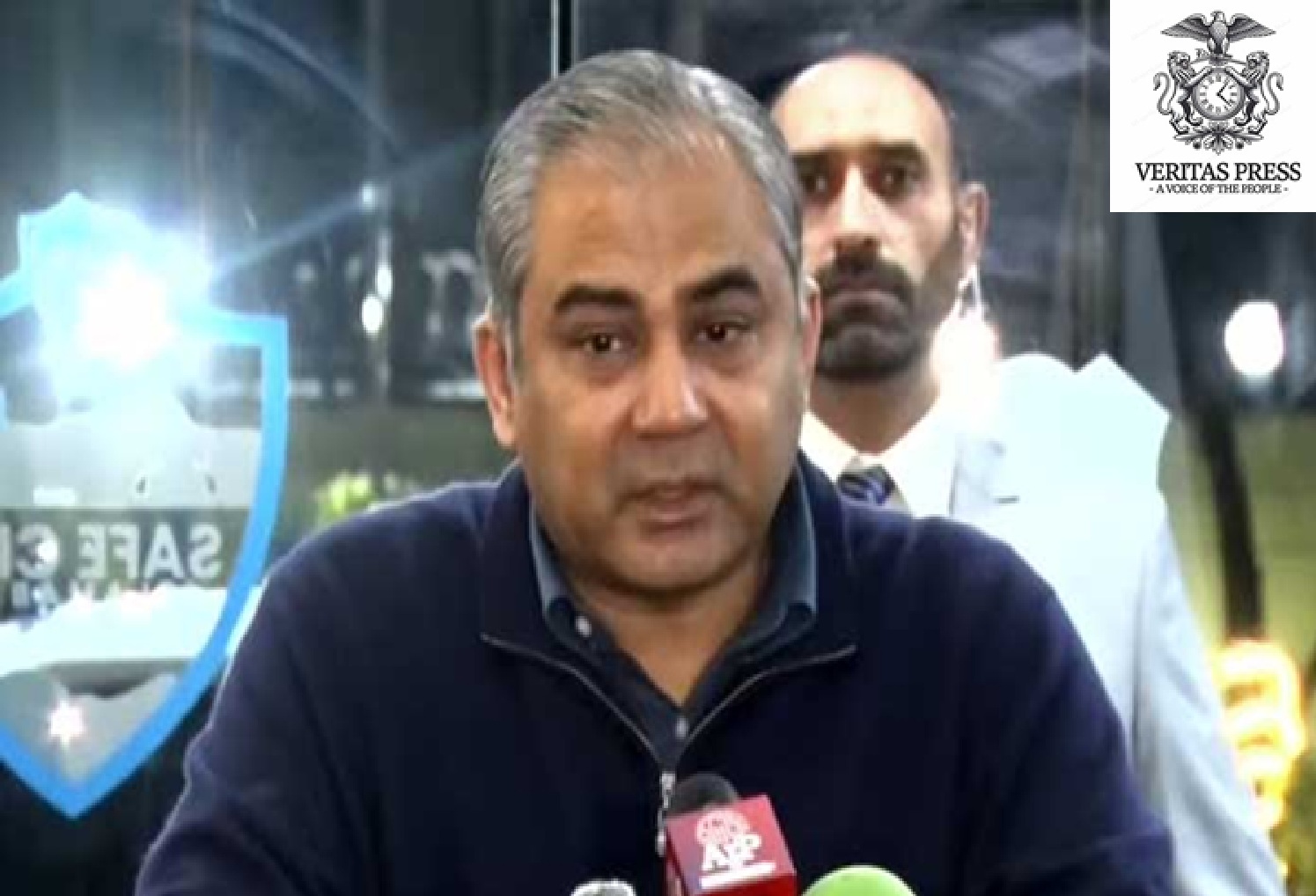
“All those linked to this attack, including the mastermind, were apprehended around 3 am,” Interior Minister Mohsin Naqvi said, praising coordination between the Counter-Terrorism Department, KP police, and intelligence agencies.
Officials say the attacker:
- received training and indoctrination in Afghanistan
- was transported across borders through a facilitation network
- opened fire before detonating explosives to maximise casualties
“We now have people in custody who have provided complete details of how the attacker was transported, trained, and sent back,” Naqvi stated.
The bombing is the deadliest attack in Islamabad since the 2008 Marriott Hotel truck blast, marking a symbolic escalation in militant ambition.
Human Cost Amid Strategic Calculus:
Survivors like Abbas Haider and volunteers on the scene describe chaos, panic, and heartbreak as emergency responders worked through shattered glass and scattered debris. Hospitals in Islamabad reported overcrowded emergency wards, with medics attending over 170 wounded. Families of the deceased wept openly, while religious scholars formed human chains to demonstrate national unity against sectarian violence.
“This was a holy place,” said one volunteer, Mohammad Iqbal. “They were here to pray. It was not politics. It was pure hate.”
India Accused, Historical Patterns Revisited:
Naqvi directly accused India of financing and directing militant groups operating from Afghan soil. “Let me be very clear: India is funding them. India is giving them their targets. India is planning every step,” he said, alleging foreign funding flowing “directly in dollars.”
While India has not publicly responded, Pakistan has historically cited cross-border intelligence interference. Notable examples include the case of Kulbhushan Jadhav, an Indian national sentenced to death by a Pakistani military court for alleged espionage and links to terrorism, which India has consistently rejected. Investigative reporting also alleges RAW involvement in targeted operations inside Pakistan, highlighting the long-running shadow conflict between Islamabad and New Delhi.
“South Asia is increasingly defined by deniable force, proxy actors, targeted killings, cyber operations, and intelligence competition,” said a regional security scholar. “The objective is strategic pressure without triggering conventional war.”
Afghanistan: The Unsettled Battlespace.
Naqvi stressed that planning, training, and indoctrination of the attacker occurred in Afghanistan, where 21 terrorist organisations currently operate, including Daesh and TTP-linked networks. Pakistan, he warned, acts as a “defensive wall” against spillover violence, a barrier whose weakening could have regional consequences.
The presence of abandoned U.S.-supplied weapons and the enduring operational space in Afghanistan amplify the threat, giving militant actors advanced capabilities that exceed local security capacities. Analysts say Afghanistan functions as a strategic multiplier, allowing proxy conflicts to regenerate and expand rapidly across borders.
Nuclear Context And The Stability–Instability Paradox:
What makes South Asia uniquely dangerous is that the region’s rivalry unfolds under a nuclear umbrella. India and Pakistan possess 300–350 nuclear warheads with delivery systems capable of striking across borders in minutes.
Paradoxically, nuclear deterrence encourages low-intensity conflict, a phenomenon known as the stability–instability paradox:
- Nuclear weapons deter full-scale war
- Conventional confrontation is therefore minimised
- Competing states increasingly turn to covert operations, proxies, and militancy
“Both sides understand the red lines,” said a security analyst. “So competition shifts into the grey zone, intelligence activity, proxies, cyber operations. It is confrontation calibrated for deniability.”
The Islamabad attack illustrates the danger of miscalculation: a single mass-casualty strike could compress decision timelines and spark retaliation before conclusive attribution.
Intelligence Doctrine And Shadow Networks:
Modern intelligence operations increasingly favour modular, deniable structures:
- locally recruited facilitators
- criminal intermediaries
- financial cutouts
- compartmentalised operational cells
This is precisely what Islamabad alleges was exploited in Friday’s bombing, reinforcing the plausible architecture doctrine, networks that allow states to exert pressure while obscuring direct involvement.
Proxy Conflict And Historical Cycles:
The current wave of attacks is part of a decades-long pattern:
- 1980s–1990s: Kashmir insurgency fuels proxy competition
- Early 2000s: Major terror attacks nearly trigger war
- Post-2010: Security operations push militants toward small, mobile cells
- Post-2021: Afghan withdrawal generates a revival of militant safe havens
Analysts describe this as a managed hostility, punctuated by crises but rarely allowing full escalation.
Soft Targets And Psychological Impact:
Officials note militants are increasingly targeting civilian sites and religious centres, rather than fortified installations. Friday’s bombing was aimed at maximum psychological and symbolic impact, an attack on faith, trust, and communal security.
“Urban psychological impact is far greater than tactical damage,” said a senior Pakistani security official.
National Mourning And Political Resolve:
Federal Information Minister Attaullah Tarar condemned the attack as “cowardly and despicable,” promising justice for facilitators and support for victims. Religious scholars from multiple schools of thought formed human chains in solidarity, signalling national unity against sectarian violence.
Deputy Prime Minister Ishaq Dar met with Iran’s ambassador to reaffirm Pakistan’s commitment to regional counterterror cooperation.
Security Reset In Islamabad:
Authorities are reviewing the capital’s defensive architecture:
- Reinforcement of 93 entry points
- Expansion of smart-surveillance systems
- Recruitment of 6,000 additional police officers
Naqvi also warned of militant exploitation of social media platforms, saying alternative measures may be adopted if online networks remain operational.
The Strategic Warning Beneath The Tragedy:
Pakistan plans to raise the attack at international forums, framing it as evidence of transnational terrorism and hybrid warfare.
“We will continue fighting this war,” Naqvi said.
“Even if they increase their budget tenfold, it will have no impact. The world needs to observe the damage. If this violence spreads elsewhere, others will have to decide what to do.”
Analysts argue the Islamabad bombing demonstrates the emergence of a persistent low-intensity, hybrid conflict across South Asia, where:
- proxy actors, covert intelligence operations, and digital influence campaigns operate beneath the threshold of open war
- Nuclear weapons provide strategic deterrence but push confrontation into ambiguous, deniable channels.
- Afghanistan functions as a staging ground, amplifying threats across borders.
No declarations.
No front lines.
No formal war.
Yet for civilians inside a shattered prayer hall, the distinction is meaningless.
As rescue workers cleared the last stretchers from the imambargah courtyard, one elderly man whispered prayers:
“They were just here to worship. Tell me, what kind of war is this?”
GENEVA — A United Nations fact-finding mission has concluded there are “reasonable grounds to believe”
Iran’s GDP is projected to contract by 5.4 to 6.1% in 2026, its worst performance
The Trump administration is preparing a $2.8 billion weapons package for Israel containing 40,000 2,000-pound

Film alleges mass civilian deaths are routinely built into military decisions amid Israel’s genocidal war
The Israeli rights group says violence, displacement, economic strangulation, and settlement expansion form part of

Houthi forces have captured the historic Red Sea port of Mocha and are advancing on
London’s historic sanctions against Israeli settlements mark a watershed moment in UK foreign policy, but
With 95% of Gaza’s population now wholly dependent on aid and more than 90% stripped
India calls for Kashmir and Ladakh to appear only on its official map after a
ISLAMABAD – In the high-stakes political theatre of Pakistan, the battleground has shifted from the