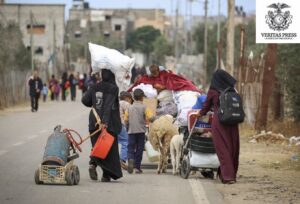





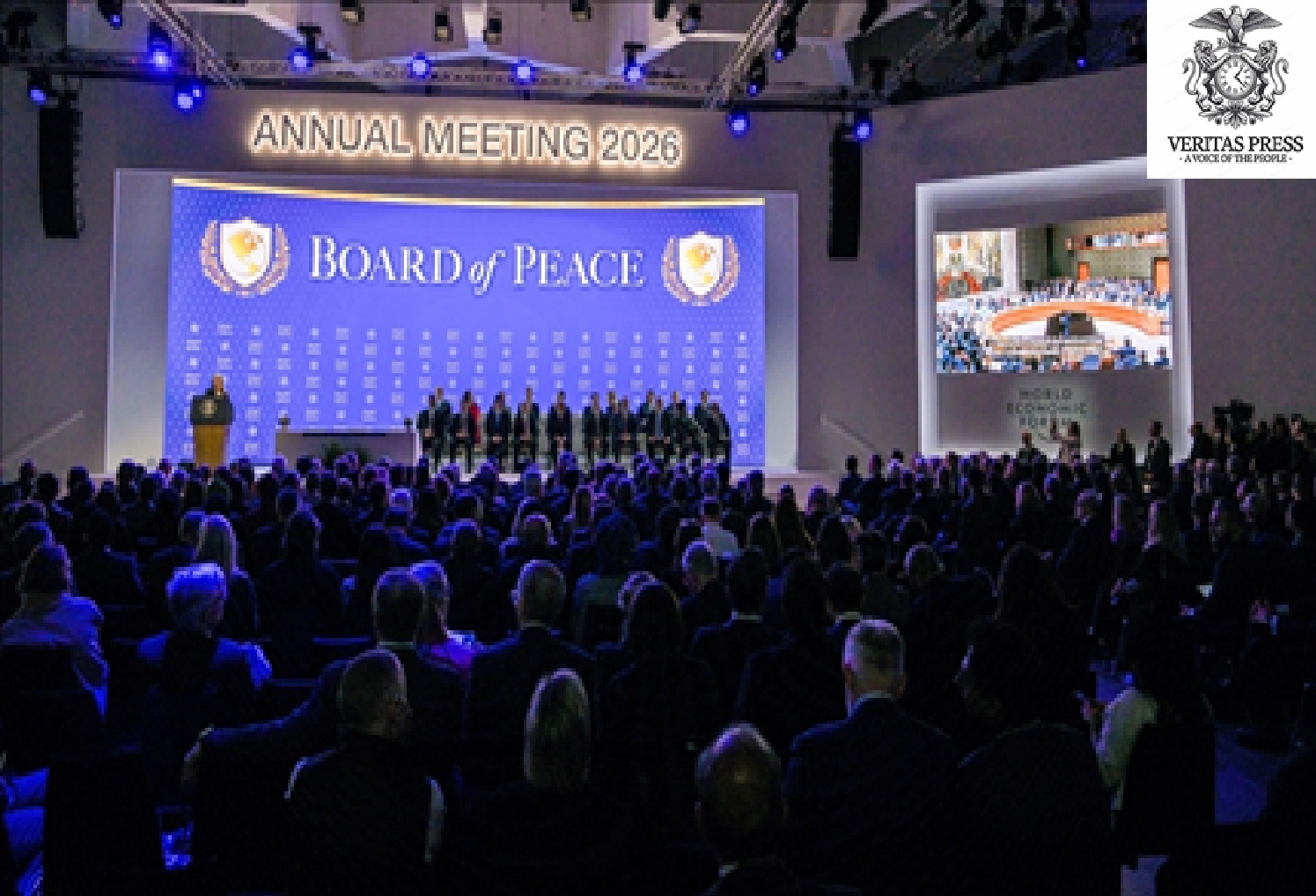

As the United States prepares to convene a leadership summit to design Gaza’s political future, Israeli forces continue to kill Palestinians across the enclave, raising profound legal, moral, and geopolitical questions about whether the international community is planning reconstruction while potential war crimes remain ongoing.
The proposed Gaza “Board of Peace,” expected to hold its first meeting on February 19 in Washington, is being promoted as a mechanism to oversee ceasefire implementation and rebuild the territory after one of the most destructive military campaigns of the 21st century. But to critics, the initiative risks becoming something far more troubling: a governance architecture drafted by global powers while the population it will govern remains under fire.
For legal scholars and human rights advocates, the contradiction is stark.
“You cannot build peace on an active crime scene,” said a Geneva-based international law expert. “Reconstruction frameworks that proceed without accountability risk normalising unlawful force.”
Ceasefire Or Controlled Violence?
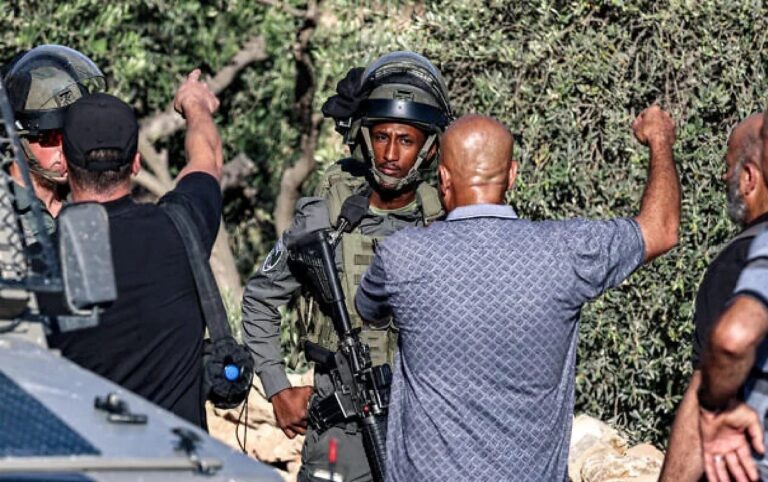
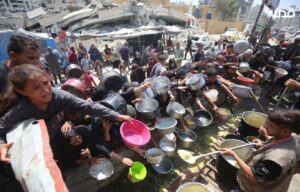
Despite the formal launch of the ceasefire’s second phase, Israeli artillery, naval fire, and aerial attacks have continued to strike multiple areas across Gaza.
Since the truce took effect in October 2025, at least 576 Palestinians have been killed and over 1,500 wounded, according to Gaza’s Health Ministry. The overall death toll has surpassed 72,000, with more than 171,000 injured, figures many demographers believe are conservative, given thousands remain missing beneath rubble.
UN officials have issued repeated warnings.
“The laws of war apply regardless of ceasefire negotiations,” a UN humanitarian spokesperson said. “Civilians must never be treated as expendable.”
Human rights organisations have gone further, suggesting the pattern may carry legal consequences.
Euro-Med Human Rights Monitor has argued that continued strikes during a declared truce could amount to collective punishment, prohibited under Article 33 of the Fourth Geneva Convention.
Amnesty International and Human Rights Watch have previously warned that repeated attacks on densely populated civilian areas may constitute indiscriminate or disproportionate force, both prosecutable under international criminal law.
Israel rejects such allegations. Military spokesperson Rear Adm. Daniel Hagari has insisted operations target “terror infrastructure,” maintaining that Israel is exercising its right to self-defence.
But critics say the persistence of large-scale attacks during diplomatic negotiations suggests a strategy aimed less at de-escalation than at preserving operational dominance.
“Ceasefires are increasingly being used as instruments of strategic pause rather than genuine peace,” said a Middle East security analyst. “They mitigate diplomatic pressure while allowing military realities to continue shaping political outcomes.”
The Shadow Of The Hague:
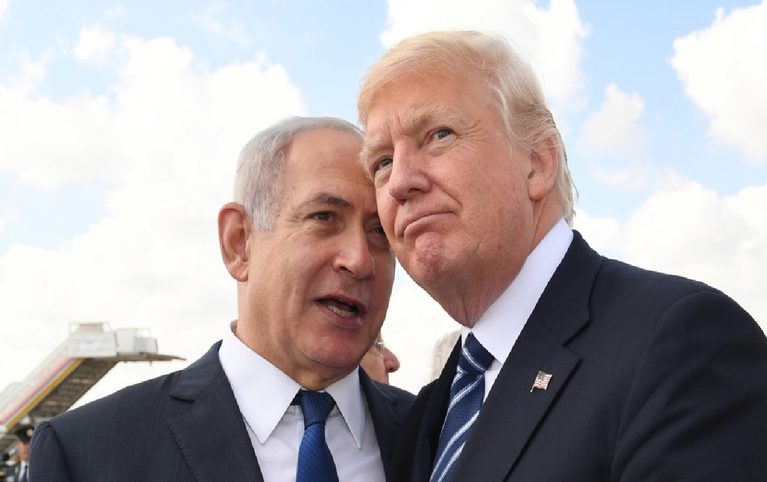
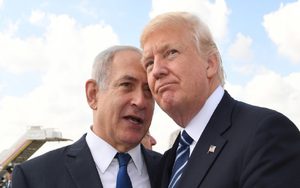
Any attempt to design Gaza’s postwar governance is already overshadowed by the International Criminal Court arrest warrant for Israeli Prime Minister Benjamin Netanyahu, issued over alleged war crimes.
Netanyahu is scheduled to meet President Donald Trump at the White House on February 18, one day before the Board of Peace summit, a diplomatic choreography that some jurists say risks signalling political insulation from accountability.
“When states engage normally with individuals facing international arrest warrants, it raises serious questions about the credibility of the rules-based order,” said a former war crimes prosecutor.
The meeting could become a defining test of whether geopolitical alliances now outweigh the enforcement of international law.
A Trusteeship In All But Name?
Formally launched at the World Economic Forum in Davos, the Board of Peace has been granted sweeping authority: governance oversight, reconstruction coordination, and even participation in a proposed disarmament process inside Gaza.
Its charter describes a permanent international mechanism for managing conflict zones, language that has triggered alarm among diplomats and post-colonial scholars.
“This bears uncomfortable resemblance to historical trusteeship systems,” said a professor of international relations. “The difference is that modern trusteeships are rarely called by their name.”
Under classical international law, trusteeship arrangements were meant to guide territories toward self-rule. Critics argue that imposing external administration without democratic Palestinian consent could violate the modern legal principle of self-determination, enshrined in the UN Charter.
Palestinian civil society groups have been blunt.
“Any political structure that bypasses Palestinian representation risks becoming an instrument of control rather than a pathway to liberation,” the Palestinian Centre for Human Rights said.
A European diplomat familiar with the proposal warned privately that externally imposed governance “rarely produces legitimacy, and without legitimacy, stability is an illusion.”
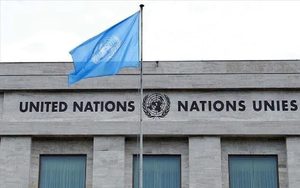
Parallel Diplomacy, And The Sidelining Of The UN:
Several governments have reportedly declined participation, citing provisions that grant the US president veto and appointment powers, an arrangement critics say could create a parallel system to the United Nations.
For decades, Washington and Tel Aviv have clashed with UN bodies over investigations into Israeli conduct. The emergence of a US-led governance framework is therefore being interpreted by some analysts as an attempt to re-engineer the diplomatic arena itself.
“Who writes the rules matters,” said one multilateral affairs expert. “If institutions perceived as too critical are bypassed, the result may be a more compliant, but less legitimate, order.”
Former UK Prime Minister Tony Blair, long associated with Western interventionism following the Iraq War, is reportedly among those offered roles, a detail that has amplified accusations that Gaza risks becoming the site of another externally managed political experiment.
The Geopolitics Beneath The Plan:
Beyond legal debates, the Board of Peace reflects a deeper geopolitical recalibration.
For Washington, stabilising Gaza could help contain regional volatility, safeguard maritime trade routes, and advance normalisation between Israel and Arab states, a strategic priority that has persisted despite the war.
Some Gulf governments face a delicate balancing act: supporting reconstruction while responding to domestic anger over Palestinian suffering.
“The Arab world cannot be seen underwriting a system that denies Palestinians sovereignty,” said a regional political analyst. “That is politically combustible.”
The timing of the summit, coinciding with Ramadan, has already sparked quiet diplomatic discomfort.
Meanwhile, Trump and allies, including Jared Kushner, have repeatedly spoken of transforming Gaza into a hub for technology and investment, a language critics say risks reducing a political catastrophe to a development project.
“Economic visions cannot substitute for political rights,” warned an international development expert. “Prosperity without freedom is rarely sustainable.”
Reconstruction, Or The Business Of War Recovery?
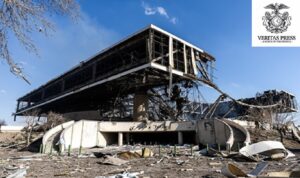
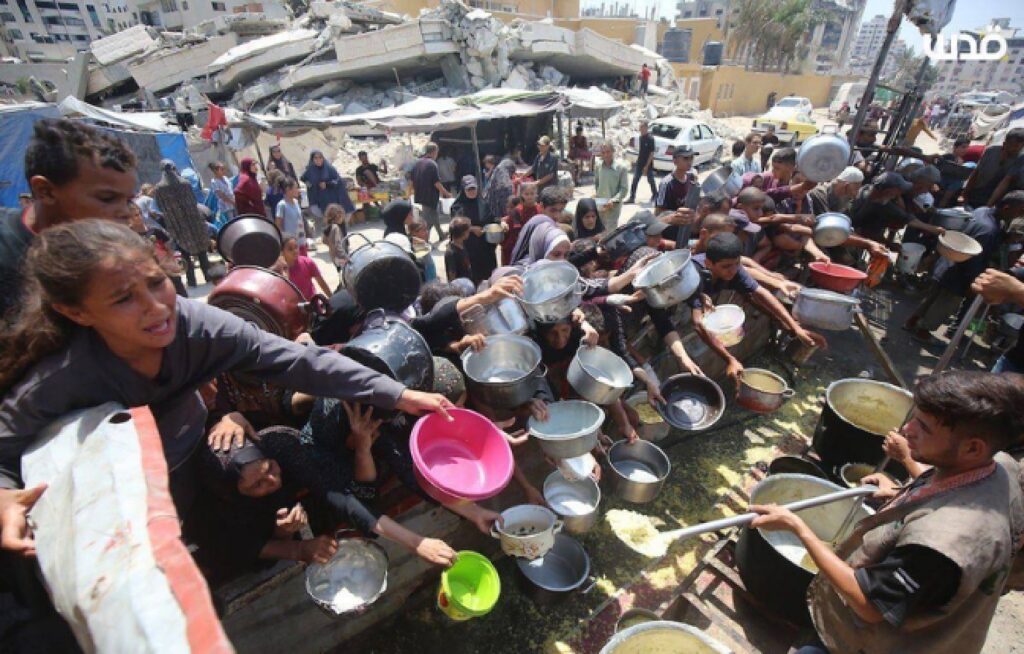
The United Nations estimates rebuilding Gaza will cost roughly $70 billion, after about 90 percent of its infrastructure was damaged or destroyed.
Yet aid agencies caution that reconstruction without structural change, including lifting the blockade and preventing recurring offensives, could trap Gaza in a cycle sometimes described by scholars as “destroy and rebuild.”
“Reconstruction must not become the humanitarian face of perpetual war,” the Norwegian Refugee Council has warned in similar contexts.
Investigative journalists have also highlighted the economic stakes: massive rebuilding contracts often flow through international corporations, raising fears that Gaza could evolve into a donor-managed economy rather than a self-governing polity.
Governance Without The Governed?
Perhaps the most destabilising feature of the proposal is the perception that Gaza’s future is being negotiated largely without Palestinians themselves.
The Palestinian technocratic government remains mostly outside the territory, unable to establish authority amid continuing insecurity.
“This is the paradox,” said a conflict-resolution researcher. “The people with the least control over Gaza may ultimately have the most say in designing its political system.”
Peace, Or Managed Containment?
The emerging picture suggests more than a diplomatic initiative; it points to a potential restructuring of how conflict zones are governed in the 21st century.
If the Board of Peace succeeds, it could redefine postwar administration globally. If it fails, it risks entrenching a model in which powerful states design political futures while accountability for wartime conduct remains unresolved.
For many legal scholars, the sequence matters.
“Accountability is not an obstacle to peace,” said a transitional justice expert. “Historically, it is often the foundation of durable peace.”
As Washington finalises its summit and world leaders prepare to discuss Gaza’s reconstruction, one reality remains unavoidable:
The future of Gaza is being drafted in conference rooms even as the territory continues to bleed.
Until the violence stops, and until the question of legal responsibility is addressed, critics warn that what is being built may not be peace at all, but a more sophisticated architecture of control rising quietly over the ruins.
In Conclusion: A Peace Built On Impunity Or A Blueprint For Regional Dominance?
If the February summit proceeds as planned, it may mark one of the most consequential experiments in modern conflict governance, not because it promises peace, but because it could redefine how wars are politically concluded without ever being legally resolved.
At the centre of the emerging framework lies a question diplomats have largely avoided: Can a durable political order emerge while allegations of war crimes remain unaddressed and civilians continue to die?
For a growing number of analysts, the concern runs even deeper. Some argue that the war on Gaza cannot be understood in isolation, but rather as part of a broader US-Israeli strategic doctrine aimed at reshaping the Middle East, weakening regional actors, fragmenting political resistance, and consolidating long-term geopolitical influence.
“This is not simply a war; it is a reordering,” said a political economist specialising in conflict zones. “Large-scale destruction creates political vacuums, and vacuums invite external design, often aligned with security priorities and global power competition.”
Great Power Rivalry Beneath The War:
Strategists increasingly view the Middle East as one of the central arenas of 21st-century great power competition, where US influence is being challenged by expanding Chinese economic penetration and deepening Russian security ties.
In that context, some geopolitical analysts argue Washington and its allies are intent on preventing rivals from gaining strategic footholds across critical maritime routes, energy corridors, and infrastructure networks.
“The Middle East is no longer just about regional politics, it is embedded in global rivalry,” said a senior fellow at a transatlantic policy institute. “From ports to digital infrastructure, influence here carries worldwide consequences.”
China has dramatically expanded its Belt and Road investments across the region, brokering high-profile diplomatic agreements and positioning itself as an alternative economic partner. Russia, meanwhile, has entrenched military relationships in Syria and cultivated security partnerships with several regional governments.
Against that backdrop, critics argue Western-backed security doctrines and alliance systems function partly as containment mechanisms, designed to shield US and Israeli strategic interests from Chinese and Russian encroachment.
“Power projection today often operates through layered security frameworks, regional doctrines, and partner forces,” noted a defence analyst. “Direct confrontation is rare; influence is more often negotiated through aligned militaries and proxy dynamics.”
Some scholars warn that prolonged conflicts can unintentionally, or deliberately, create environments where external powers justify deeper strategic involvement.
“A destabilised region invites guardians,” said an international relations professor. “The question is whether stabilisation efforts genuinely empower local populations or primarily secure external interests.”
US and Israeli officials strongly reject interpretations that frame military operations through the lens of great power rivalry, maintaining that their actions are driven by counterterrorism and national defence rather than geopolitical containment.
Still, the persistence of this analysis reflects a widening perception among parts of the global policy community that Gaza sits at the intersection of regional war and systemic international competition.
As Sun Tzu warned, “The supreme art of war is to subdue the enemy without fighting,” a maxim reflected in the US-Israeli approach in Gaza, where governance summits, reconstruction plans, and strategic diplomacy operate alongside continued military attacks to consolidate control, manage populations, and secure regional dominance.
War, Reconstruction, And The Political Economy Of Devastation:
Critics also point to the economic afterlife of conflict. The United Nations estimates Gaza’s reconstruction will cost roughly $70 billion, placing it among the largest rebuilding efforts in modern history.
“War economies do not end when the fighting stops; they mutate,” warned an international development scholar. “Destruction frequently opens markets, from private security to engineering and logistics, dominated by global firms.”
While there is no single coordinated corporate agenda, researchers caution that reconstruction contracts often concentrate influence in the hands of external actors capable of financing and executing megaprojects.
“The danger,” one political economist observed, “is that recovery becomes structurally tied to outside capital, narrowing the space for genuine political independence.”
Law Deferred, Power Consolidated:
International law was designed to prevent precisely this sequence, where reconstruction overtakes accountability and geopolitical expediency eclipses justice. Yet the current trajectory suggests a reversal: stabilise first, rebuild second, and postpone legal responsibility indefinitely.
“Postwar architecture that ignores violations does more than bury the past, it licenses the future,” said a transitional justice expert. “When destruction carries no consequence, it risks becoming an instrument of policy rather than a tragedy to be avoided.”
If powerful states oversee rebuilding while insulating allies from prosecution, scholars warn the precedent could quietly erode the enforcement of humanitarian law worldwide.
Administered Autonomy, Without Sovereignty:
For Palestinians, the implications are immediate. A governance structure designed externally, enforced through security arrangements, and financed by foreign donors risks producing what some analysts describe as “administered autonomy”, daily life managed without meaningful political agency.
“There is a difference between rebuilding a society and supervising it,” said a post-colonial policy researcher. “Populations rarely accept futures written without them, and when they are forced to, instability tends to follow.”
Such warnings have revived comparisons to historical trusteeship models, systems that promised order yet often delayed genuine self-rule.
Diplomacy Amid The Ruins:
Perhaps the most striking feature of this moment is the simultaneity itself: donor conferences being planned while rescue workers still search collapsed neighbourhoods; investment visions emerging as the legality of the war is debated in international courts.
To many observers, it evokes a familiar pattern, violence reshapes facts on the ground, and diplomacy later consolidates them.
Even some Western officials privately acknowledge the structural risk: stability imposed without legitimacy rarely endures.
The deeper question, then, is not simply who will govern Gaza, but what kind of international order is being constructed through that decision.
Is the Board of Peace a genuine attempt to end a catastrophic war, or the early architecture of a regional system shaped as much by great power rivalry as by peacemaking?
Because if reconstruction proceeds without justice, governance takes shape without consent, and strategic competition quietly frames the outcome, the result may not be peace at all.
It may instead signal the normalisation of a world in which wars are not fully ended, only reorganised within broader contests for influence.
And in Gaza, where the dead are still being counted, and the skyline remains fractured, the warning from critics is growing sharper:
That what is being assembled could become more than a postwar plan. It could mark the consolidation of a geopolitical order, one built not only to manage a shattered territory, but to secure strategic advantage in an era of intensifying global rivalry.
GENEVA — A United Nations fact-finding mission has concluded there are “reasonable grounds to believe”
Iran’s GDP is projected to contract by 5.4 to 6.1% in 2026, its worst performance
The Trump administration is preparing a $2.8 billion weapons package for Israel containing 40,000 2,000-pound

Film alleges mass civilian deaths are routinely built into military decisions amid Israel’s genocidal war
The Israeli rights group says violence, displacement, economic strangulation, and settlement expansion form part of

Houthi forces have captured the historic Red Sea port of Mocha and are advancing on
London’s historic sanctions against Israeli settlements mark a watershed moment in UK foreign policy, but
With 95% of Gaza’s population now wholly dependent on aid and more than 90% stripped
India calls for Kashmir and Ladakh to appear only on its official map after a
ISLAMABAD – In the high-stakes political theatre of Pakistan, the battleground has shifted from the