




Title: Israel Resumes Massacres Across Gaza, Shattering Ceasefire.
Press Release: Veritas Press C.I.C.
Author: Kamran Faqir
Article Date Published: 31 Jan 2026 at 13:15 GMT
Category: Middle East | Palestine-Gaza-West Bank-OPT | Israel Resumes Massacres Across Gaza, Shattering Ceasefire
Source(s): Veritas Press C.I.C. | Multi News Agencies
Website: www.veritaspress.co.uk

Business Ads


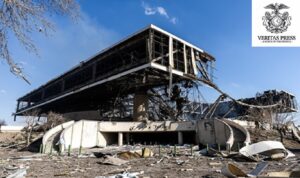
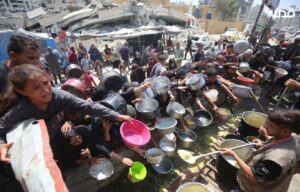
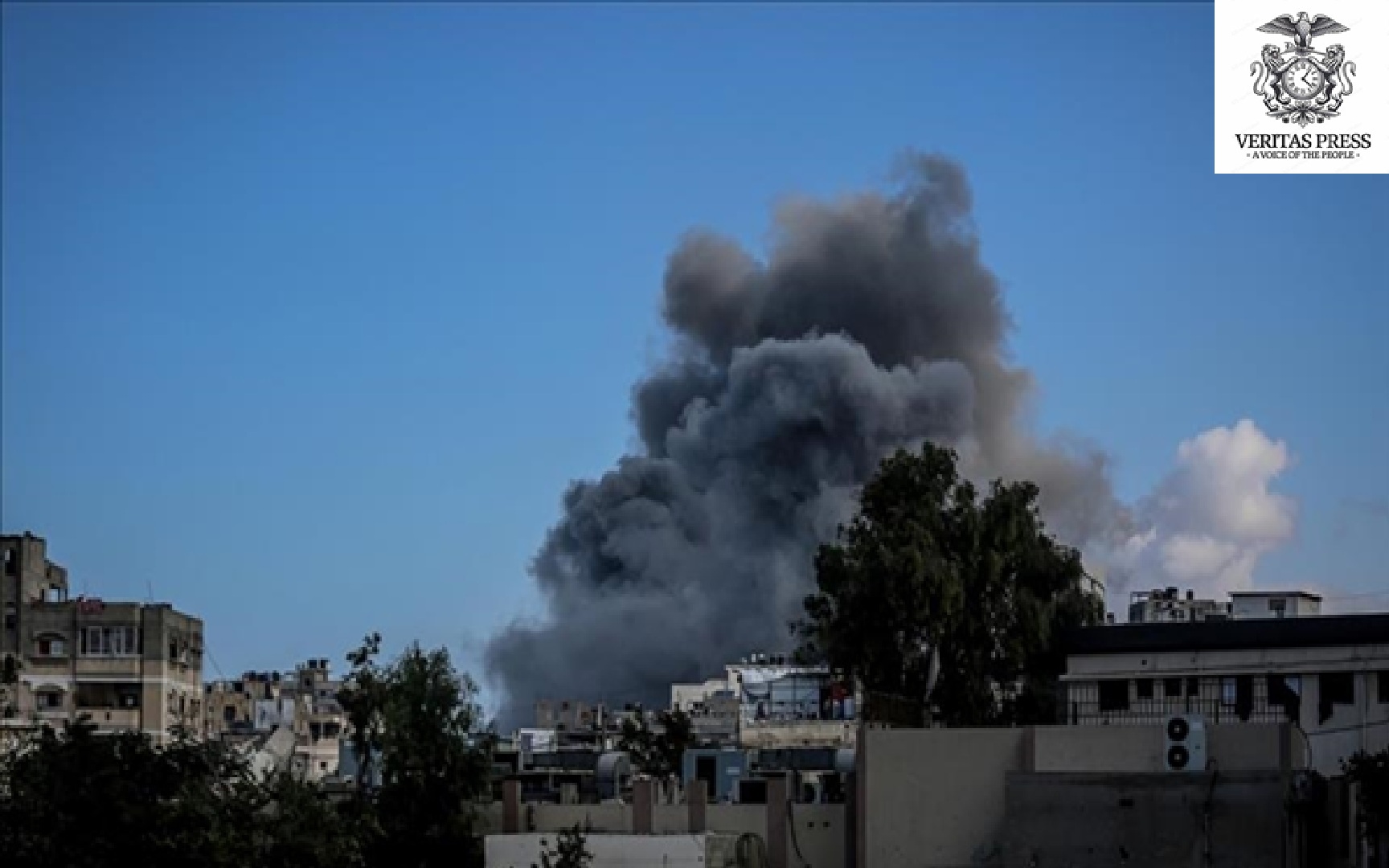
Israeli forces have resumed large-scale attacks across the Gaza Strip, killing and wounding scores of Palestinians, including children, despite a ceasefire agreement that came into effect in early October. Airstrikes, artillery fire, and live ammunition have hit residential neighbourhoods, displacement camps, police facilities, and public infrastructure, deepening an already catastrophic humanitarian crisis and raising fresh questions about the viability of the truce.
Dozens Killed Since Dawn:
The Gaza Health Ministry said at least 29 Palestinians were killed and dozens were wounded since dawn on Saturday as Israeli airstrikes and gunfire intensified across the enclave. Most of the fatalities were reported in Gaza City, where densely populated residential areas came under sustained bombardment.
Hospitals described Saturday’s attacks as among the deadliest since the ceasefire was announced. Medical officials confirmed that children and women were among the dead, with many victims pulled from the rubble of homes and tents sheltering displaced families.
Israel Claims ‘Serious Events’ Behind Renewed Assault:
Israeli media quoted army statements saying a new wave of aerial attacks was ongoing, with the military alleging that “serious events” over the past two days constituted violations of the ceasefire agreement. No evidence was publicly presented to substantiate these claims.
Palestinian officials rejected the accusations, describing Israel’s actions as unilateral escalations aimed at reshaping the terms of the ceasefire by force. Residents across Gaza reported a sudden surge in drone activity, low-flying helicopters, and warplanes overnight, fueling widespread panic.
Residential Areas And Displacement Sites Targeted:
According to medical and eyewitness accounts, Israeli warplanes struck a residential apartment in the Rimal neighbourhood of western Gaza City, killing five Palestinians, including three children and two women. Another strike on an apartment in the Al‑Tuffah neighbourhood east of the city injured several civilians.
In southern Gaza, an Israeli airstrike hit a tent sheltering displaced families in the Asdaa area northwest of Khan Younis, killing seven members of one family, a man, his three sons, and three young grandchildren, according to paramedics at Nasser Hospital.
Israeli aircraft also bombed the “Ghaith” displacement camp near Al‑Ribat College in the Al‑Mawasi area of Khan Younis. The strike came after an evacuation warning and was preceded by a drone attack, according to local reporters. Palestinian Civil Defence crews said the bombing sparked fires that tore through tents, destroying shelters housing hundreds of displaced people.
Police Facilities And Civil Infrastructure Hit:
In a further escalation, Israeli warplanes targeted the Sheikh Radwan police station west of Gaza City. Gaza’s Interior Ministry said the strike killed and wounded police officers and administrative staff. Medical sources reported at least seven fatalities, while eyewitnesses said search and rescue operations were ongoing amid fears that others remained trapped under the rubble.
Israeli strikes also hit Al‑Jalaa Street in northwest Gaza City and areas east of the Bureij refugee camp in central Gaza. Although no casualties were immediately reported in some of these locations, residents described heavy destruction and renewed displacement.
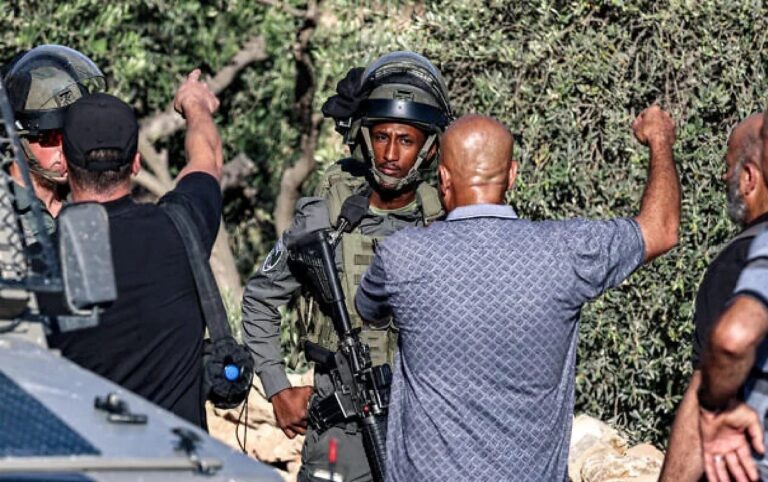
Separately, Israeli gunfire killed a Palestinian and injured others in Jabaliya, northern Gaza, outside Israeli deployment zones, an incident that local ambulance services described as part of a pattern of live‑fire attacks against civilians.
‘Gaza Holocaust’ Accusations:
The Popular Front for the Liberation of Palestine (PFLP) accused Israel of continuing what it described as a “Gaza holocaust,” arguing that the renewed massacres are intended to sabotage the ceasefire and paralyse Gaza’s national administrative committee.
In a statement, the PFLP said Israeli forces deliberately targeted inhabited homes, residential apartments, and tents sheltering displaced people, calling the attacks war crimes carried out with U.S. and Western backing. The group urged the international community to move beyond statements of concern and take concrete action, including isolating Israel diplomatically and prosecuting its leaders in international courts.
Mounting Ceasefire Violations:
According to Gaza’s Government Media Office, Israeli forces have killed at least 524 Palestinians and wounded more than 1,360 others since the ceasefire took effect, committing over 1,450 documented violations. Officials say the majority of those killed since October have been civilians, with women and children accounting for around 60 percent of the fatalities.
The media office also reported that Israeli forces have arrested at least 50 Palestinians since the agreement came into force, detaining many from residential areas far from the designated “yellow line.”
Aid Restrictions And Humanitarian Collapse:
Despite provisions in the ceasefire agreement, Israel has allowed the entry of only 28,927 aid, commercial, and fuel trucks out of the 66,600 required, reflecting a compliance rate of just 43 percent, according to Gaza officials.
Health authorities warn that Gaza’s medical system has collapsed under the combined weight of mass casualties, fuel shortages, and continued attacks on civilian infrastructure. The director‑general of Gaza’s Health Ministry said hospitals are operating far beyond capacity, with critical shortages of medicines, electricity, and surgical supplies.
Voices From The Ground:
Residents across Gaza described a pervasive sense of fear and confusion. “People don’t understand what is happening or why the escalation is happening,” said one Gaza City resident. “There was cautious optimism about the Rafah crossing reopening, but everyone knows the Israeli military controls everything and dictates daily life.”
Mohammed al‑Helou, a resident of Gaza City, recounted a deadly overnight strike that killed children in his neighbourhood. “There was no prior warning,” he said. “At 4:00 a.m., the apartment was hit while the family and children were inside. Surveillance drones and helicopters were flying dangerously low. There is nothing children could ever do to deserve being killed.”
A War Without End:
Israel’s assault on Gaza, launched in October 2023, has now killed more than 100,000 Palestinians and wounded over 377,000, according to Palestinian health authorities. Nearly 90 percent of Gaza’s civilian infrastructure, including hospitals, schools, and entire residential neighbourhoods, has been destroyed. The United Nations estimates that reconstruction will cost around $70 billion.
Saturday’s attacks marked one of the highest daily death tolls since the ceasefire began, underscoring growing fears that the truce exists largely on paper. But beyond the immediate toll, Palestinian officials, human rights organisations, and analysts warn that the renewed massacres cannot be understood in isolation: they form part of a broader system of ethnic cleansing, forced displacement, and systematic erasure unfolding in Gaza.
From Ceasefire Violations To Ethnic Cleansing:
Human rights groups argue that Israel’s continued aerial bombardment, live-fire attacks, and targeting of displacement sites amount to a coercive environment deliberately designed to make Gaza unlivable. According to legal analysts, this pattern aligns with the international legal definition of forcible transfer, a grave breach of the Fourth Geneva Convention.
Amnesty International has previously warned that Israel’s policies in Gaza, combining mass killing, destruction of civilian infrastructure, and severe restrictions on aid, constitute collective punishment and may amount to crimes against humanity. Human Rights Watch has similarly documented how repeated displacement orders, followed by bombardment of so-called “safe zones,” strip civilians of any meaningful refuge.
“People are being pushed from one place to another under fire, without food, water, or shelter, only to be bombed again,” said a Gaza-based humanitarian worker. “This is not incidental damage. It is the engineering of displacement.”
Targeted Killing And The Normalisation Of Aerial Assassination:
Doctors and emergency responders report a consistent pattern in Israeli attacks: precision airstrikes and sniper fire that target homes, tents, schools, hospitals, police facilities, and civilian gatherings, often without warning. Gaza’s Civil Defence spokesperson said victims frequently suffer fatal wounds to the head, neck, and upper body, suggesting deliberate lethal intent rather than battlefield crossfire.
International legal scholars note that the repeated use of airpower in densely populated areas, despite clear knowledge of civilian presence, points to a policy of normalised targeted killing, carried out under the guise of military necessity. “What we are seeing is the routinisation of assassination by airstrike,” said one regional security analyst. “Entire families are erased in seconds, then folded into casualty statistics.”
Humanitarian Crisis As A Weapon Of War:
The ongoing assault is compounded by severe aid restrictions that humanitarian organisations describe as weaponised deprivation. Oxfam and Doctors Without Borders (MSF) have warned that Israel’s failure to allow sufficient aid trucks, fuel, and medical supplies has transformed Gaza into a zone of engineered famine and medical collapse.
An MSF doctor working in southern Gaza said hospitals are treating mass casualty events while lacking anaesthetics, antibiotics, and electricity. “We are forced to choose who lives and who dies,” the doctor said. “Children bleed to death because we cannot operate fast enough. This is not a health system, it is a triage of despair.”
UN agencies have repeatedly stressed that starvation, disease, and untreated injuries are now killing Palestinians beyond the bombs, particularly children and the elderly.
Systematic And Generational Erasure:
Palestinian academics and genocide scholars argue that Israel’s actions in Gaza reflect a process of systematic and generational erasure. Entire family lines have been wiped out in single strikes. Schools, universities, archives, mosques, and cultural centres have been destroyed, severing the transmission of knowledge, memory, and identity.
According to Palestinian health authorities, thousands of children have been killed since October 2023, with many more orphaned, maimed, or permanently traumatised. “This is not only the killing of individuals,” said a Palestinian sociologist. “It is the destruction of Gaza’s future, its children, its educators, its doctors, its capacity to reproduce life and society.”
Genocide Allegations And International Complicity:
South Africa’s genocide case at the International Court of Justice has placed Israel’s conduct in Gaza under unprecedented legal scrutiny. The ICJ’s provisional measures, ordering Israel to prevent genocidal acts and ensure humanitarian access, stand in stark contrast to the reality on the ground, where killings and aid restrictions continue.
Legal experts note that genocide does not require the immediate extermination of a population, but includes acts committed with the intent to destroy, in whole or in part, a national, ethnic, racial, or religious group. “The combination of mass killing, forced displacement, starvation, and destruction of civilian life is precisely what international law warns against,” said a former UN human rights investigator.
Meanwhile, Palestinian factions and civil society groups accuse the United States and European governments of enabling these crimes through military support, diplomatic cover, and the normalisation of Israel’s actions as self-defence. “This war is being laundered through language,” said a media analyst. “Words like ‘security’ and ‘retaliation’ are used to obscure what is, in effect, a colonial project of removal.”
A Colonial War Normalised:
For Palestinians in Gaza, the ceasefire has not ended the war; it has merely rebranded it. Bombardment, displacement, and deprivation have become the daily routine of life under siege. Analysts warn that the international community’s failure to enforce accountability risks entrenching a dangerous precedent: that mass civilian killing and ethnic cleansing can be normalised when carried out by a powerful state.
As Israeli attacks continue and Gaza’s population is pushed ever closer to physical and social collapse, Palestinians say the objective is clear. “They are not just killing us,” said one displaced resident. “They are trying to erase us, from the land, from memory, from the future.”
Gaza And The Genocide Framework: Actus Reus And Mens Rea.
Legal scholars and genocide experts increasingly argue that Israel’s conduct in Gaza meets the genocide framework under the 1948 Genocide Convention, both in terms of actus reus (the prohibited acts) and mens rea (the specific intent to destroy, in whole or in part, a protected group).
Actus Reus: Prohibited Acts On A Mass Scale:
The acts prohibited under Article II of the Genocide Convention include killing members of the group, causing serious bodily or mental harm, deliberately inflicting conditions of life calculated to bring about physical destruction, imposing measures intended to prevent births, and forcibly transferring children.
In Gaza, multiple prohibited acts are occurring simultaneously:
• Killing members of the group: Tens of thousands of Palestinians have been killed through aerial bombardment, artillery fire, sniper attacks, and drone strikes, with children and women constituting a large proportion of the dead.
• Serious bodily and mental harm: Doctors report mass amputations without anaesthesia, widespread burn injuries, brain trauma, and severe psychological harm, particularly among children exposed to repeated bombardment and family loss.
• Conditions of life calculated to destroy the group: The systematic destruction of hospitals, water systems, bakeries, agricultural land, and electricity infrastructure, combined with tight restrictions on food, fuel, and medicine, has created what UN officials describe as a man-made humanitarian catastrophe.
Doctors Without Borders has warned that Gaza is experiencing “the collapse of the conditions necessary for life itself,” while UNICEF has described the strip as “a graveyard for children.”
• Forcible transfer and displacement: Repeated evacuation orders followed by attacks on designated displacement zones have forced Palestinians into perpetual movement under fire, a pattern human rights organisations identify as forcible transfer.
Mens Rea: Evidence Of Genocidal Intent.
Genocidal intent (mens rea) may be inferred from authoritative statements by political and military leaders, alongside patterns of conduct and the foreseeability of destructive outcomes. In Gaza, senior Israeli officials have repeatedly issued public statements that dehumanise Palestinians, erase civilian distinction, and articulate policies of collective destruction, statements genocide scholars cite as direct evidence of intent when read together with actions on the ground.
Yoav Gallant (Israeli Defence Minister) announced at the outset of the assault: “We are fighting human animals and we are acting accordingly,” while ordering a “complete siege” on Gaza—“no electricity, no food, no water, no fuel.” Legal experts note that describing a protected group in animalistic terms while imposing conditions incompatible with life constitutes classic evidence of genocidal intent.
Isaac Herzog (Israeli President) publicly erased civilian distinction, stating: “It is an entire nation out there that is responsible. This rhetoric about civilians not being aware, not involved, it’s absolutely not true.” International law scholars argue that collective attribution of guilt to an entire population directly undermines civilian immunity and signals intent to punish and destroy the group as such.
Bezalel Smotrich (Israeli Finance Minister) repeatedly framed Gaza’s destruction as necessary and desirable, declaring that “Gaza should be totally destroyed,” and later asserting that allowing humanitarian aid was a “grave mistake” because Palestinians are “the enemy.” Such statements, analysts say, demonstrate intent to sustain destructive conditions rather than mitigate civilian harm.
Itamar Ben-Gvir (National Security Minister) has openly called for the “encouragement of emigration” of Palestinians from Gaza and opposed ceasefires or aid delivery, advocating policies that human rights groups identify as ethnic cleansing through forced displacement.
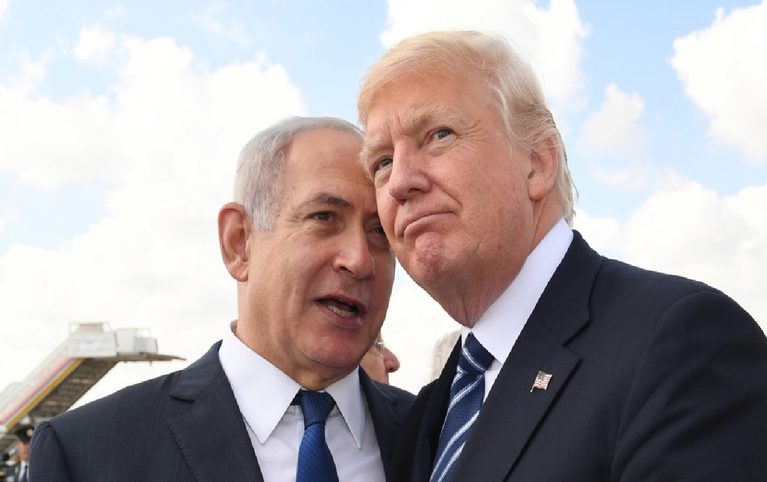
Benjamin Netanyahu (Israeli Prime Minister) has repeatedly invoked the biblical command to destroy “Amalek” when referring to the war on Gaza, language genocide scholars describe as exterminatory, drawing on a scriptural narrative historically associated with total annihilation. Netanyahu has also vowed to continue the assault regardless of civilian cost, reinforcing the inference of intent through persistence.
Former UN Special Rapporteurs and genocide experts argue that when such statements are issued by officials with command authority, and are followed by mass killing, starvation, and displacement, intent can be inferred beyond a reasonable doubt. As one international law scholar put it: “Genocide is not proven by words alone, but words that announce, justify, and normalise destruction matter profoundly when the destruction follows.”
Genocide does not require the immediate extermination of an entire population. International jurisprudence establishes that intent can be inferred from patterns of conduct, scale of destruction, and public statements by political and military leaders.
Israeli officials have repeatedly framed Gaza’s population as collectively culpable, using language that dehumanises Palestinians and erases the distinction between civilians and combatants. Statements referring to Gaza as needing to be “flattened,” “starved,” or rendered “uninhabitable” have been cited by genocide scholars as evidence of intent.
A former UN human rights rapporteur noted that “when mass killing, starvation, and displacement are pursued together and sustained over time, intent can be inferred from the inevitability of the outcome.”
The ICJ’s provisional measures, issued in response to South Africa’s genocide case, explicitly acknowledged the plausibility of genocidal acts in Gaza and ordered Israel to prevent such acts and ensure humanitarian access, orders that Palestinian officials argue have been systematically violated.
The Colonial Throughline: From Nakba To Genocidal Siege:
Palestinian historians and anti-colonial scholars situate the current assault on Gaza within a continuous colonial project dating back to the 1948 Nakba, when more than 750,000 Palestinians were forcibly expelled from their homes and over 500 villages were destroyed.
Gaza itself became a refuge for Nakba survivors, families displaced from Jaffa, Ashkelon, Beersheba, and surrounding areas, compressing a refugee population into a narrow coastal enclave. Since then, Gaza has been subjected to successive forms of control: military occupation, aerial domination, economic strangulation, and, since 2007, a comprehensive blockade.
Human rights organisations have long described the blockade as a form of collective punishment that deliberately stunts Gaza’s development, restricts movement, and renders its population dependent on humanitarian aid for survival.
The current phase, analysts argue, represents a shift from containment to elimination. “What we are witnessing is the logical endpoint of settler-colonial governance,” said one Palestinian academic. “When a population cannot be removed quietly, it is subjected to destruction.”
Entire neighbourhoods, refugee camps, and family lineages, many tracing their displacement back to 1948, have now been erased by airstrikes. This, scholars argue, constitutes generational erasure: the destruction not only of people, but of their past, present, and future on the land.
Dismantling Israel’s “Self-Defence” Claim Under International Humanitarian Law:
Israeli officials and allied governments routinely justify the assault on Gaza as an exercise of the state’s inherent right to self-defence under Article 51 of the UN Charter. However, international legal scholars, UN bodies, and human rights organisations increasingly argue that this doctrine is being misapplied, distorted, and weaponised to shield actions that violate core principles of international humanitarian law (IHL).
Occupation Nullifies The Self-Defence Claim:
Under international law, an occupying power cannot invoke self-defence against the population it occupies. Gaza, despite Israel’s 2005 redeployment, remains occupied under international law due to Israel’s effective control over airspace, territorial waters, population registry, borders, imports, exports, and movement.
The International Court of Justice affirmed this principle in its 2004 Wall Advisory Opinion, ruling that Israel cannot rely on Article 51 to justify force against Palestinians in occupied territory. Legal analysts note that Gaza’s status has not changed: Palestinians remain a protected population, and Israel’s obligations flow from occupation law, not armed conflict between sovereign states.
Proportionality And Distinction: Systematically Violated.
Even if self-defence were hypothetically applicable, IHL requires strict adherence to the principles of distinction, proportionality, and military necessity. Evidence from Gaza demonstrates systematic violations of all three.
UN investigators, journalists, and medical professionals have documented repeated strikes on homes, tents, hospitals, police stations, bakeries, water infrastructure, and schools, with foreknowledge of civilian presence. Airstrikes that annihilate entire families or ignite fires in displacement camps cannot plausibly meet proportionality tests, which prohibit attacks where civilian harm is excessive relative to anticipated military advantage.
A former UN Special Rapporteur stated that “when civilian deaths are not incidental but predictable and repeated, proportionality collapses as a legal defence.”
Collective Punishment Is Explicitly Prohibited:
The blockade of Gaza, compounded by restrictions on food, fuel, water, electricity, and medical supplies, constitutes collective punishment, explicitly prohibited under Article 33 of the Fourth Geneva Convention.
Human Rights Watch and Amnesty International have both concluded that starvation and deprivation are being used as tools of war. “You cannot starve a population and call it self-defence,” said an Amnesty legal adviser. “That is a war crime.”
Targeted Killing And The Collapse Of Civilian Immunity:
Israel’s extensive reliance on aerial targeted killings, often justified as precision strikes against militants, has eroded the legal distinction between combatants and civilians. Gaza’s dense population, combined with Israel’s choice of explosive weapons with wide-area effects, ensures foreseeable civilian death.
International law experts warn that the normalisation of assassination by airstrike in civilian areas transforms Gaza into a free-fire zone, where civilian immunity exists only in theory. As one military law scholar observed, “When the battlefield is everywhere, the law is nowhere.”
Self-Defence Cannot Justify Genocide:
Crucially, international law is unequivocal: self-defence does not excuse genocide, crimes against humanity, or grave breaches of the Geneva Conventions. The Genocide Convention imposes an absolute obligation to prevent and punish genocidal acts, regardless of security claims.
The ICJ’s provisional measures underscore this point, ordering Israel to prevent acts prohibited under the Convention and to enable humanitarian assistance. Continued mass killing and deprivation after these orders, legal analysts argue, further undermine any residual claim to lawful self-defence.
International Complicity And The Normalisation Of Genocide:
Despite mounting evidence, Israel continues to receive military, diplomatic, and financial support from Western states. Human rights advocates argue that this backing enables the continuation of prohibited acts and undermines the post-Holocaust international legal order designed to prevent genocide.
“The Genocide Convention was created precisely for moments like this,” said an international law expert. “Failure to act now does not represent neutrality; it represents complicity.”
As bombs continue to fall and Gaza’s population faces starvation, disease, and annihilation, Palestinian officials warn that history is repeating itself, not as tragedy alone, but as policy.
For Gaza’s survivors, the question is no longer whether genocide is occurring, but whether the world will choose to recognise it before there is no one left to save.
If the mass killing of children, the starvation of an entire population, the erasure of families, and the destruction of a people’s future can still be justified as “self-defence,” then what meaning do morality, international law, or “never again” have, and what does it say about the Israeli state and the governments that arm, shield, and normalise these crimes while calling themselves civilised?
GENEVA — A United Nations fact-finding mission has concluded there are “reasonable grounds to believe”
Iran’s GDP is projected to contract by 5.4 to 6.1% in 2026, its worst performance
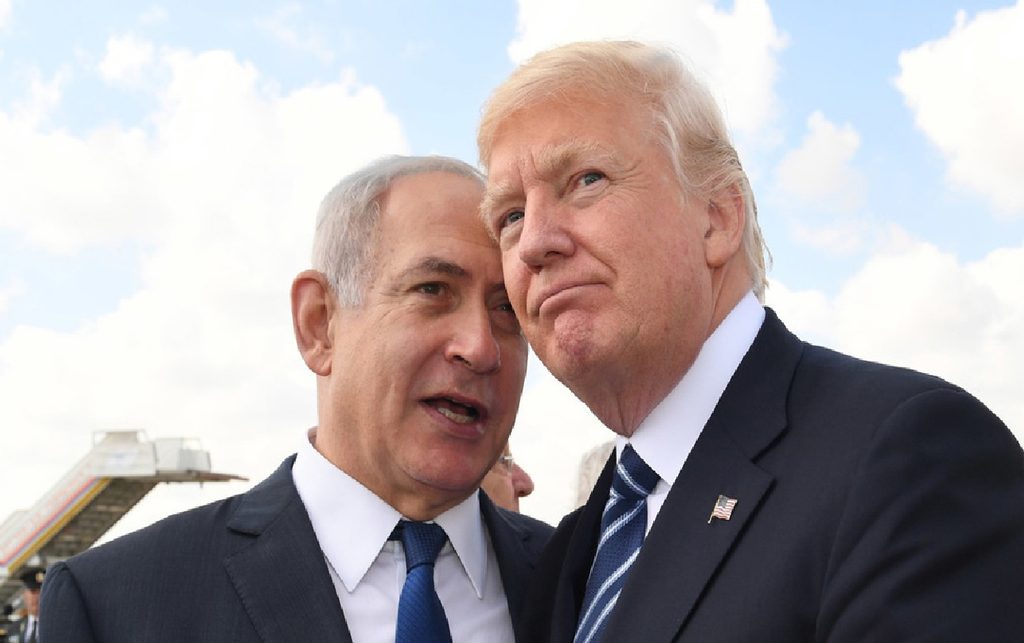
The Trump administration is preparing a $2.8 billion weapons package for Israel containing 40,000 2,000-pound

Film alleges mass civilian deaths are routinely built into military decisions amid Israel’s genocidal war
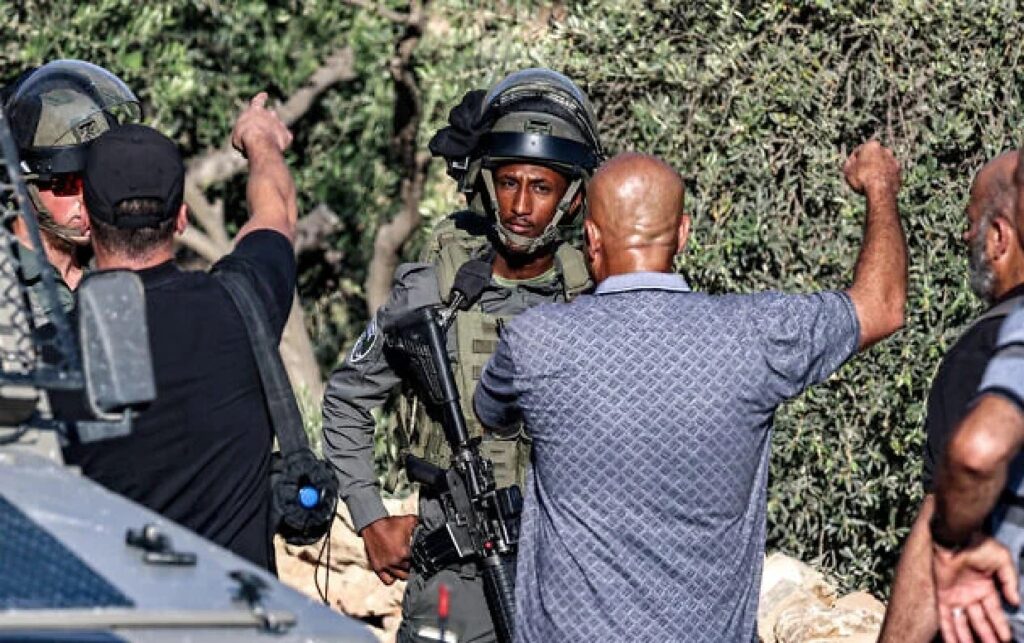
The Israeli rights group says violence, displacement, economic strangulation, and settlement expansion form part of

Houthi forces have captured the historic Red Sea port of Mocha and are advancing on

London’s historic sanctions against Israeli settlements mark a watershed moment in UK foreign policy, but
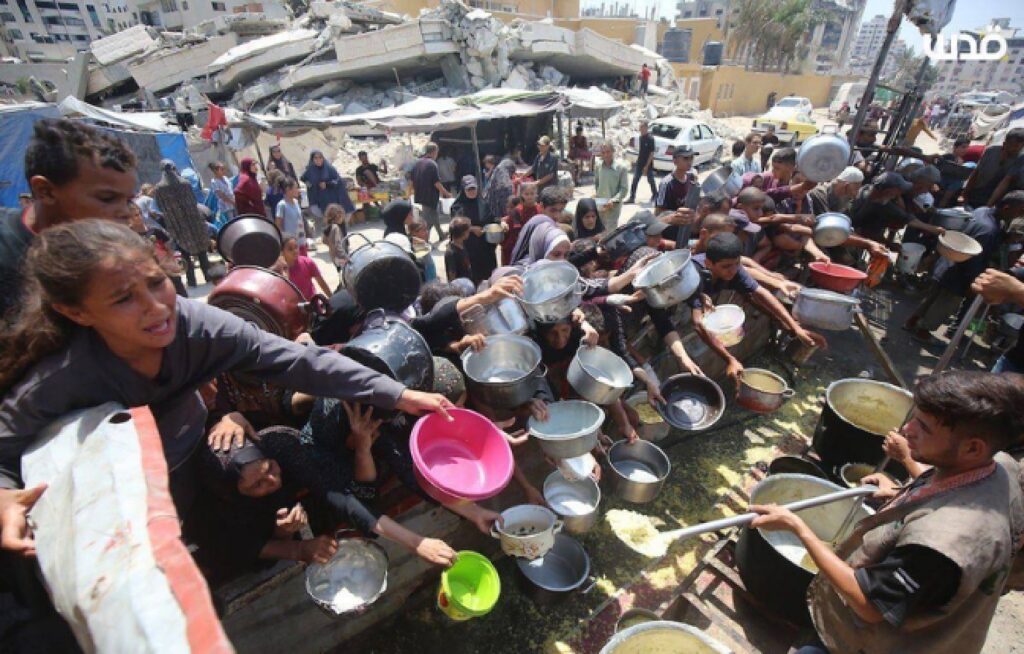
With 95% of Gaza’s population now wholly dependent on aid and more than 90% stripped