



Title: Israeli Army Storms Qalandiya And Kafr Aqab: Structural Suppression, Demolitions, And Humanitarian Crisis.
Press Release: Veritas Press C.I.C.
Author: Kamran Faqir
Article Date Published: 26 Jan 2026 at 14:25 GMT
Category: Middle East | Palestine-Gaza-West Bank-OPT | Israeli Army Storms Qalandiya And Kafr Aqab: Structural Suppression, Demolitions, And Humanitarian Crisis.
Source(s): Veritas Press C.I.C. | Multi News Agencies
Website: www.veritaspress.co.uk

Business Ads

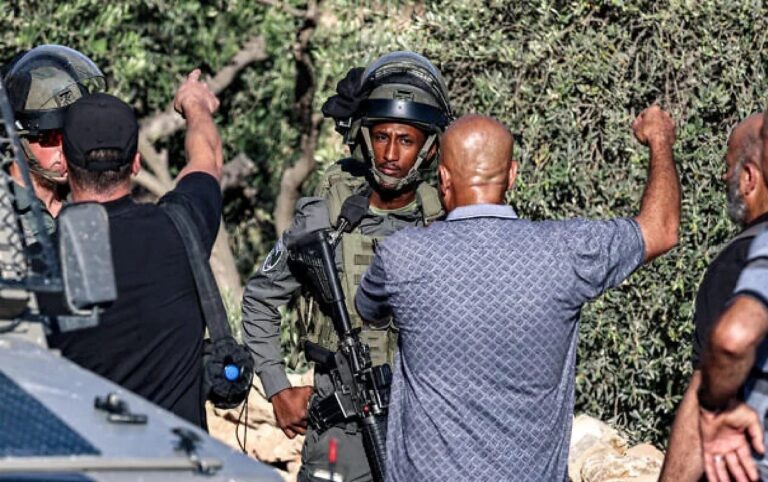
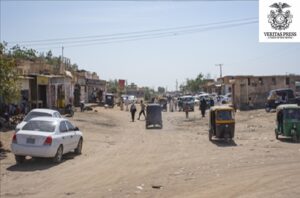
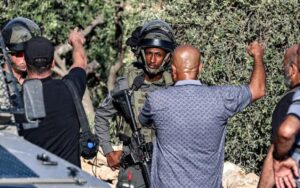
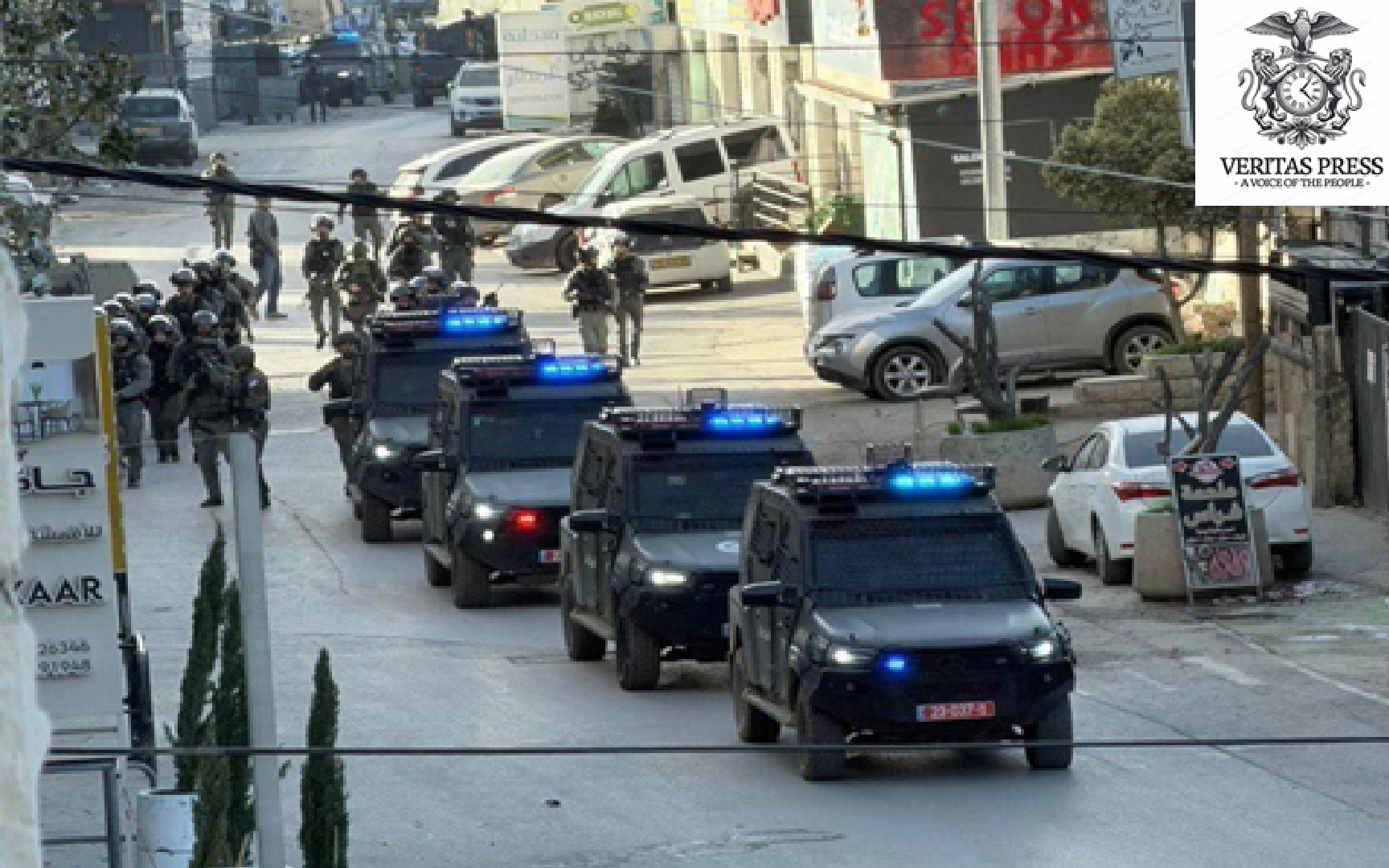
JANUARY 26, 2026 — OCCUPIED EAST JERUSALEM & WEST BANK — Early Monday, Israeli occupation forces launched a massive military operation in the Qalandiya refugee camp and the town of Kafr Aqab, just north of occupied East Jerusalem. The operation included armoured vehicles, bulldozers, rooftop snipers, forced evacuations, and large-scale demolitions, paralysing streets and creating a climate of fear across the area.
Palestinian officials and residents described the assault as part of a systematic policy aimed at imposing control, fragmenting Palestinian space, and punishing civilians. Human rights groups and UN agencies condemned the raids, emphasising violations of international humanitarian law and the Fourth Geneva Convention.
A Morning Of Siege: Local Accounts.
Residents described streets turned into militarised zones during the morning rush hour. Salim Darwish, a Qalandiya resident, told WAFA:
“The army blocked all the main roads as we were trying to leave for school, = we had no warning. Our streets became a battlefield.”
Amina Khalil, who lives near Airport Road in Kafr Aqab, described the deployment of snipers on rooftops above residential buildings:
“They didn’t just enter our streets, they made our homes their perches and watched us from above.”
The Jerusalem Governorate reported that residents were forcibly evacuated from homes and from the Popular Committee headquarters in Qalandiya, which was converted into a temporary military post.
Local teachers reported school closures due to safety concerns, with hundreds of children unable to attend classes.
Demolitions And Collective Punishment:
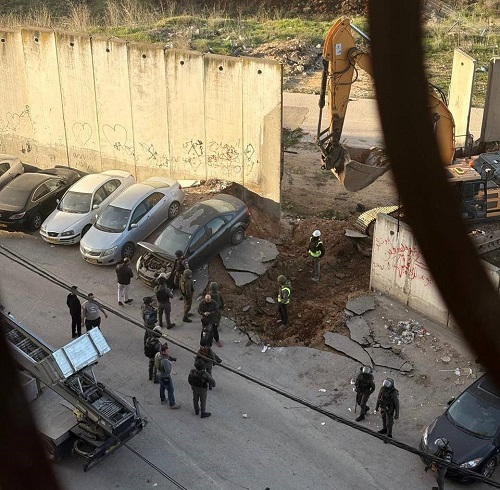
Bulldozers razed Palestinian-owned shops, street stalls, signage, and even memorials along the route from the Qalandiya checkpoint to Kafr Aqab. According to local activists, this demolition campaign is part of a deliberate effort to reshape the geography of Jerusalem’s periphery:
“These so-called unlicensed buildings have stood for decades. What we see now is not enforcement of law, but a calculated attempt to remove Palestinian presence near key routes,”
said activist Rami al-Hashimi.
Human Rights Watch has documented similar demolitions in West Bank towns as violations of international law. A 2025 HRW report, “All My Dreams Have Been Erased,” found that:
“The widespread destruction of homes and infrastructure, where no fighting is taking place, does not meet military necessity requirements and should be investigated as war crimes.”
Vehicles belonging to residents were also ticketed, damaged, or confiscated, which officials describe as collective punishment aimed at intimidating the civilian population.
Humanitarian And Organisational Impact:
The operation occurred days after Israeli forces targeted UNRWA facilities in East Jerusalem, including a vocational school, prompting condemnation from the UN Secretary-General and OHCHR:
“Attacks on education, infrastructure, and heritage sites aim to erode Palestinians’ historical ties to the land and weaken their collective identity,”
said UN Commissioner Navanethem Pillay.
UN experts further warned that dismantling humanitarian infrastructure shifts the burden of protection directly onto Israel, which, under the Fourth Geneva Convention, is obligated to ensure civilian welfare:
“If UNRWA is removed or weakened, Israel must meet its obligations directly, including education, health care, and social services.” — UN inquiry on East Jerusalem UNRWA demolitions.
Amnesty International and Al-Haq have also highlighted the systemic targeting of humanitarian actors, describing it as a deliberate attempt to isolate Palestinian communities and deepen structural vulnerability.
Legal Analysis: Occupation Obligations And Violations.
International law experts emphasise that demolitions of civilian property and displacement without military necessity are prohibited under the Fourth Geneva Convention. OHCHR spokespersons noted:
“Security forces must not use lethal force unless there is an imminent threat to their lives. We are not seeing enough investigations into these attacks.”
Dr. Lina Mustafa, a Palestinian urban policy expert at Birzeit University, contextualised today’s operation:
“This is not merely about isolated demolitions or security raids. It is a systematic apparatus of control, legal, administrative, and military, designed to fragment Palestinian space and undermine community resilience.”
The UN, Human Rights Watch, and Amnesty International have repeatedly stressed that widespread demolitions, forced evacuations, and movement restrictions constitute violations of international humanitarian and human rights law, with serious implications for accountability and potential prosecution under international law.
Wider West Bank Context:
The Qalandiya and Kafr Aqab operation is part of a broader escalation across East Jerusalem and the West Bank, which has intensified since Israel’s 2023 Gaza campaign. Recent weeks have seen:
- Arrests in Halhul, Beit Ummar, and Kobar.
- Raids in Nablus and the Balata refugee camp left multiple Palestinians injured.
- Expansion of checkpoints and roadblocks restricting civilian movement.
International media and field journalists report that these operations normalise the militarisation of civilian life, eroding access to education, commerce, and healthcare, and undermining social cohesion.
Journalistic Observations:
Al-Jazeera correspondent Thurwat Shukra described the scene:
“Journalists were prevented from covering the assault while armed soldiers moved through civilian streets. What Palestinians experience daily is being militarised and hidden from international scrutiny.”
Conclusion: Occupation By Design, Structural Erasure, Systematic Suppression, And The Normalisation Of Atrocities.
The January 26 assault on Qalandiya and Kafr Aqab reveals a strategically orchestrated machinery of occupation, where military force, administrative law, and spatial control converge to reshape Palestinian life in Jerusalem’s periphery. Bulldozers demolish homes and businesses, snipers occupy rooftops, checkpoints restrict movement, schools are shuttered, and humanitarian infrastructure is systematically targeted. This is not a series of isolated security raids, it is a deliberate, structural campaign of control and intimidation.
Human rights organisations, including Human Rights Watch, Amnesty International, and Al-Haq, have repeatedly stressed that forced evacuations, demolitions, and movement restrictions constitute collective punishment and violations of international law, including the Fourth Geneva Convention. UN experts similarly warn that these operations form a deliberate pattern of structural violence, not sporadic enforcement.
Residents describe streets, homes, and schools converted into militarised zones, obliterating the boundary between civilian life and conflict, while psychological trauma spreads among children and families. Dr. Lina Mustafa, urban policy expert, observes:
“This is an orchestrated apparatus, legal, administrative, and military, designed to fragment Palestinian space, erode community resilience, and impose facts on the ground favourable to occupation.”
Adding to this structural framework, institutions like the so-called “Board of Peace” operate as mechanisms to normalise and legitimise the occupation’s atrocities. Composed of complicit actors within international and regional institutions, the Board provides a veneer of legitimacy to actions that would otherwise be condemned as human rights violations, effectively shielding Israeli practices of displacement, demolition, and intimidation from scrutiny. As a result, systemic abuses are reframed as routine security or “peacekeeping” measures, allowing structural oppression to persist under the guise of legality and diplomacy.
The targeting of UNRWA facilities and the broader pattern of demolitions exemplify how Israel’s occupation strategy weakens civilian protection, fragments communities, and embeds impunity, while bodies like the Board of Peace contribute to the normalisation of violations on the international stage.
This operation underscores a broader structural reality: the normalisation of military dominance, systemic intimidation, and legal impunity. Qalandiya and Kafr Aqab are microcosms of an occupation by design, where law, administration, and force converge to enforce long-term demographic, geographic, and social control.
Unless the international community acts decisively to investigate violations, enforce accountability, and challenge complicit institutions, operations like this will continue to intensify civilian suffering, entrench impunity, and systemically normalise atrocities, erasing Palestinian presence and rights in a manner that appears legal and routine, yet is profoundly unjust.
GENEVA — A United Nations fact-finding mission has concluded there are “reasonable grounds to believe”
Iran’s GDP is projected to contract by 5.4 to 6.1% in 2026, its worst performance
The Trump administration is preparing a $2.8 billion weapons package for Israel containing 40,000 2,000-pound

Film alleges mass civilian deaths are routinely built into military decisions amid Israel’s genocidal war
The Israeli rights group says violence, displacement, economic strangulation, and settlement expansion form part of

Houthi forces have captured the historic Red Sea port of Mocha and are advancing on
London’s historic sanctions against Israeli settlements mark a watershed moment in UK foreign policy, but
With 95% of Gaza’s population now wholly dependent on aid and more than 90% stripped