







Title: Israel Seeks 20-Year US Aid Lock-In As Economy Slows And Public Opposition Grows.
Press Release: Veritas Press C.I.C.
Author: Kamran Faqir
Article Date Published: 23 Jan 2026 at 11:40 GMT
Category: Americas | US-Politics | Israel Seeks 20-Year US Aid Lock-In As Economy Slows And Public Opposition Grows.
Source(s): Veritas Press C.I.C. | Multi News Agencies
Website: www.veritaspress.co.uk

Business Ads

A Long-Term Demand On US Taxpayers.
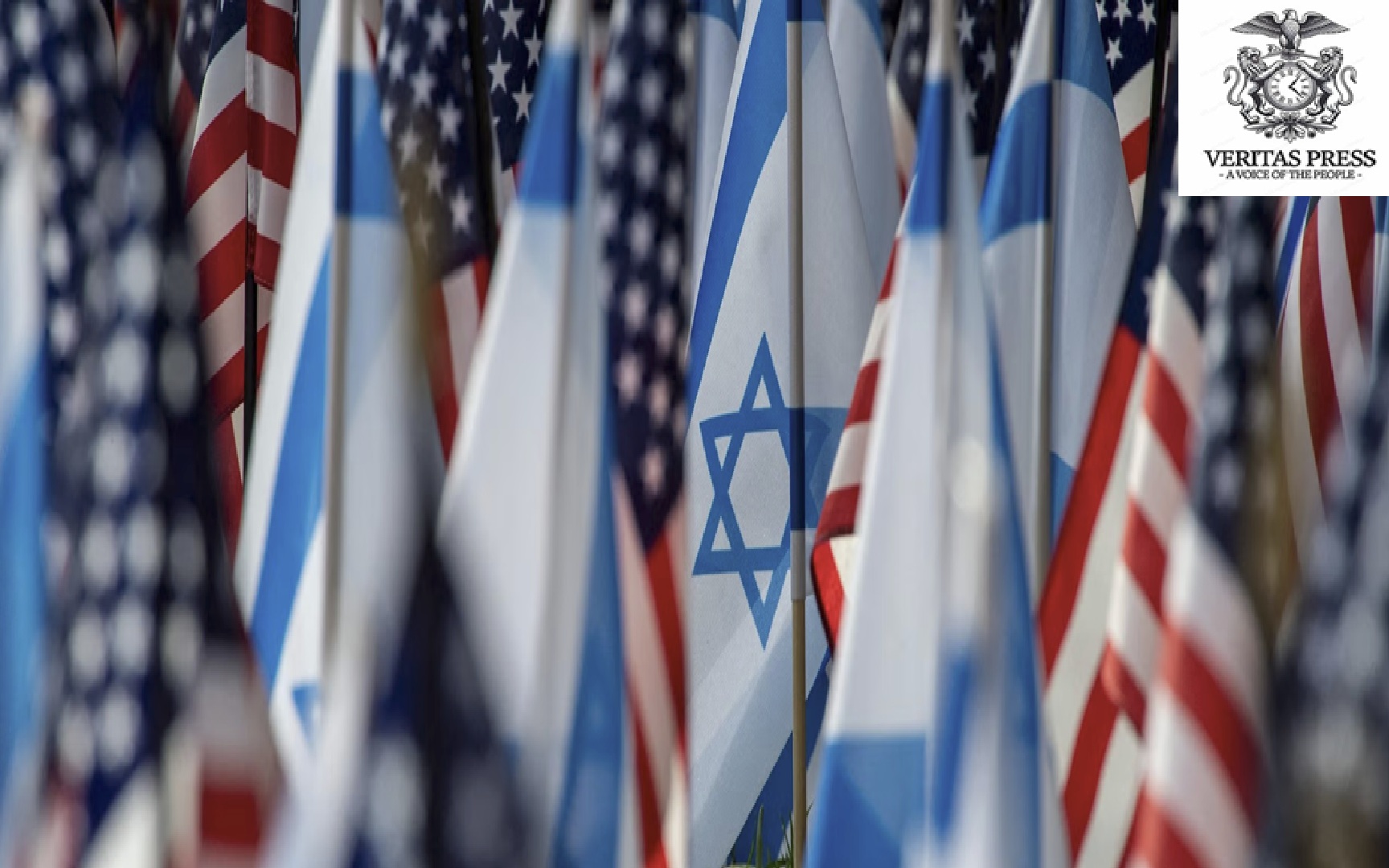
As the United States faces mounting economic strain at home and unprecedented international scrutiny over Israel’s war on Gaza, reports in late 2025 revealed that Israeli officials have quietly pressed Washington for a new 20-year Memorandum of Understanding (MOU) that would lock in expanded US military and financial assistance well into mid‑century.
According to multiple US and Israeli officials cited in Axios and defence media, the proposal would double the traditional 10-year aid framework, potentially guaranteeing more than $76 billion in US weapons and military support through 2048. The talks would succeed the current 2016 MOU, which provides Israel $3.8 billion annually in military aid and expires in 2028.
The timing is striking: Israel’s economy has been battered by prolonged war, capital flight, downgraded credit outlooks, and collapsing investor confidence, yet its leadership is seeking to extend and deepen reliance on US taxpayers for another generation.
Critics argue that Israel’s push for expanded long-term military and financial assistance is not primarily defensive, but strategic and ideological. According to analysts and rights groups, the requested funds are designed to sustain and expand Israeli military targeting across the Middle East, bankroll extensive information and propaganda campaigns, and entrench a regional order built on military hegemony, racialised security doctrines, and permanent domination over Palestinians and neighbouring populations. In this view, US assistance functions not only as weapons financing, but as political capital, shielding Israel from accountability while underwriting policies of apartheid, collective punishment, and demographic engineering. Opponents warn that this model ultimately accelerates Israel’s own isolation and instability, sacrificing long-term security and social cohesion in pursuit of short-term dominance under an increasingly discredited “Israel First” doctrine.
The Domestic Cost Of Endless Aid Commitments:
This escalating commitment to Israel comes as the United States itself is experiencing a prolonged period of economic decline that spans multiple administrations, including under President Donald Trump, his predecessors and his billionaire aristocrats. While Washington continues to guarantee tens of billions of dollars in long-term military and financial assistance abroad, millions of Americans face worsening material conditions at home.
Across the country, citizens are struggling with unaffordable housing and soaring rents, persistent food price inflation, rising utility and energy costs, and the crushing expense of childcare and transportation. Wage growth has failed to keep pace with inflation, leaving real incomes stagnant or declining, while precarious employment, underemployment, and poverty rates continue to rise in many communities. Public investment in social housing, healthcare, education, and transit remains constrained by austerity politics, even as military spending and foreign aid commitments expand.
Critics argue that this imbalance exposes a stark contradiction at the heart of US policy: a government willing to underwrite Israel’s long-term military dominance and regional ambitions, while claiming it cannot afford to guarantee basic economic security for its own population.
At the same time, even as the US economy struggles, Washington has repeatedly sanctioned additional military and financial aid packages for Israel, accelerating weapons transfers and emergency funding streams that go far beyond standing agreements. Far from stabilising the region, critics argue this assistance has fueled Israel’s wars across Gaza, the West Bank, Lebanon, Syria, and beyond, deepening regional instability, mass displacement, and civilian destruction. Under the banner of “security” and “deterrence,” US-backed military expansion has entrenched cycles of escalation, normalised collective punishment, and theft, and widened the risk of a broader regional war, while delivering little in the way of lasting safety for either Israelis or Americans.
Structural Contradictions: Militarism, Economic Decline, And Imperial Overreach.
A deeper examination of US support for Israel reveals not merely a foreign policy choice, but a structural political-economic contradiction. As domestic indicators point toward long-term economic stress, declining purchasing power, eroding public infrastructure, and widening inequality, Washington continues to lock itself into expansive military and financial commitments abroad that benefit a narrow set of strategic, corporate, and ideological interests.
At the core of this system is a military–financial aid architecture that operates with limited democratic oversight. Aid to Israel is not episodic; it is embedded through multi-year Memoranda of Understanding, emergency supplemental bills, loan guarantees, and off-budget authorisations that effectively insulate Israel’s military funding from US fiscal debate. These mechanisms ensure continuity regardless of economic downturns, public opposition, or humanitarian outcomes.
Aid As War Financing, Not Security:
Despite being framed as defensive or stabilising, US assistance has increasingly functioned as direct war financing. Funds and weapons transfers have supported sustained military campaigns that have devastated civilian infrastructure, displaced millions, and destabilised multiple countries simultaneously. Rather than deterring conflict, this model has entrenched permanent warfare, where escalation becomes a predictable outcome rather than a failure of policy.
This has produced a paradox: US officials justify aid as necessary for “security,” yet the result has been expanded regional volatility, heightened risks of confrontation with Iran and allied groups, and repeated humanitarian catastrophes that undermine US credibility and long-term strategic interests.
Sanctions For Others, Immunity For Israel:
The contradiction deepens when viewed alongside the US sanctions policy. While Washington aggressively sanctions states across the Global South, often citing human rights or regional destabilisation, it simultaneously exempts Israel from accountability, even as documented violations mount. This double standard exposes sanctions not as principled tools, but as selective instruments of hegemony, applied where compliant and waived where politically inconvenient.
Propaganda, Information Warfare, And Policy Capture:
US financial support also extends beyond weapons. Billions flow into diplomatic shielding, media influence operations, and narrative management, sustaining an international propaganda ecosystem that reframes mass civilian harm as self-defence and erases Palestinian political agency. This information warfare is critical to maintaining domestic consent in the US, particularly as economic hardship makes foreign entanglements harder to justify to the public.
Critics argue this reflects a form of policy capture, where Israeli strategic priorities and allied lobbying networks exert disproportionate influence over US decision-making, even when such policies accelerate American economic strain and global isolation.
Blowback And The Erosion Of US Power:
Far from preserving US dominance, this approach may be accelerating its decline. Endless military commitments drain public resources, inflame anti-US sentiment, expose American personnel and assets to retaliation, and weaken the dollar-based legitimacy of US leadership. Historically, empires collapse not only from external challengers but from internal decay driven by overextension.
In this context, critics contend that Israel’s escalating demands, military, financial, and political, are not only destabilising the Middle East, but are also undermining Israel’s own long-term viability, binding its future to a declining hegemon while deepening cycles of violence that offer no sustainable political resolution.
The Scale Of US Support Since October 7:
Since October 7, 2023, US support has already surged far beyond the baseline MOU. Independent tracking by the Quincy Institute, Brown University’s Costs of War Project, and Congressional disclosures shows that the US has delivered at least $21.7 billion in military aid to Israel since the Gaza war began, nearly three times the annual average under the existing agreement.
This assistance has included:
- Emergency transfers of bombs, artillery shells, and precision-guided munitions
- Direct drawdowns from US stockpiles exceeding $4 billion
- Continuous maintenance, spare parts, and logistical support for Israel’s entirely US-supplied air force of F-15s, F-16s, and F-35s
US officials privately acknowledge that Israel could not have sustained the tempo or scale of its Gaza assault without American weapons, financing, and industrial support.
From “Aid” To Permanent Military Integration:
What makes the proposed 20-year deal especially controversial is that it may rebrand, not reduce US financial responsibility.
Israeli negotiators and allied US lawmakers are floating a shift away from traditional Foreign Military Financing (FMF) toward expanded co-development and co-production of weapons, jointly funded by US taxpayers through the Pentagon budget.
Under models advanced by the Heritage Foundation and the Foundation for Defence of Democracies (FDD):
- FMF could be gradually reduced or restructured
- US funding for joint weapons development would sharply increase
- Total annual US weapons flows to Israel would rise, not fall, reaching $4.5–$6.2 billion per year by the 2040s
Critics describe the plan as a bait‑and‑switch: ending “aid” in name while deepening financial, industrial, and strategic entanglement.
“America First” Or America Locked In?
The proposal emerges amid President Donald Trump’s second-term “America First” rhetoric. Axios reports that Israeli officials have pitched expanded joint production as a way to make the deal politically palatable, claiming it benefits US jobs and defence firms.
But defence analysts are unconvinced.
“There is no such thing as ‘America First tweaks’ to this deal,” said Jon Hoffman of the CATO Institute. “This is the epitome of America last.”
Former Israeli National Security Council official Eran Lerman told Breaking Defence that Israel should instead move away from dependency and toward genuine partnership, but acknowledged that the current model is politically and financially unsustainable.
“The current model cannot be sustained,” Lerman said, noting Israel’s high GDP per capita. “At a certain point, it becomes obvious this should not depend on the American taxpayer.”
Netanyahu’s Mixed Signals:
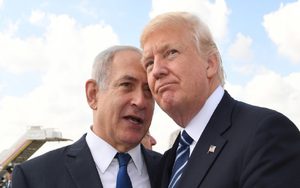
Prime Minister Benjamin Netanyahu has publicly distanced himself from the 20-year request, claiming Israel must become “independent” and “self-sufficient,” even invoking Sparta in recent speeches.
Yet behind the scenes, Likud lawmakers and Israeli ministries have been lobbying US officials and right-wing think tanks to institutionalise US-Israeli military integration for decades, not end it.
Netanyahu himself told The Economist he wants to “taper off” FMF over ten years, while supporting expanded joint weapons projects that critics argue would entrench US complicity even further.
Public Opinion: A Breaking Point.
The push for a new MOU comes as American public opinion has decisively shifted.
Recent polling shows:
- 60% of Americans oppose sending more weapons to Israel
- 71% of likely Democratic primary voters oppose taxpayer-funded weapons
- Pluralities of Republicans now oppose signing another MOU
Despite this, Congress continues to approve emergency packages and long-term commitments with little debate.
Legal And Moral Constraints Ignored:
Human rights groups argue that any new MOU, whether FMF-based or partnership-based, would violate US domestic and international law.
Under the Foreign Assistance Act, the US is prohibited from aiding governments that engage in systematic human rights abuses or block humanitarian aid. Section 620I explicitly bars weapons transfers to countries obstructing US-funded relief, something Israel continues to do in Gaza.
As a party to the Genocide Convention, the US is legally obligated to prevent and punish genocide, not subsidise it.
From Gaza To America’s Streets:
Critics also warn that expanded co-development of AI, drones, cyber surveillance, and border technologies would export Israel’s systems of population control into US domestic policy.
Israeli firms such as Elbit and NSO Group have already played roles in:
- Surveillance towers on the US-Mexico border
- Spyware used by authoritarian regimes
- AI-generated targeting systems used in Gaza
Civil liberties advocates fear these tools would be repurposed under an increasingly authoritarian US political climate.
A Stark Contrast In Priorities:
The proposed decades-long aid lock-in contrasts sharply with domestic economic debates. In New York City, newly elected Mayor Zohran Mamdani has argued that resources exist, but are misallocated.
While Washington debates guaranteeing Israel billions annually until 2048, US cities struggle to fund:
- Affordable housing
- Universal childcare
- Public transit
- Living wages
The choice, critics argue, is not about scarcity, but political will.
Conclusion: A Deal Too Far and a Reckoning.
What Israel is seeking is not merely extended assistance, but the permanent socialisation of the costs of its wars, occupation, and regional ambitions onto a United States already grappling with economic decline and domestic crisis. A 20‑year aid lock-in would function less as a security guarantee than as a long-term war financing mechanisms shielded from democratic oversight, insulated from legal accountability, and detached from outcomes on the ground.
For Washington, this trajectory reflects a deeper pathology: a political system that prioritises military expansion abroad while presiding over austerity, precarity, and stagnation at home. Under Trump and his predecessors alike, successive administrations have sanctioned ever‑greater transfers of weapons and capital to Israel, even as Americans face rising rents, food and energy inflation, collapsing public services, wage stagnation, and growing poverty. The contradiction is not accidental; it is structural.
Aid to Israel has become a pillar of US hegemony maintenance: sustaining arms manufacturers, underwriting regional force projection, and fuelling information warfare designed to suppress dissent and normalise mass violence. Sanctions regimes are deployed ruthlessly against adversaries, while Israel is rewarded for actions that would trigger isolation or embargo for any other state. Law is invoked selectively; accountability is optional.
Yet this model corrodes all parties involved. It entrenches Israel’s reliance on perpetual war and external subsidy, deepens regional instability, and accelerates US imperial decline by draining public wealth into militarised systems that generate neither security nor legitimacy. What is sold as “security cooperation” increasingly resembles a mutual trap, binding two states to endless conflict, repression, and economic decay.
The question facing the United States is no longer whether it can afford another generation of unconditional support for Israel’s wars, a model best understood as late‑imperial extraction, siphoning public wealth, political legitimacy, and legal credibility from a declining empire to sustain permanent militarism abroad. It is whether it can afford the political, moral, and economic consequences of continuing to do so, and whether dismantling this architecture of permanent militarism is now unavoidable.