







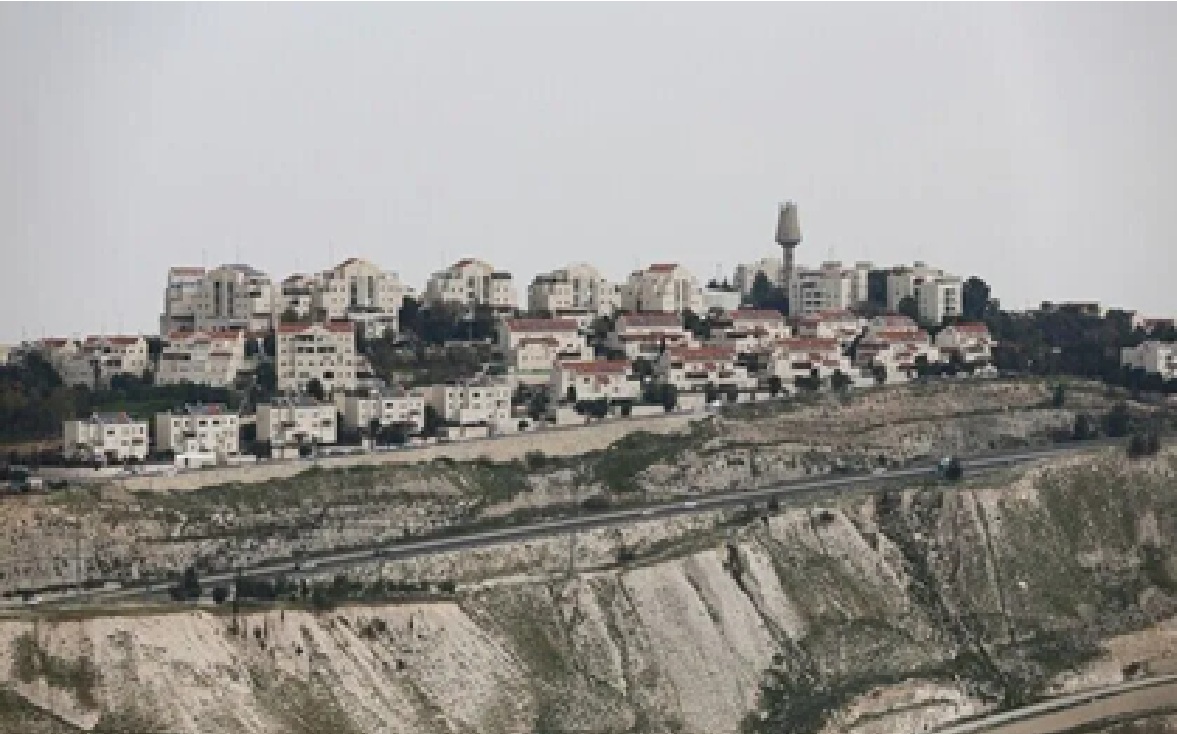

Title: How Donald Trump Will Come After Canada Next: With Corporate Lobbyists.
Press Release: Veritas Press C.I.C.
Author: Kamran Faqir
Article Date Published: 22 Jan 2026 at 13:15 GMT
Category: Americas | US-Canada | How Donald Trump Will Come After Canada Next: With Corporate Lobbyists
Source(s): Veritas Press C.I.C. | Multi News Agencies
Website: www.veritaspress.co.uk

Business Ads

Trump’s long game isn’t tanks at the border. It’s boardrooms, lobbyists, and captured policy — and Canada is dangerously exposed.
From 51st State Rhetoric To Soft-Power Capture – Annexation Rhetoric As Corporate Signalling, Imperialism Without Armies: Hegemony In The 21st Century.
We began 2025 with a warning. Commentator Conor Curtis argued that Donald Trump’s fixation on annexing Canada was not a joke, not bluster, but a strategic signal. Nearly a year later, that danger has not receded; it has metastasised.
As Canada closed out a year in which federal policy across climate, industry, defence, and infrastructure was increasingly subordinated to the language of “sovereignty,” Donald Trump quietly released a new U.S. National Security Strategy. Buried in its language is a chilling through-line: America intends to reassert dominance in the Western Hemisphere not only through overt coercion, tariffs, threats, and military pressure, but through private sector leverage.
Former Canadian UN ambassador Bob Rae has described the current moment as one marked by an “unprecedented assault… on democratic processes” by powerful states and autocratic-aligned forces. Trump’s America now sits firmly in that camp. And unlike traditional geopolitical rivals, the United States already enjoys extraordinary economic, cultural, and corporate access to Canada.
The danger is not that Canada will be taken quickly. Trump’s “51st state” rhetoric should be read as signalling, not madness.
It signals to markets, corporations, and allied elites that Canada’s assets are already American-adjacent; that resistance is futile; that absorption is inevitable. In corporate terms, the sequence is familiar: integration, alignment, absorption.
Normalising annexation language lowers the political cost of coercion and raises the confidence of capital. It is that Canada will be absorbed into an imperial system that no longer relies on formal colonies or visible occupation. It is that Canada will be absorbed into an imperial system that no longer relies on formal colonies or visible occupation. It is that Canada will be absorbed slowly, through deregulation, elite capture, media influence, economic ruptures, and corporate alignment, until sovereignty becomes hollowed out from within.
The Oligarch’s Playbook: Market Power As Foreign Policy, Recasting Trump, From Nationalist To Corporate Imperialist.
The most dangerous misconception about Trump is that he is an isolationist nationalist. He is neither. Trump operates as a corporate imperialist whose worldview treats nations as balance sheets and politics as a friction cost.
In this framework:
- Nations exist to serve capital — especially U.S.-based capital.
- Democracy is an obstacle when it interferes with profit, speed, or control.
- Sovereignty is conditional, granted only to states that comply with U.S. corporate interests.
Trump does not think in terms of allies and enemies. He thinks in terms of hostile takeovers, leveraged buyouts, and asset-stripping opportunities. Countries are evaluated for extractable value. Resistance is treated as mismanagement.
Put plainly: Trump does not want allies. He wants subsidiaries. Canada is not a partner under threat; it is a target market already deeply integrated into U.S. corporate systems.
Corporate Imperialism And American Hegemony:
Trump’s advisors are unusually candid. What they are articulating is not a retreat from global leadership, but a reconfiguration of American hegemony, one rooted in corporate dominance rather than liberal internationalism. The new National Security Strategy frames the private sector as a primary instrument of U.S. influence abroad. This is not an accident. Trump views global resources as the predetermined property of American corporations and sees other countries’ regulatory systems as obstacles to be dismantled.
For Canada, this poses a unique risk. American media monopolies, tech platforms, fossil fuel giants, and financial institutions already exert enormous influence over our economy and public discourse. Whether acting in concert with Washington or under pressure from it, these corporate actors form a ready-made infrastructure for foreign influence.
More insidiously, their interests are often repackaged as Canadian patriotism.
Policies that serve U.S. capital are reframed as “nation-building.” Deregulation becomes “competitiveness.” Weakening environmental protections becomes “energy sovereignty.” Canadians are encouraged to mistake symbolic nationalism for genuine independence, even as wealth and decision-making power flow south.
The Long Game On Annexation: Enslavement Without Occupation, The Core Threat, Preparing The Ground, Coercion First, Force Last.
If Trump is now playing a long game, Canada’s response contains a potentially fatal flaw: an assumption that military annexation is unthinkable.
Trump’s preferred form of conquest does not require troops. It requires debt, dependency, and deregulation, control without responsibility, extraction without accountability, and influence without consent. Canada can remain formally sovereign while becoming functionally constrained.
This is how the empire operates in the 21st century. It is enslavement without occupation.
History suggests otherwise. Modern empires do not advertise invasion plans; they prepare contingencies. Rhetorical normalisation (such as repeated “51st state” framing), economic coercion, legal pressure, and internal destabilisation typically precede force. Only if erosion fails does escalation follow. an overreliance on deregulation and free-market ideology in a world where the U.S. openly manipulates markets and coerces private industry to serve state power.
Any serious nation-building project must begin with a simple question: building Canada for whom?
Trump’s 2025 strategy explicitly identifies the sectors through which U.S. influence will be expanded: finance, oil and gas, and technology. These are precisely the sectors at the heart of Canada’s current economic strategy.
That overlap should alarm us.
· Corporate Capture at the Heart of Government
· Corporate Lobbyists as Shock Troops of Empire
- There are already deeply worrying signs.
Corporate lobbyists are not neutral actors. In Trump’s world order, they function as shock troops of empire, softening resistance, reframing surrender as pragmatism, and translating U.S. demands into “reasonable compromises.”
Entities like Build Canada act as a domestic interface for foreign power, normalising policies that narrow Canada’s democratic choices while expanding corporate access.
Prime Minister Mark Carney has reportedly drawn speech ideas from Build Canada, an organisation founded by oil, gas, and tech billionaires, including Shopify founder Tobias Lütke. Lütke has publicly aligned himself with Trump’s worldview, arguing Canada should not retaliate against U.S. tariffs and characterising Trump’s demands as “reasonable.”
Yet the government has gone further still. On Build Canada’s advice, Carney embedded roughly 50 corporate executives into senior one- and two-year government roles, including within defence. This opens a direct channel between private interests and the Canadian state at the very moment the U.S. has declared its intention to weaponise corporate power.
This is not a theoretical risk. Even Britain’s MI6 has publicly warned about the growing influence of the tech sector over democratic governance. When intelligence agencies and climate activists find themselves sounding the same alarm, it is worth listening.
Fossil Fuels And Tech As Trojan Horses: Climate Rollbacks As Strategic Surrender.
It might be tempting to dismiss these developments as isolated, if they did not coincide with a broader pattern of capitulation to oil, gas, minerals and tech interests that increasingly mirror Trump’s own agenda.
Fossil fuel expansion is not merely environmentally destructive. It locks Canada into U.S.-dominated supply chains, subjects the country to price volatility and leverage controlled in Washington, and forecloses genuine energy sovereignty.
Trump’s anti-climate stance is strategic, not just ideological. Climate action threatens U.S. leverage over energy-dependent states. Canada’s weakening climate policy is therefore not neutral; it is compliance.
Trump’s strategy explicitly frames other countries’ climate ambitions as threats to U.S. dominance. That alone should push Canada to accelerate climate action. Instead, Ottawa has steadily weakened or dismantled core climate policies.
The rollback of Canada’s anti-greenwashing laws is particularly alarming. Allowing oil and gas corporations, openly eager to deepen ties with an administration that talks of annexing Canada, to mislead the public is indefensible. It is a direct assault on democratic consent.
Inside government, rumours swirl of suppressed dissent over the flawed economics of fossil fuel expansion, even as the cabinet concentrates unprecedented power over project approvals. Natural Resources Canada has cut capacity critical to wildfire and flood preparedness, while methane regulations announced so far are riddled with loopholes, the unmistakable fingerprints of corporate lobbying.
The same pattern is visible in tech policy, military procurement, and the push toward a so-called “sovereign cloud” attractive to U.S. corporate giants.
Even well-intentioned private actors risk drifting into America’s gravitational pull without firm accountability. Appeasement is not neutrality; it is alignment.
“Meet Me In The Middle” — Until There Is No Middle Left, The Danger Of Corporate Appeasement Is Captured By A Simple Allegory:
A person takes a step toward injustice and says, “Meet me in the middle.” You take a step. They learn the advantage of being unjust and take advantage of others.
Corporate actors driven by fiduciary duty will always push further if rewarded for doing so. If Canada’s state apparatus becomes captured by interests aligned with Washington, no amount of military spending will save our sovereignty.
What Trump Actually Wants From Canada, Trump’s “New World Order”: Hierarchy Enforced By Markets, Resources, Dependency, And Imperial Control
Despite Trump’s claims that the U.S. “doesn’t need” Canadian products, his own rhetoric and that of his officials tell a different story.
Experts across the political spectrum agree that Trump’s objectives are not transactional; they are hegemonic. Trump’s emerging order is not globalisation; it is hierarchy.
Its pillars are increasingly clear:
- Corporate capture of the state (tech monopolies, fossil fuel giants, defence contractors)
- Economic coercion replacing diplomacy (tariffs, sanctions, regulatory threats)
- Weaponised interdependence (energy, data, minerals, defence supply chains)
- Democracy reframed as inefficiency
- Markets enforced by state power, not restrained by it
A straight line connects U.S. pressure on Canada’s media laws, Pentagon funding of Canadian mining, attacks on climate policy, and demands for regulatory rollback. They follow a single logic: if the U.S. cannot dominate democratically, it will dominate economically. This is imperialism adapted to a post-colonial age, where control is exercised through supply chains, legal regimes, and economic dependency rather than governors and garrisons.
Canada’s vast reserves of oil, gas, timber, uranium, nickel, copper, potash, and critical minerals loom large. Former prime minister Justin Trudeau privately warned business leaders that Trump’s 51st-state rhetoric was driven in part by resource hunger. Trump may downplay this publicly, but his administration’s actions say otherwise.
Trade negotiations have stalled. Trump has declared the USMCA “irrelevant,” while his trade representative has demanded concessions on dairy, alcohol markets, and Canada’s Online News and Streaming Acts, laws designed to curb U.S. tech monopolies and support Canadian media.
On defence, Canada’s long failure to meet NATO spending targets has been weaponised rhetorically, even as Ottawa races to comply. Border security and fentanyl are used as pretexts for tariffs despite data showing Canada accounts for a negligible share of U.S. drug seizures.
As political scientist Aaron Ettinger notes, nothing Canada does on any single file will satisfy Trump. Domination, not compromise, is the point.
Critical Minerals And The Pentagon’s Shadow: Nowhere Is This Clearer Than In Canada’s Critical Minerals Sector.
In Quebec’s Outaouais region, opposition to a graphite mine intensified dramatically once the U.S. Pentagon became a major investor under the Defence Production Act. Locals who had tolerated the project as part of a green transition recoiled when it became clear the primary beneficiary was the American military.
A 2025 referendum showed 95% opposition among nearby communities. Yet federal funding continues, even as provincial authorities refuse support due to a lack of social consent.
Residents ask a blunt question: Are our minerals being extracted to build the weapons that could one day be used to coerce us?
This is not paranoia. It is a rational response to a neighbour whose president openly muses about annexation.
Why Military Annexation Would Destroy The U.S.: And Why That Matters, Why Preparation Still Happens.
Ironically, Trump’s fixation on conquest ignores a fundamental reality: a military invasion of Canada would be catastrophic for the United States.
Decades of insurgency research show that weaker societies can bleed powerful armies dry through sustained resistance. Even a small fraction of Canadians engaging in armed or everyday resistance would create an insurgency dwarfing those faced by the U.S. in Afghanistan.
Canada’s geography, forests, mountains, vast distances, would make occupation impossible. Infrastructure sabotage alone could impose enormous costs. Foreign rivals like Russia and China would eagerly exploit such a quagmire.
The result would be mutual destruction.
This is precisely why Trump’s real strategy is not invasion, it is erosion.
Building Sovereignty That Cannot Be Bought
There are ways to build Canadian sovereignty that do not rely on corporate capture.
Community-controlled renewable energy, interconnected grids, storage, and Indigenous-led projects can reduce dependence on volatile fossil markets dominated by U.S. whims. Decentralised renewables are also harder to seize or sabotage in any conflict scenario.
A renewable economy would insulate Canadians from oil shocks and geopolitical blackmail while anchoring sovereignty in local control.
None of this requires blind faith in markets. It requires democratic accountability.
A 21st-Century Strategy For A 21st-Century Conflict
· Oligarchy Versus Democracy
· Confronting Corporate Empire
- Canada is not facing a traditional war. It is facing a systemic conflict between oligarchy and democracy.
Trump’s project is not anti-Canada specifically; it is anti-democracy universally. Canada is vulnerable because it is wealthy, resource-rich, deeply integrated, and ideologically committed to neoliberalism.
The central warning is unavoidable: you cannot defend sovereignty with the same ideology that makes annexation profitable. It is facing a communications and legitimacy war between oligarchy and democracy.
Trying to fight this battle with 20th-century neoliberal dogma is a losing strategy. So is building fossil and nuclear megaprojects that deepen dependence on the United States.
True deterrence lies in cohesion.
What Canada Could Do Instead
- Implement genuinely progressive taxation, including an upper wealth limit with equal redistribution.
- Break up U.S.-owned media monopolies and massively support public, local, and independent media.
- Rebuild a strong, transparent public sector capable of independent research and counter-disinformation
- Prioritise community- and Indigenous-controlled renewable energy and grids
- Train citizens in digital sovereignty and disinformation resistance
- Invest in ecosystem protection, local resilience, and essential supply chains
- Build affordable, energy-efficient green housing
- Enforce real accountability on private corporations
Above all: stop trusting the private sector to deliver public goods without oversight.
Credit Where It’s Due, And The Limits Of Buy Canada:
The federal government deserves credit for adopting Buy Canada policies. But economic growth without democratic safeguards is hollow.
The U.S. offers a living case study: deregulation eventually destroys the very systems that make growth possible. Inequality fuels polarisation. Polarisation invites authoritarianism.
This is not peacetime. Blind neoliberal faith makes Canada an easy mark.
You’re Not A Pawn, In Chess, Kings Are Protected. Pawns Are Sacrificed.
To beat Trump, Canadians cannot be treated like pawns. Sovereignty requires empowering people, economically, politically, and informationally.
Carney’s financial expertise is an asset. But governing like a corporation, negotiating behind closed doors with other corporations, cedes terrain where the U.S. holds overwhelming advantage.
Canada’s strength lies elsewhere: in a robust public sector, accountable institutions, and citizens deeply committed to the land, ecosystems, and communities they love.
Climate activists understand this instinctively. Protecting nature is not a distraction from sovereignty; it is its foundation.
When warnings about annexation first surfaced in early 2025, many dismissed them as alarmist. But alarms exist for a reason.
No single leader will save Canada.
What protection exists today exists because ordinary Canadians demanded it.
As the saying goes, and must go on being said:
Nobody Is Coming To Rescue Us But Us.