Kamran Faqir is a volunteer investigative journalist and writer committed to exposing hidden truths and amplifying underreported stories. Driven by social justice, he brings sharp insight and fearless truth-telling to independent journalism. NUJ registered.
Title: India Profiles Kashmir Mosques, Deepening Surveillance Fears In Occupied Valley
Press Release: Veritas Press C.I.C.
Author: Kamran Faqir
Article Date Published: 19 Jan 2026 at 12:55 GMT
Category: South Asia | India-Kashmir | India Profiles Kashmir Mosques, Deepening Surveillance Fears in Occupied Valley
Source(s): Veritas Press C.I.C. | Multi News Agencies
A controversial police initiative in Indian-administered Kashmir to collect detailed data on mosques, clerics, committees, and seminary leaders has ignited a fierce debate over religious freedom, state surveillance, and discriminatory governance in a region long defined by conflict and mistrust. What authorities describe as administrative verification is being widely interpreted by locals, rights groups, religious bodies, and political leaders as an exercise in collective punishment and religious profiling, one that treats Muslim places of worship as presumptive security threats and further erodes civil liberties in the Muslim-majority Valley.
The exercise has triggered anxieties across the region, where decades of militarisation, emergency laws, and intelligence-led governance have already blurred the line between civilian life and security oversight. For many Kashmiris, the profiling of mosques is not an isolated bureaucratic step, but part of a broader pattern of collective surveillance, in which Muslim religious identity itself is increasingly treated as a security variable warranting pre-emptive state control.
From ‘Routine’ Survey To Deep Data Capture:
The Jammu and Kashmir Police have circulated a four-page questionnaire explicitly titled “profiling of mosques,” a label that has itself raised alarm. Far from a basic religious census, the form demands exhaustive institutional data on mosques, including their ideological or sectarian orientation, sources of financing, monthly expenditure, property and land ownership records, congregational capacity, and internal administrative structures.
According to residents and local media reports, what has caused the greatest concern is the second half of the form, which seeks deeply personal and sensitive information about imams, muezzins, khatibs, and mosque committee members. This includes mobile numbers, email addresses, Aadhaar and passport details, bank account information, land records, social media handles, and declarations about relatives living outside Kashmir or abroad.
“This is not paperwork, this is surveillance dressed up as administration,” one mosque leader in Srinagar told Al Jazeera, reflecting a sentiment widely shared across the Valley. “They want details about relatives outside India, private family matters. When authorities ask for such details at this level, it makes you worry how this information might be used later.”
Similar forms have also been distributed to those managing madrasas, extending the data-gathering exercise beyond mosques into the sphere of religious education.
Voices Of Kashmir: Fear, Distrust And Daily Reality.
For many ordinary Kashmiris, the profiling initiative is the latest escalation in a system of collective punishment, where entire communities are subjected to monitoring and suspicion not because of individual wrongdoing, but because of their religious identity.
Mohammad Nawaz Khan, a Srinagar shopkeeper, said the form felt less like a neutral survey and more like a state attempt to map, and ultimately regulate, religious identity.
“Keeping such detailed records is not safe for families like mine. In a conflict area like Kashmir, this can have serious consequences,” he told Al Jazeera.
Local clerics have been even more explicit. Hafiz Nasir Mir, an imam who has led prayers for over 15 years at a mosque in Srinagar’s Lal Bazar area, says he has refused to fill out the form, warning that it smacks of coercive control rather than legitimate data collection.
“If this were just paperwork, the police would not repeatedly ask for the same personal details,” Mir said. “They want information about our relatives outside Kashmir or even India. These are private family matters… it makes you genuinely worry.”
Mir and other prayer leaders fear the profiling could evolve from static data collection into dynamic oversight, including the pre-approval of sermons and the policing of religious discourse, a shift they say would fundamentally change the role of mosques. “Soon we may be told what to say and what not to say,” he said.
Ancient Mosques, Impossible Questions:
The drive has also ensnared families tied to centuries-old religious institutions. Altaf Naqshbandi (name changed), a retired government officer in his seventies, said intelligence officials contacted him seeking revenue records of a mosque built by his ancestors over 300 years ago.
“How can I produce documents for something built centuries before any of us were born?” he asked. “They called me repeatedly, as if I was hiding something.”
Such cases, residents say, highlight how a security exercise has morphed into a coercive fishing expedition, forcing civilians to account for histories that predate modern bureaucracy.
Religious Bodies Push Back:
The Mutahida Majlis‑e‑Ulema (MMU), Kashmir’s largest umbrella body of Islamic scholars and organisations, has strongly opposed the profiling.
“Mosques are sacred places meant for worship, guidance, and community service,” the MMU said in a statement. “Their internal religious affairs cannot be subjected to intrusive scrutiny.”
Warning that the exercise “creates fear and undermines trust within the Muslim community,” the MMU urged authorities to halt the process immediately.
Political Fallout Inside Kashmir:
Former chief minister Mehbooba Mufti condemned the move as discriminatory and provocative, accusing authorities of criminalising Muslim spaces.
“By doing so, they are turning mosques into crime scenes,” she said at a Srinagar news conference, holding up the police form. “Can the government do the same with temples, gurdwaras, or churches?”
The region’s ruling National Conference, elected in 2024 but largely sidelined by New Delhi’s control over the police and administration, has also demanded an end to the profiling.
“There is no need for another survey,” said party spokesman Imran Nabi Dar. “But we cannot stop it ourselves because the police are not under the elected government’s control.”
BJP Defends Surveillance As ‘Transparency’:
The ruling Bharatiya Janata Party (BJP) has defended the exercise. Altaf Thakur, the BJP’s Kashmir spokesman, argued that mosques had previously been used for political mobilisation.
“Past experience tells us that mosques were used to incite pro-Pakistan rallies,” he said. “We need accountability. There is nothing wrong with knowing who funds mosques, the nature of the land they are built on, and the ideology they follow.”
Critics counter that such justifications amount to collective punishment, reinforcing a narrative in which Muslim religious life itself is framed as inherently suspect and in need of constant surveillance.
Pakistan has sharply condemned the profiling drive, calling it a “grave violation of the fundamental right to freedom of religion and belief.”
Islamabad’s Foreign Office said the collection of sectarian affiliations, personal data, and photographs amounted to systematic harassment aimed at instilling fear among worshippers.
“These actions form part of a broader pattern of institutionalised Islamophobia driven by the Hindutva ideology of the occupying Indian government,” the statement said, accusing New Delhi of selectively targeting Muslim clergy and institutions.
The condemnation comes amid renewed diplomatic sparring at the United Nations, where Pakistani officials reiterated that Jammu and Kashmir remains a disputed territory under international law.
A Broader Pattern Since 2019:
The profiling drive cannot be separated from the political transformation of Kashmir since August 5, 2019, when Prime Minister Narendra Modi’s government revoked Article 370, stripped the region of its limited autonomy, and downgraded it into two federally governed territories.
Since then, Kashmir has seen:
Prolonged shutdowns of major mosques, including Srinagar’s Jamia Masjid, have been closed for nearly two years after 2019.
Recurrent restrictions on Eid and Friday congregations.
Expanded surveillance, arrests, and censorship under security laws.
India maintains these measures are necessary to combat militancy, allegations Pakistan denies.
Why Rights Groups Call This Collective Punishment:
Under international human rights law, collective punishment refers to punitive or coercive measures imposed on an entire group for actions they did not individually commit. While the term originates in international humanitarian law governing armed conflict, human rights bodies have increasingly applied the concept to peacetime governance where entire communities are subjected to suspicion, surveillance, or restriction based solely on identity.
In Kashmir, critics argue the mosque-profiling drive meets this threshold because it is not triggered by specific allegations, evidence, or judicial warrants, but imposed wholesale on Muslim religious institutions. The requirement that clerics and committee members disclose intimate personal, financial, and familial data, including relatives abroad, effectively treats participation in religious life as grounds for state scrutiny.
“This is the logic of collective punishment,” said a South Asia researcher with an international rights organisation. “You are not investigating individuals suspected of wrongdoing; you are mapping a whole community’s religious infrastructure as if it were a security threat in itself.”
Such approaches, analysts warn, violate the principle of individual criminal responsibility, replacing it with group-based suspicion that corrodes democratic governance.
Rights Concerns Mount:
Rights groups and analysts warn that profiling mosques raises serious constitutional and human rights questions.
“A balanced approach requires transparency, judicial oversight, and community involvement,” said a political analyst, speaking anonymously over fear of reprisals. “Without that, people will see this as discriminatory pressure on Muslim institutions.”
The concerns echo broader warnings from UN experts, who in November flagged serious human rights violations in Indian‑administered Kashmir, and from international watchdogs who note rising abuse of minorities across India.
Legal And Constitutional Questions: Faith, Privacy, And State Power.
The mosque‑profiling exercise has raised serious constitutional red flags under Indian law, particularly concerning freedom of religion, privacy, equality before law, and limits on police power.
Under Article 25 of the Indian Constitution, all persons are guaranteed the freedom of conscience and the right to freely profess, practice, and propagate religion, subject only to public order, morality, and health. Legal scholars argue that while the state may regulate secular activities associated with religious institutions, it cannot intrude into internal religious affairs or target a specific faith community without compelling and proportionate justification.
“Demanding sectarian affiliation, sermon details, and ideological orientation crosses from regulation into interference,” said a Srinagar-based constitutional lawyer. “There is a difference between auditing property records and mapping belief systems.”
Equally significant are concerns under Article 14, which guarantees equality before the law. Critics note that no comparable statewide profiling of Hindu temples, Sikh gurdwaras, or Christian churches has been announced.
“The selective nature of this exercise exposes it to constitutional challenge,” said the lawyer. “If surveillance is applied only to Muslim institutions, it fails the test of equal protection.”
The drive also collides with India’s evolving right to privacy jurisprudence. In its landmark 2017 Puttaswamy judgment, India’s Supreme Court affirmed privacy as a fundamental right under Article 21, requiring that any state intrusion must satisfy tests of legality, necessity, proportionality, and procedural safeguards.
Civil liberties advocates argue that the mosque forms fail on multiple counts. “There is no publicly notified legal framework, no clarity on data storage, no sunset clause, and no explanation of how sensitive personal information like passport numbers, IMEI data, or family links abroad will be protected,” said a digital rights activist associated with the Internet Freedom Foundation.
Legal experts warn that collecting IMEI numbers, social media handles, and family‑abroad data without judicial oversight risks violating both data‑minimisation principles and protections against arbitrary state action.
Beyond domestic law, rights groups note that India is a signatory to international instruments such as the International Covenant on Civil and Political Rights (ICCPR), which protects freedom of religion and privacy. United Nations special rapporteurs have repeatedly stressed that counter‑terrorism or security measures must not be used to stigmatise or collectively punish religious communities.
“For a population already subjected to prolonged emergency laws and surveillance,” said a former UN consultant on South Asia, “this kind of profiling entrenches a regime of identity-based governance, where Muslim faith and collective life are securitised through blanket suspicion rather than evidence-based policing.”
The absence of judicial oversight, legislative debate, or independent review mechanisms, analysts say, reinforces fears that Kashmir is being governed through executive fiat rather than constitutional restraint.
Fear As Policy;
For many Kashmiris, the message of the mosque-profiling drive is unmistakable: no space is beyond the reach of surveillance, not even places of worship. By compelling clerics, committees, and congregations to submit intimate personal, financial, and familial data, the state has recast mosques not as protected civic institutions, but as nodes of suspicion within a security grid.
What distinguishes this exercise from routine administration is not merely its scope, but its logic. It does not proceed from evidence to investigation; it proceeds from identity to control. In doing so, it collapses the distinction between faith and threat, substituting constitutional restraint with executive discretion.
Legal scholars warn that such governance by profiling marks a departure from democratic norms toward preventive punishment, where compliance is extracted through fear rather than consent, and rights are subordinated to permanent suspicion. In a region already shaped by emergency laws and unresolved political claims, this approach risks normalising the idea that Muslim religious life itself is incompatible with security and society.
As India seeks to project itself globally as a constitutional democracy committed to pluralism and the rule of law, Kashmir presents an unresolved contradiction. Policies that collectively punish, profile, and pre-emptively police faith undermine not only the rights of Kashmir’s Muslims but the credibility of the constitutional order invoked to justify them.
As one senior cleric in Srinagar put it quietly, requesting anonymity, “When the state treats prayer as a provocation and worshippers as suspects, it is no longer protecting order, it is manufacturing fear.”
Kamran Faqir is a volunteer investigative journalist and writer committed to exposing hidden truths and amplifying underreported stories. Driven by social justice, he brings sharp insight and fearless truth-telling to independent journalism. NUJ registered.
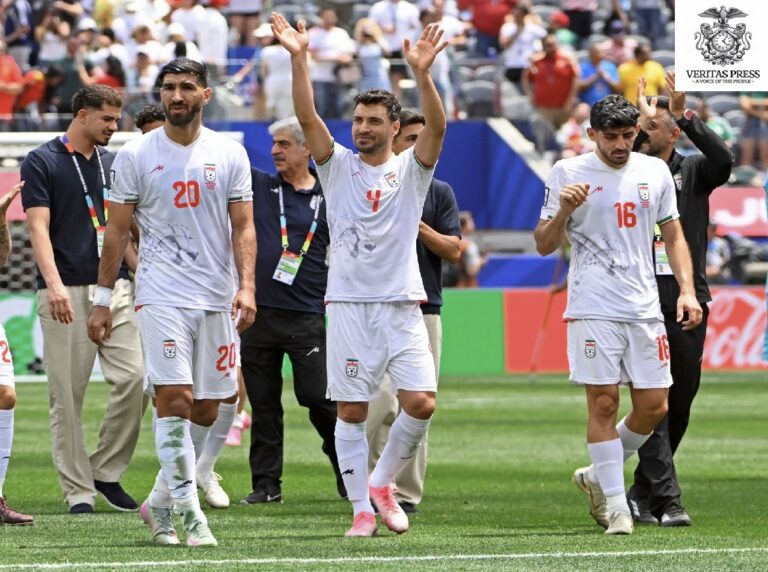
SEATTLE, TEHRAN — The U.S. Department of Homeland Security (DHS) will allow Iran’s national football team to enter the country 48 hours before their critical World Cup match against Egypt on Friday, a modest concession in a tournament where Team Melli’s travel conditions have sparked claims of oppression and competitive disadvantage.