Kamran Faqir is a volunteer investigative journalist and writer committed to exposing hidden truths and amplifying underreported stories. Driven by social justice, he brings sharp insight and fearless truth-telling to independent journalism. NUJ registered.
Title: Second Phase Opens With Bloodshed: Gaza’s ‘Ceasefire’ As Managed War, Legal Violation And Political Illusion.
Press Release: Veritas Press C.I.C.
Author: Kamran Faqir
Article Date Published: 16 Jan 2026 at 14:05 GMT
Category: Middle East | Palestine-Gaza-West Bank-OPT | Second Phase Opens With Bloodshed: Gaza’s ‘Ceasefire’ As Managed War, Legal Violation And Political Illusion
Source(s): Veritas Press C.I.C. | Multi News Agencies
GAZA STRIP — The second phase of the Gaza ceasefire was announced with diplomatic fanfare by the United States and regional mediators. On the ground, it arrived with bullets, drone strikes, demolitions and fresh graves.
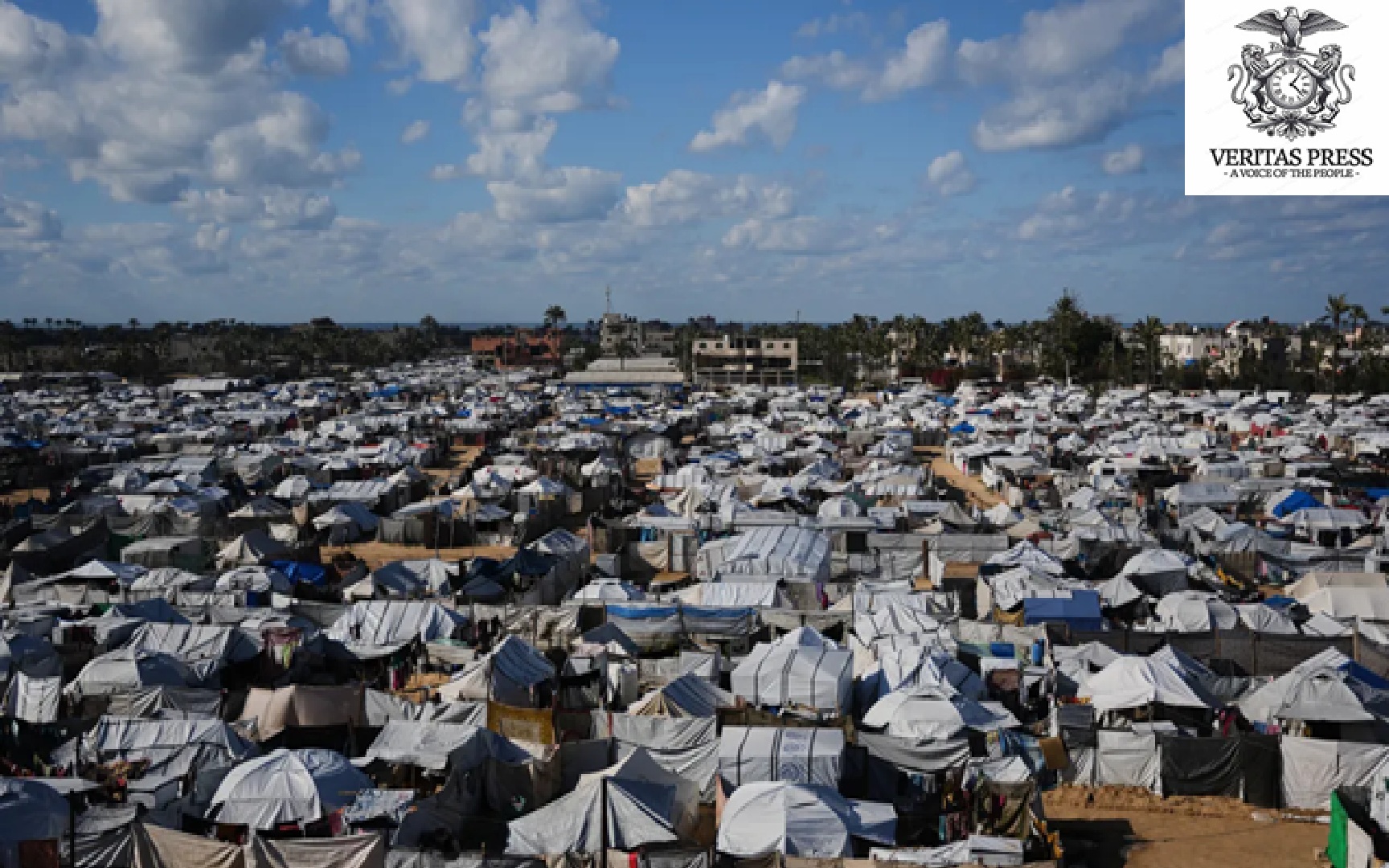
Early Friday morning, Israeli occupation forces shot dead Sabah Ahmed Ali Abu Jameh, a 62-year-old Palestinian woman, west of Khan Yunis, according to Gaza medical officials. Several others were wounded when Israeli troops opened heavy fire toward tents sheltering displaced families in central Khan Yunis and the al-Mawasi coastal area, a zone Israel itself had designated as “safe.”
“There was no fighting here,” said Fadel al-Masri, a displaced father sheltering in al-Mawasi. “Only women, children, and old people. They told us this was a safe place. Then the gunfire came through the tents.”
Within hours of the phase-two announcement, Israeli attacks were reported across the Strip. In Nuseirat refugee camp, shelling killed Ashraf al-Khatib, a senior figure in the al-Quds Brigades, along with his wife and one of his children. Airstrikes hit family homes in Deir al-Balah, killing members of the al-Houli and al-Jarou families. In Gaza City, Israeli drones struck a police checkpoint near Nabulsi Junction, killing three Palestinians. In Jabaliya, Israeli gunfire wounded displaced civilians in a makeshift camp, one critically.
Further south, Israeli helicopter fire near Nasser Hospital killed another Palestinian woman. In Rafah, emergency responders reported two Palestinians killed near the al-Alam junction in al-Mawasi, including one body left unrecovered due to continued Israeli fire.
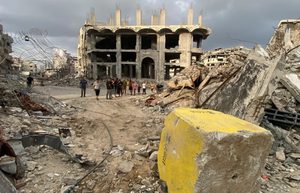
Israeli naval vessels shelled the coast off al-Zawaida and Deir al-Balah, while armoured vehicles advanced east of Deir al-Balah under heavy gunfire. In the north, Israeli forces carried out controlled demolitions east of Beit Lahia, even as the ceasefire was supposedly in effect.
A Ceasefire That Never Ceased Fire:
These incidents are not aberrations. Since the ceasefire took effect in October, at least 451 Palestinians have been killed and more than 1,250 wounded in Israeli attacks, according to Gaza’s Health Ministry. UNICEF says more than 100 of those killed were children. As of October 2023, the Palestinian death toll has reached 71,441, and more than 171,000 have been wounded; the UN and independent experts view these numbers as the most credible available, even though they are unconfirmed and likely underestimated, despite Israel’s unsupported denials.
“This is not a ceasefire,” said Rania al-Haj, a displaced schoolteacher in Deir al-Balah. “It is the same war, only quieter when the cameras move away.”
Human rights organisations argue that what Israel describes as “security incidents” amount to a pattern of continued hostilities. Al Mezan Centre for Human Rights has warned that the ceasefire has functioned as “a restructuring of violence, not its cessation.”UN OCHA has repeatedly documented Israeli military activity inside Gaza’s buffer zones, restricting civilian movement and aid access.
Netanyahu: ‘Declarative,’ Not Transformative.
Even Israel’s own leadership has undercut claims that phase two marks a real shift. Israeli Prime Minister Benjamin Netanyahu publicly dismissed the second phase as largely “declarative,” telling the parents of Israeli police officer Ran Gvili, whose remains are still in Gaza, that the new arrangements did not signal meaningful progress.
Netanyahu’s remarks directly contradicted U.S. envoy Steve Witkoff, who portrayed phase two as a transition toward governance reform, reconstruction, and stabilisation. Israeli officials later confirmed that the proposed Palestinian technocratic governing committee was coordinated with Israel, raising further questions about sovereignty and legitimacy.
For Palestinians, Netanyahu’s candour merely confirmed what was already obvious.
“They say it themselves, it is symbolic,” said Hamza Abu Shahab, displaced from eastern Khan Yunis. “So why are we expected to believe our lives will suddenly matter?”
Forensic Reality: Violations Under International Law.
Legal experts say the continued killing of civilians during a declared ceasefire may constitute serious violations of international humanitarian and human rights law.
Under the Fourth Geneva Convention, civilians must be protected “at all times.”Additional Protocol I explicitly prohibits direct or indiscriminate attacks on civilians, protections that are heightened, not weakened, during ceasefires.
Israeli human rights lawyer Michael Sfard explained:
“Once hostilities are paused, the use of lethal force is governed primarily by law-enforcement standards, not battlefield logic. Shooting civilians near tents or buffer zones cannot be justified as combat.”
The targeting of al-Mawasi, designated a humanitarian safe area, is particularly alarming. UN Special Rapporteur Francesca Albanese has warned that designating “safe zones” and then attacking them may amount to war crimes under the Rome Statute of the International Criminal Court.
Meanwhile, the continued restriction of fuel, shelter materials and aid during winter months has drawn accusations of collective punishment, prohibited under Article 33 of the Fourth Geneva Convention. Human Rights Watch has stated that restricting essential supplies during a ceasefire constitutes “ongoing hostilities by other means.”
Governance Without Sovereignty, Reconstruction Without Freedom.
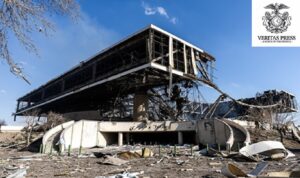
Phase two is supposed to usher in a new governance framework for Gaza. Ali Shaath, a former Palestinian Authority official, has been tasked with leading a 15-member technocratic committee and outlined an ambitious reconstruction plan, including clearing Gaza’s estimated 68 million tonnes of rubble, even suggesting dumping debris into the Mediterranean Sea to reclaim land.
Environmental and legal groups have raised alarms. PENGON, a Palestinian environmental NGO, warned that such plans risk “irreversible ecological damage and violations of international environmental law.”
More fundamentally, analysts argue that the proposed governance structure lacks real authority.
“This is administration under occupation,” said Palestinian analyst Khalil Shaheen. “It manages people, not power.”
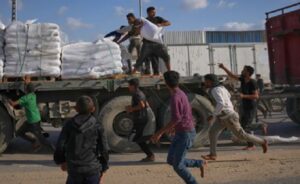
The UN estimates Gaza’s reconstruction will cost over $50 billion and take years. Yet little funding has been pledged, and rebuilding remains impossible amid ongoing Israeli military activity.
A Pattern Repeated And Deepened:
Veteran observers note that this ceasefire mirrors, and worsens, past failures.
After 2014, reconstruction was subordinated to Israeli controls. After 2021, violence paused, but siege conditions remained. Temporary truces in 2023–2024 were used to reorganise military positions rather than address root causes.
Israeli journalist Amira Hass once described these pauses as “tactical, not humanitarian.” Palestinian rights group Al-Haq has long argued that ceasefires which leave the occupation intact function as “pauses in oppression, not steps toward peace.”
What distinguishes the current phase is its normalisation of civilian death during a truce. Violence is no longer denied; it is bureaucratically justified.
Political analyst Mouin Rabbani summed it up bluntly:
“This is not conflict resolution. It is conflict management, with Palestinians paying the price.”
Conclusion: A Ceasefire That Codifies Violence.
What Gaza is experiencing under the so-called second phase is not peace, not de-escalation, and not a fragile transition toward stability. It is the managed continuation of war, refined into policy and insulated by diplomatic language. Governance is discussed without sovereignty, reconstruction is promised without security, humanitarian aid is delivered without adequacy, and a ceasefire is declared without safety. These are not gaps in implementation; they are the defining features of the arrangement itself.
The killings, demolitions and aid restrictions unfolding under phase two are not anomalies. They are the predictable outcome of a ceasefire that preserves military control while suspending accountability. When civilians are shot in tents, when “safe zones” are shelled, when buffer zones are enforced with lethal force, the war has not paused; it has simply been recalibrated. Violence has been rendered administratively acceptable, stripped of urgency and normalised through repetition.
Legally, this represents more than ceasefire violations. It marks the erosion of the distinction between war and peace itself. International humanitarian and human rights law do not recognise ceasefires that permit routine civilian deaths or collective punishment. Yet under phase two, such acts are not only occurring, they are occurring openly, repeatedly, and without consequence. When illegality is sustained and unpunished, it ceases to be an exception and becomes policy.
Politically, the second phase exposes the bankruptcy of international mediation. A technocratic governing body coordinated with the occupying power offers administration without authority. Reconstruction plans proceed amid ongoing bombardment, turning recovery into an abstraction divorced from reality. Demands for disarmament are made absent any commitment to withdrawal, freedom of movement, or Palestinian political rights. What is being built is not peace, but a system of control stabilised through managed suffering.
For Palestinians living this reality, the rhetoric of progress rings hollow. Families shiver in tents under winter rain, navigating hunger, displacement and fear, while diplomats speak of phases and frameworks. Gaza journalist Rami Abdu captured the truth succinctly: “They stopped calling it a war, but nothing stopped killing us.” The name has changed; the graves have not.
This is the most dangerous aspect of phase two: its ability to make violence appear routine, survivable, and therefore tolerable. When killing continues under the banner of peace, outrage is dulled, and responsibility diffused. When reconstruction is discussed alongside ongoing destruction, devastation becomes a logistical challenge rather than a moral crime.
For those huddled in Gaza’s camps, the second phase has not ended the war. It has merely given its violence a new name, one that shields power, displaces blame, and leaves civilians to endure a “ceasefire” in which survival remains an act of endurance rather than a right protected by law.
Until a ceasefire means the absence of killing, until governance implies sovereignty, and until aid is sufficient to sustain life rather than manage collapse, phase two will stand not as a step toward peace, but as a codification of permanent war.
What Gaza is experiencing under phase two is not peace, but a managed continuation of war:
Governance without sovereignty
Reconstruction without security
Aid without adequacy
A ceasefire without safety
For Palestinians huddled in tents under winter rain, the second phase has not ended the war — it has merely given its violence a new name.
Kamran Faqir is a volunteer investigative journalist and writer committed to exposing hidden truths and amplifying underreported stories. Driven by social justice, he brings sharp insight and fearless truth-telling to independent journalism. NUJ registered.
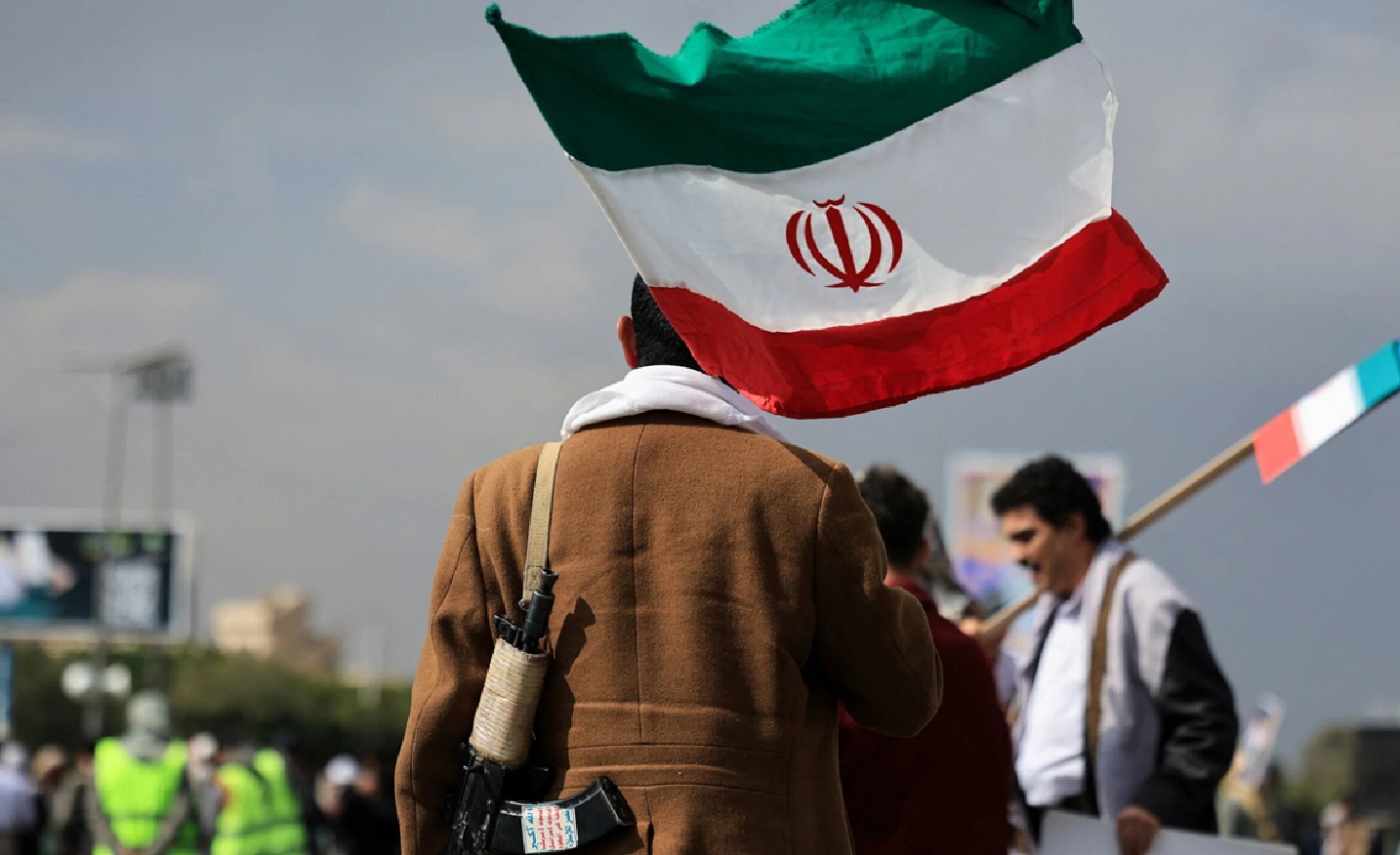
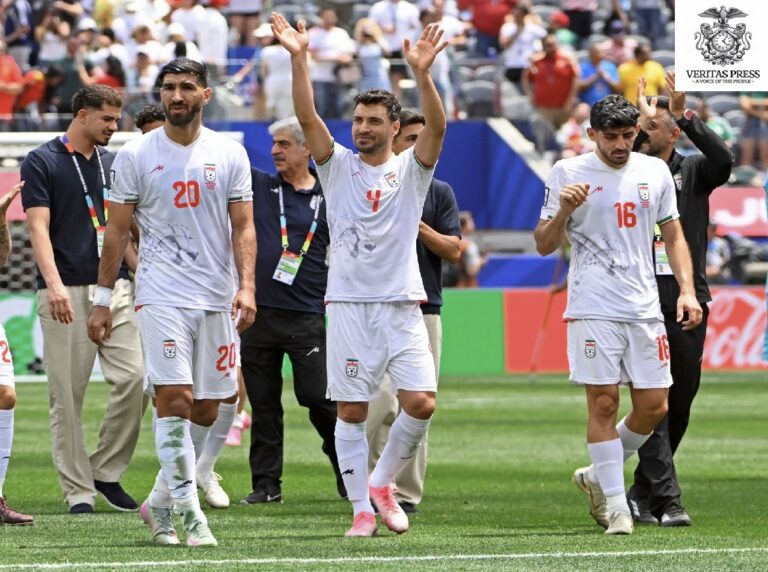
SEATTLE, TEHRAN — The U.S. Department of Homeland Security (DHS) will allow Iran’s national football team to enter the country 48 hours before their critical World Cup match against Egypt on Friday, a modest concession in a tournament where Team Melli’s travel conditions have sparked claims of oppression and competitive disadvantage.