Kamran Faqir is a volunteer investigative journalist and writer committed to exposing hidden truths and amplifying underreported stories. Driven by social justice, he brings sharp insight and fearless truth-telling to independent journalism. NUJ registered.
Title: Machado Hands Trump Her Nobel Peace Prize, But Oslo Says The Prize Is Not His To Take.
Press Release: Veritas Press C.I.C.
Author: Kamran Faqir
Article Date Published: 16 Jan 2026 at 13:10 GMT
Category: Americas | Politics | Machado Hands Trump Her Nobel Peace Prize, But Oslo Says the Prize Is Not His to Take
Source(s): Veritas Press C.I.C. | Multi News Agencies
WASHINGTON, DC / OSLO — Venezuelan opposition leader and Nobel Peace Prize laureate María Corina Machado has ignited global controversy after publicly presenting the physical medal of her 2025 Nobel Peace Prize to U.S. President Donald Trump, a symbolic act swiftly rejected by the Nobel establishment, which reiterated that the prize “cannot be revoked, shared, or transferred under any circumstances.”
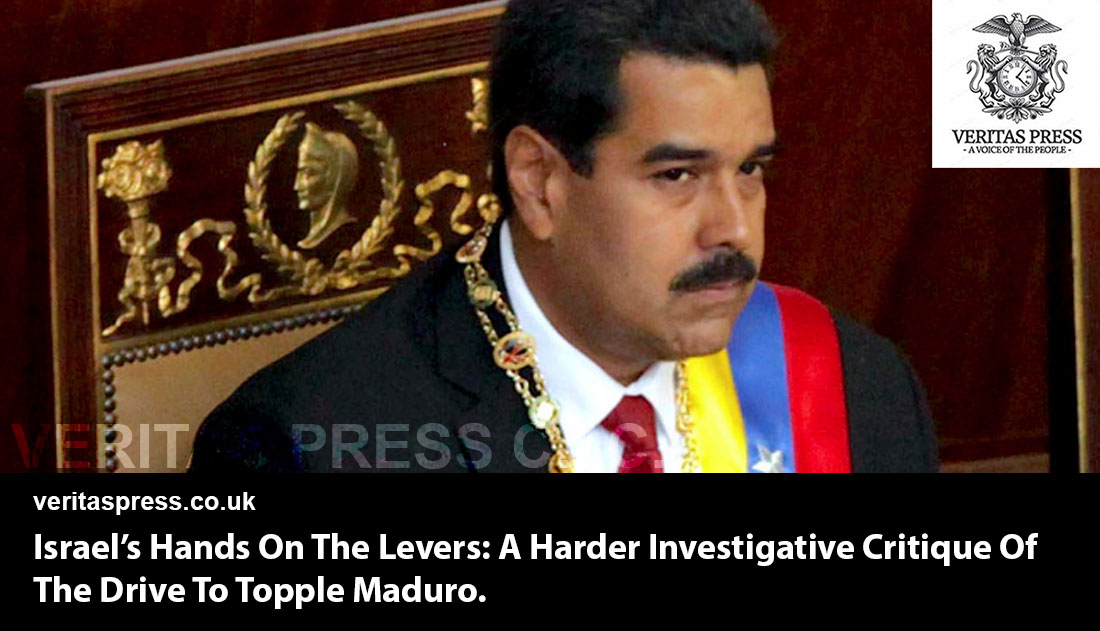
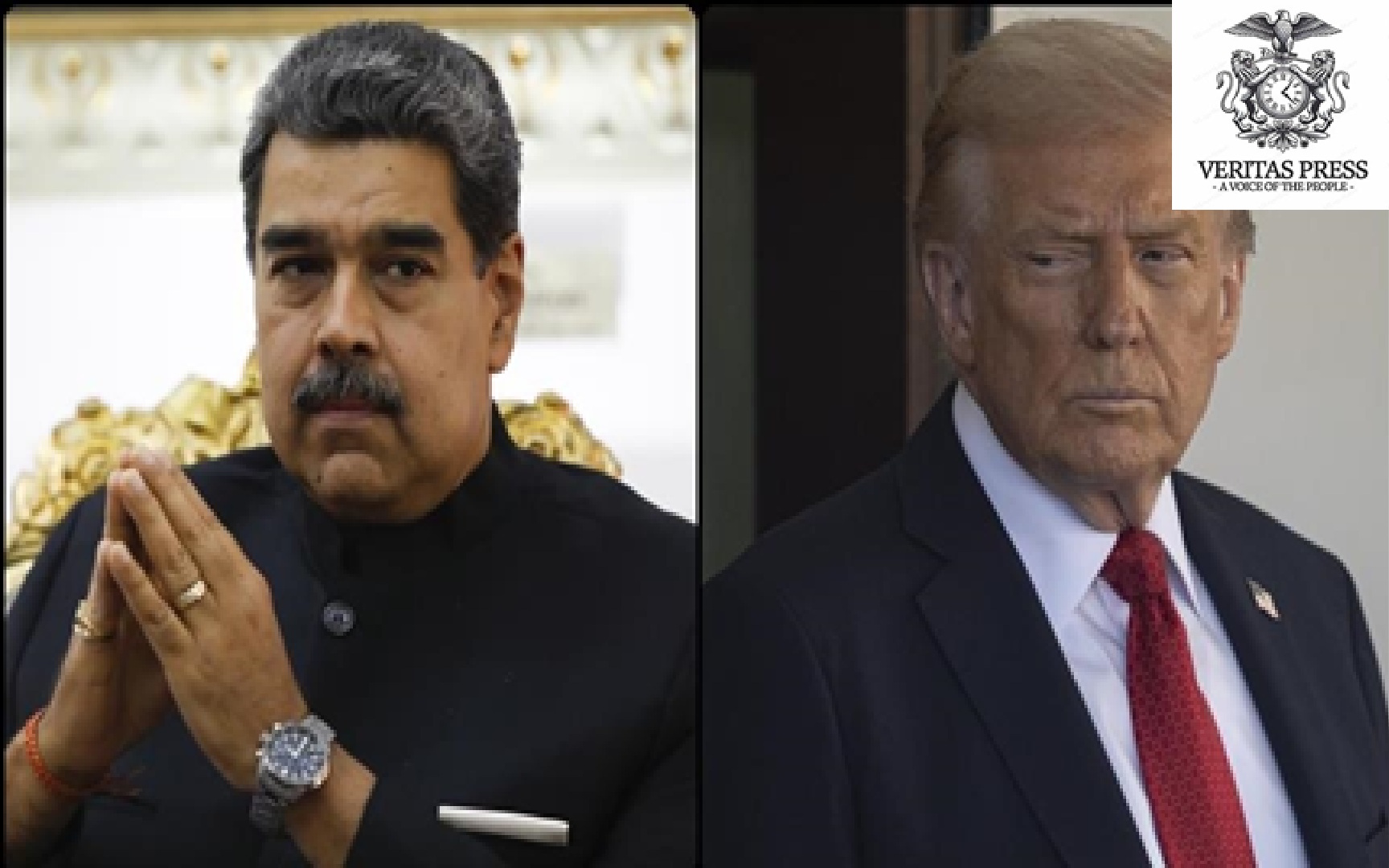
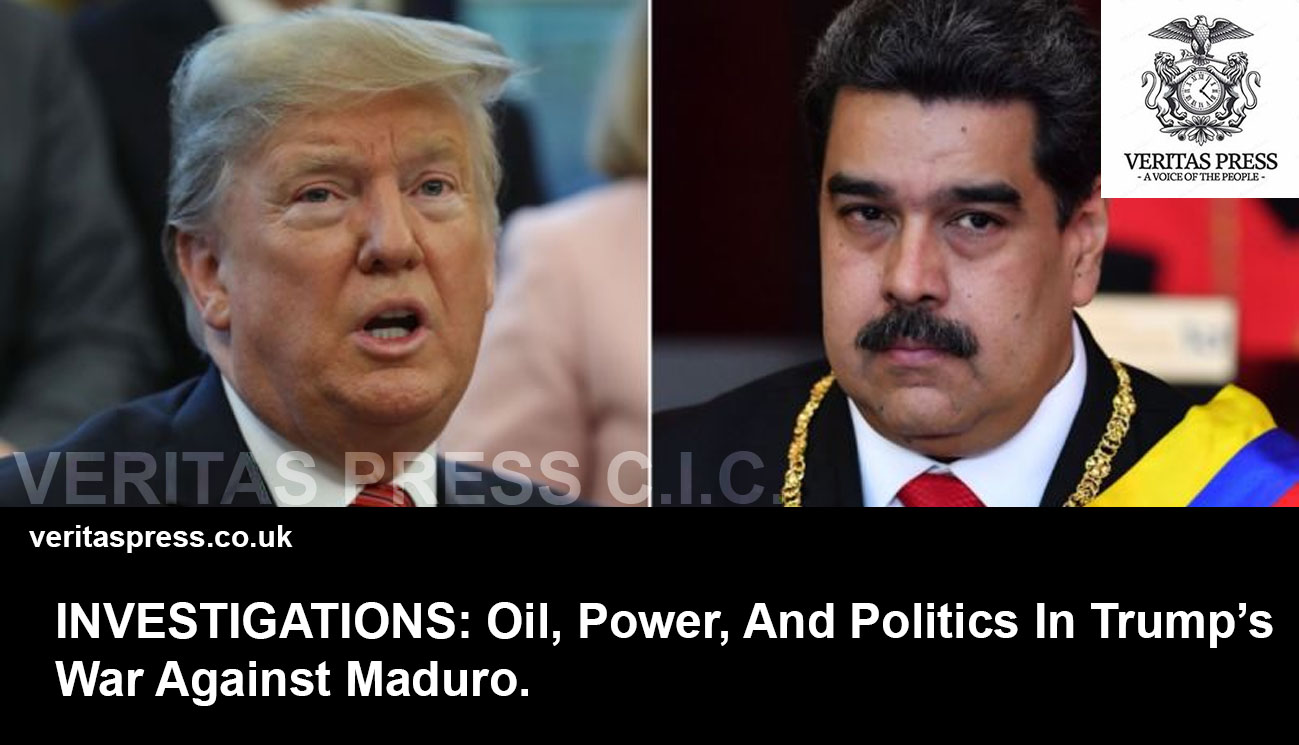
Machado said she gave Trump the medal as a gesture of gratitude for what she described as his “unique commitment to our freedom,” following a dramatic U.S. military operation that resulted in the capture of Venezuelan President Nicolás Maduro and his wife, Cilia Flores, who are now standing trial in New York on weapons-related charges.
“I presented the president of the United States the medal of the Nobel Peace Prize,” Machado told reporters Thursday at the U.S. Capitol, after meetings with Trump and bipartisan lawmakers. “It is a recognition of his unique commitment to our freedom.”
Trump, long known for openly coveting the Nobel Peace Prize, welcomed the gesture enthusiastically.
“It was my Great Honor to meet Maria Corina Machado,” Trump wrote on his Truth Social platform. “She is a wonderful woman who has been through so much. Maria presented me with her Nobel Peace Prize for the work I have done. Such a wonderful gesture of mutual respect.”
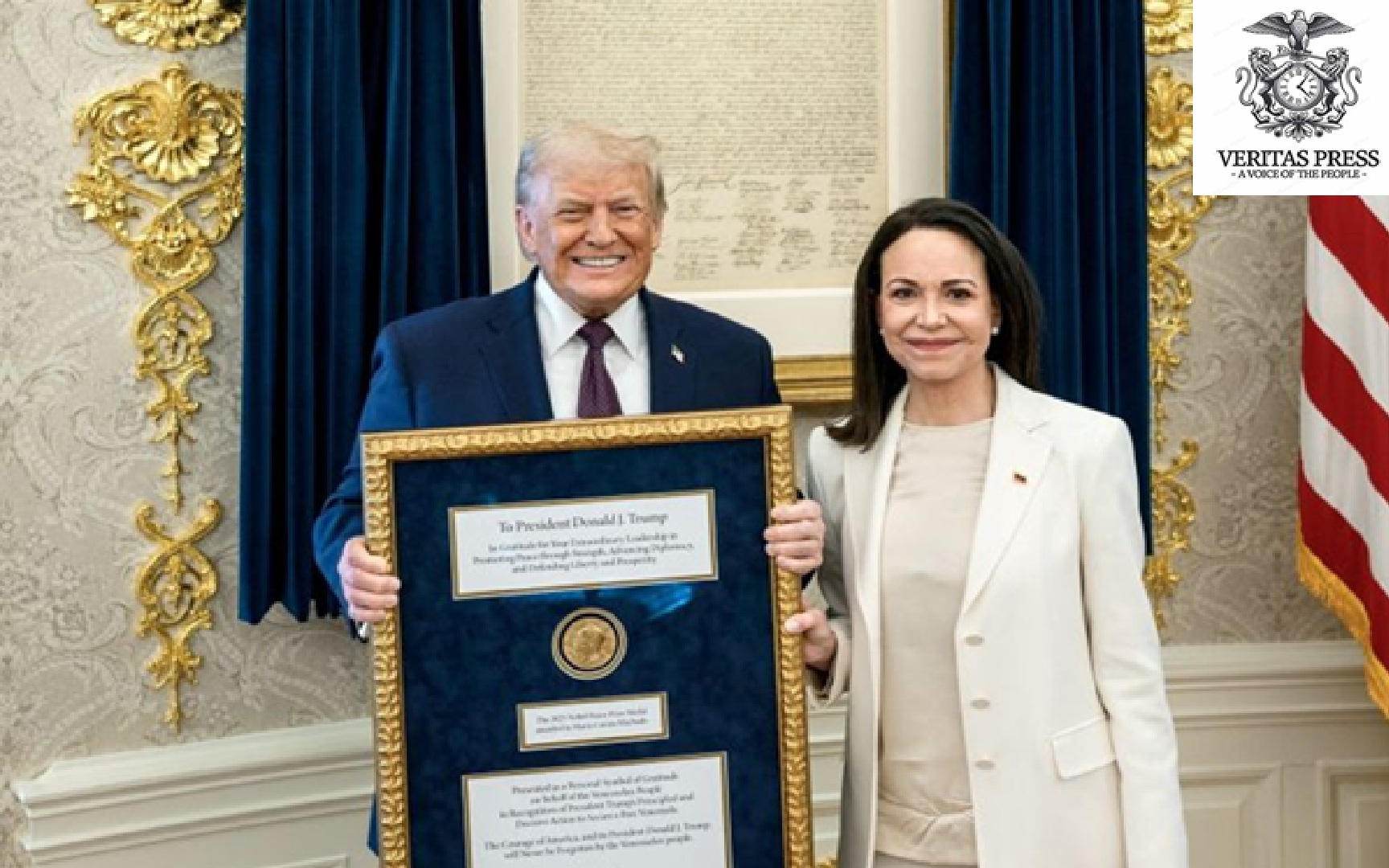
The White House later confirmed to ABC News that Trump agreed to keep the framed medal, which was prominently displayed during their Oval Office photo opportunity, staged in front of the Declaration of Independence.
But within hours, Oslo issued a blunt rebuttal.
Nobel Institute Pushes Back: “A Medal Can Change Owners, The Title Cannot”.
The Norwegian Nobel Committee and the Norwegian Nobel Institute moved quickly to clarify that while a physical medal may be gifted, the Nobel Peace Prize itself remains legally and permanently Machado’s.
“One truth remains,” the Nobel Peace Centre wrote on X.
“Once a Nobel Prize is announced, it cannot be revoked, shared, or transferred to others. The decision is final and stands for all time.”
The institute underscored:
“A medal can change owners, but the title of a Nobel Peace Prize laureate cannot.”
In a formal statement issued last week, even before Machado’s Washington visit, the Nobel Committee reiterated that its statutes allow no appeals, transfers, or post-award modifications. Committees also do not comment on how laureates use or dispose of their medals after receiving them.
Under Nobel Foundation rules, only the committee itself can decide whether a prize is shared, and only at the time of the award, among a maximum of three recipients. That decision, once announced, is irreversible.
Why Machado Won, And Why Trump Wanted It:
Machado, 58, received the 2025 Nobel Peace Prize for what the committee described as her “tireless work promoting democratic rights for the people of Venezuela and for her struggle to achieve a just and peaceful transition from dictatorship to democracy.”
A longtime critic of Nicolás Maduro, Machado won Venezuela’s opposition primary in 2023, positioning herself as the leading challenger in the 2024 presidential election. However, the Supreme Tribunal of Justice, aligned with Maduro, upheld a ban barring her from running, citing alleged support for U.S. sanctions, links to a purported weapons plot, and involvement in financial losses tied to Venezuelan state assets abroad, including Citgo and Monómeros.
Diplomat Edmundo González Urrutia replaced her on the ballot. Although Maduro claimed victory, the election was widely disputed. A UN expert panel cited serious irregularities, while nine Latin American governments demanded an independent audit.
After more than a year in hiding and defying a decade-long travel ban, Machado secretly left Venezuela in December to accept the Nobel Prize in Oslo.
Trump’s fixation on the award, meanwhile, has been well documented.
Before the 2025 prize was announced, Trump repeatedly insisted he deserved it, calling failure to award him the Nobel a “big insult” to the United States. Speaking at the UN General Assembly in September 2025, he declared: “Everyone says I should get the Nobel Peace Prize.”
Trump has claimed credit for ending or defusing conflicts involving Cambodia–Thailand, Kosovo–Serbia, the DRC–Rwanda, India–Pakistan, Israel–Iran, Armenia–Azerbaijan, Egypt–Ethiopia, and later the Gaza ceasefire.
Analysts dispute those claims. Several of the conflicts remain unresolved or have since reignited. Israeli forces have killed hundreds of Palestinians in Gaza since the ceasefire took effect in October, while India–Pakistan tensions remain high.
“I single-handedly ENDED 8 WARS,” Trump wrote on Truth Social in January. “And Norway, a NATO Member, foolishly chose not to give me the Nobel Peace Prize.”
Washington Power Plays After Maduro’s Capture:
Machado’s visit to Washington came two weeks after U.S. special forces carried out an unprecedented operation in Caracas that resulted in Maduro’s capture, an act critics have described as an abduction violating international law.
Since then, Venezuela’s political future has been in flux.
Despite Machado’s symbolic gesture, Trump has so far refused to endorse her as Venezuela’s future leader.
“I think it would be very tough for her to be the leader,” Trump said earlier this month. “She doesn’t have the support within, or the respect within, the country. She’s a very nice woman, but she doesn’t have the respect.”
According to a Washington Post report citing two anonymous White House sources, Trump had initially withheld support because Machado accepted the Nobel Prize rather than rejecting it in his favour. One source reportedly called her acceptance the “ultimate sin.”
“If she had turned it down and said, ‘I can’t accept it because it’s Donald Trump’s,’ she’d be the president of Venezuela today,” another source said.
Instead, Trump has thrown his weight behind Delcy Rodríguez, Maduro’s former deputy, who has been sworn in as interim president. White House Press Secretary Karoline Leavitt said U.S. officials, including Secretary of State Marco Rubio, have been in “constant communication” with Rodríguez.
“They have thus far met all of the demands and requests of the United States,” Leavitt said, citing the sale of $500 million in Venezuelan oil and the release of political prisoners. “The president likes what he’s seeing.”
Trump later described a phone call with Rodríguez as “very good,” praising prospects for cooperation on oil, minerals, trade, and national security.
Symbolism, Satire, And The Politics Of Power:
Machado left the White House carrying a red gift bag stamped with Trump’s gold facsimile signature, a striking contrast to the golden Nobel medal she left behind.
She later told U.S. lawmakers that she envisioned transforming Venezuela from “the criminal hub of the Americas” into “a security shield for the whole hemisphere,” promising open markets, restored rule of law, and the return of Venezuela’s vast diaspora.
Yet her political standing in Washington remains uncertain.
Meanwhile, the episode has sparked ridicule at home.
Late-night host Jimmy Kimmel mocked Trump for accepting “a Nobel Prize he didn’t win,” joking that Machado’s gift was “the only way to get him to do anything.”
“Rarely does a president yank a Nobel Prize off of someone’s neck,” Kimmel quipped. “He’s back in the Oval Office sucking on it like a pacifier.”
Kimmel also skewered the White House’s gift in return:
“Thanks for the Nobel Prize. Here’s a Make America Great Again mug.”
A Prize That Exposes The Limits Of Power:
Despite Trump’s celebration and Machado’s gesture, the Nobel Institute’s message was unequivocal: the Nobel Peace Prize remains Machado’s, legally, historically, and symbolically.
In theory, Trump could still be nominated for the prize in the future. U.S. presidents have won it before, including Barack Obama in 2009, a decision Trump has repeatedly derided.
But for now, the episode underscores a deeper truth: while power can seize leaders, shape governments, and even take presidents across borders, it cannot rewrite the statutes of history.
As the Nobel Committee put it plainly:
“Once a Nobel Prize is announced, the decision is final and stands for all time.”
Conclusion: A Shameless Exchange In An Age Of Transactional Power.
Donald Trump did not merely receive a symbolic gift; he shamelessly accepted a Nobel Peace Prize he did not win, fully aware that the Nobel Committee had neither granted it to him nor recognised his claim to it. In doing so, the U.S. president laid bare a political culture in which prestige is seized, not earned, and where the appearance of legitimacy matters more than its substance.
The handover of the medal by María Corina Machado was not an act of mutual respect, but a moment of political capitulation under asymmetric power. The prize, legally meaningless once removed from its laureate, nonetheless functioned as a token of loyalty, offered to a leader whose favour now determines Venezuela’s political future. Trump’s willingness to accept it, and to publicly celebrate it, underscores the degree to which norms, institutions, and even history itself are treated as negotiable when empire is at stake.
This episode strips away any lingering illusions about Washington’s commitment to democratic principles. While the Nobel Committee reaffirmed that prizes cannot be transferred, revoked, or shared, the White House demonstrated something far more consequential: that democratic legitimacy itself can be transferred, not through votes, but through military force, economic compliance, and political submission. The same administration that sidelined the internationally recognised Nobel laureate has embraced an interim authority shaped by U.S. interests, oil deals, and strategic obedience.
The irony is stark. Machado’s Nobel Prize was awarded for resisting dictatorship and defending democratic rights. Yet its most public use has been to court the approval of a foreign power that openly dismisses her political viability and treats Venezuela’s sovereignty as a bargaining chip. The medal, displayed beneath the Declaration of Independence, became a prop in a broader performance of dominance, a peace prize showcased amid forced regime change and extraterritorial abduction.
In the end, the Nobel Institute’s insistence that titles cannot be transferred rings hollow against the reality that power has no such restraint. Trump may never be a Nobel Peace Prize laureate in law or history, but he has shown he is willing to take the prize anyway, and in doing so, he has revealed how symbols of peace are hollowed out when subjected to transactional geopolitics.
The medal may sit in Trump’s possession. But its meaning, like Venezuela’s future, has been violently contested, reshaped not by democratic will, but by shameless power.
Kamran Faqir is a volunteer investigative journalist and writer committed to exposing hidden truths and amplifying underreported stories. Driven by social justice, he brings sharp insight and fearless truth-telling to independent journalism. NUJ registered.
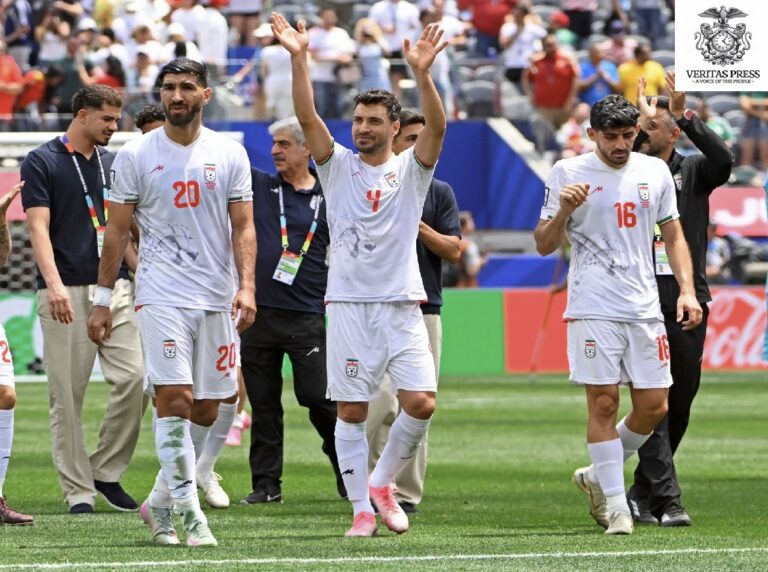
SEATTLE, TEHRAN — The U.S. Department of Homeland Security (DHS) will allow Iran’s national football team to enter the country 48 hours before their critical World Cup match against Egypt on Friday, a modest concession in a tournament where Team Melli’s travel conditions have sparked claims of oppression and competitive disadvantage.