






Title: UN Warns Nearly 95,000 Gaza Children Malnourished As Rights Groups Say Starvation, Exposure And Ongoing Attacks Amount To War Crimes.
Press Release: Veritas Press C.I.C.
Author: Kamran Faqir
Article Date Published: 13 Jan 2026 at 12:05 GMT
Category: Americas | Politics | UN Warns Nearly 95,000 Gaza Children Malnourished as Rights Groups Say Starvation, Exposure and Ongoing Attacks Amount to War Crimes.
Source(s): Veritas Press C.I.C. | Multi News Agencies
Website: www.veritaspress.co.uk

Business Ads


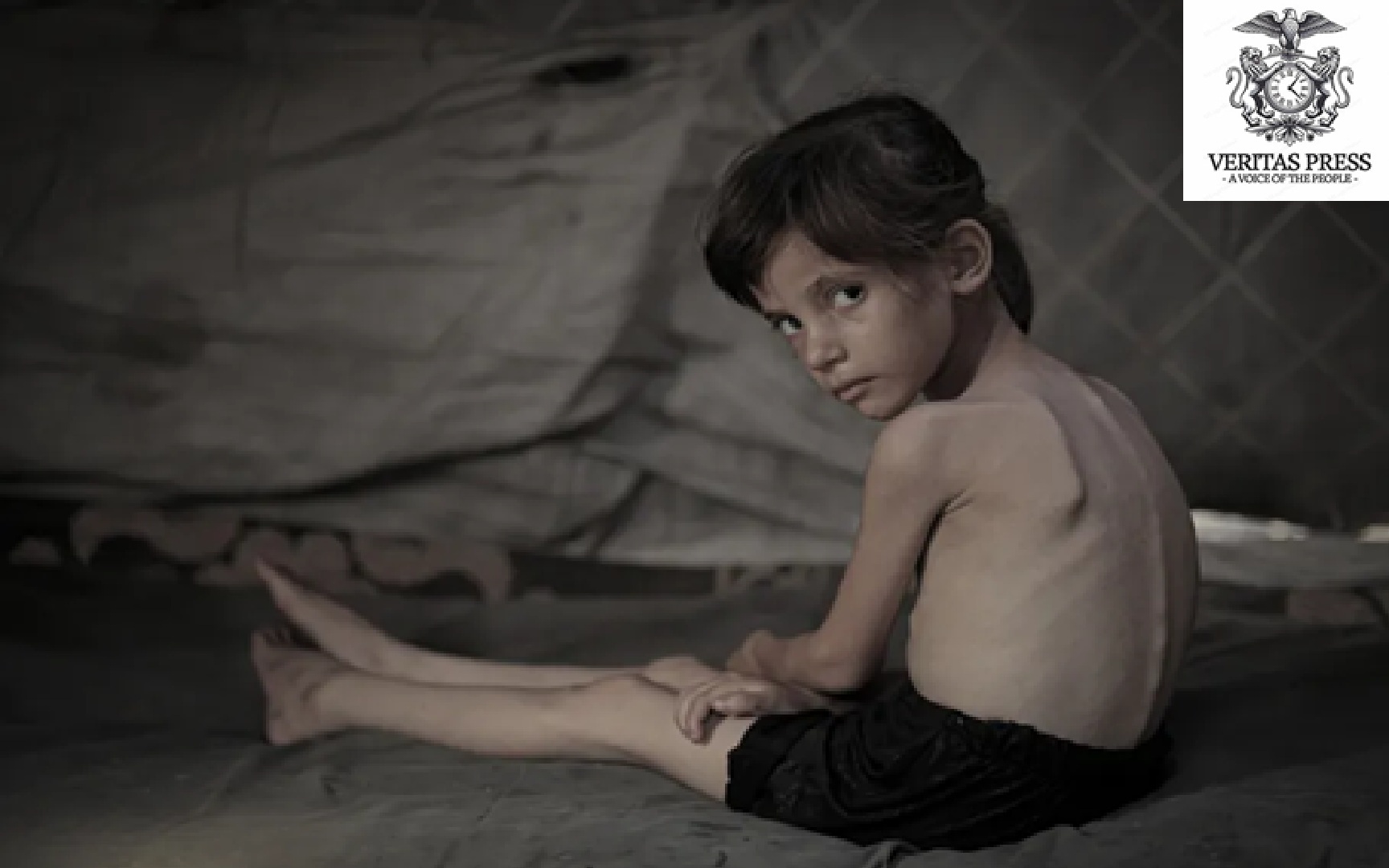
The United Nations has warned that nearly 95,000 cases of acute child malnutrition have been identified in Gaza since the start of 2025, as winter storms, aid restrictions, and continued Israeli military operations converge into what human rights groups describe as a deliberate, systematic assault on civilian survival, one that may constitute war crimes under international law.
UN officials, medical workers, and rights organisations say the scale, predictability, and persistence of deaths from hunger, cold, disease, and collapsing bomb-damaged buildings point not to humanitarian failure, but to policy-driven deprivation.
“Starvation, exposure, and denial of medical care are not side effects of war,” said Human Rights Watch in a recent briefing. “They are prohibited methods of warfare.”
95,000 Malnourished Children: Evidence Of Starvation As A Weapon.
At a UN press briefing, spokesperson Stéphane Dujarric, citing the UN Office for the Coordination of Humanitarian Affairs (OCHA), confirmed that humanitarian partners screened more than 76,000 children in a single month, identifying 4,900 new cases of acute malnutrition, including over 820 cases of severe acute malnutrition.
“This brings the total number of acute malnutrition cases identified in 2025 to nearly 95,000,” Dujarric said.
Under Article 54 of Additional Protocol I to the Geneva Conventions, starvation of civilians as a method of warfare is explicitly prohibited. Legal analysts note that malnutrition on this scale, amid repeated warnings, extensive documentation, and the capacity to allow aid, raises serious questions of criminal liability.
Dr. Ayman Abu Jazar, a paediatrician in Khan Younis, told Middle East Eye:
“Children are not just underfed, they are wasting away. Their immune systems have collapsed. We are watching preventable deaths in real time.”
The World Health Organisation has warned that prolonged malnutrition will cause irreversible cognitive and physical damage, even among survivors.
Winter Exposure And Shelter Destruction: Foreseeable, Preventable, Lethal.
UN officials say 1.1 million Palestinians remain in urgent need of shelter, as winter storms repeatedly destroy tents pitched over rubble created by Israeli bombardment.
“Tents are not shelter,” Dujarric said. “They are a last resort.”
Medical authorities report a surge in deaths from hypothermia and collapsing structures, many involving children. At least six children have died from cold exposure this winter, including a seven-day-old infant and a four-year-old child.
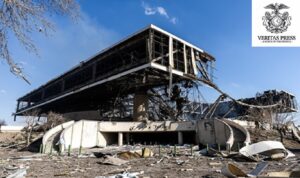
In Gaza City, 15-year-old Rimas Bilal Hammouda was killed when storm winds caused a bomb-damaged building to collapse.
Under international humanitarian law, an occupying power must ensure adequate shelter and protection of civilians, particularly children. Rights groups argue that preventing reconstruction materials from entering Gaza while winter deaths mount amounts to deliberate endangerment.
Ceasefire Violations And Continued Military Operations:
Despite a ceasefire announced on October 10, Israeli forces have continued:
- Demolitions of civilian structures
- Artillery shelling of refugee camps
- Drone strikes and air raids
- Restrictions preventing rescue teams from reaching the wounded
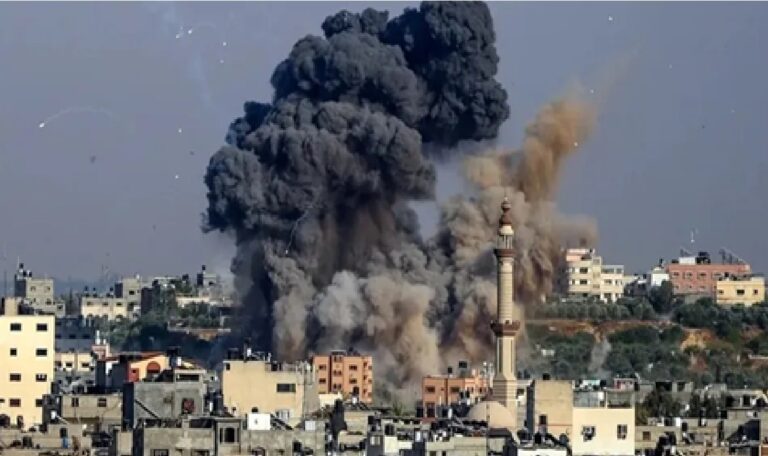
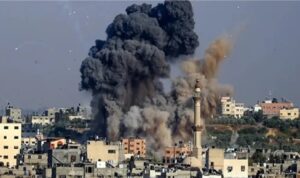
UN officials have confirmed ongoing demolitions and shelling in Gaza City, al-Bureij, Khan Younis, and Deir al-Balah.
“You cannot claim humanitarian progress while destruction continues,” Dujarric said. “We want to see a stop to the demolition of whatever remains of Gaza.”
Human Rights Watch and Amnesty International have both stated that continued military operations during a ceasefire, particularly when they obstruct humanitarian access, may constitute grave breaches of the Geneva Conventions.
Healthcare Collapse And Preventable Deaths:
Hospitals across Gaza are operating at over 150% capacity, with severe shortages of fuel, electricity, antibiotics, vaccines, and medical equipment.
Health authorities warn of the spread of mutated strains of influenza and coronavirus, driven by:
- Immune collapse caused by hunger
- Overcrowded shelters
- Lack of vaccines and antivirals
- Unheated living conditions
Dr. Marwan Al-Hams, Director of Gaza’s Field Hospitals, said:
“These deaths are not inevitable. They are the result of blocked medicine, blocked fuel, blocked movement.”
The UN High Commissioner for Human Rights has previously warned that denial of medical care may constitute inhuman and degrading treatment under international law.
Aid Restrictions As Collective Punishment:
While UN agencies have distributed winter clothing, shoes, and child-friendly tents, humanitarian groups say these measures are grossly insufficient due to Israeli restrictions on:
- Cement and construction materials
- Heavy machinery to clear rubble
- Fuel for hospitals and shelters
- Medical equipment and vaccines
“Blocking reconstruction guarantees prolonged suffering,” Amnesty International said, describing the policy as collective punishment, which is prohibited under Article 33 of the Fourth Geneva Convention.
Education Denied, Rights Violated:
Israeli authorities continue to block educational supplies, arguing that education is not a “critical activity” during the ceasefire.
“We strongly disagree,” Dujarric said. “Education is a critical activity.”
UNICEF and Save the Children warn that denying education violates children’s rights and compounds long-term trauma.
Journalist Hind Khoudary reported:
“Children speak of school as something that belonged to another life. Many no longer believe the future exists.”
Mounting Death Toll And Legal Warnings:
Since October 2023, Gaza’s health authorities report:
- Over 100,000 Palestinians killed
- More than 400,000 injured
- Thousands are still buried under rubble
Deaths from hunger, cold, disease, and building collapse continue during the ceasefire, highlighting what rights groups describe as a shift from overt bombardment to slow, structural killing.
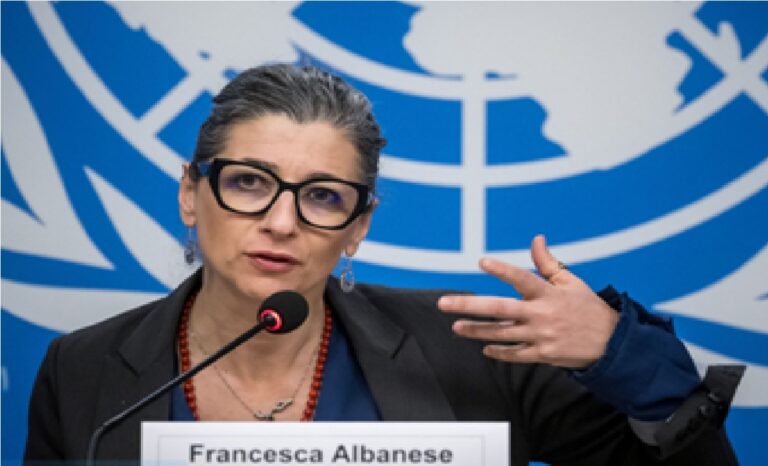
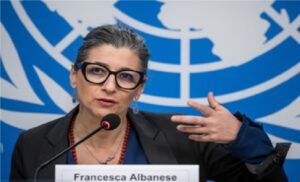
“This is not collateral damage,” said UN Special Rapporteur Francesca Albanese. “It is the systematic destruction of the conditions necessary for life.”
Accountability Demanded:
Human rights organisations and legal scholars are calling for:
- Independent international investigations
- Accountability for starvation and denial of aid
- Enforcement of provisional measures ordered by the International Court of Justice
- Protection for civilians and aid workers
- Immediate lifting of all aid restrictions
As winter deepens and children continue to die, doctors and rights groups warn that every additional day of inaction strengthens the evidence of criminal responsibility.
As one Gaza medic told Reuters:
“The bombs may have slowed. The policy has not. And the children are still dying.”
Conclusion: From Humanitarian Catastrophe To Criminal Liability
What is unfolding in Gaza can no longer be credibly framed as a humanitarian emergency alone. The scale, duration, predictability, and documented causes of child starvation, winter exposure, untreated disease, and preventable civilian deaths point instead to systematic violations of international humanitarian law, carried out in full view of the international community.
Nearly 95,000 malnourished children, infants dying from cold in unheated tents, civilians crushed by buildings previously bombed and left unrepaired, and hospitals collapsing under the weight of blocked fuel and medicine are not random outcomes of conflict. They are the foreseeable results of policy choices and apartheid: the restriction of food, fuel, medical supplies, shelter materials, and reconstruction equipment; the continuation of military operations during a ceasefire; and the sustained denial of conditions necessary for civilian survival.
Under the Fourth Geneva Convention, an occupying power bears a clear and non-derogable duty to ensure food, medical care, shelter, and public health for the civilian population. Under Additional Protocol I, the starvation of civilians as a method of warfare is explicitly prohibited. Under the Rome Statute of the International Criminal Court, intentionally inflicting conditions of life calculated to bring about a population’s physical destruction constitutes a prosecutable crime.
Human rights organisations, including Human Rights Watch, Amnesty International, and UN-mandated experts, have repeatedly warned that Israel’s conduct in Gaza meets these legal thresholds. The International Court of Justice, in its provisional measures, ordered steps to prevent irreparable harm to Palestinians and to ensure humanitarian access. Those measures remain unfulfilled as children continue to die from hunger and cold.
The language of “aid challenges” and “logistical constraints” now functions as a shield against accountability. Humanitarian agencies have been explicit: sufficient aid exists, expertise exists, and capacity exists. What does not exist is permission. When destruction continues during a ceasefire, when rescue teams are blocked, when vaccines and cement are denied, and when winter deaths are publicly reported yet allowed to persist, the claim of inevitability collapses.
As UN Special Rapporteur Francesca Albanese has warned, this is not merely a failure to protect civilians, it is the active dismantling of the conditions required for life. Legal scholars increasingly describe Gaza not as a battlefield, but as a controlled environment in which suffering is managed, prolonged, and normalised.
The consequences of inaction are no longer abstract. Each additional child who dies of malnutrition or hypothermia deepens the evidentiary record. Each day reconstruction is blocked strengthens the case that civilian suffering is not incidental but instrumental. Each state that continues military, political, or diplomatic support without enforcing compliance risks complicity under international law.
The question confronting the international community is no longer whether Gaza is facing a humanitarian catastrophe. The evidence is overwhelming. The question is whether the world will continue to treat mass civilian harm as an unfortunate outcome or finally recognise it for what international law already defines it as: a crime demanding accountability.
History will not measure this moment by the number of statements issued or aid trucks promised, but by whether those with the power to stop preventable deaths chose to act, or chose to look away while children froze, starved, and disappeared beneath rubble.