Kamran Faqir is a volunteer investigative journalist and writer committed to exposing hidden truths and amplifying underreported stories. Driven by social justice, he brings sharp insight and fearless truth-telling to independent journalism. NUJ registered.
Title: Assault On Worshippers At Iranian Mosque In London, A Flashpoint Of Diaspora Tensions And Global Struggle.
Press Release: Veritas Press C.I.C.
Author: Kamran Faqir
Article Date Published: 11 Jan 2026 at 12:35 GMT
Category: UK | Politics-Islamophobia | Assault On Worshippers At Iranian Mosque In London, A Flashpoint Of Diaspora Tensions And Global Struggle.
Source(s): Veritas Press C.I.C. | Multi News Agencies
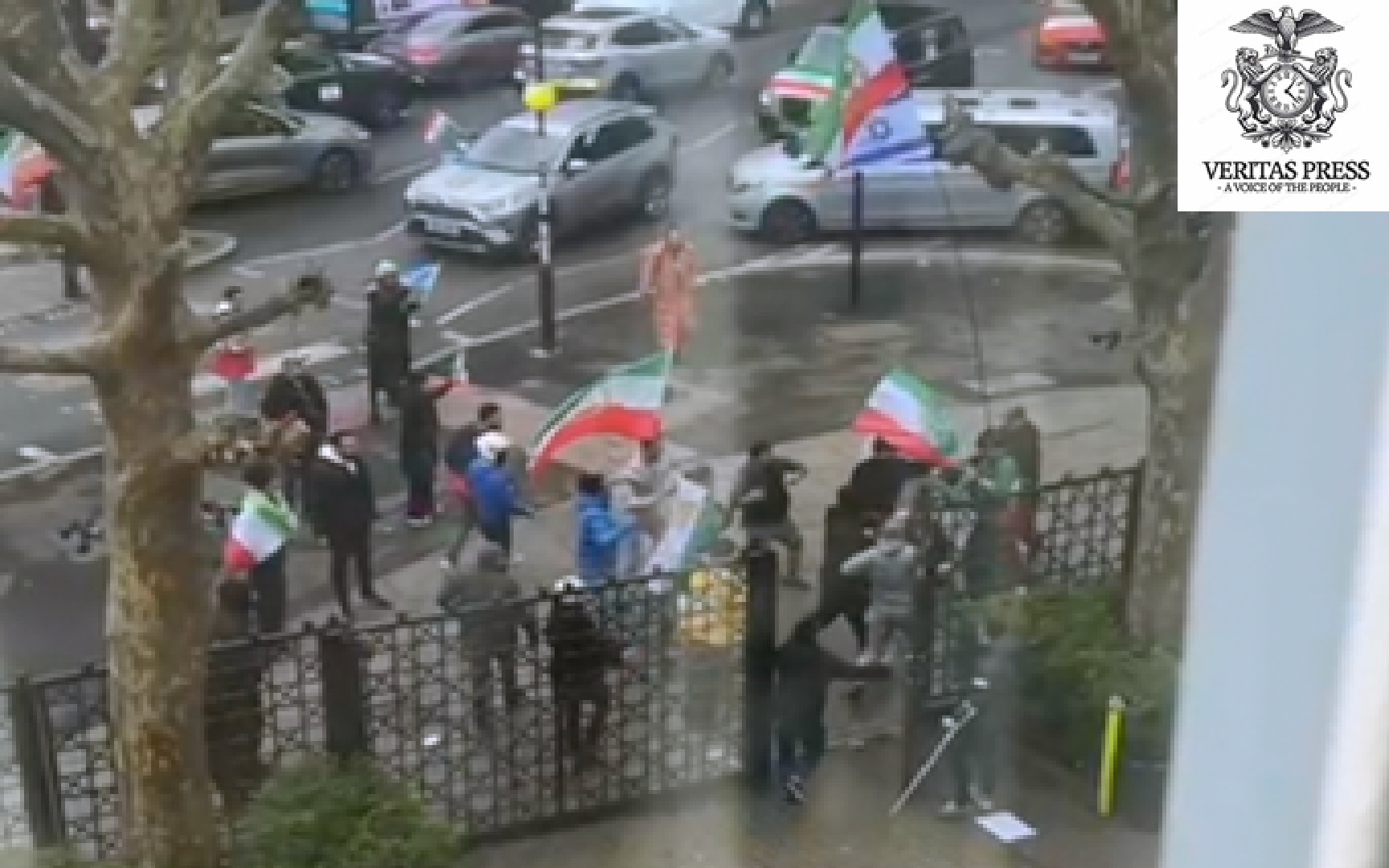
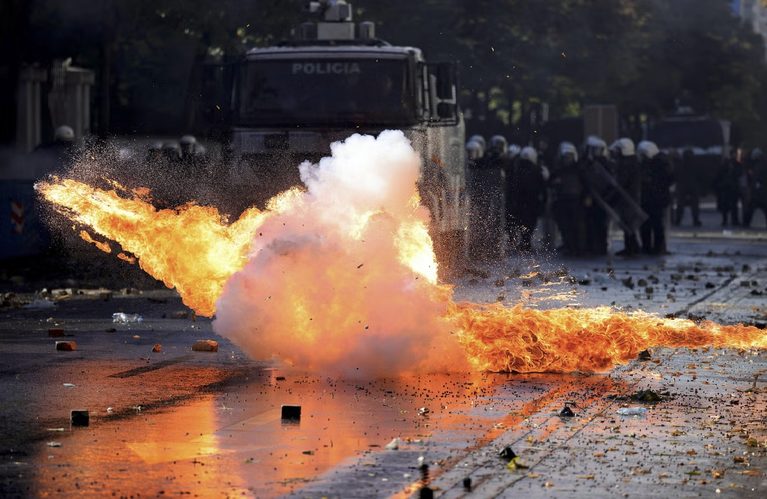
LONDON — The assault on worshippers at the Islamic Centre of England in Kilburn on Saturday is not merely a clash outside a mosque; it has become a symbol of deepening political fractures within the Iranian diaspora and exposes the challenge facing British authorities in policing ideologically charged demonstrations that mirror brutal repression unfolding inside Iran.
What began as a group of anti-government demonstrators congregating near the mosque’s gates quickly escalated into violence, forcing the centre to temporarily close its doors as worshippers and volunteers sought refuge and tried to protect vulnerable congregants, including children, inside the building.
Witness Testimonies And Community Impact:
Hassan al‑Qadri, present during the assault, described to 5Pillars UK how he tried to appeal to protesters about the children inside the mosque:
“I begin to tell them that there are kids inside and please don’t come close … then 20 to 30 of them surround me … they all begin to attack me.”
Another worshipper, who asked to remain anonymous, told reporters they saw elderly members pushed and shouted at, compelling centre staff to lock the mosque’s doors for safety reasons. The melee, though brief, has left community members shaken and fearful of further incidents. The receptionist at the Islamic Centre warned that a larger protest was expected the following day, which he described ominously as an “anti-Islam demonstration.”
UK Police Response: Policing Protest And Public Order:
The Metropolitan Police have been openly monitoring and responding to demonstrations around Iranian political tensions. On social media, the Met posted that:
“We are aware of a protest currently taking place outside of the Iranian Embassy … Officers are on site, and additional officers are being deployed to prevent any disorder.”
This statement was issued during a separate embassy protest earlier in the same week, where a demonstrator scaled the Iranian embassy and replaced the national flag with the pre-1979 Lion and Sun flag, an act widely circulated on social media and publicly acknowledged by police.
In previous clashes linked to Iranian diaspora protests, the Met confirmed arrests on suspicion of grievous bodily harm and cordoned off areas where confrontations occurred. One police statement during a June 2025 demonstration noted:
“Seven other men remain in police custody after being arrested on suspicion of grievous bodily harm … Two men were treated for injuries … Police have cordoned off the area while initial investigations take place.”
Yet despite heightened policing around embassy protests and clashes, there has been no widely published statement specifically addressing the mosque assault itself, highlighting a gap in official communication at a moment when optimism for inclusive policing is most needed.
Human Rights Organisations: International Context And Diaspora Implications.
Amnesty International and Human Rights Watch have highlighted the unfolding repression in Iran as part of the backdrop for these diaspora tensions. In a joint report released in early January 2026, the groups documented:
“People in Iran daring to express their anger at decades of repression and demand fundamental change are once again being met with a deadly pattern of security forces unlawfully firing at, chasing, arresting and beating protesters …” — Amnesty International & Human Rights Watch
Their findings confirm that security forces in Iran have killed at least 28 demonstrators and bystanders, including children, in just the first days of nationwide protests that began after December 28, 2025. The report condemns unlawful use of force, arbitrary arrests, and systematic intimidation. The violence witnessed in Tehran and other major Iranian cities has been labelled “unlawful” and part of a broader pattern of repression by these organisations, insinuating that both domestic Iranian and diaspora protests are entangled in a cycle of political violence and counter-violence.
Analysis From Diaspora Rights Organisations And UK Civil Society:
Rights advocates in the UK have long raised concerns about the intersection of foreign political conflict with local safety and freedom of expression. In a letter to former Metropolitan Police Commissioner Sir Mark Rowley, the Islamic Human Rights Commission (IHRC) warned of organised, premeditated violence at demonstrations, describing attacks on peaceful Iranian demonstrators as both targeted and systematic.
Amnesty International UK has also documented how diaspora activism intersects with wider demands for human rights in Iran, stating that protests outside embassies aim to call attention to violent repression and political prisoners inside Iran, and urging robust protection for peaceful demonstrators in the UK. However, diaspora activism has not been free from conflict itself. In previous incidents, Iranian dissidents in Britain, including those critical of Tehran and outspoken against regime violence, reported serious attacks by pro‑regime supporters, including beatings leading to permanent injuries. One such case documented by The Jewish Chronicle described an asylum‑seeker left partially paralysed after an assault in London, illustrating real dangers faced by activists on both sides of the political divide.
Media And Journalistic Perspectives On The Broader Crisis:
British media coverage has echoed concerns about the spillover of Iran’s domestic unrest into the UK’s streets, with outlets like The Guardian reporting on anti-regime protests that drew hundreds in London, including dramatic acts such as the tearing down of the Iranian flag at the embassy. These protests reflect solidarity with exhausted Iranians at home while exposing diverse and sometimes conflicting political alliances within the diaspora.
Journalistic accounts suggest that part of the challenge lies in differentiating between legitimate anti-regime expression and actions that cross into intimidation or violence against fellow diaspora communities, such as the assault at the Kilburn mosque.
Deeper Implications: Diaspora Divides And Policing Challenges.
This incident lays bare a troubling reality: global crises are no longer contained by borders. For Iranian expatriates, the struggle over Iran’s political future, be it secular democracy, theocratic reform, or reviving pre-revolutionary symbols, has fractured into rival camps that sometimes clash physically in host societies.
For British authorities, the task is twofold:
Protect the right to free expression and peaceful protest while
Prevent politically motivated violence that mirrors oppression abroad and erodes safety at home.
The Met’s sporadic communication around these events, active on social media for high-profile embassy protests but less so after violence involving worshippers, may be perceived as uneven by affected communities.
Rights organisations, from Amnesty International’s calls to protect protests and human rights defenders, to IHRC’s warnings about repeated attacks on peaceful demonstrators, all underscore the urgent need for clearer, consistent policing strategies that uphold public safety without stifling legitimate political expression.
Conclusion: From Kilburn To The Nation — How Transnational Conflict Feeds Islamophobia And Erodes Muslim Safety In The UK.
The assault on worshippers at the Islamic Centre of England should be understood not as an isolated clash of politics, but as a symptom of intersecting crises: political polarisation within the Iranian diaspora, the violent spill‑over of global conflicts into British communities, and a nationwide rise in Islamophobia that has made Muslims in the UK disproportionately vulnerable to hate and violence.
This violence did not happen in a vacuum. National monitoring organisations have recorded record levels of anti‑Muslim hatred in the UK, with Islamophobic assaults surging by 73% in 2024, the highest since systematic tracking began and thousands of incidents reported, including verbal abuse, physical attacks, and intimidation. According to Tell MAMA, which monitors anti‑Muslim hatred, 6,313 cases of anti‑Muslim hate were reported in 2024, a 43% increase on the previous year, with many incidents involving both online and offline violence. Community members were often targeted simply because of their appearance or religious identity, not any individual political stance.
Government figures corroborate this trend: in the year ending March 2025, religiously motivated hate crimes against Muslims rose by 19%, driven in part by spikes in public disorder linked to unrelated events such as the Southport murders and ensuing unrest. Muslims were also the most likely religious group to experience a hate crime, according to official Home Office statistics. Community leaders have warned that such hate is not random but rooted in deep-seated prejudice and political scapegoating. Zara Mohammed, Secretary‑General of the Muslim Council of Britain, described the rise in Islamophobic offences as “shocking and deeply distressing,” noting that existing legislation and strategies are insufficient to combat an escalating climate of hate that has been normalised in parts of public and political discourse. She has called for a national strategy to tackle Islamophobia alongside all forms of racism and more meaningful government engagement with Muslim communities. These patterns are mirrored in repeated reports of attacks on mosques and Muslim institutions, from symbolic vandalism to violent arson. In October 2025, a mosque in Peacehaven, East Sussex, was set alight in a suspected hate crime, reinforcing the reality that Muslim places of worship are increasingly targeted.
Against this backdrop, the Kilburn assault takes on a darker significance: what began as a confrontation tied to Iranian politics quickly overlapped with latent anti‑Muslim sentiment and a broader social narrative that portrays Muslims as monolithic and politically suspect. Critics of diaspora activism, far-right agitators, and some media narratives alike have conflated Muslim identity with foreign political agendas, reinforcing stereotypes that fuel suspicion and hostility. This dynamic makes British Muslims targets not only of geopolitical backlash, but also of domestic nationalist impulses that frame Muslim communities as inherently alien or destabilising.
The result is a toxic feedback loop: international crises feed domestic prejudice, and unresolved domestic Islamophobia feeds mistrust and insecurity within minority communities. Worshippers who sought only to pray were instead caught in a collision of global politics and rising hatred, an outcome that should alarm policymakers, law enforcement, and society at large.
For the UK to uphold its commitments to multiculturalism, freedom of religion, and community cohesion, it must confront this reality head-on. Strengthening hate‑crime protections, investing in robust monitoring and victim support, and dismantling the structural biases that allow anti‑Muslim prejudice to flourish are essential. Without a national reckoning with Islamophobia, not as sporadic mistrust but as a systemic threat to civil society, incidents like the Kilburn assault will continue to recur, and British Muslims will bear the brunt of both global conflict and domestic hatred.
Kamran Faqir is a volunteer investigative journalist and writer committed to exposing hidden truths and amplifying underreported stories. Driven by social justice, he brings sharp insight and fearless truth-telling to independent journalism. NUJ registered.
SEATTLE, TEHRAN — The U.S. Department of Homeland Security (DHS) will allow Iran’s national football team to enter the country 48 hours before their critical World Cup match against Egypt on Friday, a modest concession in a tournament where Team Melli’s travel conditions have sparked claims of oppression and competitive disadvantage.