Kamran Faqir is a volunteer investigative journalist and writer committed to exposing hidden truths and amplifying underreported stories. Driven by social justice, he brings sharp insight and fearless truth-telling to independent journalism. NUJ registered.
Title: Israeli Bombardment Of Shelters And Schools In Gaza: A Pattern Of Civilian Targeting Amid Fragile Ceasefire
Press Release: Veritas Press C.I.C.
Author: Kamran Faqir
Article Date Published: 09 Jan 2026 at 12:30 GMT
Category: Middle East | Palestine-Gaza-West Bank-OPT | Israeli Bombardment Of Shelters And Schools In Gaza: A Pattern Of Civilian Targeting Amid Fragile Ceasefire
Source(s): Veritas Press C.I.C. | Multi News Agencies
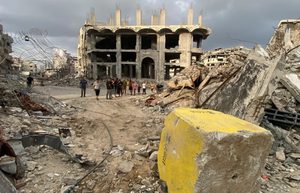
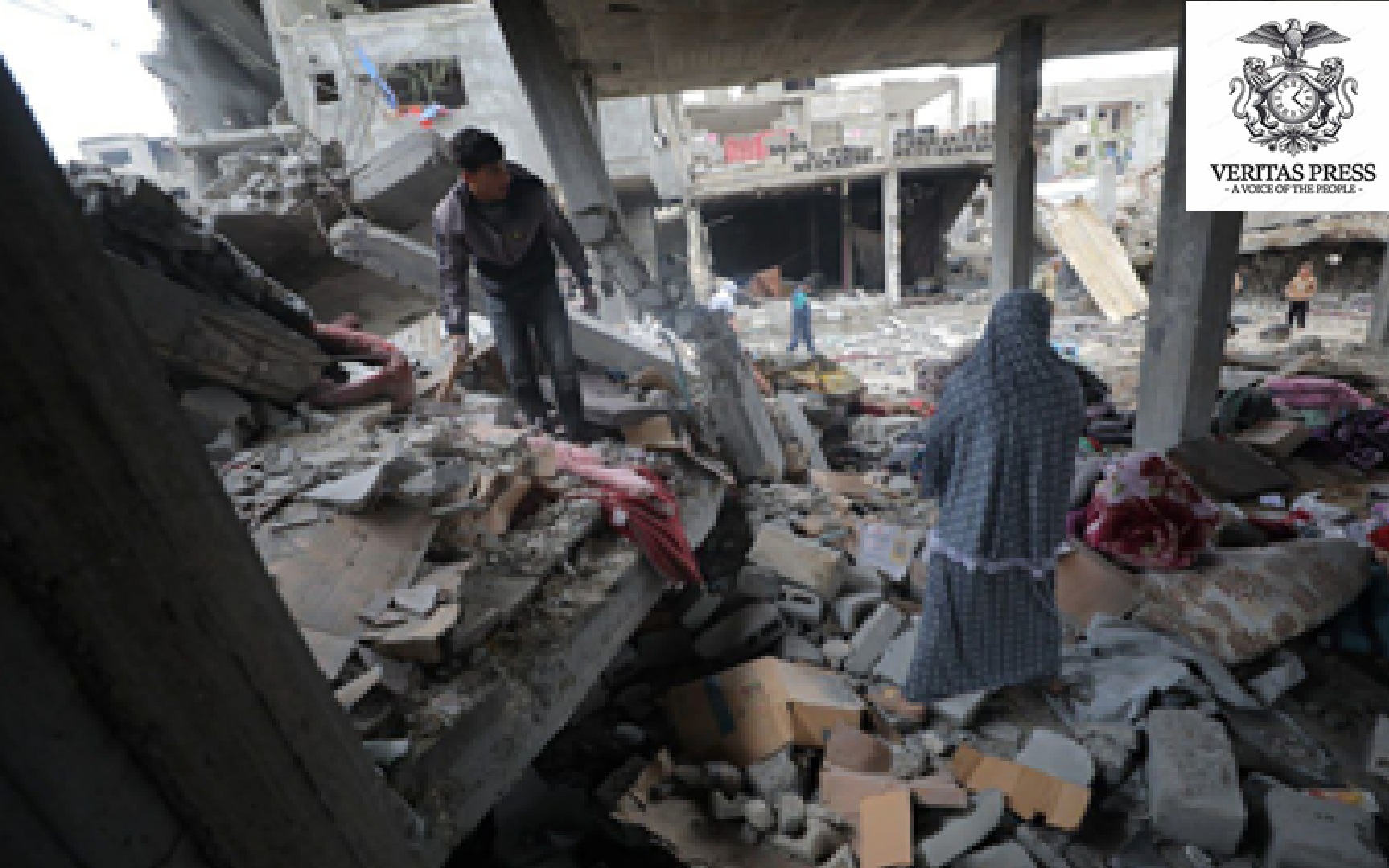
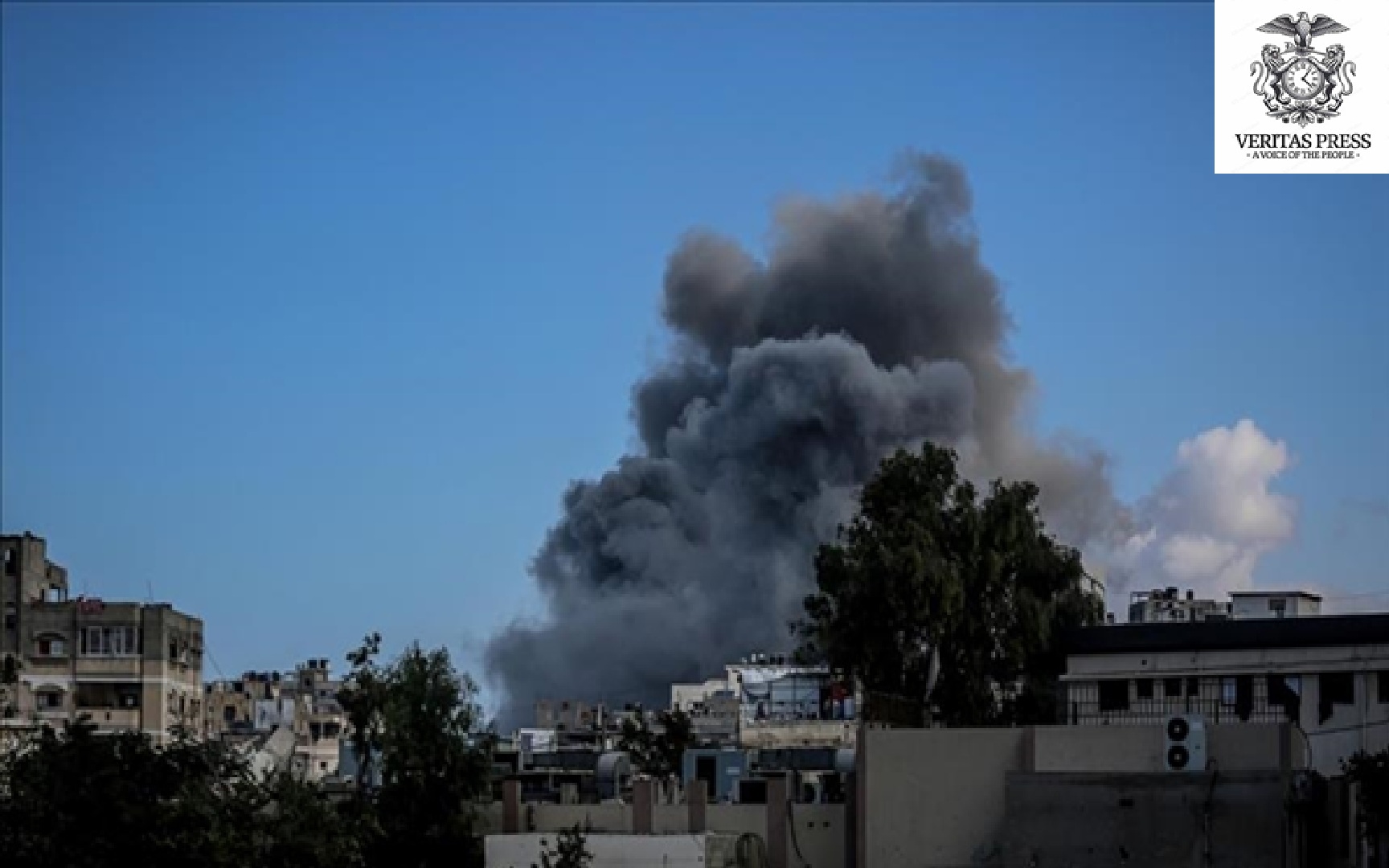
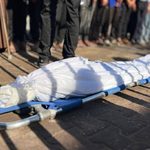
GAZA, January 2026 — At least 14 Palestinians, including five children, were killed on Thursday in a wave of Israeli air and drone strikes that hit displacement tents, school shelters, and residential neighbourhoods across the Gaza Strip, according to multiple independent and local medical sources.
The attacks underscore a disturbing pattern of violence against civilians, even three months into a United States-mediated ceasefire that was supposed to halt hostilities and pave the way for reconstruction and humanitarian relief. Gaza’s Ministry of Health, itself operating under extreme strain, reports that more than 420 Palestinians have been killed and over 1,000 wounded in Israeli operations since the October 10 ceasefire, even as both sides accuse each other of violations.
“Safe Zones” Hit, Children Among The Dead:
A drone strike on a tent shelter in the Al-Mawasi area, an area Israel has previously described as a refuge for displaced civilians, killed several members of the Al-Abadla family, including young children, according to local emergency services.
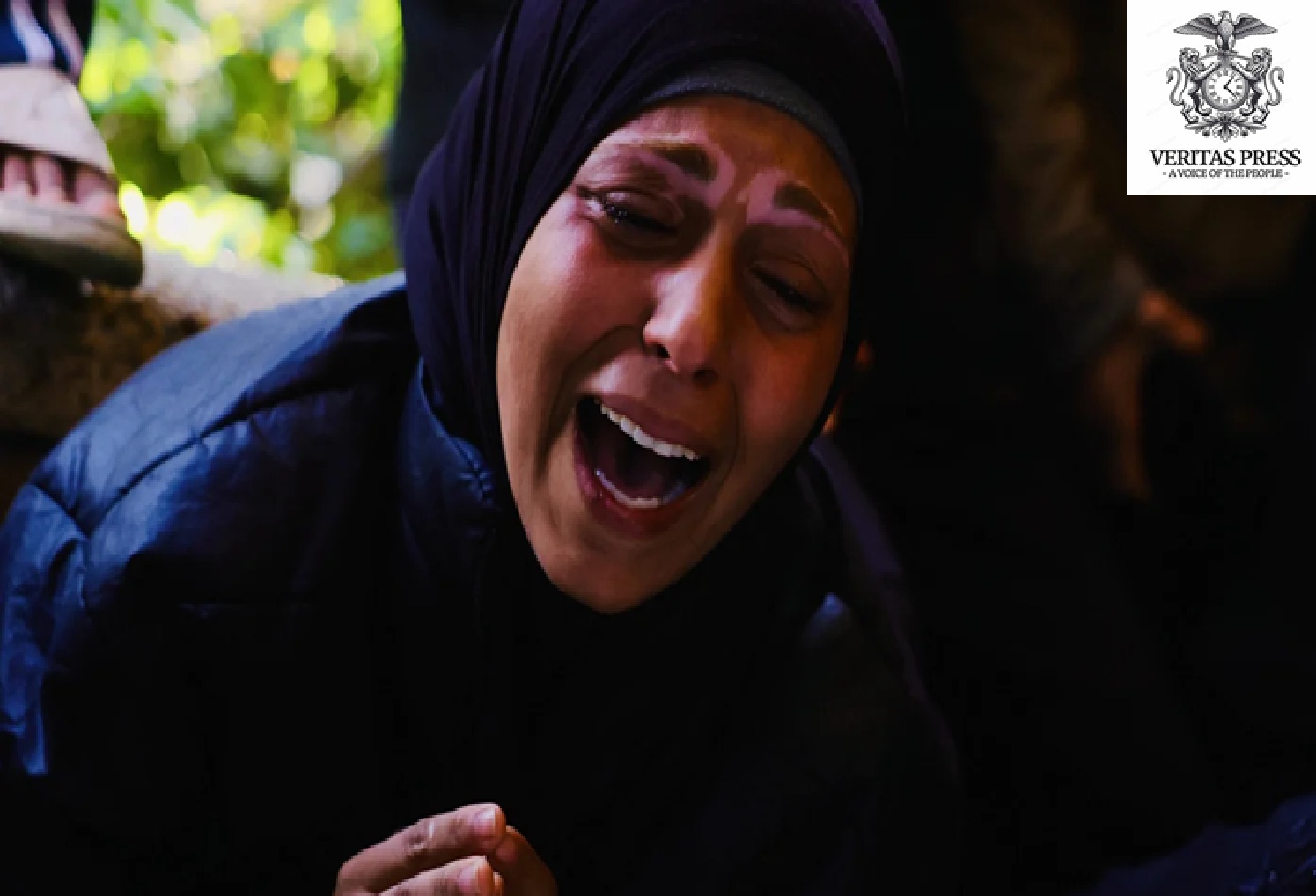
One medical source at Nasser Hospital said bodies of Layan Abu Shaqra and brothers Abdullah (7) and Omar (5) were received after the tent was struck, with relatives describing the scene as “beyond human comprehension” as rescuers pulled charred remains from the debris. In Jabaliya refugee camp in northern Gaza, a strike on a school sheltering displaced families killed at least one young man and wounded several children, according to civil defence officials. Local residents, whose identities are withheld for their safety, told Middle East Eye that “no one here feels safe, not in tents, not in school buildings,” and that families now move night and day, “running from one risk to another.”
Ceasefire In Name Only: Analysts Warn Of Long-Term Degradation.
Despite the ceasefire, violence has persisted almost daily, particularly along the so-called “Yellow Line,” an informal boundary marking areas of Gaza from which Israel says it has withdrawn. According to The Washington Post, more than 250 Palestinians have been killed near this demarcation alone, with Israeli officials claiming most incidents are responses to alleged Hamas military activity.
Conflict analyst Dr. Lena Harb told this reporter:
“What we are seeing is not sporadic ‘violations’, it is a systematic pattern of strikes that repeatedly hit civilian infrastructure. The use of drones to target shelters and schools suggests detailed operational choices, not accidental harm.”
Harb emphasised that while the ceasefire halted full-scale war, it did not change the underlying dynamics of occupation and asymmetric power, allowing Israel to continue operations under the guise of security counter-terrorism.
The violence is compounded by tightening restrictions on humanitarian operations. On January 8, Israel barred foreign medical and relief workers from entering Gaza unless their organisations comply with new registration demands, a move that forced 37 NGOs to halt operations unless they accede to onerous conditions.
A senior aid worker with Médecins Sans Frontières (speaking on condition of anonymity) called the new rules:
“An existential threat to humanitarian operations. By forcing groups into political compliance tests, the effective result is fewer lifesaving services right when civilians need them most.”
Similarly, the Humanitarian Country Team, a UN and NGO coalition, warned late last year that unless barriers to aid delivery are reversed, the humanitarian response could collapse altogether, especially as winter deepens and conditions worsen.
Many displaced families live in makeshift tents inadequate for the winter months, with recent storms damaging large numbers and leaving tens of thousands exposed to cold and flooding.
Education Under Fire: Schools As Shelters And Targets.
The repeated strikes on schools, many serving as shelters for displaced civilians, have a devastating long-term impact on Palestinian education. A United Nations OCHA report shows that hundreds of school buildings have been directly hit, significantly disrupting education for tens of thousands of students, while many remain closed due to insecurity.
Human Rights Watch has documented numerous instances where Israeli strikes on schools sheltering civilians appear unlawfully indiscriminate, noting that schools retain protected civilian status even when housing displaced people unless there is clear evidence of military use, evidence the Israeli military often fails to provide.
A Palestinian schoolteacher sheltering with her family said via satellite phone:
“We fled to this school because it was meant to be safe. Children now hide under rubble where they used to learn math and science. This is slow-motion destruction of our future.”
Political Fallout: Hamas, Israel And The Ceasefire Narrative.
Hamas leaders have condemned the latest raids as a deliberate attempt by Israel to undermine the ceasefire and forestall its second phase, which was supposed to include reconstruction plans and greater humanitarian access. A movement spokesperson told AFP:
“These strikes prove the occupation has no intention to abide by the truce. They kill civilians to delay accountability and freeze political progress.”
From the Israeli side, military spokespersons consistently frame operations as necessary responses to alleged militant threats and “imminent dangers,” often without publicly providing corroborating evidence. In at least one recent strike that killed a child, Israel claimed it targeted a “Hamas militant planning imminent attacks,” a claim local officials dispute, calling it a post-hoc justification.
International Response: Condemnation And Calls For Accountability.
International human rights and aid organisations have repeatedly condemned attacks on civilians. Previously, more than 100 aid and rights groups warned of mass starvation and accused Israel of blocking critical aid, arguing that failure to ensure unfettered humanitarian access constitutes collective punishment.
UN agencies have also expressed alarm at the scale of school destruction and civilian displacement, noting that education, already crippled, faces years of interruption if reconstruction does not begin.
A spokesperson for the UN Relief and Works Agency (UNRWA) said:
“When schools are hit, entire communities lose their heart. Education is not a luxury; it is a lifeline. And every attack on it reverberates across generations.”
Kamran Faqir is a volunteer investigative journalist and writer committed to exposing hidden truths and amplifying underreported stories. Driven by social justice, he brings sharp insight and fearless truth-telling to independent journalism. NUJ registered.
SEATTLE, TEHRAN — The U.S. Department of Homeland Security (DHS) will allow Iran’s national football team to enter the country 48 hours before their critical World Cup match against Egypt on Friday, a modest concession in a tournament where Team Melli’s travel conditions have sparked claims of oppression and competitive disadvantage.