Kamran Faqir is a volunteer investigative journalist and writer committed to exposing hidden truths and amplifying underreported stories. Driven by social justice, he brings sharp insight and fearless truth-telling to independent journalism. NUJ registered.
Title: Iran’s Defiant Warning: Post-War Posturing, Strategic Weakness, And The Looming Risk Of Renewed Conflict
Press Release: Veritas Press C.I.C.
Author: Kamran Faqir
Article Date Published: 08 Jan 2026 at 12:45 GMT
Category: Americas | Politics | Iran’s Defiant Warning: Post-War Posturing, Strategic Weakness, And The Looming Risk Of Renewed Conflict
Source(s): Veritas Press C.I.C. | Multi News Agencies
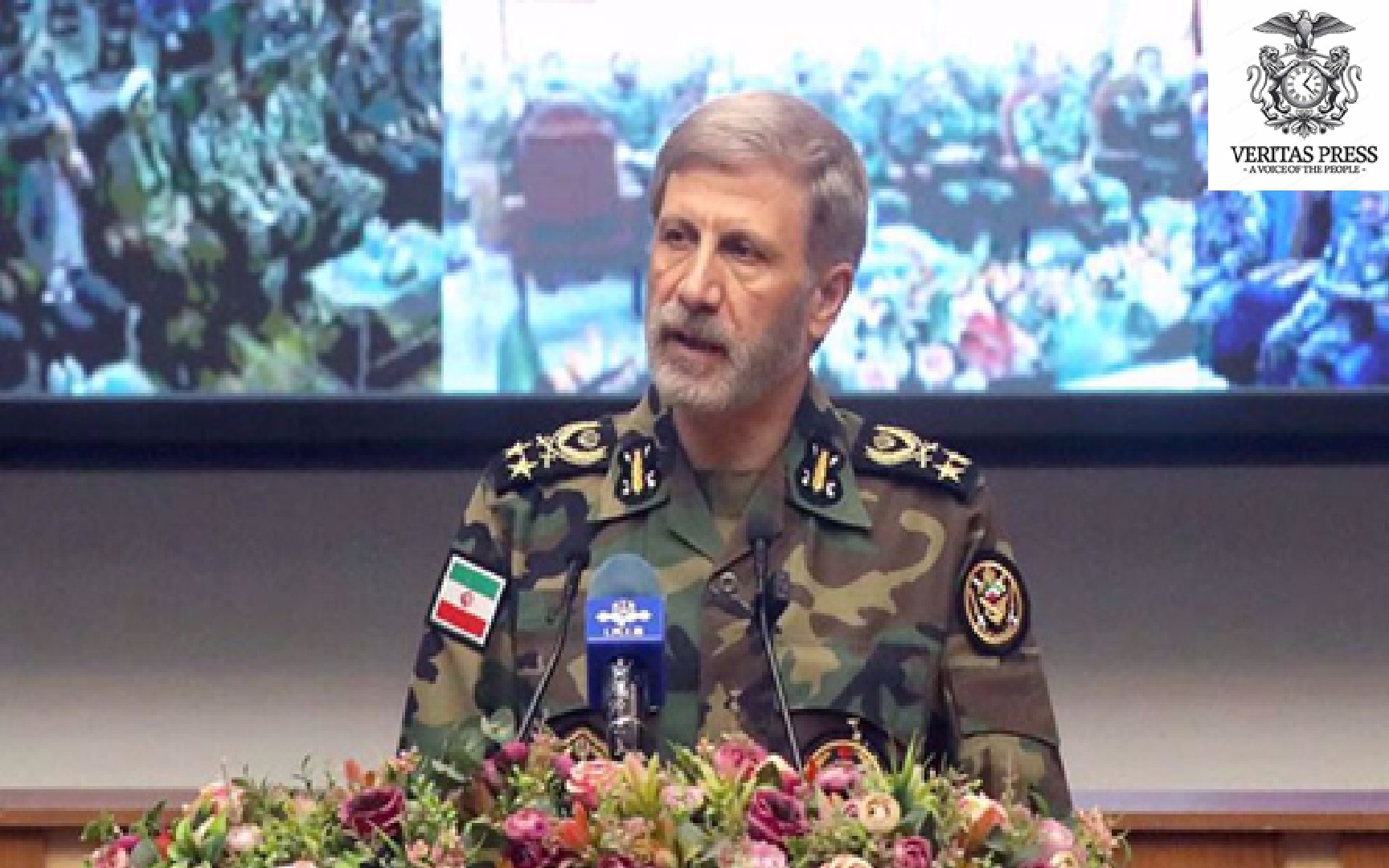
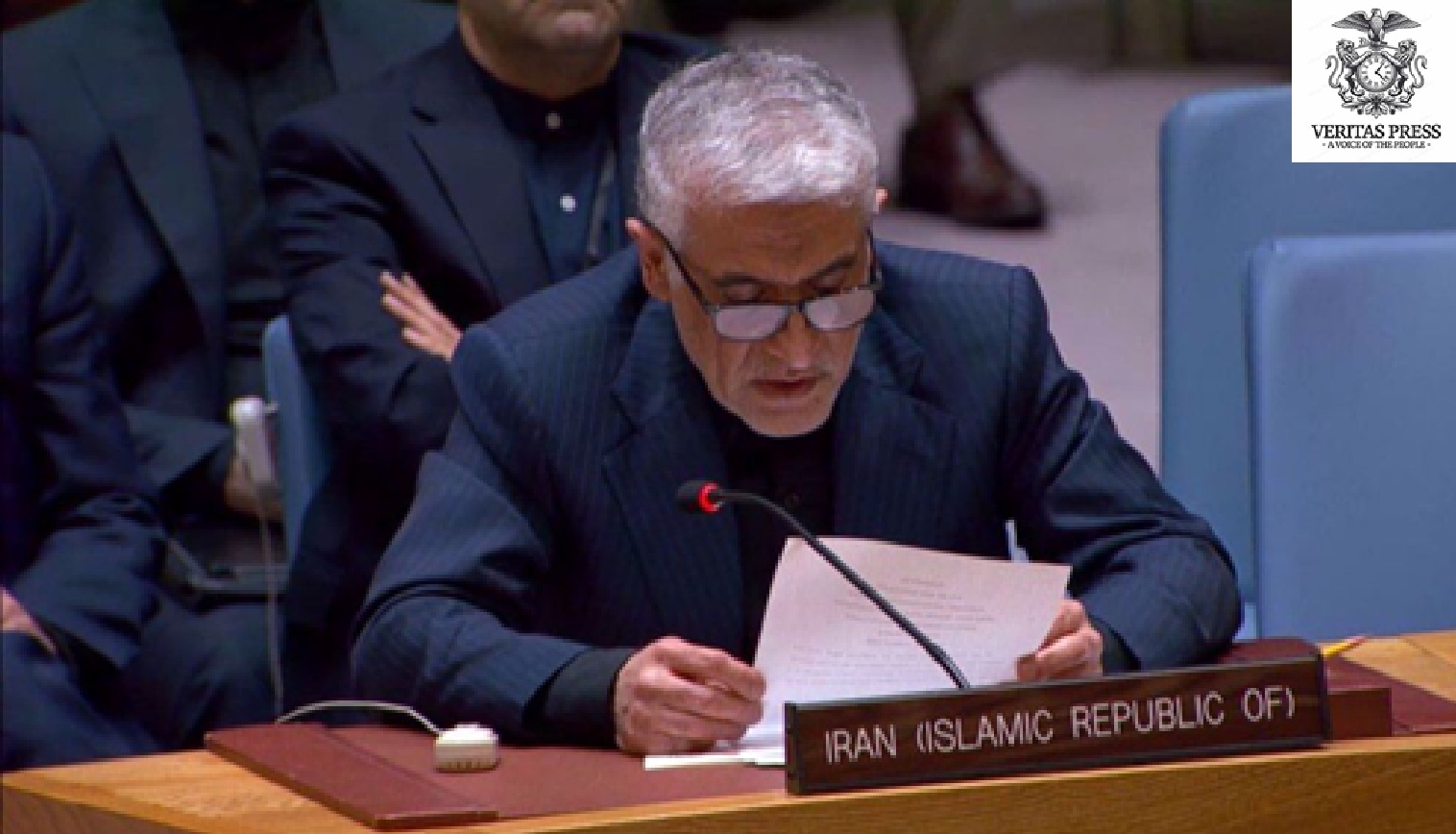
TEHRAN — Iran’s foreign minister, Abbas Araghchi, has issued stark warnings that Tehran is prepared to fight back “if attacked again by the United States or Israel,” even as the regime insists publicly it does not want war. But beneath the diplomatic language lies a far more complex and dangerous set of realities, a combination of strategic recalibration, internal dissent, regional power plays, and profound distrust of Western intentions that could mean the next spark might ignite a much larger blaze.
“We are fully prepared, this doesn’t mean we welcome another war, but it is exactly to prevent a war, and the best way to prevent war is to be prepared for that,” Araghchi told state and allied media outlets.
The Strategic Messaging: Deterrence Or Bluff?
Araghchi’s rhetoric, that Iran has rebuilt what was damaged during last year’s intense conflict and will retaliate decisively against any repeat aggression, performs multiple functions:
Deterrence: Claiming readiness for overwhelming retaliation is intended to dissuade further strikes. Tehran frames the 12-day Iran-Israel-U.S. war as a strategic failure for the attackers, insisting that a repeat would yield the same result.
Domestic Signalling: Internally, this posture helps regime hardliners argue that decisiveness against external threats is needed to preserve national cohesion, especially amid unprecedented domestic unrest.
Diplomatic Insurance: By emphasising openness to “mutual respect” in negotiations, but not under “dictation”, Iran tries to position itself as a responsible actor, even while rejecting key U.S. demands.
However, independent analysts caution that this diplomatic veneer masks underlying strategic weakness. A 2025 Atlantic Council analysis after the last conflict framed the strikes as only the beginning, noting that Israel’s attack on Iranian nuclear and military sites could leave Tehran with few credible options beyond posturing without provoking full war.
Internal Pressures: Protests, Factionalism, And Regime Survival.
Iran is not a monolith. The regime itself is divided between pragmatists pushing for de-escalation and hardliners demanding confrontation.
Moderate voices within the government have at times preferred diplomatic engagement to preserve economic space and avoid further devastation. Reports from senior officials in mid-2025 indicated that pragmatists, including the president and a judiciary figure, were advocating a negotiated end to hostilities if the U.S. would stay out of new Israeli attacks.
Hardline factions dominate military and security institutions, often eclipsing diplomatic channels. In some quarters, these leaders view any concession as a threat to regime legitimacy. Tehran’s top judge has warned protesters there will be “no leniency” for those deemed to be aiding foreign enemies like the U.S. and Israel.
Civil society activists, including Nobel laureates Shirin Ebadi and Narges Mohammadi, have criticised the regime’s nuclear escalation, arguing that enrichment and regional adventurism place Iranian civilians at risk for political ends they do not support.
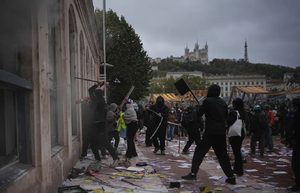
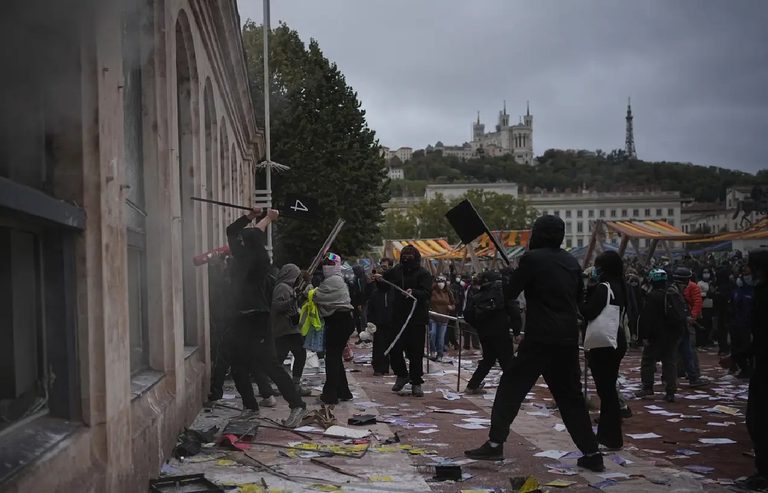
This internal turbulence is occurring against the backdrop of Iran’s largest nationwide protests in years, driven by economic hardship, inflation, unemployment, and frustration with state repression. Some protesters perceive war posturing as a mechanism used by elites to distract from domestic failings.
External Pressures: U.S. Maximum Pressure, Netanyahu, And Regional Realignments.
On the other side, U.S. and Israeli rhetoric has also hardened dramatically. U.S. President Donald Trump has publicly threatened renewed strikes on Iranian nuclear sites if Tehran attempts to restart enrichment, vowing to “knock the hell out of them.”
This threat has reverberated through Tehran’s political class, strengthening the narrative that the West is determined to militarily roll back Iran’s capabilities rather than negotiate in good faith. Russia warned that a U.S. attack on Iran could destabilise the region and bring the world “millimetres” from nuclear catastrophe, underscoring the global stakes.
Saudi Arabia and other Gulf states have also weighed in, urging Iran to seize diplomatic openings and reach a nuclear deal before a potential Israeli strike, revealing uneasy regional fears that no side truly wants full-scale war, but that miscalculation could still unleash it.
Questioning The Narrative: Military Capability Vs. Political Theatre.
Independent observers note that Iran’s claimed readiness must be scrutinised against its real capabilities.
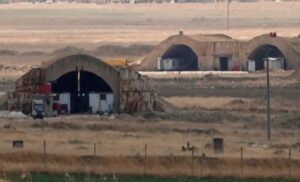
Some Western experts have suggested that much of Iran’s strategic air defences were weakened by previous strikes and that much of the rhetoric about “full preparedness” may be aimed at shoring up deterrence rather than reflecting a credible second-strike capability. Satellite imagery and defence analyses from mid-2025 indicated that Iran has been focused on repairing and reinforcing air defences near nuclear sites, suggesting vulnerability remains a concern.
Critics also argue that the regime’s push toward 60% uranium enrichment, technically a short step from weapons-grade, might be less about acquiring a bomb and more about creating a threshold deterrence, complicating outside intervention but not necessarily signalling intent to weaponise. But academic analysis shows even enriched stockpiles at 60% could theoretically be used in crude nuclear devices if safeguards were dropped, a reality that alarms proliferation scholars.
International Law And The Question Of Legitimacy:
Legal experts have openly challenged the June strikes by Israel and the United States, with commentators arguing that such use of force breached the UN Charter’s prohibition on aggression. These critiques frame the recent hostilities as not defensive under international law but rather unlawful interventions that worsen global insecurity.
Meanwhile, many human rights and international law NGOs have been accused of selective outrage, condemning Israeli actions while ignoring Iranian violations of the laws of war, including attacks that struck civilian areas. This has deepened scepticism over the global institutional response to the conflict.
The Dangerous Mix: Miscalculation, Escalation, And Global Fallout.
The current moment, fiery rhetoric layered over diplomatic stagnation, is not merely a replay of past Middle East tensions. It reflects a dangerous convergence:
Tehran’s domestically fractious politics
Heightened U.S. and Israeli warnings
Proxy conflicts spilling across the region
Public scepticism and activist pressure on all sides
Disparate international responses
In this charged environment, analysts warn that even a limited strike or misinterpreted military move could cascade into irreversible conflict.
One former senior diplomat told The Atlantic Council that if either side believes they can win a quick, decisive blow, they might misjudge the other’s resolve, turning deterrence into accidental war.
Conclusion: Regime Change By Other Means, And The Architecture Of Permanent Confrontation.
Iran’s warning that it is prepared to fight back if attacked again is not merely a defensive signal; it is a response to what Iranian officials, regional analysts, and a growing number of independent observers describe as a long-term campaign aimed not at deterrence, but at transformation.
Behind Washington’s and Tel Aviv’s stated objectives of “non-proliferation” and “regional security” lies a deeper, largely unacknowledged agenda: the pursuit of regime change in Tehran, the strategic containment of Iranian sovereignty, the control of Iran’s vast energy and transit resources, and the permanent denial of independent nuclear development, civilian or otherwise. These aims are not new. They have been articulated, implicitly and explicitly, across decades of sanctions regimes, covert operations, assassinations, cyber warfare, and now direct military strikes.
Israeli officials have repeatedly framed Iran’s very political system as an existential threat, not merely its nuclear program. U.S. policy, meanwhile, has oscillated between engagement and open hostility, but the underlying structure has remained consistent: maximum pressure without durable guarantees, demands for capitulation without security assurances, and military action divorced from international oversight. Analysts note that no U.S. security architecture in the Middle East envisions Iran as a sovereign equal, only as a contained adversary or a restructured state.
The June strikes and subsequent threats cannot be divorced from this broader design. Military planners and defence think tanks in Washington have long discussed scenarios involving forward basing, expanded missile defence systems, and intelligence installations in and around Iran, should the current political order collapse or be forcibly altered. In this context, Tehran’s leadership interprets airstrikes on nuclear sites not as isolated acts, but as probing operations within a wider regime-degradation strategy.
This perception is reinforced by history. From the 1953 overthrow of Iran’s elected government to decades of sanctions explicitly aimed at economic exhaustion, Iranians across the political spectrum view U.S. intervention as inseparable from resource control, particularly oil, gas, and strategic trade corridors linking Asia, the Caucasus, and the Gulf. “When they speak of security, they mean access,” one Iranian economist told independent regional media. “When they speak of reform, they mean compliance.”
At the same time, the language of nuclear non-proliferation has been applied selectively. Israel’s undeclared nuclear arsenal remains beyond inspection, while Iran, a signatory to the Non-Proliferation Treaty, has faced bombing, sabotage, and assassinations even while under international monitoring. Human rights organisations and legal scholars have warned that this double standard has eroded the legitimacy of the global non-proliferation regime itself, turning it into a tool of geopolitical enforcement rather than collective security.
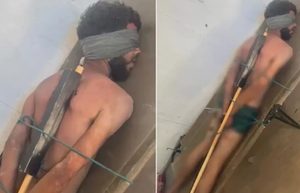
Yet Iran’s leadership is not without responsibility. The regime has exploited external threats to justify internal repression, silence dissent, and defer political accountability. Activists argue that the state’s confrontational posture feeds a vicious cycle: foreign aggression strengthens hardliners, while hardliner dominance invites further external pressure. “We are crushed between two violences,” an Iranian women’s rights activist said in exile. “One drops bombs, the other drops batons.”
What emerges, then, is not a clash driven by miscommunication, but a structural conflict, one in which diplomacy is subordinated to coercion, and sovereignty is treated as conditional. Iran’s warning, stripped of bravado, is an assertion that it will not submit quietly to a future designed elsewhere.
Unless the United States and Israel abandon the logic of regime engineering, resource domination, and militarised containment, and unless Iran confronts its own failures of governance and accountability, the region will remain locked in a confrontation where war is officially disavowed but strategically prepared for.
In such a system, escalation is not an accident. It is the policy.
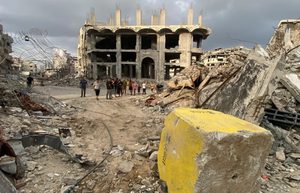
And the cost, as history has shown repeatedly, will not be paid by decision-makers, but by civilians, in Iran, across the region, and far beyond it.
Kamran Faqir is a volunteer investigative journalist and writer committed to exposing hidden truths and amplifying underreported stories. Driven by social justice, he brings sharp insight and fearless truth-telling to independent journalism. NUJ registered.
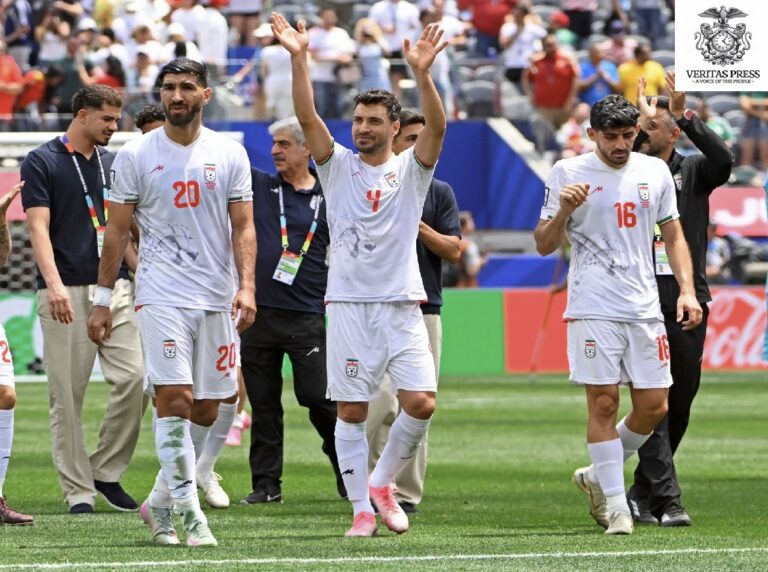
SEATTLE, TEHRAN — The U.S. Department of Homeland Security (DHS) will allow Iran’s national football team to enter the country 48 hours before their critical World Cup match against Egypt on Friday, a modest concession in a tournament where Team Melli’s travel conditions have sparked claims of oppression and competitive disadvantage.