Kamran Faqir is a volunteer investigative journalist and writer committed to exposing hidden truths and amplifying underreported stories. Driven by social justice, he brings sharp insight and fearless truth-telling to independent journalism. NUJ registered.
Title: IMPEACHING DONALD J. TRUMP
Press Release: Veritas Press C.I.C.
Author: Kamran Faqir
Article Date Published: 05 Jan 2026 at 12:05 GMT
Category: Americas | Politics | Impeaching Donald J. Trump
Source(s): Veritas Press C.I.C. | Multi News Agencies
A Constitutional Crisis, An Unconstitutional War, And The Fight For American Democracy.
Resolved, That Donald J. Trump, President of the United States, is impeached for high crimes and misdemeanours…
In the early hours of January 3, 2026, as most Americans slept and Congress remained in recess, President Donald J. Trump launched one of the most extraordinary and constitutionally fraught military actions in modern U.S. history: a massive, unprovoked assault on Venezuela, carried out without congressional authorisation, without international sanction, and without public debate.
According to military and government sources, the operation unfolded with stunning speed. Hundreds of U.S. aircraft struck Caracas and the surrounding regions. Special forces units penetrated Venezuelan territory. The communications infrastructure was disrupted. By dawn, Venezuelan President Nicolás Maduro and his wife, Cilia Flores, had been captured, placed under U.S. military custody, and flown to New York to face federal charges.
Within hours, Trump publicly declared the operation a success, and announced something far more consequential: the United States would now “run” Venezuela until a U.S.-approved political transition could be imposed.
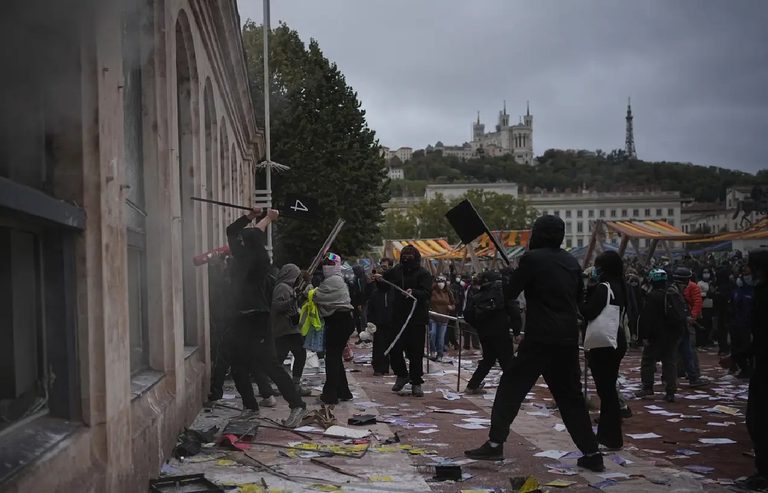
There had been no vote in Congress. No Authorisation for Use of Military Force. No emergency notification to congressional leadership. No claim that the United States faced an imminent attack. What followed was not celebration, but mass protests across U.S. cities, bipartisan shock on Capitol Hill, and urgent calls for a second impeachment, not over ideology or policy differences, but over what legal scholars and lawmakers described as an illegal war of aggression and a direct assault on the Constitution itself.
This was not merely another controversial foreign policy decision. It was a constitutional rupture.
ARTICLE I
Abuse of Presidential Power: Waging War Without Congress
A War Congress Did Not Authorise, and Did Not Know About
The Constitution is explicit: only Congress has the power to declare war. Article I, Section 8 was written precisely to prevent a single executive from dragging the nation into conflict based on secrecy, impulse, or personal ambition.
Yet Trump ordered airstrikes, ground operations, and the capture of a foreign head of state without a declaration of war, without an AUMF, and without even prior consultation with congressional leadership.
Multiple lawmakers across party lines confirmed they learned of the attack after it was already underway, some first seeing confirmation through breaking news alerts and the president’s own social media posts. One senior lawmaker described the moment bluntly: “We weren’t briefed. We were bypassed.”
The White House later claimed that consulting Congress beforehand risked operational leaks. Constitutional scholars rejected the argument outright, noting that secrecy does not nullify constitutional law. As one legal expert put it, “The Constitution does not contain a ‘trust me’ exception.”
This was not a technical oversight. It was a deliberate usurpation of congressional authority, transforming the presidency into a unilateral war-making office, the very danger the Framers sought to prevent.
“Operation Absolute Resolve”: Regime Change By Force
According to multiple reports, the January 3 operation, internally referred to as “Operation Absolute Resolve”, was not limited in scope or defensive intent.
U.S. forces launched a surprise aerial and ground assault on Caracas, triggering widespread destruction and civilian displacement.
Nicolás Maduro and Cilia Flores were seized by U.S. special forces and flown to New York under armed guard.
Trump declared the mission “decisive,” announcing that the U.S. would oversee Venezuela’s political transition and oil infrastructure.
Venezuelan institutions, amid internal chaos and foreign pressure, moved to recognise Delcy Rodríguez as interim president.
International legal experts and United Nations officials swiftly condemned the attack as a flagrant violation of the U.N. Charter, which prohibits the use of force except in cases of self-defence or Security Council authorisation, neither of which applied.
Trump’s central justification that long-standing U.S. indictments against Maduro authorised military invasion, found no basis in international law. Former State Department lawyers described the rationale as unprecedented and dangerous. One expert summarised it plainly: “You cannot bomb a country to serve an arrest warrant.”
Reports soon emerged of civilian casualties, mass displacement, and escalating unrest, deepening an already severe humanitarian crisis.
Political And Legislative Backlash: A Constitutional Reckoning.
Congress Reacts After the Fact:
The response in Washington was immediate and volatile.
Lawmakers condemned the operation as unconstitutional, illegal, and destabilising. Senator Scott Wiener labelled the invasion “a lawless coup,”arguing that Trump acted not in defence of national security, but in pursuit of political dominance and economic leverage.
Members of the House Foreign Affairs Committee expressed fury at being kept entirely in the dark, demanding emergency briefings and warning that the administration had shredded constitutional norms.
Representative Delia Ramirez called the operation “illegal and reckless,” likening it to the most destructive chapters of U.S. interventionism in Latin America. Others pointed out that Trump had openly ignored the War Powers Resolution of 1973, which requires presidential consultation with Congress within 48 hours and withdrawal absent authorisation within 60 days, conditions Trump violated outright.
Legal scholars were blunt: this alone constitutes an impeachable offence.
Public Uprising And International Alarm:
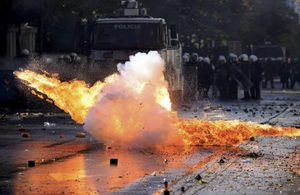
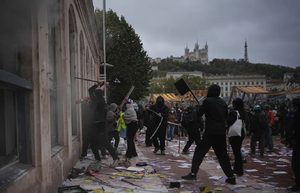
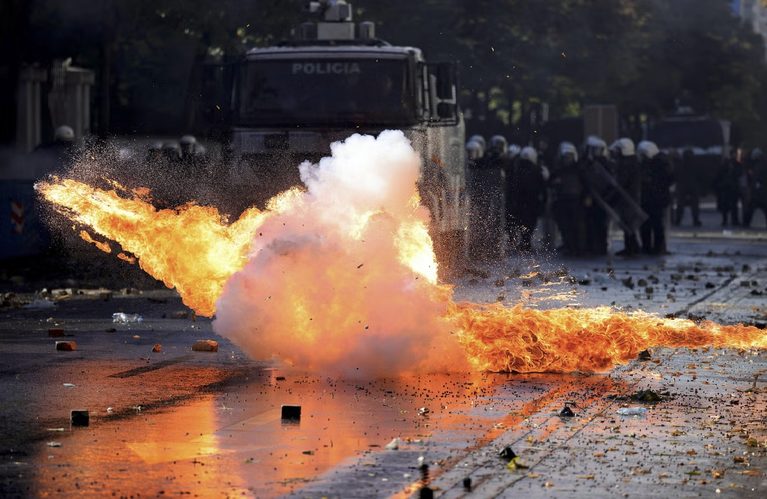
As the constitutional crisis escalated, mass protests erupted nationwide, from Miami to the Bay Area, demanding Trump’s impeachment and warning that unchecked executive war powers threaten democratic survival.
While many Republican leaders initially rallied behind the president, cracks quickly emerged. Fiscal conservatives and constitutional originalists raised alarms about the precedent being set: the unilateral kidnapping of a sovereign leader without congressional consent.
Abroad, condemnation was swift. Russian officials and other governments warned that the strike shattered norms governing the use of force, raising fears that powerful states may now feel emboldened to depose foreign leaders unilaterally.
“This resets global norms in the worst possible way,” one diplomat warned privately.
An Existential Threat To Democracy:
For constitutional historians, the Venezuelan invasion did not occur in isolation. It represents the culmination of Donald J. Trump’s sustained assault on democratic institutions, constitutional limits, and the rule of law.
Trump has repeatedly demonstrated contempt for the separation of powers:
His incitement of the January 6 insurrection to overturn a democratic election;
His calls to imprison political opponents without due process.
His threats against judges who rule against him;
His hostility toward a free press, independent prosecutors, war crimes, and electoral accountability.
The unauthorised war in Venezuela, following earlier unilateral military strikes elsewhere, reflects a presidency increasingly defined by personalised power and authoritarian impulse.
James Madison warned that “the executive is the branch of power most interested in war, and most prone to it.” Trump has turned that warning into a lived reality.
By declaring that the United States will “run” Venezuela, openly tying occupation to oil control, and dismissing Congress as an inconvenience, Trump crossed a defining threshold, from constitutional violation to imperial presidency.
Impeachment As Constitutional Duty:
Impeachment, legal experts stress, is not a political option under these circumstances. It is a constitutional obligation.
The Framers understood “high crimes and misdemeanours” to include abuses of power that endanger constitutional order, even absent statutory crimes. Unauthorised war, regime change by force, and military occupation without congressional consent fall squarely within that definition.
Failure to impeach would establish a catastrophic precedent: that a president may wage war, overthrow governments, and seize sovereign resources at will, without consequence.
This is why impeachment is increasingly viewed as inevitable. Not as partisanship, but as institutional self-preservation. Inaction would amount to acquiescence in executive dictatorship.
Conclusion: A Republic At The Brink.
Donald J. Trump now poses a clear and present danger to American democracy.
His unilateral war in Venezuela represents not strength, but the collapse of constitutional restraint, democratic accountability, and the rule of law. History shows that democracies do not fall all at once; they erode when violations are tolerated, and power goes unchecked.
Impeachment, trial, and removal are not acts of vengeance. They are acts of constitutional preservation.
If Congress fails to act now, it will not merely be surrendering its war powers; it will be surrendering the republic itself.
ARTICLE I
ABUSE OF PRESIDENTIAL POWERS BY DISREGARDING THE SEPARATION OF POWERS, USURPING CONGRESS’S EXCLUSIVE WAR AUTHORITY, AND THREATENING CONSTITUTIONAL DEMOCRACY
In his conduct of the office of President of the United States, Donald J. Trump, in violation of his constitutional oath faithfully to execute the office of President of the United States.
Kamran Faqir is a volunteer investigative journalist and writer committed to exposing hidden truths and amplifying underreported stories. Driven by social justice, he brings sharp insight and fearless truth-telling to independent journalism. NUJ registered.
SEATTLE, TEHRAN — The U.S. Department of Homeland Security (DHS) will allow Iran’s national football team to enter the country 48 hours before their critical World Cup match against Egypt on Friday, a modest concession in a tournament where Team Melli’s travel conditions have sparked claims of oppression and competitive disadvantage.