Kamran Faqir is a volunteer investigative journalist and writer committed to exposing hidden truths and amplifying underreported stories. Driven by social justice, he brings sharp insight and fearless truth-telling to independent journalism. NUJ registered.
Title: Cold Weather Payments Triggered In Over 400 UK Postcodes, Are You Eligible For £25 Support?
Press Release: Veritas Press C.I.C.
Author: Kamran Faqir
Article Date Published: 03 Jan 2026 at 14:30 GMT
Category: UK | DWP | Cold Weather Payments Triggered in Over 400 UK Postcodes, Are You Eligible for £25 Support?
Source(s): Veritas Press C.I.C. | Multi News Agencies
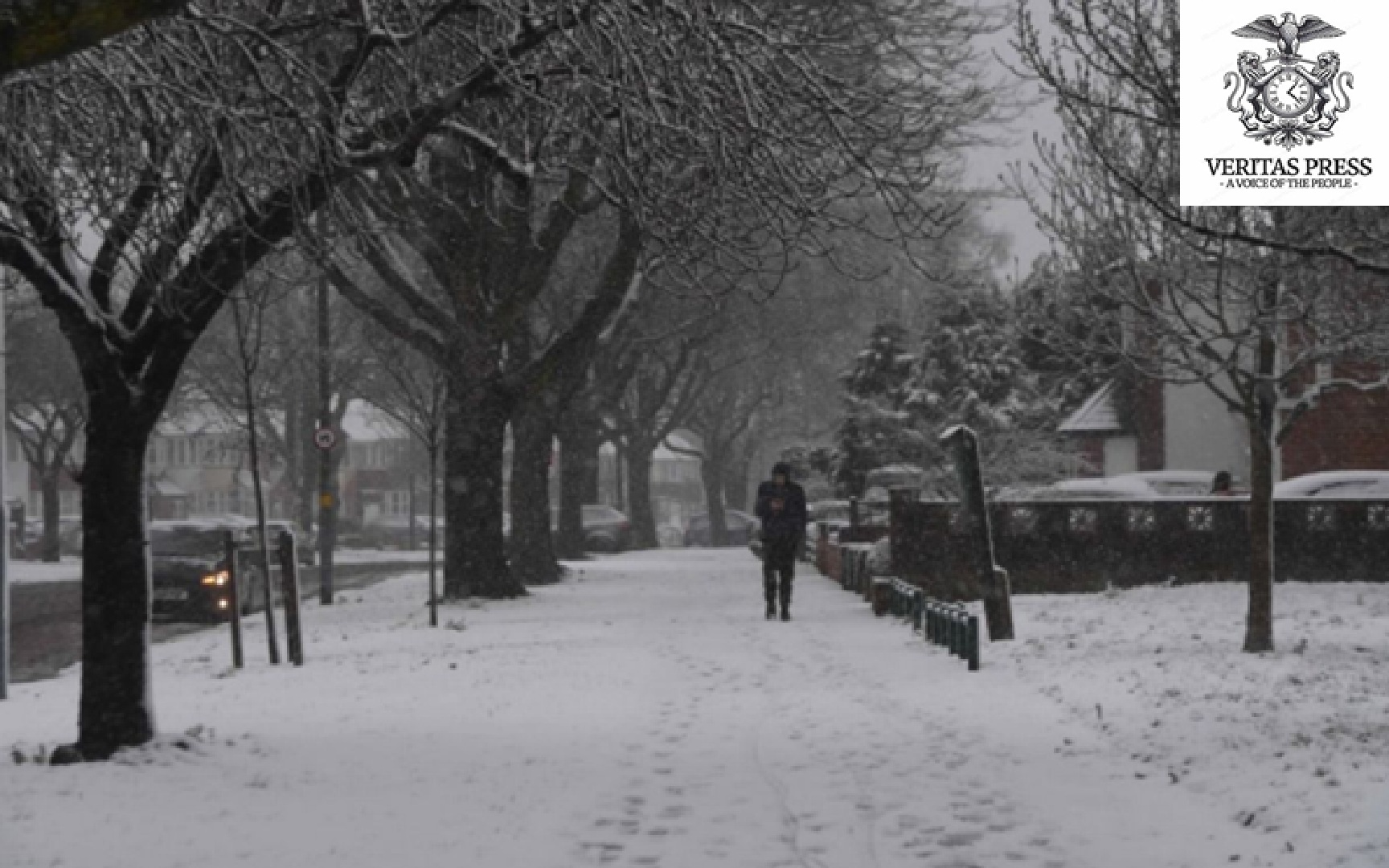
UK – As the new year begins under a bone-chilling Arctic blast, the UK is grappling with persistent sub-zero temperatures, widespread snow, and travel disruption. Against this backdrop, the Department for Work and Pensions (DWP) has confirmed that Cold Weather Payments have been triggered in over 400 postcode areas, meaning hundreds of thousands of households now qualify for financial support.
What’s Happening, Winter Weather & Warnings:
The Met Office has issued amber and yellow weather warnings for snow and ice across much of the UK, including parts of northern and eastern Scotland, as Arctic air grips the nation. Temperatures are expected to remain below average with daytime highs struggling to rise above freezing and overnight lows dipping to −10°C in places.
This has prompted health alerts from the UK Health Security Agency, warning vulnerable groups about increased cold-related health risks through at least 6 January.
What Are Cold Weather Payments?
The Cold Weather Payment scheme, run by the DWP, provides a one-off £25 payment to qualifying households for every seven-day consecutive period in which the average temperature in their area is recorded as, or forecast to be, 0°C or below.
• The scheme runs annually from 1 November to 31 March. • If multiple cold spells occur, households can receive more than one payment. • Payments are made automatically into the bank account used for benefit payments.
The most recent trigger, covering the period 30 December 2025 to 2 January 2026, has been confirmed in 441 postcode areas, with an estimated 674,000 households set to receive payments.
According to DWP figures, this winter will likely see multiple triggers if the Arctic conditions persist, and households could see successive £25 payments for each qualifying week.
Who Is Eligible?
To qualify for Cold Weather Payments, a household must:
Be living in an area where temperatures reached or were forecast to reach 0°C or below for 7 days.
Be receiving one or more of the following benefits:
Pension Credit
Income Support
Income-based Jobseeker’s Allowance (JSA)
Income-related Employment and Support Allowance (ESA)
Universal Credit (with additional conditions)
Support for Mortgage Interest (SMI)
Note: Universal Credit claimants must also meet specific eligibility conditions, such as having limited capability for work or caring responsibilities, to qualify.
Scotland Exception:
Although the cold weather affects Scotland too, residents do not receive DWP Cold Weather Payments. The Scottish Government offers a separate annual Winter Heating Payment for eligible low-income households, paid irrespective of temperatures, instead of the DWP scheme.
When Will You Get The Payment?
The payments are automatic; there’s no application to make. If you qualify, the £25 should appear in your bank account, usually within 14 working days after the end of the qualifying cold spell, with the reference ‘DWP CWP’.
If you believe you should have received a payment but haven’t, contact the DWP or, for Universal Credit claimants, use your online journal or helpline to report it.
Government Response & Political Context:
Minister for Pensions Torsten Bell said the Cold Weather Payments are designed to deliver “automatic support directly to vulnerable households as temperatures plunge.” He added that this is just part of a wider strategy, including the “biggest ever Pension Credit take-up campaign” and the government’s long-term Triple Lock pension guarantee, expected to increase the State Pension by up to £2,100 over the course of this Parliament.
Campaigners and charities, however, argue that £25 per cold spell barely scratches the surface of soaring energy costs and that more could be done to protect those most vulnerable to fuel poverty during increasingly volatile winters.
What This Means For Household Budgets:
For some families, particularly those on low incomes or with underlying health conditions, these payments can make a tangible difference to heating bills, especially in rural or high‑altitude areas where cold spells can stretch into multiple weeks.
Last winter, several communities in the Lake District received up to three Cold Weather Payments (a total of £75), illustrating how prolonged cold can translate to repeated support.
That said, with energy costs still a major concern, local authorities and support organisations are encouraging eligible residents to explore additional schemes such as:
Warm Home Discount
Household Support Fund
Priority Services Register for extra help from energy suppliers
…and tools like the government postcode checker to track whether your area has triggered a Cold Weather Payment.
Key Takeaways:
674,000+ households across 441–451 postcodes will receive £25 payments.
Payments happen when temps stay at or below 0°C for 7 days.
Eligibility depends on specific benefits, and extra criteria for some.
People in Scotland get separate Winter Heating Payments.
Payments require no claim — they’re automatic, arriving within ~14 days.
Want To Check If You’re Eligible?
Use the UK government’s Cold Weather Payment postcode checker on gov.uk, entering your postcode to see whether your local temperatures have triggered support, or contact your local benefits advisor for personalised assistance.
If you are on universal credit, you can use your online journal or call the universal credit helpline to report it.
Unsure if your postcode is eligible? Check using the postcode tracker tool on gov.uk.
The list of postcodes triggered are:
North Yorkshire / Craven
BD23 – Skipton and surrounding villages
BD24 – Settle area
DL8 – Leyburn / Wensleydale
DL11 – Reeth / Swaledale
County Durham & Darlington Area
DH1 – Durham
DH6 – Bowburn / Coxhoe area
DH7 – Sacriston / Lanchester area
DH8 – Consett
DH9 – Stanley
DL4 – Shildon
DL5 – Newton Aycliffe
DL12 – Barnard Castle
DL13 – Stanhope / upper Weardale
DL14 – Bishop Auckland
DL15 – Crook
DL16 – Spennymoor
DL17 – Ferryhill / Chilton
TS21 – Sedgefield / west of Stockton
TS28 – Wingate
TS29 – Trimdon Station / Deaf Hill
Cumbria / Brecon & Mid‑Wales Fringe
LD3 – Brecon and surrounding area (Powys)
Cambridgeshire (Cambridge, Ely, South Cambs, East Cambs)
CB1, CB2, CB3, CB4, CB5 – Cambridge city districts
CB6, CB7 – Ely and nearby villages
CB10, CB11 – Saffron Walden area (Essex, but in the CB area)
CB21, CB22, CB23, CB24, CB25 – South and east Cambridgeshire villages (Linton, Sawston, Cambourne, Cottenham, Bottisham, etc.)
Kamran Faqir is a volunteer investigative journalist and writer committed to exposing hidden truths and amplifying underreported stories. Driven by social justice, he brings sharp insight and fearless truth-telling to independent journalism. NUJ registered.
SEATTLE, TEHRAN — The U.S. Department of Homeland Security (DHS) will allow Iran’s national football team to enter the country 48 hours before their critical World Cup match against Egypt on Friday, a modest concession in a tournament where Team Melli’s travel conditions have sparked claims of oppression and competitive disadvantage.