Kamran Faqir is a volunteer investigative journalist and writer committed to exposing hidden truths and amplifying underreported stories. Driven by social justice, he brings sharp insight and fearless truth-telling to independent journalism. NUJ registered.
Title: Yemen’s Fractured Front: Saudi Jets Strike UAE-Backed STC As Gulf Rivalry Explodes.
Press Release: Veritas Press C.I.C.
Author: Kamran Faqir
Article Date Published: 02 Jan 2026 at 12:40 GMT
Category: Middle-East | Yemen | Yemen’s Fractured Front: Saudi Jets Strike UAE-Backed STC as Gulf Rivalry Explodes
Source(s): Veritas Press C.I.C. | Multi News Agencies
HADHRAMAUT, YEMEN – Saudi-led coalition fighter jets launched airstrikes on forces loyal to the United Arab Emirates–backed Southern Transitional Council (STC) in Yemen’s eastern Hadhramaut province on Friday, marking a dramatic escalation in a conflict long defined by shifting alliances and fractured loyalties.
Officials in Yemen said the strikes targeted STC units accused of setting up ambushes against government troops during the handover of military positions. Local observers warn, however, that this confrontation is symptomatic of a far deeper crisis, one that threatens to unravel Yemen’s anti-Houthi coalition and destabilise the Gulf.
Ambushes And Airstrikes: The Spark Of Escalation:
Mohammed Qizan, undersecretary at Yemen’s Information Ministry, told Al Jazeera:
“Coalition fighter jets are striking STC forces that are setting up ambushes.”
Hadhramaut Governor Salem al-Khanbashi echoed the official account, stating that strikes targeted armed groups attacking the “Dera’ Al-Watan” units as they advanced to reclaim bases.
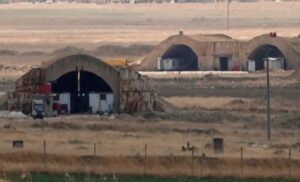
Yet eyewitness reports and STC statements paint a more complex picture. Mohammed Abdulmalik, head of STC forces in Wadi Hadhramaut, said seven airstrikes hit a camp in Al-Khasah, killing at least seven fighters and wounding more than 20. STC forces later repelled a ground assault after the strikes.
Al Jazeera correspondent Mohammed Al Attab reported clashes along Saudi border positions, although STC forces reportedly retained control of key sites.
A Rift Within The Anti-Houthi Coalition:
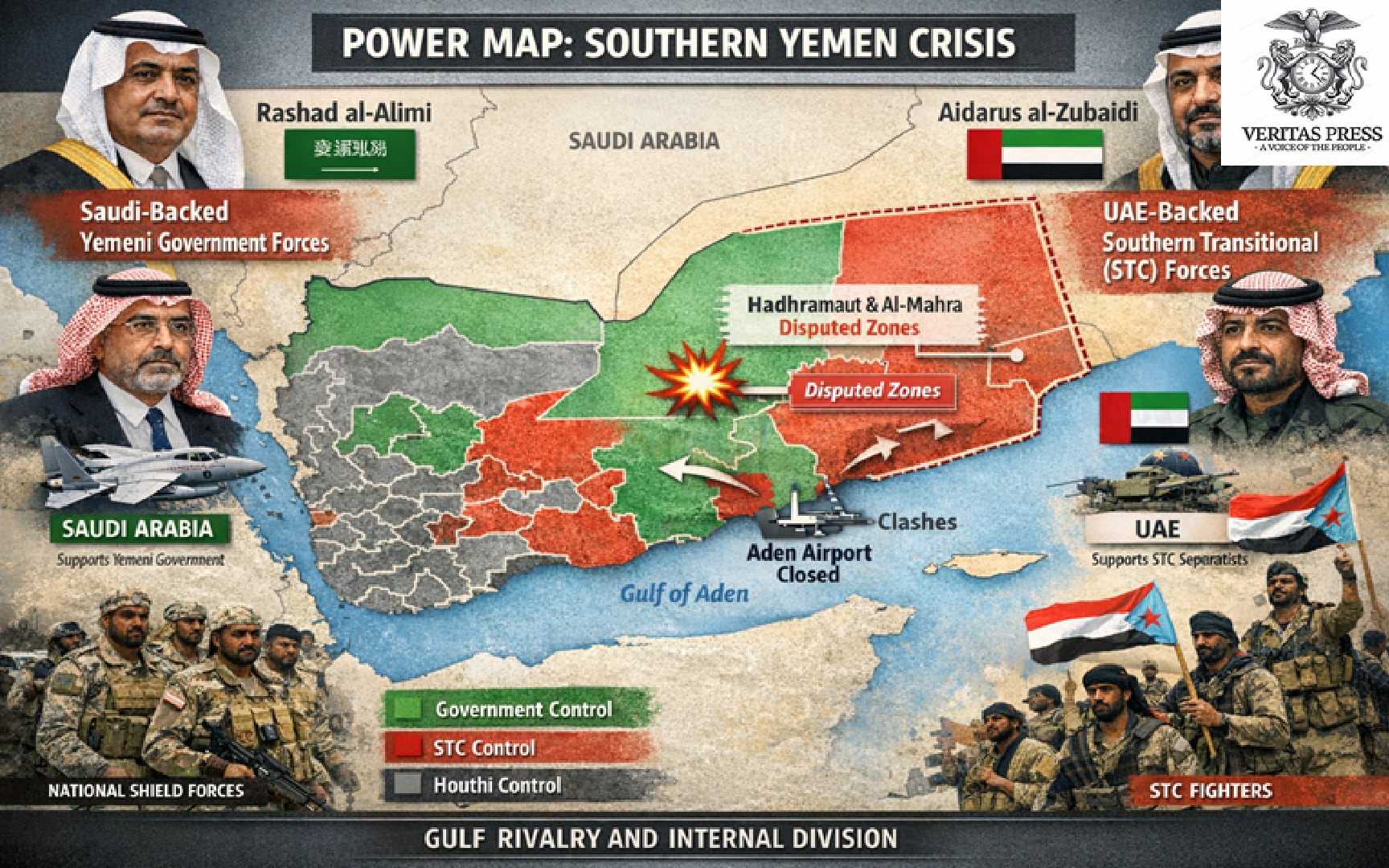
The escalation in Hadhramaut exposes a growing fracture in the coalition that once held nominal unity against the Iran-backed Houthis movement. Saudi Arabia backs Yemen’s internationally recognised government, while the UAE has historically supported the STC, a separatist faction seeking southern autonomy.
Tensions intensified when Abu Dhabi announced the withdrawal of its remaining forces after Saudi authorities intercepted what they described as a UAE-linked weapons shipment. Analysts say the split is now visible not just militarily but politically, with Saudi and UAE-backed factions pursuing divergent agendas in Yemen.
Barakat, a Middle East analyst with Al Jazeera, commented:
“Little by little, the UAE started the habit of undertaking foreign policy and independent decisions in Yemen without going back to Saudi Arabia.”
Chatham House analyst Neil Quilliam warned:
“Relations between the two states are … at their most intense for years. The STC’s rapid advance has forced Riyadh and Abu Dhabi into opposing positions, no longer partners in Yemen.”
Key Players In The Crisis:
Aidarus al-Zubaidi — STC Leader A former Aden governor, al-Zubaidi, leads the STC and sits as vice president on Yemen’s Presidential Leadership Council (PLC). Since forming the STC in 2017, he has pushed for southern autonomy, recently seizing Hadhramaut and Al-Mahra provinces. Critics accuse him of entrenching secessionist control under the guise of security operations.
Rashad al-Alimi — PLC Chair Al-Alimi leads Yemen’s Presidential Leadership Council, tasked with unifying anti-Houthi factions. His authority is contested by al-Zubaidi and other PLC members, highlighting a collapse in internal governance structures. He has framed STC advances as a direct threat to Yemen’s unity and stability.
Salem al-Khanbashi — Saudi-Aligned Governor Governor of Hadhramaut and commander of National Shield forces, al-Khanbashi, announced the “peaceful operation” to reclaim bases from the STC. Despite calling the mission non-escalatory, airstrikes and ground clashes suggest otherwise.
Mohammed Al-Jaber — Saudi Ambassador Al-Jaber has publicly accused al-Zubaidi of blocking Saudi aircraft from landing in Aden, describing it as a “dangerous escalation” undermining political coordination.
United Arab Emirates — STC Backer Abu Dhabi provides funding, training, and military support to the STC. While the UAE claims commitment to Saudi security, Riyadh accuses it of enabling STC territorial expansion, highlighting growing Gulf competition.
Political Implosion And Civilian Impact:
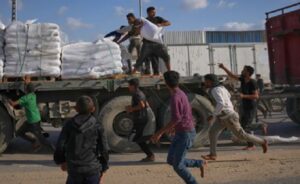
The airstrikes in Hadhramaut coincided with a shutdown at Aden International Airport, stranding passengers and interrupting aid flows. STC officials and Saudi authorities traded accusations over air blockades, underscoring how internal disputes are amplifying civilian suffering.
United Nations Secretary-General António Guterres warned:
“A full resumption of hostilities could have serious ramifications on regional peace and security.”
Analysts emphasise that the fracture between Saudi and UAE-backed factions threatens not just southern Yemen but the broader anti-Houthi coalition, potentially providing the Houthis with a strategic advantage.
Strategic Consequences:
The Hadhramaut clash illustrates a dramatic realignment in Yemen and the Gulf. Saudi Arabia is now conducting airstrikes against forces once considered allies, while the UAE asserts influence indirectly via the STC. The anti-Houthi coalition, already fragile, is at risk of unravelling just as a decade-long humanitarian crisis continues to devastate millions.
A Middle East analyst at the Financial Times observed:
“The Saudi-UAE alliance has shifted from tacit cooperation to open geopolitical competition, with consequences far beyond Yemen.”
Unless diplomatic channels are urgently leveraged, southern Yemen risks sliding into a new civil war phase, driven by both internal factionalism and Gulf power rivalries.
Conclusion: Yemen’s Anti-Houthi Front Is Imploding, And Civilians Pay The Price.
The clashes in Hadhramaut are far more than a tactical dispute over military positions; they are the visible tip of a fracturing anti-Houthi coalition that has long masked the deep divisions between Riyadh and Abu Dhabi. Saudi airstrikes against UAE-backed STC forces underscore a shocking reality: former allies are now actively confronting each other, and Yemen’s civil war is being reshaped not by ideology alone, but by regional power competition, personal ambitions, and divergent visions for the country’s future.
Analysts warn that the STC’s consolidation of southern provinces, backed by the UAE, has created de facto autonomous zones that directly challenge the authority of Yemen’s internationally recognised government. Meanwhile, Riyadh’s repeated use of force to reclaim territory signals a willingness to prioritise its security concerns over internal cohesion within the coalition. As Chatham House’s Neil Quilliam observes,
“The anti-Houthi alliance is no longer united; the Gulf powers have turned Yemen into a proxy battlefield, with civilian security as the first casualty.”
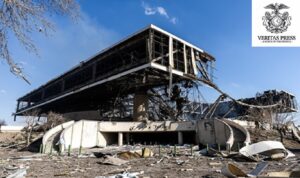
The human cost is already evident. Airstrikes, ambushes, and the shutdown of Aden International Airport have disrupted civilian life, hindered humanitarian aid, and amplified the risk of renewed conflict in regions that had largely avoided the worst of Yemen’s decade-long war. UN Secretary-General António Guterres’ warning about “wider escalation and further fragmentation” is no longer hypothetical; it is unfolding in real time.
The Hadhramaut confrontation exposes the structural failure of Yemen’s transitional institutions, including the Presidential Leadership Council, whose authority is contested from within. Political agreements are undermined by competing ambitions, Gulf rivalries, and the STC’s unilateral expansion, creating a vacuum of accountability that risks perpetuating cycles of violence.
Unless Riyadh, Abu Dhabi, and the Yemeni government pursue urgent, enforceable political reconciliation backed by credible international mediation, Yemen risks sliding into a new chapter of intra-coalition conflict. In this scenario, the war may no longer be fought primarily against the Houthis but between factions once nominally united, with civilians trapped at the intersection of regional rivalries and local power struggles.
In short, Hadhramaut is not just a battlefield; it is a mirror reflecting the erosion of coalition unity, the fragility of Yemen’s political institutions, and the grim reality that foreign agendas often dictate the fate of Yemenis on the ground. Without accountability and sustained political intervention, the Hadhramaut crisis may only be the opening act of a deeper fragmentation, with consequences that extend far beyond Yemen’s borders.
Kamran Faqir is a volunteer investigative journalist and writer committed to exposing hidden truths and amplifying underreported stories. Driven by social justice, he brings sharp insight and fearless truth-telling to independent journalism. NUJ registered.
SEATTLE, TEHRAN — The U.S. Department of Homeland Security (DHS) will allow Iran’s national football team to enter the country 48 hours before their critical World Cup match against Egypt on Friday, a modest concession in a tournament where Team Melli’s travel conditions have sparked claims of oppression and competitive disadvantage.