




Title: Pakistan Sees 17% Drop In Terror Attacks After Afghan Border Closure, But 2025 Emerges As Deadliest Year In A Decade.
Press Release: Veritas Press C.I.C.
Author: Kamran Faqir
Article Date Published: 01 Jan 2026 at 13:30 GMT
Category: South Asia| Pakistan | Pakistan Sees 17% Drop In Terror Attacks After Afghan Border Closure, But 2025 Emerges As Deadliest Year In A Decade.
Source(s): Veritas Press C.I.C. | Multi News Agencies
Website: www.veritaspress.co.uk

Business Ads


ISLAMABAD – Pakistan recorded a notable decline in terrorist attacks in the final months of 2025 following its decision to shut down key border crossings with Afghanistan, according to new data released by the Centre for Research and Security Studies (CRSS). However, the apparent gains came against the backdrop of an unprecedented surge in overall violence, making 2025 the most violent year for the country in over a decade.
The CRSS Annual Security Report 2025 reveals that terrorist attacks dropped by nearly 17 percent in December, following a 9 percent decline in November, after Pakistan sealed the Torkham and Chaman border crossings on October 11–12 amid deadly clashes with Afghan Taliban forces and affiliated militant groups. The report also documents a significant reduction in violence-linked fatalities among civilians and security personnel during the last quarter of the year.
Yet despite this late-year improvement, Pakistan endured a 34 percent year-on-year surge in overall violence in 2025, with fatalities climbing sharply nationwide—underscoring the depth of the country’s ongoing security crisis.
Border Closure And Cross-Border Clashes:
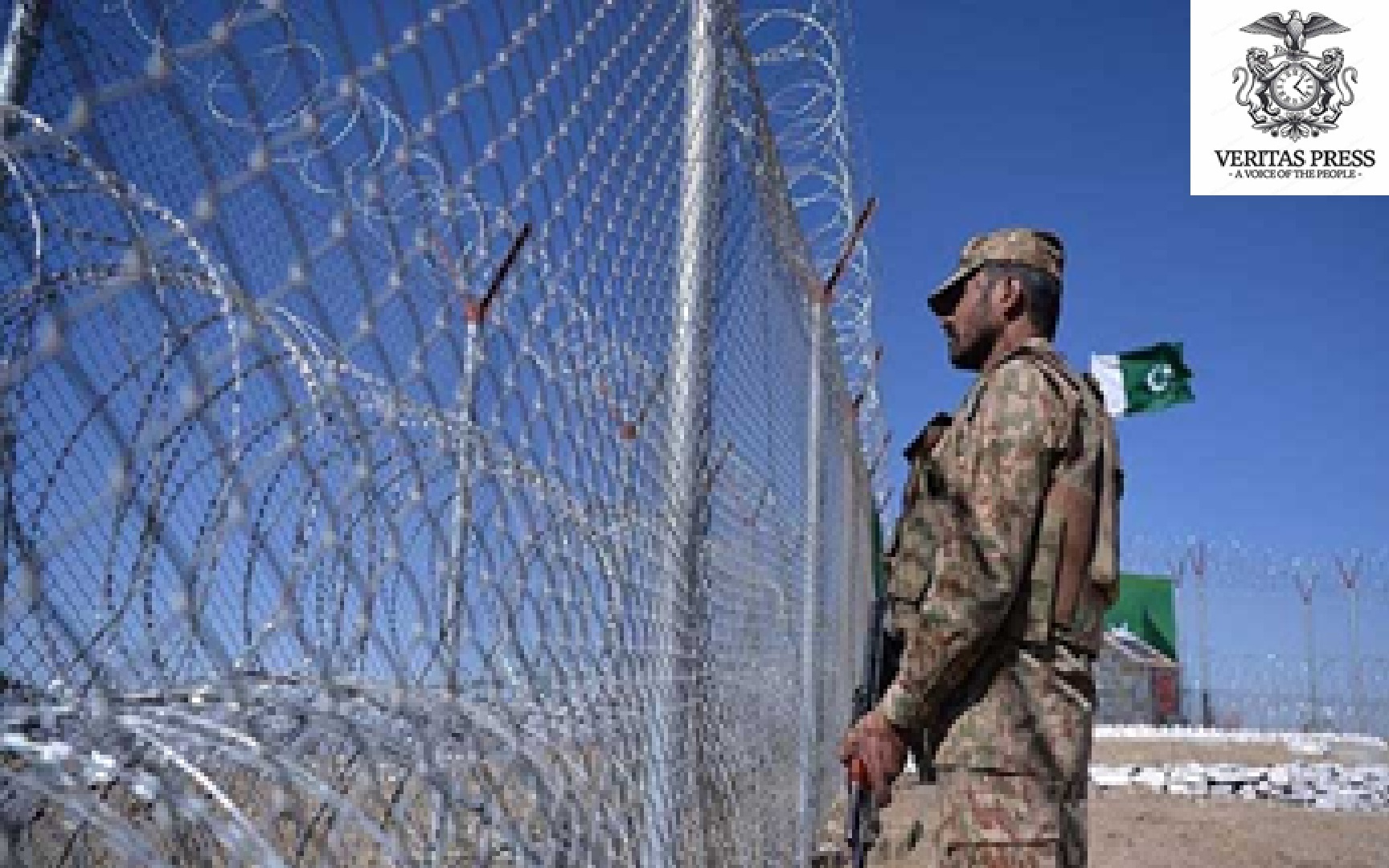
Islamabad closed its border with Afghanistan on October 12, 2025, following what Pakistani officials described as unprovoked attacks by Afghan Taliban fighters and allied militants on Pakistan Army border posts. The clashes, which began on the night of October 11–12, escalated rapidly into one of the most serious military confrontations between the two neighbours since the Taliban’s return to power in Kabul in 2021.
According to official accounts, more than 200 Taliban and affiliated militants were killed, while 23 Pakistani soldiers were martyred defending forward positions along the frontier. In response, Pakistan launched what it described as “precision strikes” deep inside Afghan territory, targeting militant hideouts in Kandahar province and Kabul.
A temporary 48-hour ceasefire was announced on October 15 at Afghanistan’s request, followed by diplomatic engagements mediated by Qatar and Turkiye. The two sides ultimately reached an official ceasefire agreement on October 19 in Doha, easing immediate tensions but leaving deeper security disputes unresolved.
Terror Attacks Fall, Fatalities Decline In Final Quarter:
Data compiled by CRSS and reported by Dawn and PTI indicate that Pakistan’s tougher border posture had an immediate impact on militant violence:
- Terrorist attacks declined by nearly 17% in December, following a 9% drop in November.
- Violence-linked fatalities among civilians fell by nearly 4%, while deaths among security personnel dropped by 19% during the same period.
The findings reinforce Islamabad’s long-standing assertion that militant groups operating from Afghan soil, including factions linked to Tehreek-e-Taliban Pakistan (TTP), have been a major driver of cross-border terrorism.
Pakistani officials have repeatedly accused the Afghan Taliban of failing to prevent the use of Afghan territory by anti-Pakistan militants, a charge Kabul has denied.
2025: Pakistan’s Most Violent Year In A Decade:
Despite the late-year decline, CRSS warns that 2025 marked Pakistan’s bloodiest year in ten years, capping a five-year streak of escalating violence that coincides with the Taliban’s return to power in Afghanistan.
According to the report:
- 3,417 people were killed, and 2,134 were injured in 1,272 incidents of violence, including terrorist attacks and counter-terrorism operations.
- This represents a sharp increase from 2,555 fatalities in 2024, an absolute rise of 862 deaths, or 34 percent year-on-year.
CRSS describes the trend as a “sustained escalation in violence” since 2021, with year-on-year increases of:
- 38% in 2021
- Over 15% in 2022
- 56% in 2023
- Nearly 67% in 2024
- 34% in 2025
KP And Balochistan Bear The Brunt:
Violence in 2025 remained overwhelmingly concentrated in Pakistan’s northwest and southwest, with Khyber Pakhtunkhwa (KP) and Balochistan accounting for more than 96 percent of all fatalities and nearly 93 percent of violent incidents nationwide.
Khyber Pakhtunkhwa
- Fatalities surged from 1,620 in 2024 to 2,331 in 2025
- An increase of 711 deaths, accounting for over 82 percent of the net national rise
- Nearly 44 percent year-on-year increase
- KP alone suffered 68 percent of total violence-linked fatalities and 63 percent of all incidents.
Balochistan
- Fatalities rose from 787 to 956, an increase of 169 deaths
- Nearly 22 percent higher than 2024
- Accounted for 28 percent of total fatalities and over 30 percent of incidents
The data underscores the deepening insurgencies and militant activity in both provinces, driven by a complex mix of separatist violence, Islamist militancy, and cross-border infiltration.
Punjab, Sindh, And Other Regions:
In contrast, Pakistan’s heartland provinces experienced comparatively lower levels of violence:
- Punjab:
- 25 incidents
- 40 fatalities, 24 injuries
- Just 1.15 percent of total casualties
- Sindh:
- 51 incidents
- 56 fatalities, 40 injuries
- 1.73 percent of total casualties
Elsewhere:
- Islamabad Capital Territory saw fatalities decline from 26 to 15
- Azad Jammu and Kashmir (AJK) recorded 15 fatalities, compared to none in 2024
- Gilgit-Baltistan remained the least affected region, though fatalities rose fourfold from one to four
Deadliest Year For Outlaws:
2025 was also the deadliest year in a decade for militants and criminal outlaws, reflecting the scale of Pakistan’s counter-terrorism operations:
- 2,060 outlaws killed in at least 392 security operations
- Outlaws accounted for over 60 percent of total fatalities, surpassing the combined deaths of civilians and security personnel
- Civilians and security officials suffered 1,357 fatalities (40%) across roughly 880 terrorist attacks
While fatalities among civilians and security personnel declined by over 24 percent and 5 percent, respectively, compared to 2024, injuries remained disproportionately high:
- Civilians: 1,187 injuries (56%)
- Security personnel: 793 injuries (37%)
- Outlaws: 154 injuries (7%)
A Fragile Decline Amid Structural Instability:
Security analysts caution that the post-border-closure decline in attacks, while significant, may prove temporary unless underpinned by sustained diplomatic pressure, regional cooperation, and internal reforms.
The CRSS report paints a stark picture: Pakistan’s security situation remains structurally volatile, with militant violence deeply entrenched in border regions and closely tied to developments in Afghanistan.
As Islamabad tightens border controls, shuts down refugee camps, and expands counter-terrorism operations, the challenge remains balancing short-term security gains against the long-term risks of regional instability, humanitarian fallout, and militant regrouping.
For now, the numbers suggest one clear conclusion: border enforcement has reduced attacks, but it has not yet reversed the trajectory of violence that made 2025 Pakistan’s deadliest year in a decade.