Kamran Faqir is a volunteer investigative journalist and writer committed to exposing hidden truths and amplifying underreported stories. Driven by social justice, he brings sharp insight and fearless truth-telling to independent journalism. NUJ registered.
Title: ‘Lives Will Be Destroyed’: Gaza Faces 2026 Under Israel’s Sweeping Ban On International Aid Groups
Press Release: Veritas Press C.I.C.
Author: Kamran Faqir
Article Date Published: 01 Jan 2026 at 12:35 GMT
Category: Middle-East | Palestine-Gaza-West Bank | ‘Lives Will Be Destroyed’: Gaza Faces 2026 Under Israel’s Sweeping Ban on International Aid Groups
Source(s): Veritas Press C.I.C. | Multi News Agencies
Displaced Palestinians warn Israel’s NGO crackdown will deepen famine, medical collapse, and mass suffering.
Gaza has entered 2026 not with relief or reconstruction, but with deepening despair. On 01st January, Israel’s decision to revoke the operating licences of 37 international humanitarian organisations formally came into force, triggering alarm across the devastated enclave and among global aid agencies. For more than a million displaced Palestinians, the ban represents not a bureaucratic shift, but an existential threat.
Displaced residents across Gaza warn that Israel’s latest restrictions will shatter what little remains of the humanitarian lifeline keeping the besieged population alive after more than two years of genocidal war, blockade, and systematic destruction.
“Where are we supposed to go? We have no income, no money,” Siraj al‑Masri, a displaced Palestinian in Khan Younis, told Al Jazeera this week. “Only a few medical points remain. This makes the situation extremely difficult and will lead to a catastrophe for the injured and the wounded. Even ordinary people who come seeking treatment will face severe hardship.”
A Sweeping Ban On Life-Saving Organisations:
The Israeli ban targets 37 international NGOs, including some of the most experienced and essential humanitarian actors operating in Gaza: Doctors Without Borders (Médecins Sans Frontières), the Norwegian Refugee Council, CARE International, and the International Rescue Committee, among others. Many of the affected groups are integral to the UN-backed humanitarian coordination system that delivers food, medical care, shelter, sanitation, and psychosocial support in emergency settings.
Israel claims the move stems from new regulatory requirements compelling aid organisations to disclose extensive details about their staff, funding, and operations. Humanitarian groups and rights organisations argue these requirements amount to political vetting and de facto control over independent aid work. Israeli officials have repeatedly accused humanitarian organisations and UN agencies of links to Hamas, allegations that remain unproven and which international bodies say are being used to justify collective punishment.
“Even with the presence of humanitarian organisations, the situation is already tragic,” Gaza resident Ramzi Abu al‑Neel told Al Jazeera. “If their support and presence are removed, God knows what will happen. Many children will die, and lives will be destroyed, and many families will be devastated by this decision.”
Aid Dependence After Total Devastation:
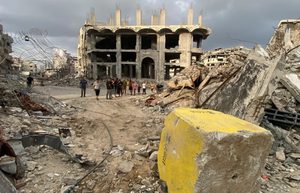
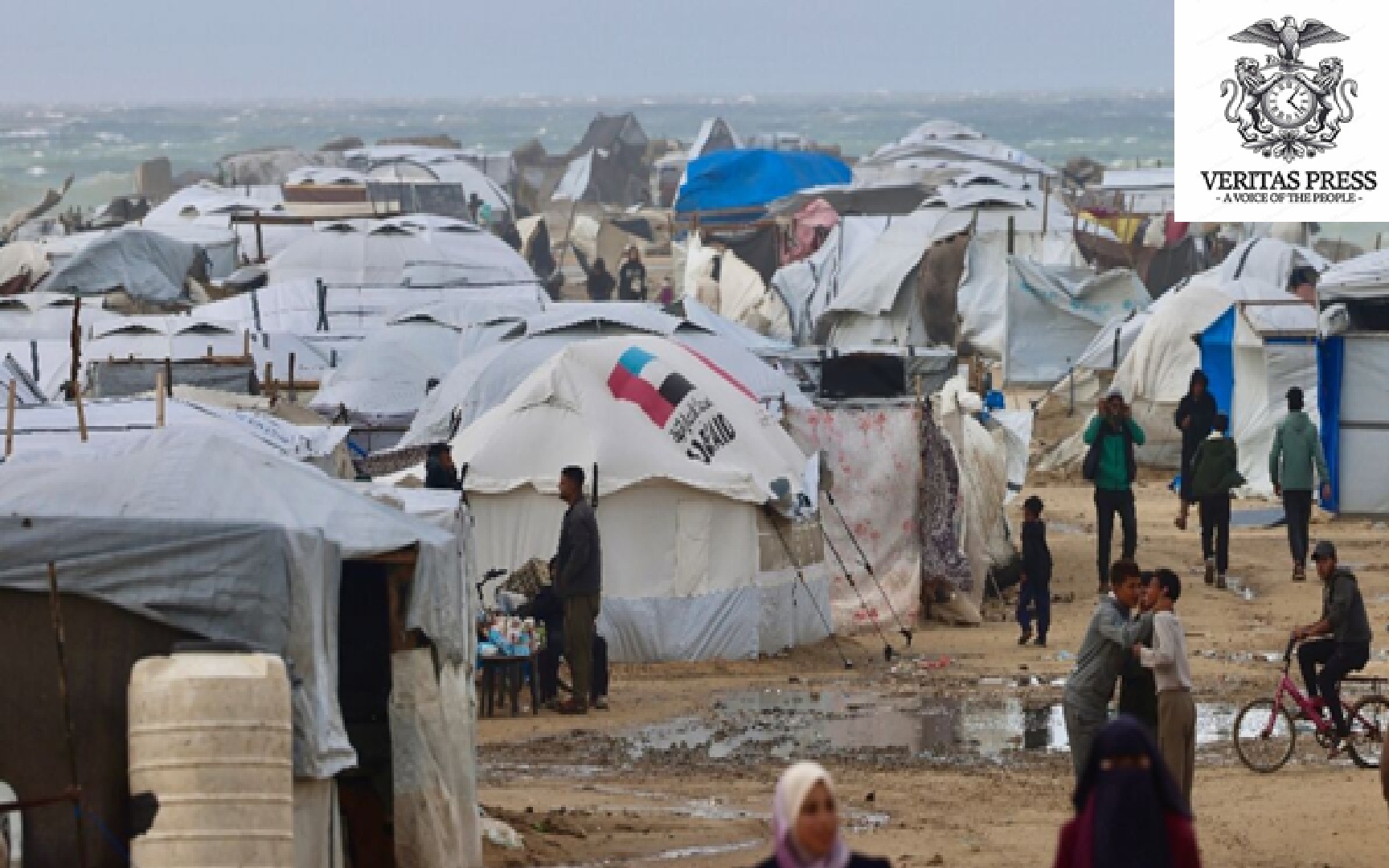
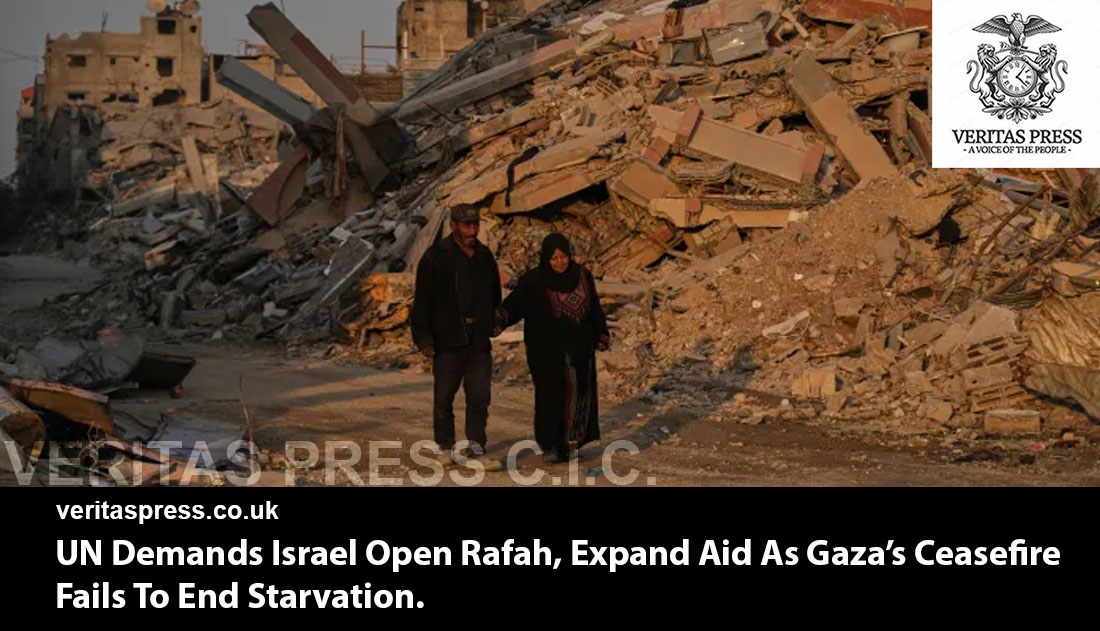
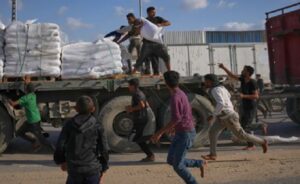
With most of Gaza reduced to rubble, economic life obliterated, and farmland, factories, and markets destroyed, the population has been pushed into near‑total dependence on international aid. According to humanitarian agencies, over one million Palestinians remain displaced, many living in makeshift tents or damaged structures, exposed to harsh winter conditions.
“Most people rely entirely on the assistance that comes from international organisations,” said Abdullah al‑Hawajri, another displaced resident of Khan Younis. “Without them, there is nothing.”
Despite a fragile ceasefire, Israeli forces have continued to kill Palestinians, restrict movement, and severely limit the entry of aid, fuel, medical supplies, and temporary housing materials. Aid groups report persistent obstruction at border crossings, arbitrary denials, and delays that have already cost lives.
Severe Weather Compounds Humanitarian Collapse:
The timing of the ban has intensified fears of mass suffering. Palestinian meteorological authorities have warned of heavy rainfall, thunderstorms, and hail sweeping across Gaza and the wider region in early January. With drainage systems destroyed and tent camps sprawling across flood-prone areas, thousands of families face the risk of flooding, exposure, and disease.
Humanitarian responders say the ban has crippled emergency preparedness. Warehouses cannot be restocked, mobile clinics are shutting down, and plans to reinforce shelters or distribute winter supplies have been suspended or scaled back. “This is a perfect storm,” one aid worker told regional media. “Restricted aid, destroyed infrastructure, and extreme weather, civilians will pay the price.”
International Backlash And Diplomatic Warnings:
On Tuesday, the foreign ministers of 10 countries, including Canada, France, Japan, and the United Kingdom, issued a joint statement urging Israel to ensure international NGOs can operate in Gaza “in a sustained and predictable way.”
“Any attempt to stem their ability to operate is unacceptable,” the statement said. “Without them, it will be impossible to meet all urgent needs at the scale required.”
The United Nations Relief and Works Agency for Palestine Refugees (UNRWA) condemned Israel’s decision as “further compromising the humanitarian operation” in Gaza. UNRWA Commissioner‑General Philippe Lazzarini warned that the move sets a “dangerous precedent” globally.
“Failing to push back against attempts to control the work of aid organisations will further undermine the basic humanitarian principles of neutrality, independence, impartiality and humanity underpinning aid work across the world,” Lazzarini said.
A Broader Campaign Against Humanitarian Presence:
Human rights organisations argue the NGO ban is not an isolated measure but part of a broader Israeli campaign to dismantle humanitarian infrastructure in Gaza. Throughout 2025, Israel approved multiple measures aimed at banning or severely restricting UNRWA, the backbone of aid distribution, education, and healthcare for Palestinian refugees.
Lazzarini described the latest ban as “part of a troubling pattern of disregard for international humanitarian law and increasing impediments to aid operations.” According to Gaza’s Government Media Office, Israeli forces have killed approximately 500 aid workers and volunteers during the two-year war, making Gaza the deadliest place on earth for humanitarian personnel.
Ceasefire Violations And Legal Implications:
Legal experts note that Israel’s decision appears to violate both the ceasefire agreement and US President Donald Trump’s widely publicised “20-point peace plan.” The plan explicitly states that “entry of distribution and aid in the Gaza Strip will proceed without interference… through the United Nations and its agencies, and the Red Crescent, in addition to other international institutions not associated in any manner with either party.”
Many of the organisations now banned fall squarely within that framework. Critics argue Israel’s actions amount to collective punishment, a grave breach of the Fourth Geneva Convention, and a deliberate strategy to make Gaza unlivable.
‘A year that begins with despair’
Reporting from Gaza City, Al Jazeera correspondent Hani Mahmoud said Palestinians are beginning 2026 “not with hope or certainty, but with despair,” as the humanitarian catastrophe deepens under renewed Israeli restrictions.
Aid agencies warn that unless the ban is reversed, Gaza faces an acceleration of famine, the collapse of remaining healthcare services, and rising preventable deaths, particularly among children, the elderly, and the wounded.
As Gaza braces for storms, shortages, and further isolation, displaced families say the message from Israel is unmistakable. “They are not just banning organisations,” said one displaced father in Rafah. “They are banning our chance to survive.”
Without urgent international intervention, humanitarian officials warn, 2026 may mark not a turning point toward recovery, but a deeper descent into engineered catastrophe.
Engineered Famine And The Weaponisation Of Aid:
Humanitarian organisations and food security experts warn that Israel’s NGO ban risks accelerating what UN agencies have already described as an unfolding famine across large parts of Gaza. After two years of siege, bombardment, and the destruction of agricultural land, bakeries, water systems, and markets, Gaza’s food system has been almost entirely dismantled.
According to UN assessments, hundreds of thousands of Palestinians remain at catastrophic levels of food insecurity, with children increasingly presenting symptoms of acute malnutrition. Aid agencies say Israel’s restrictions on aid convoys, combined with the deliberate throttling of humanitarian access, have transformed hunger into a tool of pressure against the civilian population.
“Famine in Gaza is not the result of natural scarcity,” one international aid official said. “It is the direct consequence of policy choices, blockade, obstruction, and now the removal of the very organisations trying to prevent mass starvation.”
The NGO ban further disrupts food distribution networks that took months to establish under fire. Many of the affected organisations operate community kitchens, nutrition programmes for children and pregnant women, and emergency food distributions. Their removal, aid officials warn, will translate rapidly into empty warehouses, longer food queues, and rising death tolls.
Gaza: The Deadliest Place In The World For Aid Workers.
The ban also comes amid unprecedented losses among humanitarian personnel. According to Gaza’s Government Media Office, approximately 500 aid workers and volunteers have been killed by Israeli attacks since the start of the war, an extraordinary figure that has drawn condemnation from international rights groups.
Doctors, nurses, UN staff, civil defence volunteers, and local aid workers have been killed in air strikes, artillery fire, and attacks on clearly marked humanitarian facilities. UN agencies have repeatedly documented strikes on shelters, convoys, and medical sites, despite Israel’s obligation under international law to protect humanitarian personnel.
Humanitarian organisations argue that instead of investigating these killings or holding perpetrators accountable, Israel has escalated its campaign against aid groups themselves, through bans, accusations, and bureaucratic strangulation. “This is not just negligence,” said one rights advocate. “It is the systematic dismantling of humanitarian presence in an active crisis.”
Violations Of International Humanitarian Law:
Legal experts say Israel’s NGO ban raises serious questions under international humanitarian law, particularly the Fourth Geneva Convention, which obliges an occupying power to ensure the welfare of the civilian population and facilitate the delivery of humanitarian assistance.
By restricting or expelling neutral humanitarian organisations, critics argue, Israel is violating its duty to allow and facilitate the rapid and unimpeded passage of relief for civilians in need. The targeting of aid workers, obstruction of aid, and policies that exacerbate starvation may also constitute war crimes under the Rome Statute of the International Criminal Court.
The ban further appears to breach the ceasefire framework and the humanitarian access guarantees outlined in US President Donald Trump’s “20-point peace plan,” which explicitly commits both parties to non-interference in aid delivery through UN agencies and international institutions.
Rights groups warn that failure by the international community to challenge these measures risks normalising the criminalisation of humanitarian work worldwide. “If this precedent stands,” said UNRWA chief Philippe Lazzarini, “it will erode the foundations of humanitarian action far beyond Gaza.”
As Gaza enters 2026 under siege, famine conditions, and collapsing medical services, Palestinians say the message is clear: the assault on aid is an assault on civilian survival itself.
An investigative assessment: starvation, suppression, and the erosion of humanitarian law
Humanitarian officials, medical professionals, and legal experts increasingly describe Israel’s NGO ban not as a security measure, but as part of a systematic strategy to render Gaza uninhabitable while insulating the policy from accountability.
“This is no longer about access constraints or administrative disputes,” said a senior international aid coordinator working in Gaza, speaking on condition of anonymity due to security concerns. “What we are witnessing is the deliberate dismantling of the humanitarian system while civilians are still trapped inside a war zone.”
Medical workers warn that the impact is already measurable. Doctors in northern and southern Gaza report rising deaths from treatable injuries, infections, and chronic illnesses as clinics shut down and supply lines collapse. “We are losing patients not because their wounds are fatal, but because we no longer have antibiotics, surgical kits, or fuel,” said a Palestinian surgeon in Khan Younis. “When aid organisations are expelled, death becomes administrative.”
Starvation As A Method Of Warfare:
International human rights organisations have warned that Israel’s restrictions on food and humanitarian aid may amount to the use of starvation as a method of warfare, explicitly prohibited under international law. Article 54 of Additional Protocol I to the Geneva Conventions bans attacks on objects indispensable to civilian survival, including food supplies, agricultural areas, and water infrastructure. The Rome Statute of the International Criminal Court further classifies the intentional starvation of civilians by depriving them of objects indispensable to their survival as a war crime.
In multiple 2024–2025 reports, Human Rights Watch documented Israel’s systematic obstruction of humanitarian aid into Gaza, concluding that Israeli authorities were “using starvation of civilians as a method of warfare.” HRW cited the destruction of bakeries, restrictions on aid convoys, denial of fuel, and the targeting of food production infrastructure as part of a coordinated policy.
Amnesty International, in its 2025 report “You Feel Like You Are Subhuman”, similarly found that Israel’s siege and aid restrictions constituted collective punishment and may amount to war crimes. “Israel has deliberately created conditions of life calculated to bring about the physical destruction of Palestinians in Gaza,” the organisation said, referencing starvation, dehydration, and the collapse of healthcare.
UN officials have echoed this assessment. The UN Office for the Coordination of Humanitarian Affairs (OCHA) warned in late 2025 that Gaza’s humanitarian system was operating “far below survival thresholds,” with food consumption, water access, sanitation, and medical care all falling beneath emergency minimum standards. OCHA noted that repeated Israeli denials and delays had rendered large-scale famine prevention “functionally impossible.”
The Integrated Food Security Phase Classification (IPC), the global authority on famine assessment, has repeatedly warned that Gaza meets multiple criteria for famine risk, with large portions of the population experiencing Phase 5 (Catastrophe) levels of food insecurity unless aid flows are restored immediately.
Criminalising Humanitarian Work:
Aid organisations argue the ban reflects a broader trend of criminalising humanitarian action. Médecins Sans Frontières (MSF) said Israel’s accusations against NGOs are “unsupported by evidence” and risk placing aid workers in further danger. “When humanitarian organisations are portrayed as legitimate military targets, the consequences are deadly,” MSF warned in a 2025 briefing on Gaza.
The International Committee of the Red Cross (ICRC) has repeatedly reminded Israel that humanitarian personnel must be protected under international humanitarian law. “Respect for medical and humanitarian workers is not optional,” the ICRC said, stressing that attacks on aid workers and restrictions on their movement undermine the entire humanitarian response.
Activists note that Gaza has become the deadliest conflict zone for humanitarian personnel in modern history. According to verified UN data, more aid workers have been killed in Gaza since October 2023 than in any other conflict over a comparable period. The Aid Worker Security Database confirms Gaza as the most lethal operating environment on record.
Under Article 71 of Additional Protocol I, humanitarian personnel engaged in relief operations must be respected and protected. Legal scholars argue Israel’s failure to prevent, investigate, or prosecute attacks on aid workers, while simultaneously expelling their organisations, may engage state responsibility for grave breaches of international law.
Occupation, Collective Punishment, And Legal Accountability:
As the occupying power, Israel is bound under the Fourth Geneva Convention to ensure food, medical supplies, and public health for the occupied population. Article 55 obliges the occupying power to ensure the food and medical supplies of the population, while Article 56 mandates the maintenance of medical services. Article 33 explicitly prohibits collective punishment.
In a 2025 legal analysis, the UN Special Rapporteur on the right to food concluded that Israel’s siege policies in Gaza constituted “a campaign of starvation,” warning that the denial of aid and destruction of food systems could amount to crimes under international law. The UN Special Rapporteur on the situation of human rights in the Palestinian territories similarly stated that Israel’s actions displayed “hallmarks of genocidal conduct,” including the deliberate infliction of conditions of life calculated to bring about physical destruction.
Legal experts argue that policies which deliberately worsen civilian suffering in pursuit of political or military objectives meet the threshold of collective punishment. “The NGO ban cannot be separated from the broader context of blockade, destruction, and displacement,” said a legal adviser to a European human rights organisation. “Together, these measures amount to coercive population control prohibited under international law.”
The ban also undermines Israel’s obligations under customary international humanitarian law, reflected in Rule 55 of the ICRC’s Customary IHL Database, which requires parties to a conflict to allow and facilitate rapid and unimpeded passage of humanitarian relief for civilians in need. Analysts warn that the international community’s failure to enforce these norms risks hollowing out the legal protections governing armed conflict globally.
A Precedent With Global Consequences:
UNRWA chief Philippe Lazzarini warned that allowing Israel’s actions to stand would have consequences far beyond Gaza. “If states are permitted to decide which civilians deserve aid and which organisations may deliver it, humanitarian law becomes optional,” he said.
Rights groups argue that Gaza is becoming a testing ground for the erosion of humanitarian norms. “What is happening here will be cited in future conflicts,” said a Middle East analyst. “The lesson being taught is that you can starve a population, target aid workers, and eliminate NGOs if the world looks away.”
As Palestinians face another year of siege, displacement, and deprivation, humanitarian officials warn that the window for preventing mass death is rapidly closing. “This is no longer a humanitarian emergency alone,” said one UN official. “It is a legal and moral reckoning.”
Kamran Faqir is a volunteer investigative journalist and writer committed to exposing hidden truths and amplifying underreported stories. Driven by social justice, he brings sharp insight and fearless truth-telling to independent journalism. NUJ registered.
SEATTLE, TEHRAN — The U.S. Department of Homeland Security (DHS) will allow Iran’s national football team to enter the country 48 hours before their critical World Cup match against Egypt on Friday, a modest concession in a tournament where Team Melli’s travel conditions have sparked claims of oppression and competitive disadvantage.