“The Evidence Is Compelling”: Retired British Army Generals Warn UK Faces Complicity As Arms, Intelligence And Supply Chains Tie Britain To Gaza’s Destruction.
“The Evidence Is Compelling”: Retired British Army Generals Warn UK Faces Complicity As Arms, Intelligence And Supply Chains Tie Britain To Gaza’s Destruction.
Kamran Faqir is a volunteer investigative journalist and writer committed to exposing hidden truths and amplifying underreported stories. Driven by social justice, he brings sharp insight and fearless truth-telling to independent journalism. NUJ registered.
Title: “The Evidence Is Compelling”: Retired British Army Generals Warn UK Faces Complicity As Arms, Intelligence And Supply Chains Tie Britain To Gaza’s Destruction.
Press Release: Veritas Press C.I.C.
Author: Kamran Faqir
Article Date Published: 26 Dec 2025 at 13:53 GMT
Category: UK | Politics | “The Evidence Is Compelling”: Retired British Army Generals Warn UK Faces Complicity As Arms, Intelligence And Supply Chains Tie Britain To Gaza’s Destruction.
Source(s): Veritas Press C.I.C. | Multi News Agencies
Senior military voices, legal experts, journalists and activists say Starmer’s government is entrenching UK involvement in alleged war crimes.
Four retired senior British Army officers have issued one of the most severe warnings ever directed at a sitting UK government by figures from within the military establishment, urging Prime Minister Keir Starmer to impose a full arms embargo on Israel and immediately sever all military, intelligence and industrial ties.
In a letter to Starmer, first reported by The Times, Brigadier John Deverell, Lieutenant General Sir Andrew Graham, Major General Peter Currie and Major General Charlie Herbert argued that Britain now risks legal and moral complicity in what they described as well-documented Israeli war crimes in Gaza.
“The evidence is now so well documented and compelling,” they wrote, “that the British government should cut all military collaboration with Israel forthwith, to avoid the charge of complicity.”
Their intervention marks a decisive break with the government’s claim that UK cooperation with Israel remains legally defensible, limited, or precautionary. Instead, the former officers describe a system of ongoing entanglement, through arms exports, intelligence sharing, training contracts and global supply chains, that continues despite the mass killing of civilians, famine conditions, and the destruction of Gaza’s civilian infrastructure.
“This Would Never Pass a British Targeting Board”
Central to the officers’ criticism is a rejection of claims made by the Ministry of Defence that Israel’s military conduct “resembles” British practice. That assertion, relied upon by the government in a High Court case defending arms exports, is described by the signatories as untenable.
Brigadier John Deverell, who served for over 30 years in the British Army and was defence attaché in Saudi Arabia and Yemen, has previously stated that British doctrine treats civilian protection as a binding legal obligation, not an operational afterthought.
“What we are witnessing in Gaza, mass civilian death, systematic infrastructure destruction, collective punishment, would never pass a British targeting board,” a senior officer close to the signatories told journalists.
Sir Andrew Graham, former Director General of the UK Defence Academy, was even more blunt in private briefings cited by reporters:
“British forces do not accept famine, the obliteration of hospitals, or tens of thousands of civilian deaths as collateral damage.”
Major General Peter Currie, who served during the Bosnian conflict, drew historical parallels that carry legal weight. “We were warned in the 1990s that atrocities occurred despite good intentions. We later learned that denial and inaction were part of the crime.”
From Political Debate To Legal Threshold:
Legal analysts say Gaza has now crossed a threshold that strips the UK government of plausible deniability.
Under Article I of the Genocide Convention, the UK has a positive obligation to prevent genocide once a plausible risk is identified. The International Court of Justice, in its provisional measures ruling, explicitly found such a risk in Gaza, triggering duties for third states like Britain.
Professor Philippe Sands KC has warned that once plausibility is established, “states cannot plead uncertainty.” Continued arms transfers, intelligence support, or enabling supply chains may engage state responsibility.
The Arms Trade Treaty, to which the UK is a signatory, prohibits exports where there is a clear risk of serious violations of international humanitarian law. Campaign Against Arms Trade (CAAT) argues that Gaza surpassed that standard long ago.
“This is no longer about predicting risk,” said Emily Apple of CAAT. “It’s about ongoing, documented violations. Every licence approved now is a conscious choice.”
Partial Suspensions, Total Exposure:
Despite announcing a partial suspension of arms licences in September 2024, export data reveal that UK arms approvals to Israel have surged under Labour. Between October and December alone, at least 20 licences were approved for military aircraft components, targeting equipment, radar systems and explosive devices, exceeding totals approved under the previous Conservative government.
Most controversially, the UK has continued to permit exports of F-35 fighter jet components, arguing that Britain cannot unilaterally disrupt a multinational supply chain. Critics say this is precisely how legal responsibility is laundered.
Former Labour shadow chancellor John McDonnell accused ministers of obfuscation: “If the government knows British-made components are used in Gaza and continues to approve them, then we are breaching both international law and our own export rules.”
Mapping Britain’s Role: Supply Chains That Lead To Gaza.
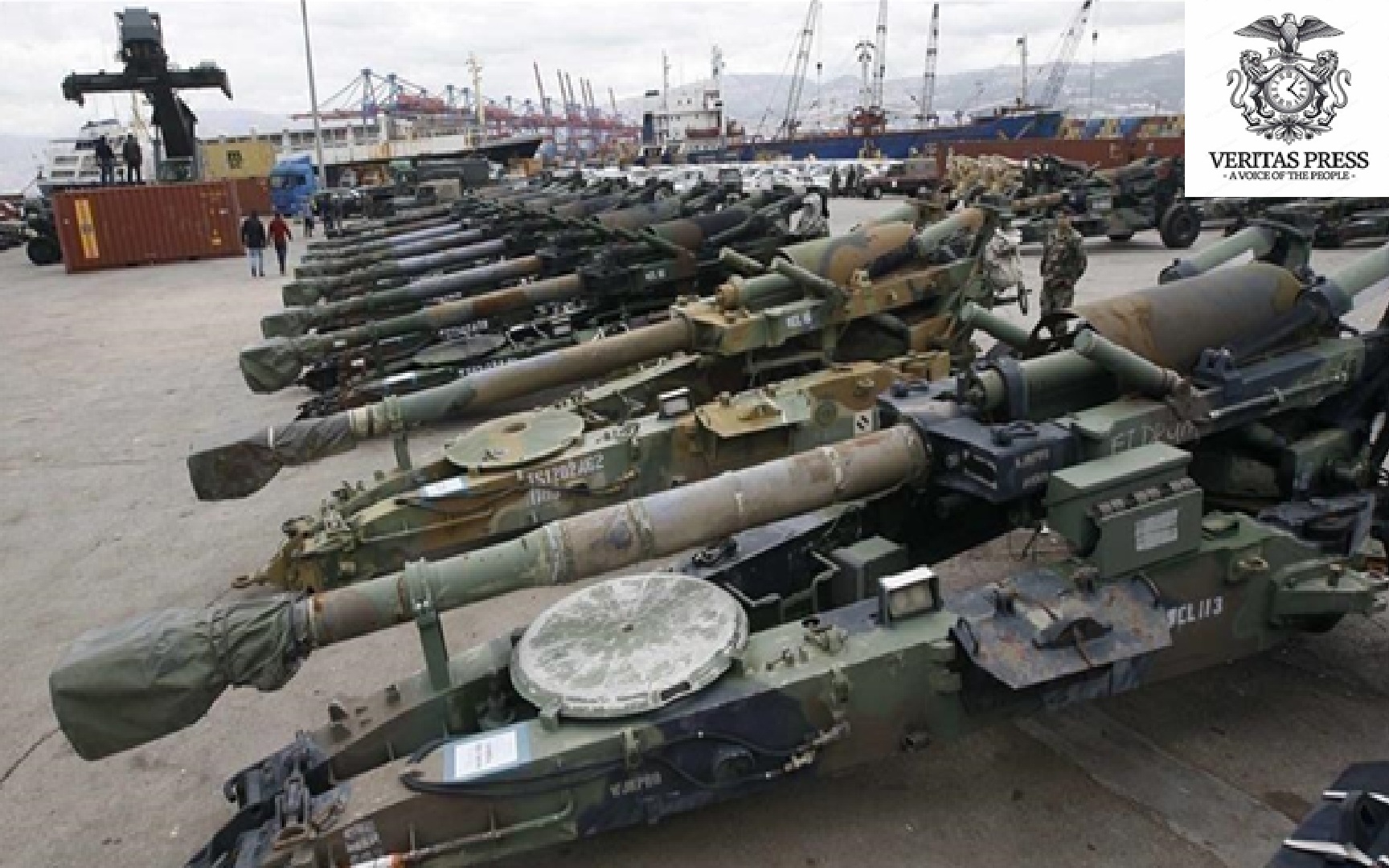
Far from being abstract, Britain’s military involvement is embedded in a dense web of corporate supply chains directly linked to weapons used in Gaza.
At the centre is BAE Systems, Britain’s largest arms manufacturer and a key partner in the F-35 programme. Roughly 15 percent of each F-35 jet, including fuselage components, avionics, fuel systems and electronic warfare elements, is produced in the UK. Israeli F-35s have been repeatedly documented carrying out strikes on densely populated areas of Gaza.
Then there is Elbit Systems, Israel’s largest weapons firm and a focal point of activist scrutiny. Through subsidiaries such as Elbit Systems UK, UAV Engines Ltd, and Instro Precision, British-based facilities manufacture drone engines, targeting systems and electro-optical components tied to Israeli military platforms used in Gaza.
Joint ventures like UAV Tactical Systems Ltd, a partnership between Elbit and Thales UK, produced the Watchkeeper drone, derived directly from the Hermes drones extensively deployed by Israel.
Leonardo UK, operating from Edinburgh, produces laser targeting systems for F-35 jets. Smaller firms QinetiQ, Smiths Group, and specialist precision engineering contractors sit deeper in the subcontracting chain, supplying components that ultimately feed into weapons platforms used in Israeli operations.
Investigative journalist Mark Curtis describes this as “institutionalised complicity,” arguing that Britain is not merely exporting arms but embedding itself into the infrastructure of Israel’s war-making capacity.
Intelligence Flights And The RAF Question:
The retired officers also condemned the UK’s intelligence role, citing more than 500 RAF reconnaissance flights over Gaza since December 2023. While the Ministry of Defence insists these missions were solely to locate hostages, critics argue that intelligence gathered in an active warzone cannot be cleanly separated from military use.
Former UN rapporteur Michael Lynk warned that “intelligence sharing where war crimes are alleged can itself constitute participation.”
Pro-Palestinian activist Huda Ammori, co-founder of Palestine Action, said: “You cannot claim neutrality while providing components, training, and intelligence to the same military accused of mass atrocities.”
Starmer’s Defining Test:
For Keir Starmer, a former human rights lawyer, the stakes are acute. Critics argue his government has adopted a strategy of legal minimalism: suspending some licences while preserving the architecture of military cooperation.
SNP MP Brendan O’Hara accused the government of moral collapse, calling for a full embargo, UK participation in the ICJ genocide case, recognition of Palestine, and enforcement of international arrest warrants against Israeli leaders.
“The law is clear,” O’Hara said. “What is missing is political courage.”
Media outlets, including Declassified UK, Middle East Eye and The Guardian, have repeatedly challenged the government’s framing, highlighting the opacity of “open licences” and the contradiction between humanitarian rhetoric and industrial reality.
Veteran journalist Jonathan Cook argues that “policy ambiguity functions as political shielding,” allowing ministers to claim compliance while enabling continuity.
“History Will Not Accept Denial”
For the retired officers, the moment for half-measures has passed.
“History will not ask whether ministers were cautious,” Brigadier Deverell has warned. “It will ask whether they acted when the evidence was already clear.”
As Gaza’s death toll exceeds 150,000 killed and more than 400,000 wounded, with famine deepening and ceasefire violations continuing, the question confronting Britain is no longer abstract.
It is whether the UK will dismantle the arms, intelligence and industrial systems that bind it to one of the gravest humanitarian catastrophes of the century, or whether it will be remembered as a state that saw the evidence and chose complicity.
Conclusion: From Plausible Risk To Proven Responsibility.
What confronts the British government now is no longer uncertainty, complexity, or competing narratives; it is accumulated evidence.
The warning issued by four retired senior British Army officers is not an act of political protest but a professional judgment rooted in doctrine, law, and lived experience of war. When figures who once upheld the UK’s rules of engagement, targeting protocols, and legal obligations state that Israel’s conduct bears no resemblance to British military practice, the government’s defence collapses.
This is no longer a question of whether UK weapons might be misused. British-made components are already embedded in aircraft, drones, targeting systems and intelligence infrastructures operating over Gaza. The supply chains are mapped. The export licences are documented. The RAF missions are logged. The training contracts are pending. The legal risk is no longer hypothetical; it is active.
International law does not allow states to hide behind partial suspensions or bureaucratic fragmentation. The Genocide Convention imposes a duty to prevent, not merely to review. The Arms Trade Treaty prohibits exports where there is a clear risk of serious violations, not where risk can be administratively diluted. Once the International Court of Justice ruled that a plausible risk of genocide exists in Gaza, the space for political discretion narrowed dramatically.
By continuing arms approvals, exempting F-35 components, maintaining intelligence cooperation, and deepening defence-industrial partnerships with Israeli firms, Starmer’s government is not standing at a distance from Gaza’s destruction; it is structurally entangled in it.
History offers no refuge for such positioning. Britain has travelled this path before: arming allies while questioning evidence, invoking strategic necessity, and postponing accountability until the human toll became undeniable. From Iraq to Bosnia, official regret has always arrived after the dead were counted.
The retired officers’ warning is explicit: denial itself becomes complicity once the facts are known. The scale of civilian death, the deliberate degradation of life-sustaining infrastructure, the use of starvation as a method of war, and the repeated targeting of protected sites have been documented not by activists alone, but by UN bodies, humanitarian organisations, journalists, doctors, and now Britain’s own military establishment.
Keir Starmer’s background as a human rights lawyer sharpens, rather than softens, this reckoning. He cannot plausibly claim ignorance. Nor can his government claim legality while preserving the very supply chains that make Israeli military operations possible.
The question now is not whether Britain might be complicit, but whether it will continue choosing to be.
The evidence is no longer emerging. It is established. The risk is no longer prospective. It is ongoing. And the judgment, legal, moral, and historical, will not be deferred indefinitely.
As Brigadier John Deverell warned, history will not measure caution. It will measure action takenafter the truth was already clear.
Kamran Faqir is a volunteer investigative journalist and writer committed to exposing hidden truths and amplifying underreported stories. Driven by social justice, he brings sharp insight and fearless truth-telling to independent journalism. NUJ registered.
SEATTLE, TEHRAN — The U.S. Department of Homeland Security (DHS) will allow Iran’s national football team to enter the country 48 hours before their critical World Cup match against Egypt on Friday, a modest concession in a tournament where Team Melli’s travel conditions have sparked claims of oppression and competitive disadvantage.