Kamran Faqir is a volunteer investigative journalist and writer committed to exposing hidden truths and amplifying underreported stories. Driven by social justice, he brings sharp insight and fearless truth-telling to independent journalism. NUJ registered.
Title: Israel’s Airstrikes Across South Lebanon: Anatomy Of A Ceasefire In Tatters.
Press Release: Veritas Press C.I.C.
Author: Kamran Faqir
Article Date Published: 24 Dec 2025 at 18:45 GMT
Category: Middle-East | Palestine-Gaza-West Bank | Israel’s Airstrikes Across South Lebanon: Anatomy Of A Ceasefire In Tatters
Source(s): Veritas Press C.I.C. | Multi News Agencies
By analysing the latest strikes, decades-long patterns of violence, and testimonies from those on the frontlines, this report reveals how Israel’s longstanding military campaign in southern Lebanon has been consolidated through chronic ceasefire breaches, structural destruction and punitive repression.
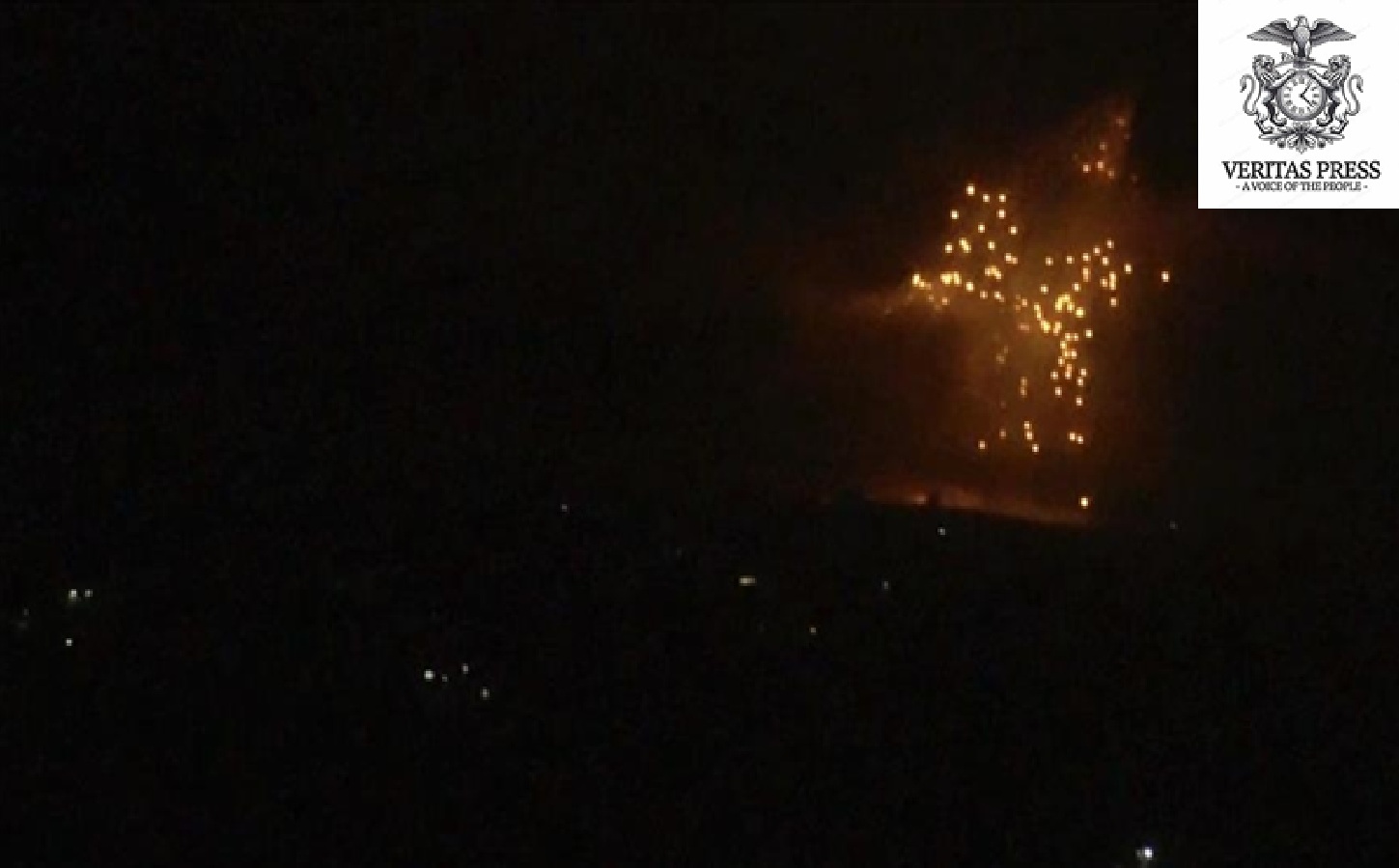
LEBANON – On Wednesday, the Israeli occupation army launched a new spate of airstrikes across southern Lebanon, including at least six blows in Wadi Houmine alone, part of a sustained campaign of bombardment that has become routine despite a US-brokered ceasefire agreement in November 2024. Israel claims its targets are Hezbollah military infrastructure; residents, aid groups and analysts contend that the strikes are wreaking damage on civilian life and undermining fragile diplomatic efforts.
The Latest Strikes: Military Claims, Civilian Impact.
Lebanon’s National News Agency (NNA) reported that Israel fired a series of missiles on Wadi al-Nemiriyeh and Wadi Houmine in the Nabatieh and Sidon districts, echoing explosions across towns and villages in the region. Al Mayadeen also documented intensive aerial and drone activity preceding the strikes, with reconnaissance aircraft flying at unusually low altitudes over populated areas, a dynamic locals described as “unsettling and dangerous.”No official casualty figures have yet been released for Wednesday’s strikes.
Israeli army spokesperson Avichay Adraee asserted on X that the operations targeted “launch sites belonging to Hezbollah,” destroying “military buildings and infrastructure recently used by Hezbollah operatives.” His statement, however, deserves scrutiny in the light of repeated satellite verification and humanitarian reporting that show large swathes of southern Lebanon, including homes, farmland and civilian infrastructure, have been damaged or destroyed in past operations, often without clear evidence of purely military targets. Amnesty International
Voices From The Ground: Civilian Testimonies Of Destruction And Fear.
Local residents and medics describe an atmosphere of persistent fear rather than targeted security operations:
Aisha Mounir, a shopkeeper in Wadi Houmine, told local journalists after recent strikes: “We hear jets and drones every day now. Even when no one dies, people stay in their homes, afraid to go out. The fields, the markets, everything is suffering.” Her testimony echoes broader reports from southern village councils that civilian life remains sharply disrupted by repeated aerial violations.
Dr. Samir Habeeb, a medic at a field clinic serving border towns, said: “We see trauma, not just physical injuries, but anxiety, sleep disturbances in children, farmers afraid to return to their fields. Even when strikes are ‘targeted’, the reverberations are communal.” Medics have additionally noted shortages of supplies, as ambulances risk being caught between shellfire or drone surveillance while trying to reach the wounded.
Activists assisting displaced families spoke of homes and orchards that cannot be rebuilt: “Even after a ceasefire, people have no safe return,” one observer from a southern relief network told Al Jazeera reporters, referencing entire villages that remain deserted because of insecurity and destruction.
Patterns Of Violence: Ceasefire Violated, Lives Shattered.
These latest strikes are part of a broader pattern of violation:
According to UN and civil society monitoring, Israel has committed thousands of ceasefire breaches, from airspace incursions and ground fire to strikes that kill civilians trying to return home.
In January 2025, Israeli forces reportedly killed at least 26 returning civilians and wounded dozens more at Kfar Kila when residents tried to go back to their villages after a partial Israeli withdrawal, a stark example of the lethal enforcement of exclusion zones under the guise of security.
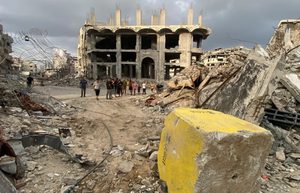
Amnesty International has documented widespread destruction of civilian homes, infrastructure, orchards and cultural sites in areas that saw Israeli ground operations in late 2024, continuing even after ceasefire arrangements were in force. Witnesses recounted bulldozing and explosive use that rendered villages uninhabitable, sometimes long after active combat had subsided.
International And Analytical Perspectives: Legal And Strategic Dimensions.
Human rights organisations have warned that indiscriminate or disproportionate attacks on civilians and civilian objects could amount to serious breaches of international humanitarian law. Amnesty’s report argues that extensive demolition of homes and public infrastructure, absent verifiable military necessity, constitutes unlawful conduct. Amnesty International
Analysts contend that Israel’s pattern of violations is not episodic but strategic:
Regional security expert Dr. Layla Haddad explained to Middle East correspondents: “Israel’s offensive logic in Lebanon is partly deterrence through constant pressure, maintaining tactical superiority over Hezbollah while keeping communities destabilised to discourage resistance.” She and other analysts note that such a strategy risks entrenching cycles of violence rather than preventing them.
A former UN official, who spoke on condition of anonymity, said: “Ceasefires are meaningless if violations are chronic. The violence is not only military; it’s psychological, demographic, and socio-economic.”
Humanitarian Toll Hidden In The Figures:
Lebanese health authorities estimate that Israeli attacks since November 2024 have caused hundreds of civilian deaths and injuries, while UN and rights groups highlight that documented strikes often hit residential areas, agricultural lands and essential community infrastructure.
Compounding the human cost are restrictions on safe return: many villagers cannot rebuild because their homes were levelled or designated no-go zones remain in place. This is not just collateral damage; it is deeply disruptive to community life, local economies and the social fabric of southern Lebanon.
Political Faultlines: Ceasefire, Disarmament And Diplomatic Deadlock.
The continued strikes occur amid fraught politics:
Lebanon’s cabinet has passed resolutions aimed at restricting weapons to the state and tasked the Lebanese Army with implementation, a process Israel says must include the disarmament of Hezbollah before 2026.
Hezbollah leaders maintain they will not relinquish arms while Israel continues to occupy and attack Lebanese territory, insisting that resistance is necessary to protect communities.
External diplomatic efforts, including a planned February 2026 international conference in Paris co-hosted by France, the US and Saudi Arabia, aim to bolster the Lebanese army and prevent escalation. However, for many observers, that conference seems like a band-aid on an open wound unless it addresses root grievances, including continued occupation, displacement and accountability for violations.
Breaking Ceasefire Narratives: Who Speaks For The People?
Local communities, displaced families and activists stress their voices are too often absent from international discourse dominated by military and diplomatic elites.
One displaced father from Kfar Kila, now living in a camp near Tyre, told journalists: “We are not Hezbollah. We just want to go home without fear, that’s all.”
His words, echoed by countless others displaced since late 2023, underscore a deeper truth: ceasefires without safeguards for civilian life are fragile, hollow, and ultimately self-defeating.
Kamran Faqir is a volunteer investigative journalist and writer committed to exposing hidden truths and amplifying underreported stories. Driven by social justice, he brings sharp insight and fearless truth-telling to independent journalism. NUJ registered.
SEATTLE, TEHRAN — The U.S. Department of Homeland Security (DHS) will allow Iran’s national football team to enter the country 48 hours before their critical World Cup match against Egypt on Friday, a modest concession in a tournament where Team Melli’s travel conditions have sparked claims of oppression and competitive disadvantage.