Kamran Faqir is a volunteer investigative journalist and writer committed to exposing hidden truths and amplifying underreported stories. Driven by social justice, he brings sharp insight and fearless truth-telling to independent journalism. NUJ registered.
Title: Israel Violates Gaza Ceasefire As WHO Warns Of Mass Child Malnutrition.
Press Release: Veritas Press C.I.C.
Author: Kamran Faqir
Article Date Published: 22 Dec 2025 at 13:45 GMT
Category: Middle East | Palestine-Gaza-West Bank | Israel Violates Gaza Ceasefire As WHO Warns Of Mass Child Malnutrition.
Source(s): Veritas Press C.I.C. | Multi News Agencies
Despite a US-, Qatar- and Egypt-brokered ceasefire that took effect on 10 October 2025, Israeli military operations and restrictions on humanitarian access continue to undermine the truce and fuel a deepening humanitarian catastrophe in Gaza. While the World Health Organization (WHO) warns that more than 100,000 children and tens of thousands of pregnant and lactating women could face acute malnutrition by April 2026, families on the ground describe suffering that has already crossed the threshold of a long-term nutritional crisis.
Ceasefire Violations: Daily Deaths And Structural Enforcement Gaps.
The ceasefire was supposed to stop fighting and let aid in, but it’s been broken by the Israeli forces’ almost daily military operations.
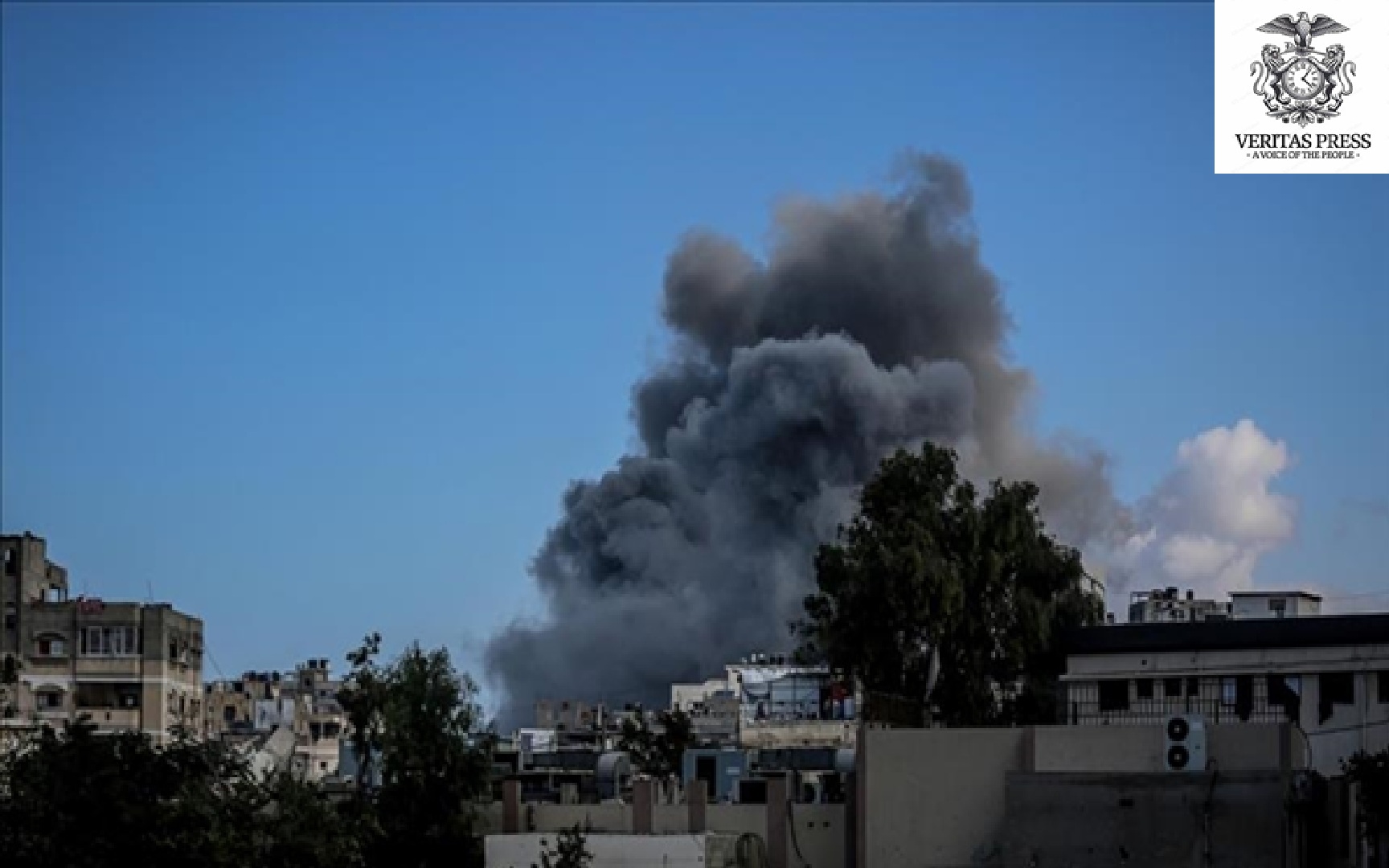
According to independent tracking by Gaza authorities and media analysts, Israel has conducted hundreds of military actions since the ceasefire began, including airstrikes, artillery fire, and raids beyond the ceasefire’s “Yellow Line,” directly contributing to hundreds of Palestinian deaths and injuries.
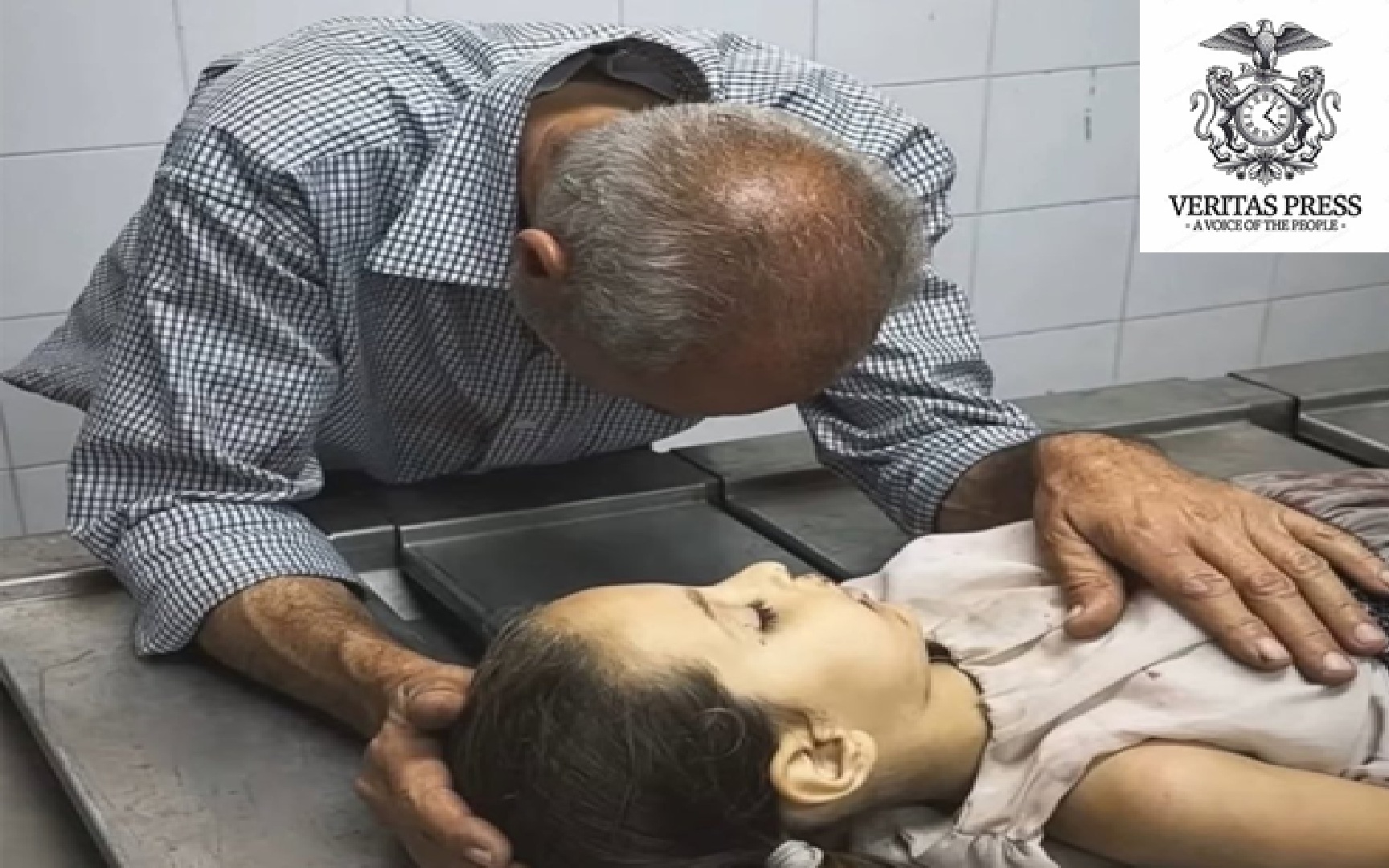
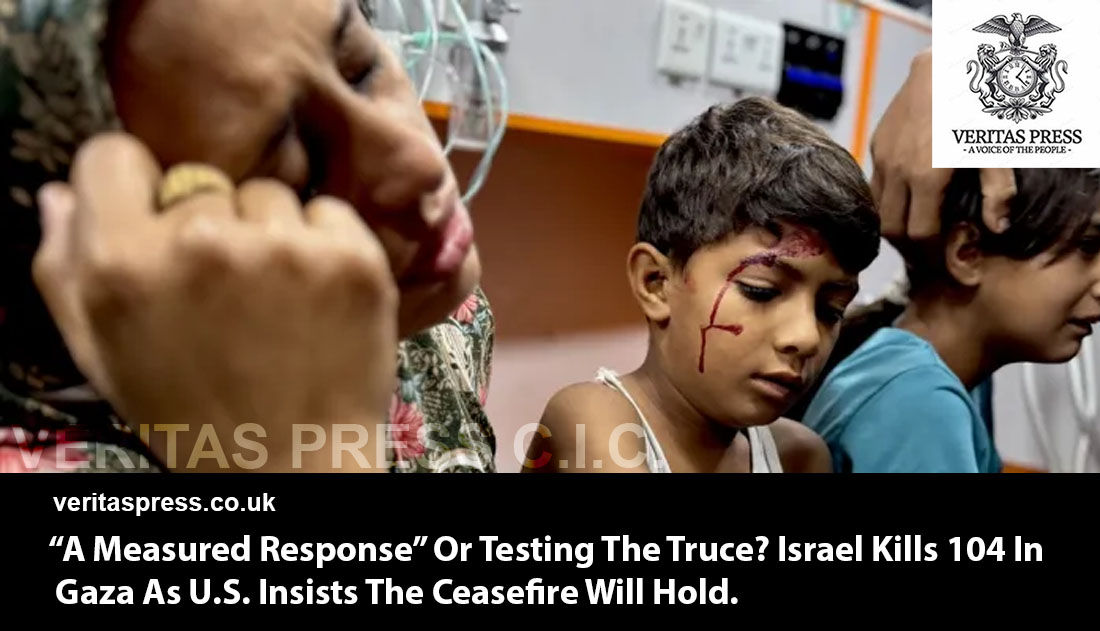
Palestinian medical officials say Israeli fire killed at least five Palestinians, including a baby, in the Tuffah neighbourhood of Gaza City in the past week, and mortars fired by Israeli troops wounded at least 10 others near ceasefire lines.
At least six civilians sheltering in a school, including young children, were killed in an Israeli operation, according to Gaza civil defence and hospital sources; witnesses told Agence France-Presse (AFP): “This is not a truce, it is a bloodbath.”
Local activists and residents describe scenes of loss that go far beyond statistics. A displaced family member in Gaza City told reporters that “bombardment continues even where people have nowhere else to go, the so-called ‘ceasefire’ feels meaningless to us.” Independent journalists on the ground describe pervasive fear that any movement outside shelter at night risks artillery or aerial fire.
Humanitarian Access: Strangled Aid And Bureaucratic Blockades.
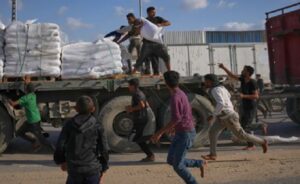
The ceasefire explicitly envisioned unimpeded delivery of food, medical supplies, shelter materials, and fuel. Yet, multiple international agencies, humanitarian groups, and UN officials have documented persistent barriers:
The WHO, UNagencies (FAO, UNICEF, WFP) and NGO coalitions have warned that fragile gains against famine could be reversed if humanitarian and commercial access does not scale dramatically.
The United Nations and over 200 aid groups have publicly warned that new Israeli registration and bureaucratic requirements could force key international organisations to withdraw from Gaza and the West Bank by early 2026, jeopardising health care, food distribution, water, sanitation programs and child nutrition services.
Doctors Without Borders (MSF) has been among the most critical voices inside Gaza. In their own reporting, MSF warns:
“The health situation in Gaza remains extremely critical… ceasefire has not been accompanied by the opening of crossings or delivery of humanitarian aid… aid must reach Gaza before any discussion of rebuilding hospitals can take place.”
MSF medical teams treating traumatic injuries and basic illnesses describe operating with shortages of essential medicines and surgical supplies, while many facilities are operating at only a fraction of capacity due to fuel and equipment bottlenecks.
WHO & UN Agencies: Acute Malnutrition And “Fragile” Relief.
On 19 December 2025, joint statements from WHO, WFP, UNICEF and FAO warned that the Strip had escaped official famine classification, but at an enormous cost and only because of modest increases in aid after October’s ceasefire. Yet the humanitarian situation remains perilously unstable:
Over 1.6 million people face acute food insecurity, more than 75% of Gaza’s population, with over 100,000 children and 37,000 pregnant or breastfeeding women projected to suffer from acute malnutrition by April 2026.
WHO Director-General Dr Tedros Adhanom Ghebreyesus warned that:
“Limited progress in preventing famine is being undermined by widespread infrastructure destruction, collapsed livelihoods, and severe restrictions on humanitarian operations.”
Yet Israeli military authorities have disputed humanitarian data, criticising IPC findings as purportedly “distorted” and lacking full engagement with Israeli coordination structures. Reddit
Even senior UNICEF officials caution that increases in aid are insufficient. UNICEF spokesperson James Ingram said:
“Although the increase in aid reaching Gaza during the first two weeks of the ceasefire is encouraging, it is still far from enough… children are dying from preventable causes such as malnutrition, hypothermia, and disease because we still cannot bring enough supplies into Gaza.”
Children On The Brink: Medics And Advocates Sound The Alarm.
International child-welfare organisations stress that the crisis is not abstract; it’s harming the youngest and most vulnerable:
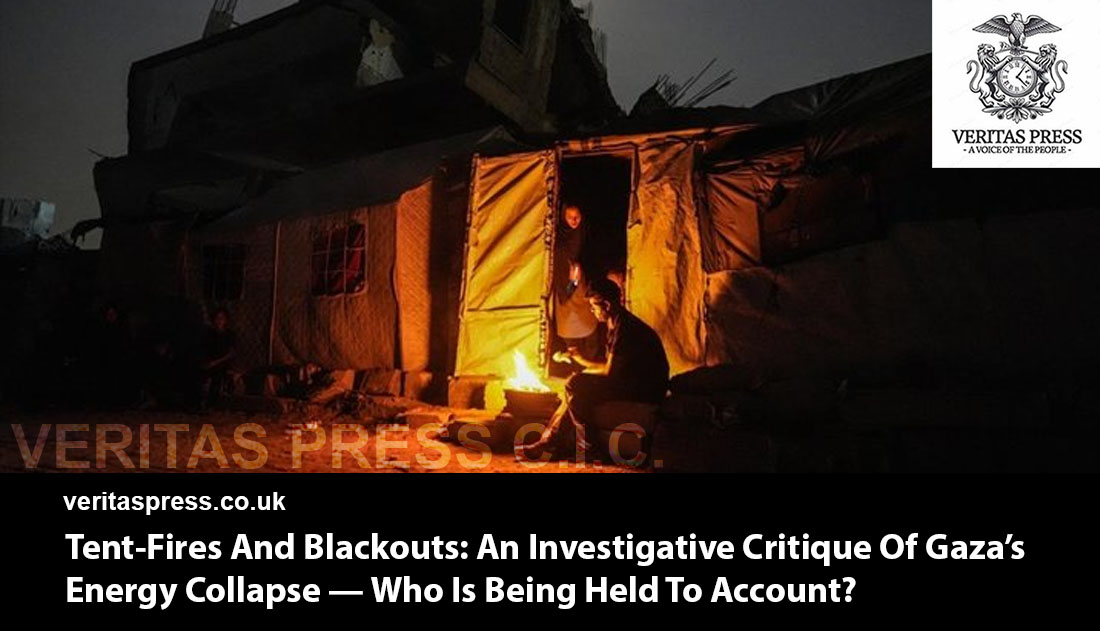
UNICEF and partner agencies report that hundreds of thousands of displaced children live in makeshift tents without adequate shelter, water, sanitation or food.
UNICEF’s former spokesperson Ricardo Pires reported from Gaza that children have died during the ceasefire period as Israeli fire continues: “If the required aid and support had reached more quickly, we would have been able to do more.”
Medics inside Gaza identify early signs of wasting (acute weight loss) and stunting (long-term growth impairment) among children, conditions that can cause irreversible developmental damage long before 2026.
Save the Children’s regional director warned months earlier that starvation was already causing deaths and pushing thousands of children into life-threatening malnutrition, a situation that only worsened by incomplete aid deliveries and restrictions.
Structural Violence: Beyond The Battlefield.
What emerges from this deeper analysis is not simply a failure of logistics: it is a structural blockade accompanied by intermittent military pressure and global complicity that restricts people’s access to the essentials of life.
Local activists, humanitarian workers, and analysts have repeatedly characterised the situation as systematically engineered to hinder recovery:
Chris Gunness, former UNRWA spokesperson, told Al Jazeera that Israel’s sustained restrictions on aid and refusal to fully open crossings amounts to “a war crime by blocking aid to Gaza… Israel has made it clear that it wants to commit a genocide against the Palestinians, it wants to ethnically cleanse them, and it wants to starve them.”
Multiple Gaza health officials and local doctors have described ongoing trauma cases, infectious disease outbreaks, and malnutrition as not merely byproducts of war but direct consequences of policy-shaped deprivation.
International Accountability: Courts, Politics And The Ceasefire’s Future.
The crisis has also triggered legal and political fallout:
The International Criminal Court (ICC) recently rejected Israeli attempts to halt investigations into alleged war crimes in Gaza, rejecting claims that post-October 2023 events should be excluded from scrutiny.
Meanwhile, diplomatic efforts for a second phase of the peace process, including deploying international peacekeeping forces and broader reconstruction plans, are stalled amid disputes over disarmament, border control, and humanitarian access.
Conclusion: Managed Survival, Starvation, And A People On The Brink Of Death And Erasure.
The Gaza ceasefire may have ended major combat operations, but it has not ended suffering, and in many ways, the terms of the truce have institutionalised it. What is framed as de-escalation has instead enabled a continuation of structural harm: violence persists under new justifications, humanitarian access remains conditional, and deprivation has been transformed into a governing mechanism rather than an unintended byproduct of war.
Violent breaches of the ceasefire continue to claim civilian lives, often beyond sustained international scrutiny. Israeli military operations persist under the language of enforcement and security, ensuring that Palestinians remain exposed to lethal force even during a supposed truce. Civilians are killed, homes are demolished, and displacement continues, not as anomalies, but as features of a ceasefire that lacks enforcement and accountability.
Aid flows, while marginally increased, remain deliberately insufficient and tightly controlled. Food, fuel, medicine, and shelter materials are permitted at levels that prevent immediate mass death while guaranteeing that hunger, disease, and dependence endure. This has produced what humanitarian officials increasingly describe as “managed survival”, a calibrated humanitarian minimum that keeps Gaza’s population alive, but malnourished, weakened, and unable to recover. The World Health Organization’s warning that more than 100,000 children could suffer acute malnutrition by April 2026 is not a speculative projection; it is a stark measure of how deprivation has been normalised and sustained.
Gaza’s health system teeters on the edge of collapse under this arrangement. Only a fraction of hospitals function at partial capacity, medical staff operate without essential supplies, and preventable deaths continue to mount. Proposed Israeli regulations that could bar international humanitarian organisations from operating in Gaza threaten to dismantle even this fragile lifeline. As Doctors Without Borders and other agencies have warned, removing independent medical actors from a population facing mass malnutrition is not administrative reform; it is the withdrawal of life-saving protection.
Children offer the clearest evidence of the consequences. The unfolding crisis of malnutrition, stunting, untreated illness, and psychological trauma carries irreversible implications. Medical experts warn that even if violence were to cease entirely, prolonged hunger will shape survival, health, and cognitive development for decades. Starvation here is not sudden or accidental; it is slow, cumulative, and administratively sustained, pushing a generation to the brink of death long before the world acknowledges the scale of loss.
This reality raises a question that humanitarian discourse often avoids but international law demands be confronted: Is Gaza being kept alive, or is it being erased slowly through starvation? When food systems are dismantled, healthcare obstructed, livelihoods destroyed, and aid deliberately restricted, even in the absence of large-scale bombardment, the line between managed survival and deliberate annihilation through famine and malnutrition becomes increasingly untenable.
The world now faces a stark choice. It can accept the current equilibrium of managed suffering, in which famine is postponed but never resolved, civilians are weakened rather than protected, and an entire population is held permanently at the edge of survival, or it can mount a decisive international effort to enforce not only a cessation of violence, but unrestricted humanitarian access, protection of civilians, and accountability for policies that push Gaza toward death and erasure.
International actors cannot plausibly claim ignorance. The evidence is documented, the warnings unambiguous, and the human toll undeniable. What remains absent is the political will to confront a system that allows Gaza to exist in a permanent state of controlled deprivation. Without enforcement, accountability, and an end to the weaponisation of hunger, the ceasefire risks becoming not a bridge to peace, but a framework for the slow, bureaucratised destruction of a people, carried out not in secrecy, but in full view of the world.
Kamran Faqir is a volunteer investigative journalist and writer committed to exposing hidden truths and amplifying underreported stories. Driven by social justice, he brings sharp insight and fearless truth-telling to independent journalism. NUJ registered.
SEATTLE, TEHRAN — The U.S. Department of Homeland Security (DHS) will allow Iran’s national football team to enter the country 48 hours before their critical World Cup match against Egypt on Friday, a modest concession in a tournament where Team Melli’s travel conditions have sparked claims of oppression and competitive disadvantage.