Kamran Faqir is a volunteer investigative journalist and writer committed to exposing hidden truths and amplifying underreported stories. Driven by social justice, he brings sharp insight and fearless truth-telling to independent journalism. NUJ registered.
Title: Crocodiles, Executions, And Starvation: Israel’s Prison System And The Escalating Assault On Palestinian Detainees.
Press Release: Veritas Press C.I.C.
Author: Kamran Faqir
Article Date Published: 21 Dec 2025 at 19:40 GMT
Category: Middle-East | Palestine-Gaza-West Bank | Crocodiles, Executions, And Starvation: Israel’s Prison System And The Escalating Assault On Palestinian Detainees.
Source(s): Veritas Press C.I.C. | Multi News Agencies
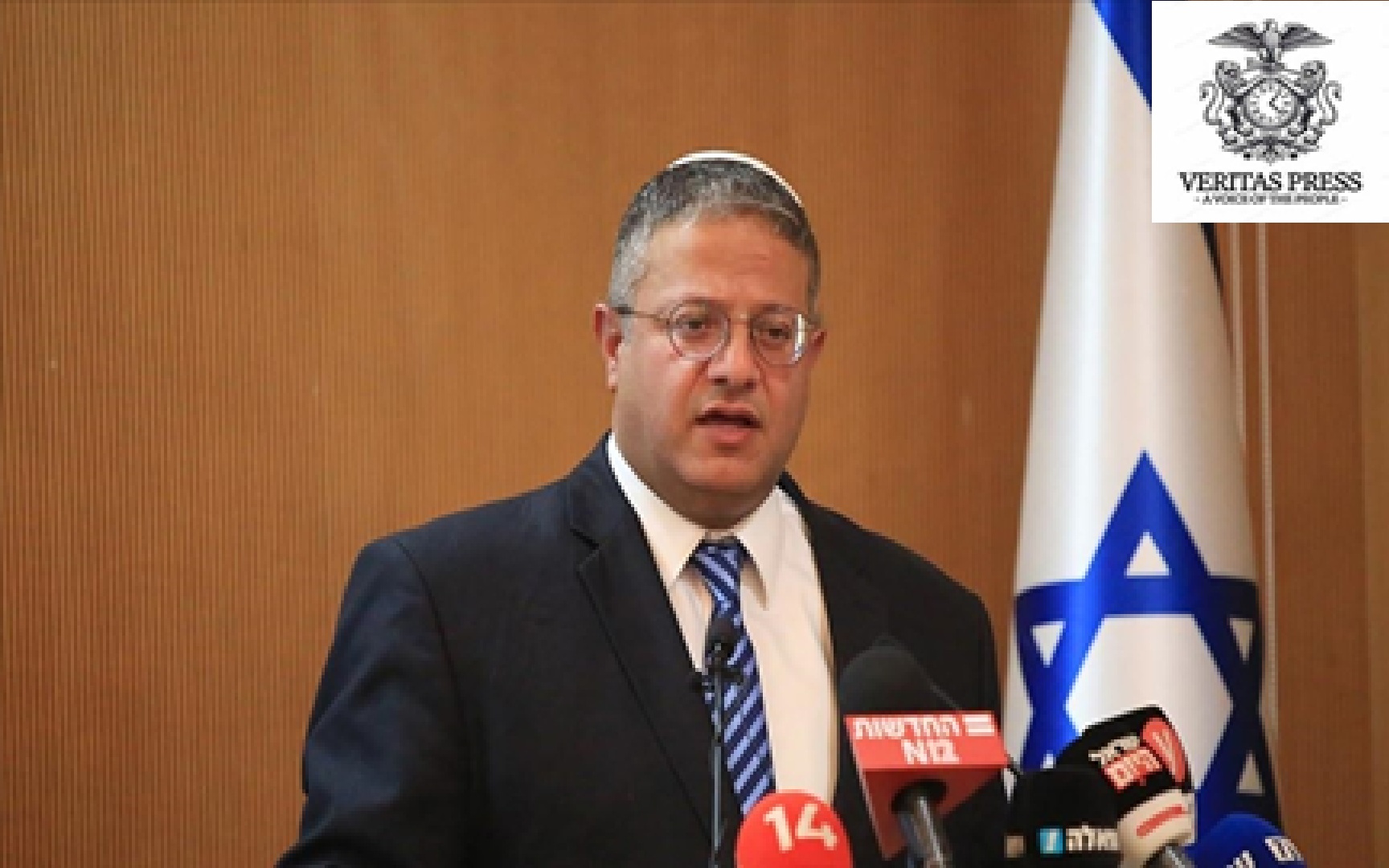
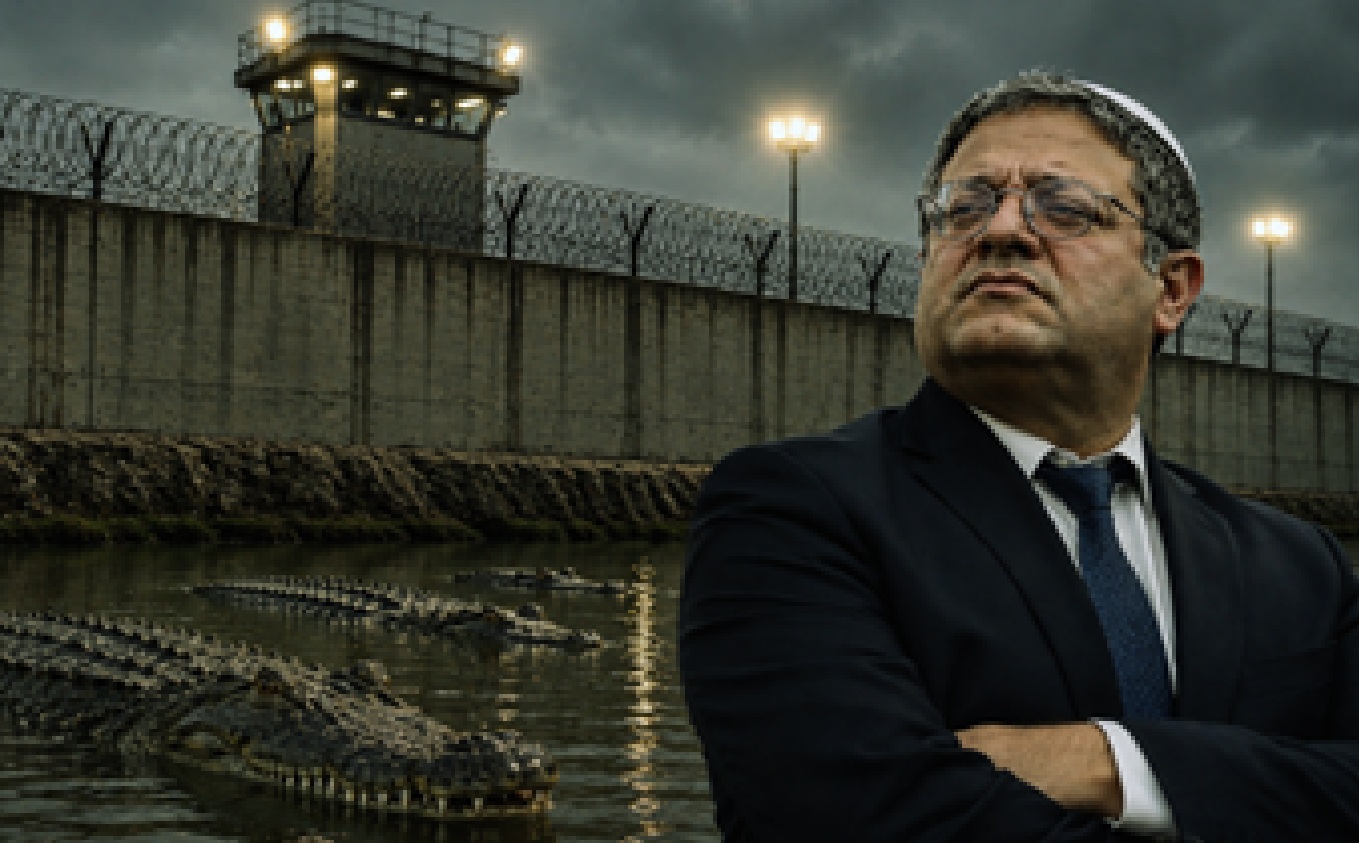
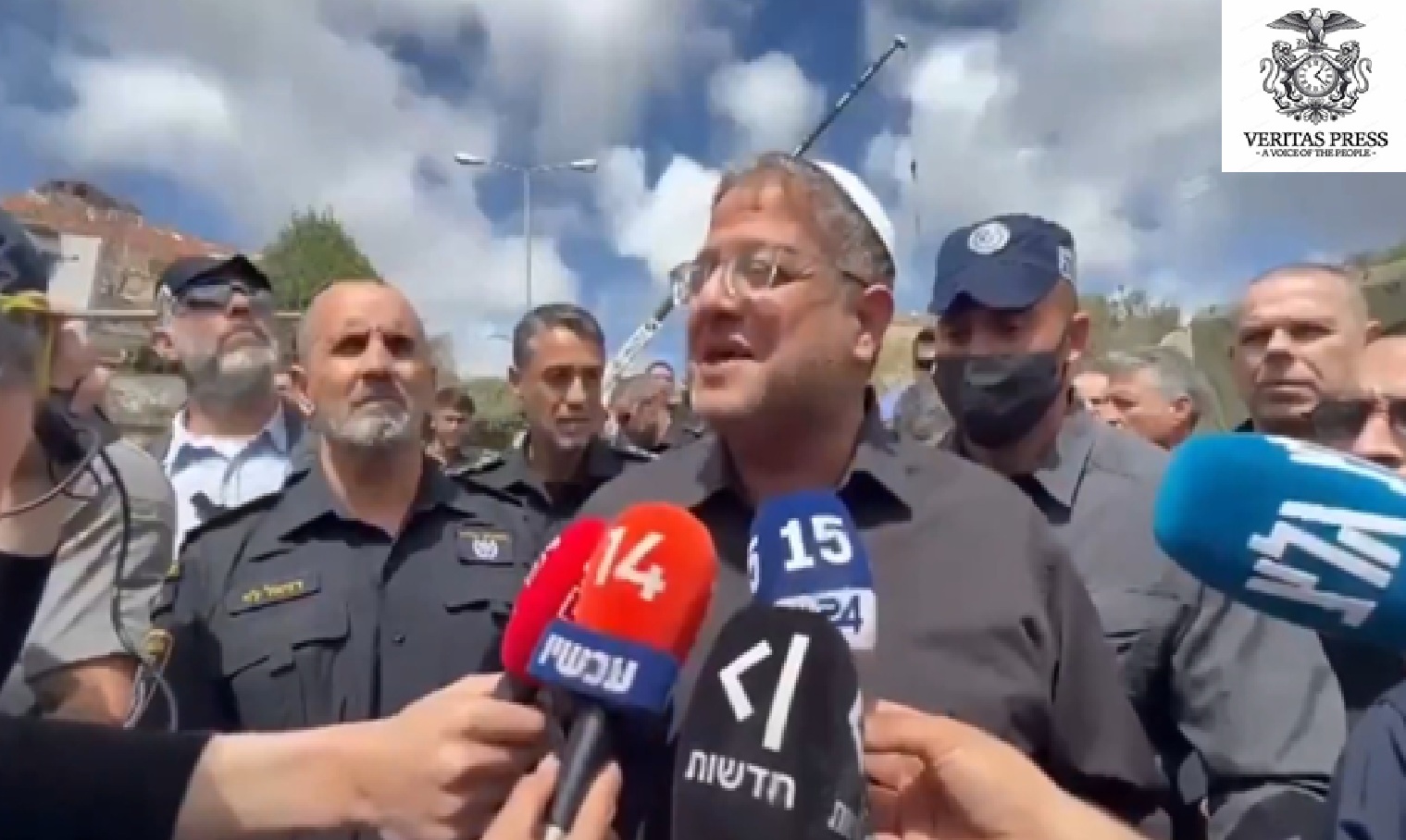
JERUSALEM / RAMALLAH — When Israel’s far-right National Security Minister Itamar Ben-Gvir proposed building a detention facility for Palestinian prisoners “surrounded by crocodiles,” the remark initially drew ridicule. But within days, Israeli media confirmed that the Israel Prison Service (IPS) was formally examining the proposal, raising alarms among human rights groups who say the idea reflects an already entrenched system of cruelty rather than a fringe provocation.
According to Channel 13, Ben-Gvir raised the proposal during a security assessment meeting with IPS Commissioner Kobi Yaakobi. The suggested site lies near Hamat Gader (Al-Hamma) in northern Israel, close to the occupied Syrian Golan Heights, where a crocodile farm already operates.
While some Israeli officials reportedly dismissed the idea as unserious, the IPS has not ruled it out, underscoring how proposals once considered unthinkable are now being evaluated at the highest levels of Israel’s security apparatus.
A Policy Trajectory, Not A Provocation:
Human rights organisations argue that the proposal cannot be understood in isolation. It comes amid a broader hard-right push led by Ben-Gvir to radically transform Israel’s prison system, particularly for Palestinians designated as “security prisoners.”
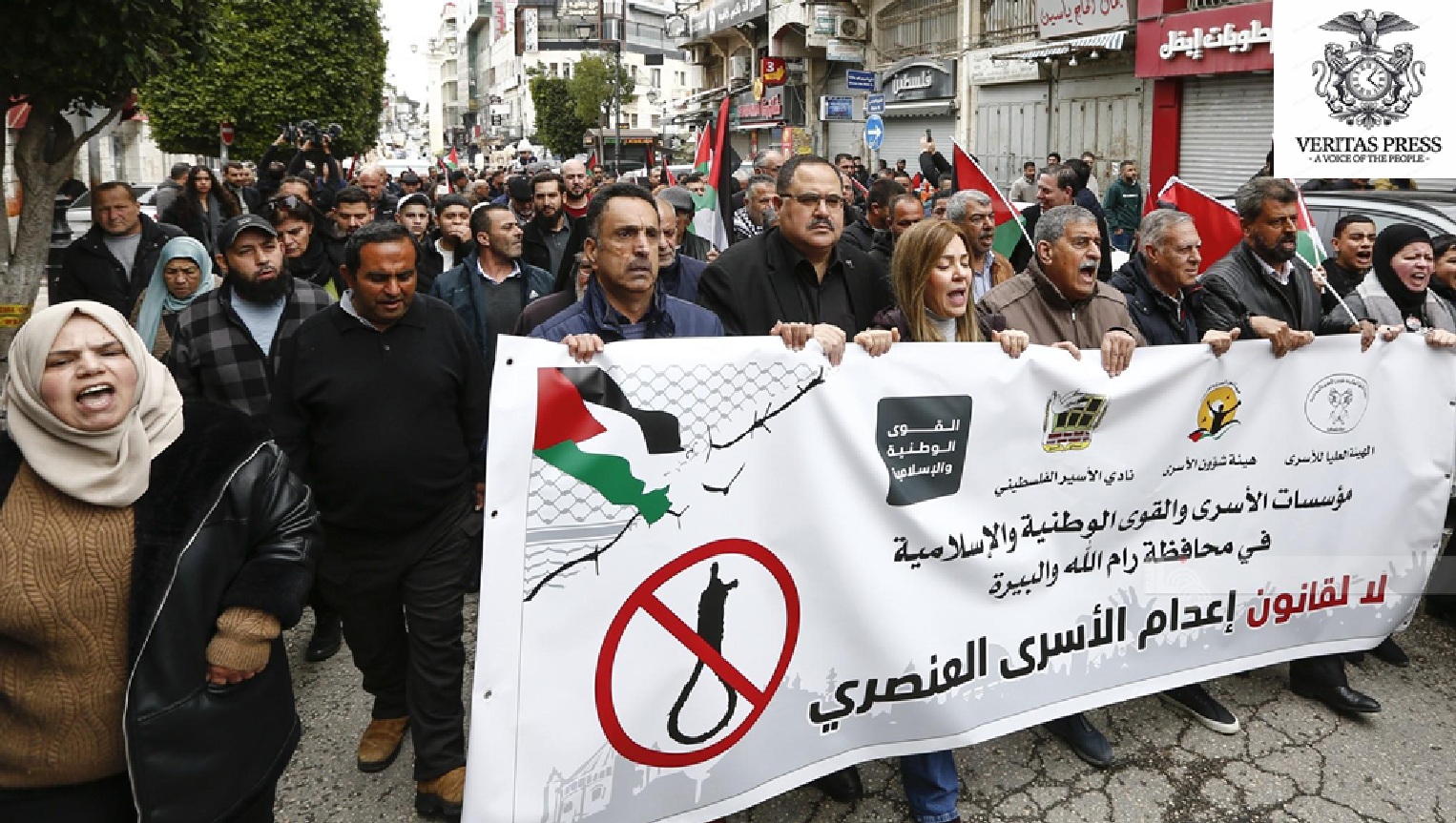
At the same time, the Israeli Knesset is advancing Ben-Gvir’s bill to introduce the death penalty for Palestinian detainees, which passed its first reading in November and is now awaiting final votes. If enacted, the law would allow executions without sentence reductions for those convicted of attacks deemed politically or racially motivated.
Legal experts warn the legislation would apply almost exclusively to Palestinians tried in Israeli military courts, where conviction rates exceed 99 percent and due-process protections are widely criticised.
“This is not about deterrence,”Addameer Prisoner Support and Human Rights Association said in a statement. “It is about formalising a system of elimination under the cover of law.”
Israel currently holds more than 10,000 Palestinian prisoners, including women, children, and hundreds under administrative detention, a practice allowing imprisonment without charge or trial.
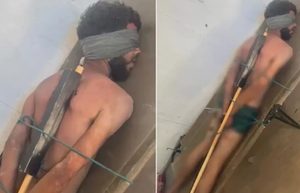
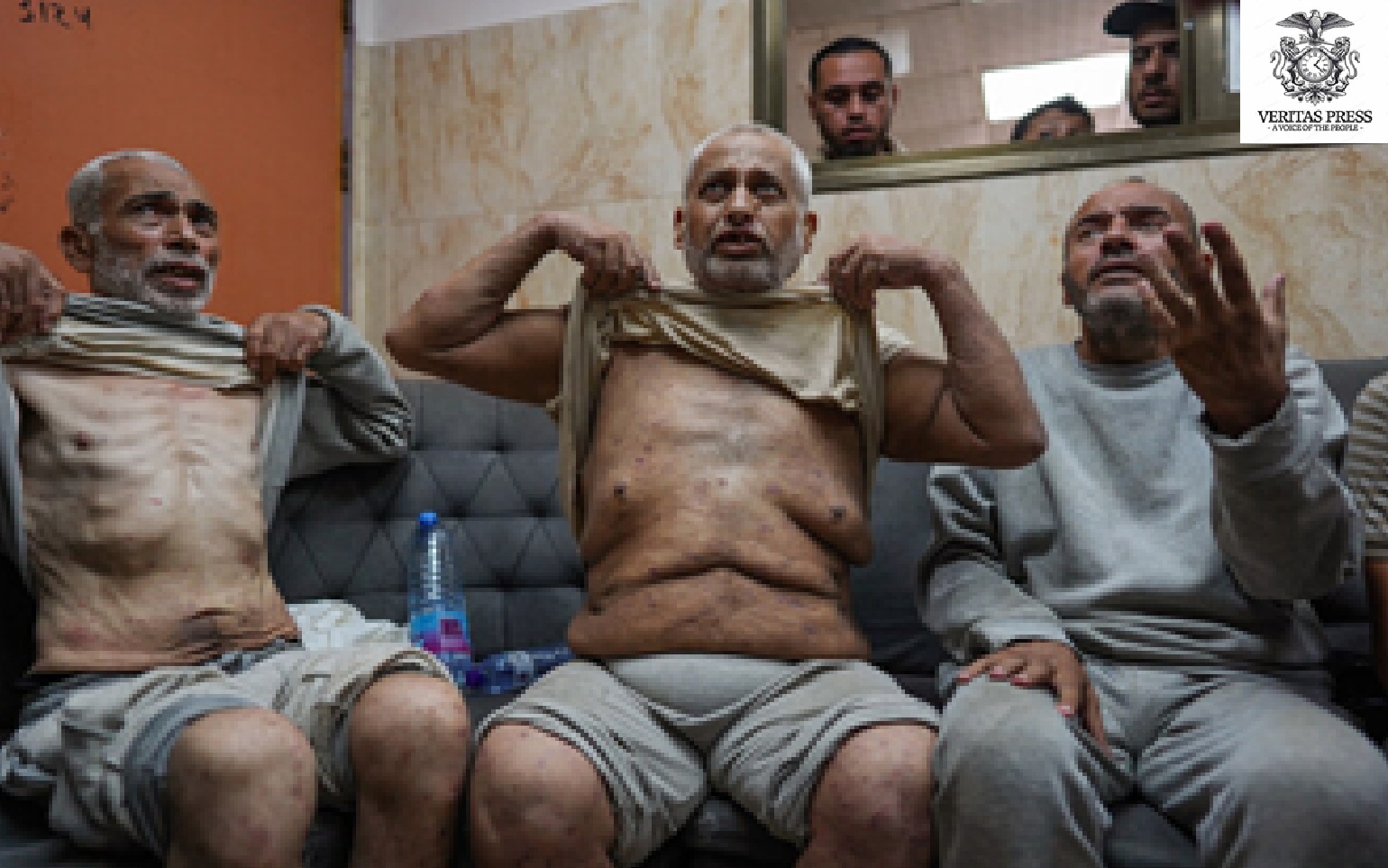
Since October 2023, at least 98 Palestinians have died in Israeli custody, according to Israeli and Palestinian rights organisations. Many deaths have been attributed to torture, medical neglect, starvation, and untreated illness.
Physicians for Human Rights–Israel (PHRI) has documented cases of diabetic detainees denied insulin, cancer patients refused treatment, prisoners left untreated after severe beatings, and widespread outbreaks of scabies and skin infections.
“This is not incidental neglect,” said Oneg Ben-Dror, a PHRI coordinator. “It is systemic abandonment that predictably leads to death.”
Testimonies From Detention:
Former detainees describe conditions that have sharply deteriorated since Ben-Gvir assumed office in late 2022.
Munthir Amira, a West Bank activist released from Ofer Prison, told the Associated Press that detainees were routinely beaten, starved, and denied sleep.
“I lost 33 kilograms in three months,” Amira said. “They froze us at night, beat us without reason, and cut food to the point of collapse.”
Other former detainees from Megiddo and Negev prisons reported nightly raids, prolonged shackling, denial of water, and untreated injuries. The Palestinian Prisoners Society has documented cases involving minors, including a 15-year-old boy left for weeks with a suspected broken rib without medical care.
“These are not isolated abuses,” the organisation said. “They are standardised practices.”
Ben-Gvir’s Record And Rhetoric:
Unlike previous ministers, Ben-Gvir has openly embraced harsher treatment of Palestinian prisoners.
He has publicly boasted of reducing food rations to “the minimum,” cutting bathing time, restricting family visits, and denying detainees necessities. In recorded statements, he dismissed legal challenges to prison conditions as “delusional,” saying Israel was “at war.”
Ben-Gvir has also:
Stormed the cell of prominent Palestinian leader Marwan Barghouti
Ordered detainees to be shown images of Gaza’s destruction as punishment
Publicly referred to Palestinian prisoners as undeserving of “privileges”
Human rights lawyers say such statements function as official incitement, encouraging abuse by guards and reinforcing impunity within the prison system.
“When the minister responsible for prisons signals approval of cruelty, abuse becomes policy,” said one Israeli legal analyst.
Crocodiles And The Global Far-Right Playbook:
Analysts say the crocodile-moat proposal mirrors punitive detention models promoted by far-right governments elsewhere, including the U.S. “Alligator Alcatraz” detention facility in Florida, backed by former President Donald Trump and Governor Ron DeSantis.
That facility relied on isolation and natural predators as deterrents, drawing lawsuits and international condemnation.
“This is a shared political imagination,” said a regional security analyst. “Cruelty is no longer hidden; it is marketed as strength.”
Legal Implications And International Silence:
Under international law, including the Fourth Geneva Convention and the UN Convention Against Torture, the treatment of Palestinian detainees may constitute grave breaches and crimes against humanity when practised systematically.
Yet no senior Israeli political or prison official has been held accountable.
“The absence of accountability has enabled this escalation,” said thePalestinian Centre for Human Rights. “Torture has become bureaucratised, and dehumanisation has become state policy.”
Despite mounting evidence, the international response has remained limited to expressions of concern, with no meaningful sanctions or prosecutions.
A System Revealed:
Whether or not a crocodile-surrounded prison is ever built, rights groups say the proposal has already achieved its purpose.
It signals to guards that brutality is sanctioned.
It signals to detainees that survival is conditional.
And it signals to Palestinians that imprisonment is no longer about justice, but about domination.
As one former detainee put it:
“They don’t need crocodiles. The prison system itself is the predator.”
Conclusion: A State That Preaches Morality While Practising Erasure.
Taken together, the crocodile-moat proposal, the execution bill, and the documented system of torture, starvation, and medical abandonment point to more than policy excess or ideological extremism. They reveal a state apparatus that operates through terror while insisting on moral exceptionalism.
Israel currently holds more than 10,000 Palestinian detainees, according to prisoner rights organisations. A substantial proportion are imprisoned without charge or trial under administrative detention orders, often renewed indefinitely based on secret evidence inaccessible to detainees or their lawyers. Others have been forcibly taken from their homes during night raids, seized at checkpoints, or abducted from hospitals and ambulances, including wounded civilians and medical workers, acts that rights groups describe as kidnapping under international law.
For decades, Israeli officials have portrayed this detention regime as lawful and security-driven. Yet the record assembled by Palestinian detainees, Israeli doctors, human rights organisations, journalists, and even Israeli court proceedings paints a different picture: a system where arbitrary imprisonment is the norm, innocence offers no protection, and legal process is optional.
Legal scholars and rights advocates increasingly argue that Israel’s prison regime meets the functional definition of state terrorism, the systematic use of fear, violence, and collective punishment against a civilian population to achieve political ends. Those ends extend beyond deterrence toward Palestinian erasure, social fragmentation, and the entrenchment of permanent occupation.
The contradiction is stark. Israel presents itself internationally as a champion of democracy and morality, while its senior officials openly advocate starvation, celebrate deprivation, promote execution, and propose detention facilities designed to terrorise through spectacle. As one Israeli human rights lawyer observed, “A system that kidnaps civilians, detains them without charge, and then claims moral superiority is not defending values, it is manufacturing impunity.”
That hypocrisy is not incidental. Analysts argue it is intrinsic to the project of permanent occupation: dehumanisation makes dispossession administratively manageable, while arbitrary detention neutralises civil society, healthcare workers, journalists, and community organisers. Prisons become laboratories of control, where coercion tested on detainees is later normalised across broader military and civilian governance.
The crocodile-surrounded prison proposal crystallises this logic. It is not about preventing escape. It is about communicating absolute domination, about signalling that Palestinian detainees are stripped of legal personhood and reduced to bodies to be managed, threatened, and discarded. Whether implemented or not, the proposal functions as psychological warfare, reinforcing a system already built on fear.
International law is unequivocal. Arbitrary detention, hostage-taking, torture, starvation, medical neglect, collective punishment, and discriminatory imprisonment are prohibited under the Fourth Geneva Convention, the UN Convention Against Torture, and customary international law. When such practices are systematic, publicly defended, and directed at a protected population under occupation, they constitute grave breaches and may amount to crimes against humanity.
Yet accountability remains absent.
No senior prison official has been prosecuted. No minister has faced sanctions. Military and diplomatic support continues uninterrupted. In this context, silence is not neutrality; it is active complicity.
The crocodiles, ultimately, are not the story. They are a symbol of how far the system has already moved, and how openly cruelty is now articulated. The deeper reality lies in the thousands of Palestinians kidnapped from their homes, detained without charge, starved, beaten, denied medical care, and told, explicitly and implicitly, that their lives exist outside the protection of law.
The evidence no longer supports debate over whether Israel’s prison system has crossed moral and legal thresholds. It has. What remains unresolved, and increasingly indefensible, is how long the international community will continue to shield a state that practises terror while preaching virtue, and whether accountability will ever interrupt a project defined by permanent occupation and Palestinian erasure.
Kamran Faqir is a volunteer investigative journalist and writer committed to exposing hidden truths and amplifying underreported stories. Driven by social justice, he brings sharp insight and fearless truth-telling to independent journalism. NUJ registered.
SEATTLE, TEHRAN — The U.S. Department of Homeland Security (DHS) will allow Iran’s national football team to enter the country 48 hours before their critical World Cup match against Egypt on Friday, a modest concession in a tournament where Team Melli’s travel conditions have sparked claims of oppression and competitive disadvantage.