Kamran Faqir is a volunteer investigative journalist and writer committed to exposing hidden truths and amplifying underreported stories. Driven by social justice, he brings sharp insight and fearless truth-telling to independent journalism. NUJ registered.
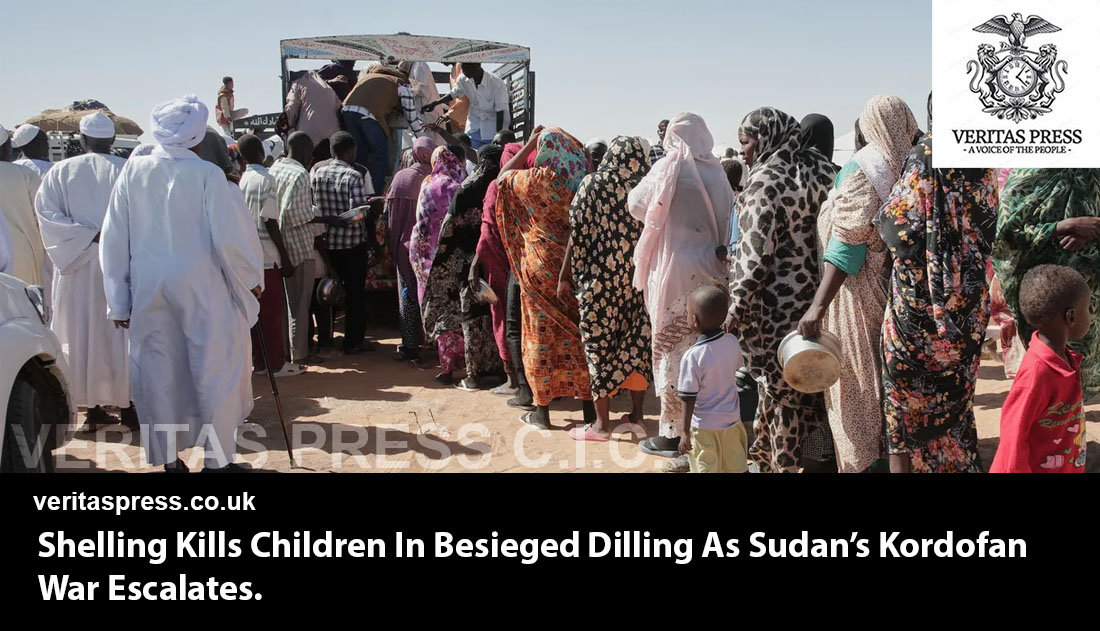
Title: Shelling Kills Children In Besieged Dilling As Sudan’s Kordofan War Escalates.
Press Release: Veritas Press C.I.C.
Author: Kamran Faqir
Article Date Published: 18 Dec 2025 at 11:15 GMT
Category: Africa-Sudan-Kordofan | Politics | Shelling Kills Children In Besieged Dilling As Sudan’s Kordofan War Escalates.
Source(s): Veritas Press C.I.C. | Multi News Agencies
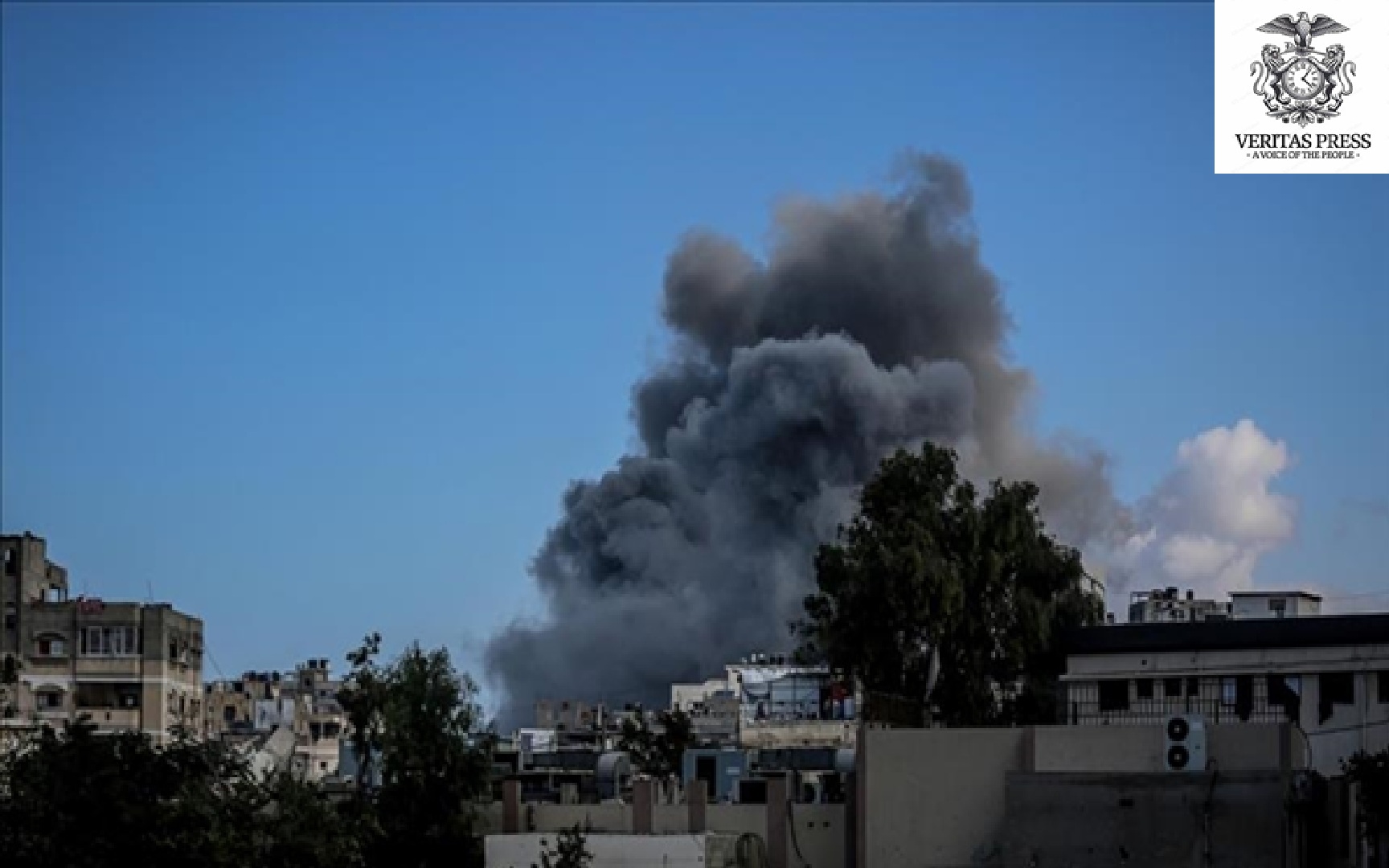
Nine civilians, including three children, were killed on Wednesday after heavy artillery fire struck residential neighbourhoods in Dilling, Sudan’s South Kordofan state, amid an intensifying multi-front war that has increasingly targeted civilians, hospitals, and critical infrastructure.
According to the Nuba Mountains Platform, a Sudanese civil society monitoring group, the shelling was carried out by forces of the Sudan People’s Liberation Movement–North (SPLM‑N), led by Abdelaziz al‑Hilu, which is militarily aligned with the paramilitary Rapid Support Forces (RSF). The bombardment killed six adults and three children and wounded several others when shells landed in densely populated areas of the city.
The platform said Sudanese army units later attacked and seized the Taital area in South Kordofan, from where the artillery fire was reportedly launched. As of publication, neither the Sudanese Armed Forces (SAF), the SPLM-N faction, nor the RSF had issued any public comment.
Conflicting Casualty Counts As Shelling Intensifies.
Local sources cited by Sudanese media reported at least seven people killed and dozens injured in what residents described as the most intense shelling of Dilling in months. Western neighbourhoods of the city were particularly hard hit, triggering mass panic among civilians.
In response, local authorities ordered the immediate closure of markets, schools, and government offices and imposed a ban on public gatherings. Medical workers said health facilities, already struggling with shortages of supplies and staff, were overwhelmed by the influx of wounded civilians.
The discrepancies in reported death tolls reflect the extreme difficulty of verifying casualties in a besieged city with limited communications and access, a recurring feature of Sudan’s war.
A City Under Dual Siege:
Dilling, South Kordofan’s second-largest city, has been under a de facto dual siege since the early months of the conflict that erupted in April 2023.
To the north and east, RSF forces control key access routes, blocking commercial traffic and humanitarian convoys. To the west and south, the SPLM‑N faction led by al‑Hilu enforces its own blockade, restricting the entry of staple goods such as maize and flour, which it designates as “strategic materials.”
Residents say the overlapping sieges have driven food prices beyond reach, crippled livelihoods, and left the city’s population increasingly dependent on dwindling aid and informal smuggling routes.
Hospitals And Displaced Civilians Are Repeatedly Targeted.
The latest shelling follows a series of deadly attacks in and around Dilling and the wider Kordofan region. Earlier this week, the Sudan Doctors Network reported that RSF drone and artillery strikes hit Dilling Military Hospital and surrounding civilian areas, killing at least nine people and injuring 17 others.
The medical group described the attack as a “flagrant violation of international humanitarian law,” which strictly prohibits targeting medical facilities and health workers. It accused the RSF of carrying out “systematic attacks” on health infrastructure and held the group’s leadership responsible for the resulting civilian deaths and humanitarian fallout.
In a separate incident on Tuesday, an RSF drone strike killed at least six displaced people near al‑Kargal as they travelled from the state capital, Kadugli, toward Dilling, according to local sources.
Intelligence Warnings And Looming Isolation.
Security sources say SPLM-N fighters have been mobilising near the towns of Al‑Samasim and Al‑Kargal, raising fears of an imminent attempt to sever the road linking Kadugli and Dilling. The route had been reopened by the Sudanese army in February and remains one of the few lifelines connecting South Kordofan’s main urban centres.
Analysts warn that cutting the road would further isolate Kadugli and Dilling, deepen shortages of food and medicine, and accelerate civilian displacement across the region.
Mass Displacement Amid Cholera And Dengue Outbreaks.
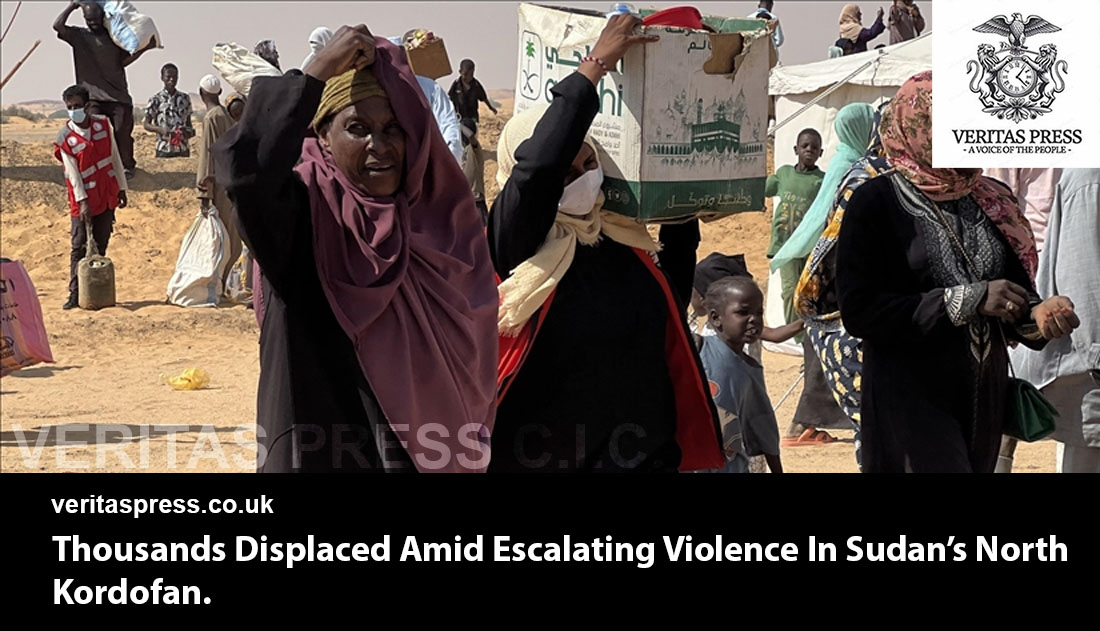
The International Organisation for Migration (IOM) reported a fresh wave of displacement driven by the fighting. According to the agency, at least 825 people have fled Gadeer, 455 have left Dilling, and hundreds more have escaped Kadugli and Al‑Kuweik in recent days.
Many displaced families are heading toward North Kordofan, White Nile state, and Khartoum, despite insecurity along the routes and the collapse of basic services.
Health officials warn that displacement is compounding an already dire public health emergency. North Kordofan’s health ministry has recorded more than 13,600 cholera cases and over 700 dengue infections, while roughly 30 percent of health facilities are no longer functioning due to the conflict.
Drone Warfare Spreads Across Kordofan.
The violence in South Kordofan is part of a broader escalation across the three Kordofan states, North, West, and South, where weeks of fierce fighting have killed scores of civilians and displaced tens of thousands.
Since early December, drone attacks across Kordofan have killed at least 104 civilians, according to humanitarian monitors. The deadliest single incident occurred in Kalogi, South Kordofan, where drones struck a kindergarten and a hospital, killing 89 people, including 43 children and eight women.
UN High Commissioner for Human Rights Volker Türk said he was “alarmed by the further intensification in hostilities” and stressed that attacks on medical facilities constitute serious violations of international humanitarian law.
On December 13, six Bangladeshi peacekeepers serving with the UN mission were killed when drones hit their base in Kadugli. UN Secretary‑General António Guterres condemned the strikes as “horrific” and warned that attacks on peacekeepers may amount to war crimes.
Power Infrastructure Targeted In Northern Sudan.
The RSF has also expanded its drone campaign to northern Sudan. On Thursday, RSF drones struck a power substation in Atbara, River Nile state, killing two civil defence workers and triggering widespread electricity outages affecting River Nile state, Red Sea state, and parts of Omdurman.
Witnesses reported swarms of so-called suicide drones launched from RSF-controlled areas in North Kordofan, including the city of Bara. The attacks damaged major transformers and further strained civilian life in areas far from the front lines.
Shifting Battlefields, Mounting Atrocities.
The escalation in Kordofan follows the RSF’s seizure of el‑Fasher in October, the Sudanese army’s last major stronghold in Darfur. A recent report by Yale University’s Humanitarian Research Lab documented RSF forces killing civilians attempting to flee the city and systematically destroying evidence by burning, burying, or removing bodies.
Across Sudan, the RSF now controls nearly all of Darfur, while the army holds most of the remaining states, including Khartoum. The Kordofan region has emerged as a new epicentre of the war as fighting shifts eastward and southward.
External Backing And Diplomatic Efforts Amid Deepening Catastrophe.
Rights groups and regional analysts have also pointed to the role of foreign backers in sustaining the RSF’s military capacity. The paramilitary force has long been accused of receiving financial, logistical, and political support from regional regimes, particularly the United Arab Emirates, which has been repeatedly named in UN expert reports and investigative journalism as a key external sponsor despite Abu Dhabi’s denials.
Israel has also been identified by Sudanese activists and regional observers as a covert backer of the RSF, viewing the paramilitary group as a useful counterweight to extremist-aligned forces within Sudan’s army and a means of advancing its regional security and normalisation agenda. While Israeli officials have not publicly acknowledged direct support, reports of intelligence coordination, arms channels routed through third countries, and political engagement with RSF-linked figures have fuelled accusations of complicity in the group’s campaign of mass atrocities.
Critics argue that this foreign backing has emboldened the RSF to escalate drone warfare, target civilian infrastructure, and sustain sieges that amount to collective punishment, while shielding its leadership from meaningful international accountability.
Against this backdrop, international efforts to revive peace talks have resumed in recent days.
International efforts to revive peace talks have resumed in recent days. SAF chief Abdel Fattah al‑Burhan met Saudi Crown Prince Mohammed bin Salman on December 15, expressing readiness to engage with US President Donald Trump’s administration on renewed mediation.
Egypt and the United States subsequently issued a joint statement rejecting “any attempts to divide Sudan” and calling for a comprehensive ceasefire.
Yet for civilians in Dilling, Kadugli, and across Kordofan, diplomacy feels distant. Sudan has topped the International Rescue Committee’s Emergency Watchlist for three consecutive years. The war has killed more than 40,000 people according to UN figures, though aid groups say the real toll is far higher, and displaced more than 14 million, creating what the UN describes as the world’s largest humanitarian crisis.
As artillery, drones, and sieges tighten their grip on South Kordofan, rights groups warn that without urgent international action to protect civilians and lift blockades, the death toll will continue to rise, quietly and largely unseen.
Investigative Analysis: From War Crimes To Crimes Against Humanity.
Under international humanitarian law, many of the acts documented across South Kordofan meet the legal threshold for war crimes. The deliberate shelling of residential neighbourhoods in Dilling, repeated drone strikes on hospitals and medical staff, attacks on UN peacekeepers, and the targeting of power stations and water infrastructure are all prohibited under the Geneva Conventions and their Additional Protocols. Medical facilities enjoy special protection, and their repeated targeting, despite their known civilian status, suggests intentional or reckless disregard for civilian life.
Beyond individual war crimes, rights lawyers argue that the pattern of violence emerging across Kordofan increasingly satisfies elements of crimes against humanity as defined under the Rome Statute of the International Criminal Court. These include widespread or systematic attacks directed against a civilian population, carried out pursuant to an organisational policy. The combination of sieges, starvation tactics, forced displacement, and aerial terror points not to battlefield excesses but to a sustained strategy aimed at rendering entire regions uninhabitable.
The RSF’s conduct of mass killings, forced displacement, attacks on healthcare, and the weaponisation of hunger mirrors tactics previously documented in Darfur, for which senior figures in the paramilitary’s leadership have already been accused of atrocity crimes. The expansion of these methods into Kordofan signals not escalation alone, but geographic replication of an established model of violence.
A Proxy War Embedded In Regional Militarisation.
Sudan’s war can no longer be analysed in isolation. The RSF’s battlefield resilience and technological sophistication reflect its integration into a wider regional ecosystem of militarised proxy forces operating with external sponsorship.
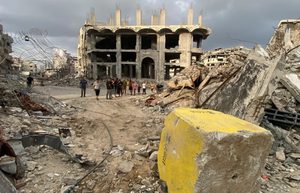
In Gaza, Israeli-backed military campaigns have normalised the large-scale destruction of civilian infrastructure under the banner of security and occupation, with hospitals, power grids, and water systems treated as legitimate targets. In Yemen, the UAE has spent years cultivating, arming, and financing non-state militias that operate outside formal chains of accountability while advancing Emirati strategic interests. Sudan now exhibits a convergence of these models: a paramilitary force empowered by foreign states to prosecute war through siege, deprivation, and aerial terror, while its sponsors deny direct responsibility.
Analysts argue that the RSF represents the Sudanese manifestation of a broader regional trend: the outsourcing of violence to proxy actors who absorb international condemnation while their patrons retain diplomatic and economic insulation. Drone warfare, once the preserve of states, has become a tool of paramilitaries precisely because regional sponsors provide the funding, technology, and political cover necessary for its deployment.
Israel’s alleged engagement with RSF-linked figures, viewed alongside its broader regional security doctrine, reflects a willingness to prioritise short-term strategic alignment over the protection of civilian life. The UAE’s documented support for the RSF, meanwhile, situates Sudan firmly within Abu Dhabi’s long-standing practice of shaping conflict theatres, from Libya to Yemen, through heavily armed local proxies.
Complicity Beyond Sudan’s Borders.
Under international law, states that knowingly aid, abet, or materially support forces committing war crimes may themselves bear responsibility. Legal scholars note that the provision of weapons, intelligence, financing, or political protection to actors engaged in systematic civilian targeting can constitute complicity in international crimes.
Despite mounting evidence, there has been no meaningful effort to sanction or restrain the RSF’s external sponsors. Arms flows continue, diplomatic engagement remains largely intact, and accountability mechanisms have stalled. This failure, critics argue, has transformed Sudan into a permissive environment for atrocity crimes—one sustained not only by local perpetrators but by an international order willing to tolerate mass civilian suffering in exchange for strategic leverage.
An Indictment Of The International System.
What is unfolding in Dilling and across Kordofan is not merely Sudan’s tragedy; it is an indictment of a global system that selectively enforces international law. Civilians are shelled, hospitals bombed, peacekeepers killed, and cities starved into submission, yet the states most capable of exerting pressure instead issue statements of concern while continuing business as usual with those underwriting the violence.
The evidence emerging from Kordofan demands more than humanitarian appeals. It demands criminal accountability for commanders who order attacks, for organisations that implement siege warfare, and for states that finance, arm, and shield them. Without such accountability, Sudan risks becoming yet another case where mass atrocities are documented in real time, acknowledged in principle, and ultimately normalised.
Conclusion: A Crime Sustained By Silence, Money, And Power.
What is unfolding in Dilling and across Kordofan is no longer defensible as the chaos of a civil war spiralling out of control. It is a structured campaign of violence, sustained by money, weapons, intelligence, and diplomatic protection that flows far beyond Sudan’s borders. Civilians are not incidental victims of this war; they are its primary targets.
The legal thresholds have been crossed repeatedly. Hospitals have been struck despite their protected status. Peacekeepers have been killed. Cities have been placed under siege and starved. Populations have been forcibly displaced through bombardment, deprivation, and fear. Under international law, these are not merely violations; they are prosecutable crimes. When such acts are carried out systematically, with organisational coherence and external backing, they amount to crimes against humanity.
Yet accountability remains absent, not because evidence is lacking, but because enforcement is politically inconvenient. The RSF continues to operate as a regional proxy force precisely because its sponsors calculate that Sudanese lives carry little strategic cost. The United Arab Emirates’ role in financing and sustaining the RSF has been documented and denied in equal measure, while Israel’s alleged engagement fits a wider pattern of regional militarisation in which civilian protection is subordinated to security alignments, geopolitical gain and resource exploitation.
This is how modern atrocity crimes are sustained: not only by the men who fire the shells or launch the drones, but by the states that bankroll them, arm them, legitimise them, and shield them from consequence. Silence becomes complicity. Diplomacy without enforcement becomes cover. Humanitarian concern without coercive action becomes theatre.
Sudan today mirrors Gaza, Yemen, and other theatres where siege warfare, infrastructure destruction, and proxy violence have been normalised under the watch of an international community unwilling to confront its own allies. The lesson for armed actors is unmistakable: if you are strategically useful, international law will bend, or simply look away.
The civilians of Dilling, Kadugli, and Kordofan are paying the price for that failure. Until foreign support networks are dismantled, arms flows halted, and criminal accountability imposed not only on local commanders but on complicit states, Sudan’s war will continue to be fought not just with guns and drones, but with indifference.
This is not a tragedy without authors. It is a crime with enablers, and history will record not only who carried it out, but who allowed it to continue.
The killing of civilians in Dilling is not an aberration but a predictable outcome of a war increasingly defined by impunity, deliberate siege warfare, and external sponsorship. Across Kordofan, armed actors have normalised tactics that treat civilian life as expendable: encirclement, starvation, aerial terror, and the systematic destruction of health and power infrastructure.
The RSF’s expanding drone campaign, now stretching from South Kordofan to River Nile state, marks a qualitative shift in the conflict. Once reliant on ground militias and looting-based logistics, the paramilitary has evolved into a force capable of coordinated long-range strikes on hospitals, UN bases, kindergartens, and power stations. Such capabilities are widely understood by analysts to be unattainable without sustained external financing, training, and access to advanced weapons supply chains.
Multiple UN expert panels, human rights investigations, and media reports have identified the United Arab Emirates as the RSF’s principal foreign sponsor, citing weapons transfers routed through neighbouring states, financial support networks, and political protection in international forums. Despite repeated denials, the pattern of RSF battlefield resilience and technological escalation has reinforced accusations that Abu Dhabi has helped transform the group into a regional proxy force.
Israel’s alleged involvement, though less documented publicly, has drawn growing scrutiny. Sudanese activists and regional analysts argue that Israeli engagement with RSF-linked figures reflects a broader strategy of cultivating non-state and paramilitary allies across the region to counter perceived adversaries and shape post-conflict political outcomes. Critics say this approach prioritises short-term security and normalisation objectives over civilian protection, effectively enabling atrocities carried out by proxy forces.
Together, this external backing has insulated RSF leadership from accountability, allowing it to defy international condemnation while prosecuting a campaign that increasingly mirrors patterns seen in Darfur two decades ago: ethnic targeting, mass displacement, and the weaponisation of hunger and fear.
SPLM-N, Shifting Alliances, And Civilian Cost.
The role of the Abdelaziz al-Hilu–led SPLM-N faction further complicates the conflict. Once framed as a rebel movement rooted in long-standing grievances of marginalisation in the Nuba Mountains, the group’s tactical alignment with the RSF has drawn sharp criticism from civil society organisations and local communities. Artillery fire on Dilling’s residential neighbourhoods, regardless of intent, has eroded claims of civilian protection and placed the SPLM-N alongside other armed actors accused of violating international humanitarian law.
Analysts note that the SPLM-N’s blockade of food supplies and its efforts to sever roads linking Kadugli and Dilling amount to collective punishment, exacerbating famine-like conditions in already besieged cities. The convergence of RSF and SPLM-N tactics, siege, bombardment, and denial of aid, has left civilians trapped between rival forces whose political calculations outweigh humanitarian considerations.
A Collapsing Humanitarian System By Design.
The repeated targeting of hospitals, power stations, and water infrastructure suggests more than battlefield collateral damage. Medical groups argue that the destruction of Dilling Military Hospital, Kalogi’s health facilities, and Atbara’s power grid reflects a deliberate strategy to render civilian life unsustainable and force population movements.
This has had cascading effects: cholera and dengue outbreaks surge as water systems fail; hospitals close as staff flee or are killed; and displacement routes become death traps under drone surveillance. The result is a slow-motion catastrophe in which disease, hunger, and exposure kill far beyond the immediate blast zones.
International Failure And Selective Outrage.
Despite mounting evidence of war crimes, including attacks on UN peacekeepers, medical facilities, and fleeing civilians, international responses have remained fragmented and cautious. Sanctions have been limited, arms embargoes weakly enforced, and diplomatic pressure inconsistently applied.
Sudanese activists accuse global powers of prioritising regional alliances and migration containment over civilian lives, warning that selective outrage has created a permissive environment for escalation. The failure to meaningfully confront RSF backers, they argue, has sent a clear message: atrocities can continue without consequence.
As the war enters its third year, Kordofan’s devastation underscores a central truth of Sudan’s conflict: the violence is not only the result of internal power struggles but of an international system willing to tolerate mass civilian suffering in exchange for strategic convenience.
Kamran Faqir is a volunteer investigative journalist and writer committed to exposing hidden truths and amplifying underreported stories. Driven by social justice, he brings sharp insight and fearless truth-telling to independent journalism. NUJ registered.
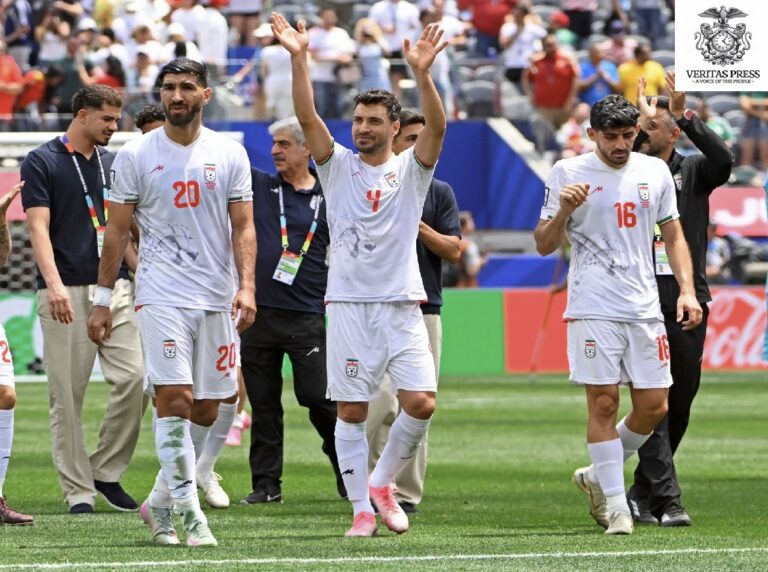
SEATTLE, TEHRAN — The U.S. Department of Homeland Security (DHS) will allow Iran’s national football team to enter the country 48 hours before their critical World Cup match against Egypt on Friday, a modest concession in a tournament where Team Melli’s travel conditions have sparked claims of oppression and competitive disadvantage.