Kamran Faqir is a volunteer investigative journalist and writer committed to exposing hidden truths and amplifying underreported stories. Driven by social justice, he brings sharp insight and fearless truth-telling to independent journalism. NUJ registered.
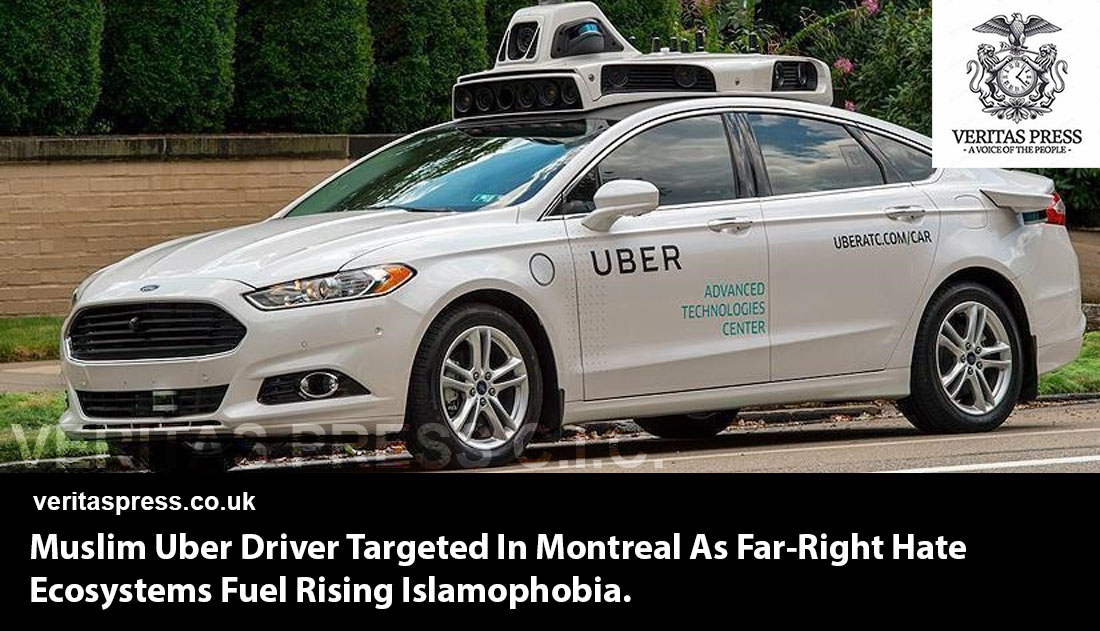
Title: Muslim Uber Driver Targeted In Montreal As Far-Right Hate Ecosystems Fuel Rising Islamophobia.
Press Release: Veritas Press C.I.C.
Author: Kamran Faqir
Article Date Published: 17 Dec 2025 at 12:25 GMT
Category: North Americas-Canada | Islamophobia | Muslim Uber Driver Targeted In Montreal As Far-Right Hate Ecosystems Fuel Rising Islamophobia.
Source(s): Veritas Press C.I.C. | Multi News Agencies
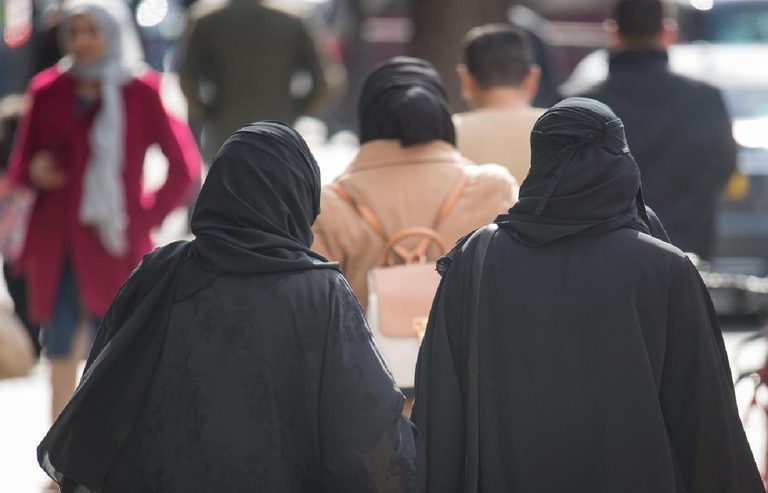
A Muslim Uber driver in Montreal narrowly escaped a potentially fatal attack earlier this month after a passenger allegedly demanded he disclose his religious faith before threatening to slit his throat with a knife, an incident that rights groups say reflects a dangerous escalation of Islamophobic hostility in Quebec and Canada.
But advocates and analysts warn that the near-murder cannot be understood as an isolated act. Instead, it sits within a broader political and media environment in which far-right actors, online hate networks, and opportunistic commentators are actively normalising anti-Muslim suspicion, particularly in the wake of high-profile acts of violence such as the recent Bondi Beach terror attack in Australia.
Knife Threat Under Investigation As Hate Crime:
According to the National Council of Canadian Muslims (NCCM), the attack occurred on Dec. 6 in downtown Montreal near Square-Victoria and Saint-Antoine Street in the Ville-Marie borough. The driver was transporting two passengers when one allegedly began questioning him about his religious identity.
NCCM says the passenger demanded the driver confirm whether he was Muslim before producing a knife and issuing a death threat, reportedly saying: “I’m going to slit your throat.” The situation de-escalated only after the intervention of another passenger, preventing serious injury.
Montreal police have confirmed their hate crimes unit is investigating the incident. A spokesperson said an altercation took place inside the vehicle, prompting the driver to stop and ask the passengers to exit. One passenger allegedly threatened the driver with a knife while making remarks related to his religious affiliation. No arrests have yet been made, and investigators are seeking both the suspect and the witness who intervened.
The driver reported the incident several days later, a delay that advocates say is common in hate-motivated cases due to fear, trauma, or lack of trust in authorities.
‘Enough is enough’
In a statement, NCCM described the incident as a serious act of Islamophobic violence and warned that it reflects a broader pattern of hostility toward Muslims in Quebec.
“Enough is enough: no one in Quebec should fear for their life because of their religion,” the organisation said, urging provincial and federal leaders to condemn the attack and take concrete action unequivocally.
NCCM chief executive officer Stephen Brown said the alleged demand for religious disclosure followed by a death threat was especially alarming.
“It is deeply troubling to see something like this happen here, in our own province of Quebec,” Brown said. “Muslims are not a threat. It is time for our political leaders to say this clearly and take action to stop the rise of hatred.”
The organisation said it is in contact with law enforcement and Uber, noting that some details are still being verified.
From Keyboard To Knifepoint: How Far-Right Narratives Incubate Street-Level Violence.
According to human rights advocates and extremism researchers, incidents like the Montreal knife threat are becoming more frequently linked to a larger system of far-right rhetoric. This rhetoric characterises Muslims as an inherent threat, a narrative that is aggressively promoted online and within far-right political circles, and is periodically reinforced by acts of mass violence in other regions.
One recent example is the Bondi Beach attack in Sydney, which Australian authorities are investigating as an act of propagandised terrorism. While law enforcement has been clear that responsibility lies with the perpetrators alone, far-right actors across multiple countries rapidly seized on the massacre to push sweeping anti-Muslim narratives, conflating extremist violence with an entire religious community.
Following the Bondi attack, far-right influencers, politicians, xenophobic commentators, and media platforms disseminated calls for stricter immigration controls, increased surveillance of Muslim communities, and rhetoric portraying Islam as a civilisational threat. Researchers of online extremism note that such occurrences are commonly used, not to understand the violence, but to warrant wider exclusion and opposition.
This process is not incidental. Scholars describe it as discursive weaponisation: a cycle in which violent events are stripped of context and repurposed to legitimise suspicion, harassment, and, in some cases, physical intimidation of Muslims in everyday settings.
“The danger isn’t just the attack itself,” one researcher has noted, “but how it is used to normalise hatred afterwards.”
Advocacy groups warn that this environment lowers the social cost of aggression. When Muslims are repeatedly framed as security threats by online networks, talk-radio ecosystems, and political rhetoric, some individuals feel emboldened to act on that hostility directly. The Montreal case follows a familiar pattern: a demand to “prove” religious identity, followed by a threat of violence.
Quebec’s Climate Of Normalised Suspicion:
In Quebec, critics say long-running political debates over secularism, identity, and legislation such as Bill 21 have helped entrench a culture in which Muslims are portrayed as a problem to be managed rather than a community to be protected.
While defenders of such policies frame them as neutral, civil-liberties groups argue they create a permissive environment for Islamophobia, one in which harassment and threats become easier to rationalise.
Statistics Canada has reported a sharp increase in police-reported hate crimes targeting Muslims in recent years, including violent incidents. Advocacy groups caution that these figures likely undercount the real scale of the problem, as many victims do not report abuse.
Gig Workers Left Exposed:
The Montreal attack also highlights the vulnerability of gig-economy workers. Ride-share drivers often work alone, late at night, in confined spaces, with limited real-time protection. NCCM confirmed the incident was reported to Uber, but the company has not publicly detailed what measures, if any, were taken.
Labour advocates say platform companies rely heavily on reactive safety tools, account suspensions or post-incident reporting, while offering little in the way of proactive protection for drivers facing hate-motivated threats.
Beyond condemnation:
For NCCM and other rights groups, statements of concern are no longer enough. They are calling for tangible measures: properly resourced hate-crime units, transparent investigations, stronger platform accountability, and political leadership that clearly rejects narratives portraying Muslims as inherently dangerous.
“No one should have to rely on luck or the courage of another passenger to survive a hate crime,” the organisation said.
As investigators search for the suspect, the Montreal driver, whose identity has not been publicly disclosed for safety reasons, remains alive because someone intervened at the right moment.
For many in Canada’s Muslim communities, that narrow escape is not reassuring. It is a warning: that when far-right rhetoric is allowed to circulate unchecked, the distance between online hate and real-world violence can be frighteningly short.
Conclusion: A Near-Murder Rooted In Demonisation, Ignorance, And Manufactured Hate.
The knife threat against a Muslim Uber driver in Montreal was not an isolated outburst of individual prejudice. It was the predictable outcome of a society in which Muslims are increasingly demonised because of their religion, and in which public ignorance is actively exploited by far-right actors who trade in fear, distortion, and outright falsehoods.
At the core of this violence lies a simple but dangerous lie: that Islam itself is inherently violent, incompatible, or threatening. This claim has been repeatedly debunked by scholars, civil liberties groups, and decades of empirical research. Yet it continues to circulate, not because it is true, but because it is politically useful. Far-right movements feed on opportunistic narratives, seizing moments of crisis or violence to advance an ideological agenda that depends on collective blame and dehumanisation.
This is how Islamophobia functions in practice. Isolated acts of violence are stripped of context and weaponised to indict an entire faith community of more than a billion people worldwide. Extremism is deliberately conflated with belief. Muslims are framed not as individuals or citizens, but as a civilisational threat. In that environment, demanding that someone “prove” whether they are Muslim, as allegedly occurred in the Montreal case, becomes a prelude to violence rather than an aberration.
Public ignorance is not incidental to this process; it is cultivated. Far-right ecosystems thrive on misinformation, selective outrage, and historical amnesia, reducing complex geopolitical realities and social problems into crude binaries of “us versus them.” Online platforms amplify these distortions, while political equivocation and dog-whistle rhetoric allow them to seep into mainstream discourse largely unchallenged.
The result is a social climate in which threats against Muslims are increasingly normalised, and in which perpetrators feel justified, even righteous, in targeting people solely based on perceived religious identity. That the Montreal driver delayed reporting the incident is itself telling: it reflects a rational fear that institutions may not protect those who are persistently portrayed as suspects.
This case also exposes a deeper institutional failure. Hate crimes are still treated primarily as episodic law enforcement issues rather than as the downstream effects of sustained ideological campaigns. Investigations begin after threats are made, knives are drawn, and lives are nearly lost, while the architects and amplifiers of hate continue to operate with relative impunity.
The driver survived because another passenger intervened. That intervention was an act of individual courage, not the product of a functioning safety net.
Until governments confront the deliberate lies used to vilify Islam, invest in public education that counters ignorance with fact, and dismantle the far-right networks that profit from fear, similar incidents will continue to occur. The distance between demonising rhetoric and physical violence is not theoretical. It is measured in moments, and, in this case, in a throat that was nearly cut.
Silence, equivocation, and half-measures are not neutrality. They are complicity.
Kamran Faqir is a volunteer investigative journalist and writer committed to exposing hidden truths and amplifying underreported stories. Driven by social justice, he brings sharp insight and fearless truth-telling to independent journalism. NUJ registered.
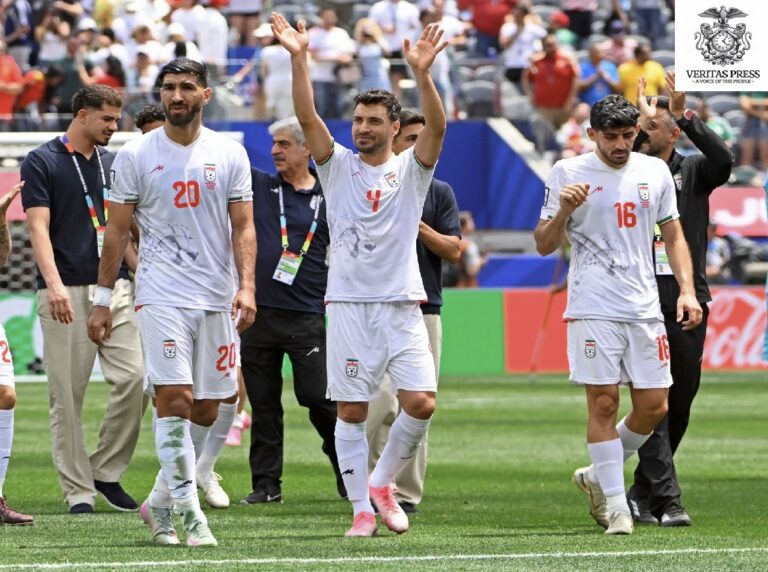
SEATTLE, TEHRAN — The U.S. Department of Homeland Security (DHS) will allow Iran’s national football team to enter the country 48 hours before their critical World Cup match against Egypt on Friday, a modest concession in a tournament where Team Melli’s travel conditions have sparked claims of oppression and competitive disadvantage.