Kamran Faqir is a volunteer investigative journalist and writer committed to exposing hidden truths and amplifying underreported stories. Driven by social justice, he brings sharp insight and fearless truth-telling to independent journalism. NUJ registered.
Title: Israel Escalates Drone War In Southern Lebanon, School Principal Among The Dead.
Press Release: Veritas Press C.I.C.
Author: Kamran Faqir
Article Date Published: 18 Nov 2025 at 16:53 GMT
Category: Middle-East | South Lebanon | Israel Escalates Drone War In Southern Lebanon
Source(s): Veritas Press C.I.C. | Multi News Agencies
Investigative analysis: deliberate targeting, impunity, and the erosion of the ceasefire
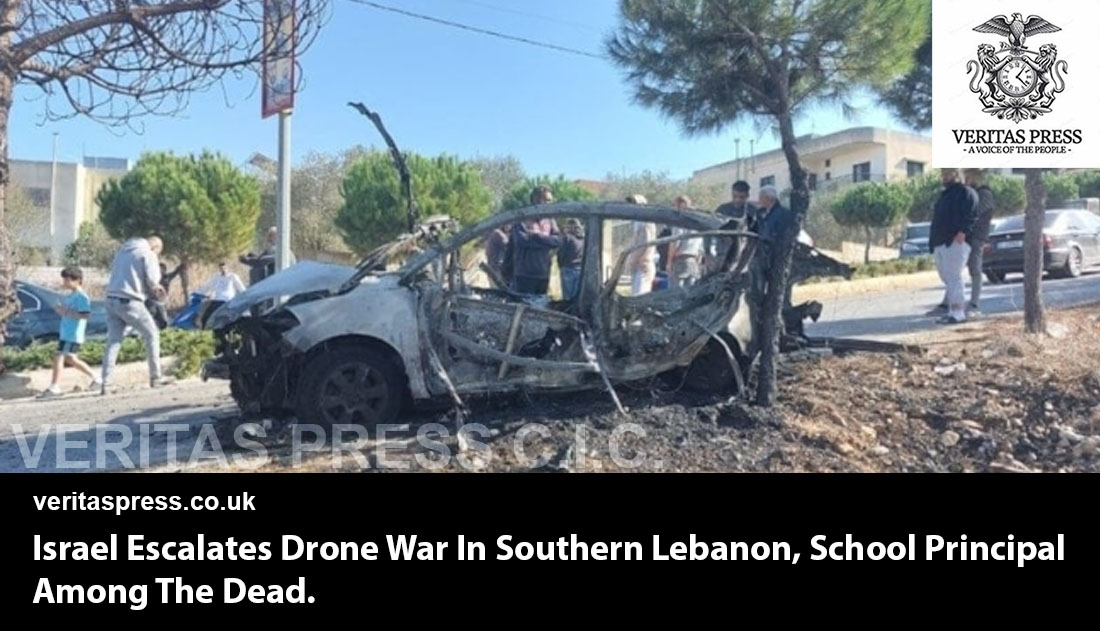
TYRE DISTRICT, LEBANON — A wave of precise Israeli drone strikes, sabotage of civilian infrastructure, and a near-fatal incident involving UN peacekeepers has reignited fears of a creeping, undeclared war along the Israel–Lebanon frontier. The killing of Mohammad Shweikh, the respected principal of Mansouri Public School, in an Israeli drone strike on 16 November 2025, has become the latest flashpoint, crystallising the shrinking boundary between civilian and combatant and the near-total collapse of enforcement of UN Security Council Resolution 1701.
A Civilian Educator Or A “Hezbollah Operative”? A Deadly Clash Of Narratives.
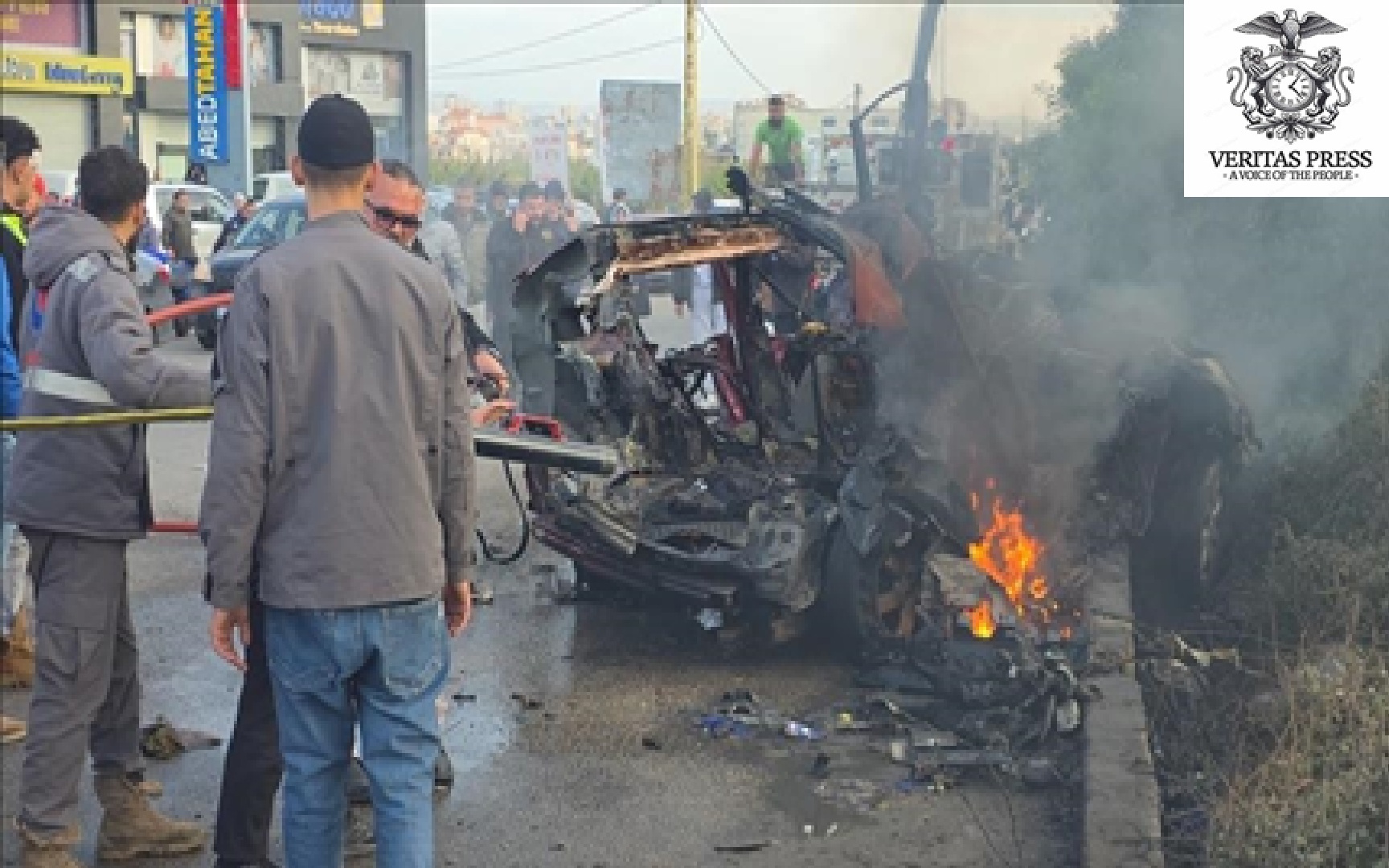
Lebanon’s National News Agency and multiple local outlets reported that a drone struck a civilian vehicle near the Imam Musa al-Sadr Stadium in al-Mansouri, igniting it and killing its single occupant, identified by the municipality and school staff as principal Mohammad (Muhammad) Shweikh.
Local officials described Shweikh as “an educator who had no political role”, with community members holding public vigils and school colleagues calling him “a pillar of the town.”
But the Israel Defence Forces (IDF) issued a sharply different account, claiming in a formal statement that the strike “eliminated a Hezbollah operative responsible for communication and operational activity in the area.” Israeli media amplified the claim, despite no independently verifiable evidence being provided.
No neutral investigative body has confirmed the IDF allegation, and no public intelligence has been disclosed. Legal experts note that such opaque claims, asserting militant activity behind a civilian façade, are increasingly common in drone-led conflicts.
“When a state claims a civilian is in fact a combatant without evidence, due process collapses. The burden of proof rests on the attacker, but in practice is almost never met,” a Beirut-based international law analyst told this publication.
A Shifting Israeli Tactic: Loitering Munitions, FPV Drones, And Civilian Infrastructure Hits.
Reports since the 2023–24 cross-border flareups point to a clear evolution in Israel’s drone use. According to eyewitness accounts, local media and field photographs inspected by analysts:
Small, agile loitering drones have repeatedly struck vehicles in towns including al-Mansouri, Bourj Rahal, Bint Jbeil and nearby villages.
Crater patterns and burn signatures match known profiles of Israeli FPV-style munitions.
Civilian infrastructure — excavators, road machinery, water wells, communal spaces, has been targeted in multiple incidents.
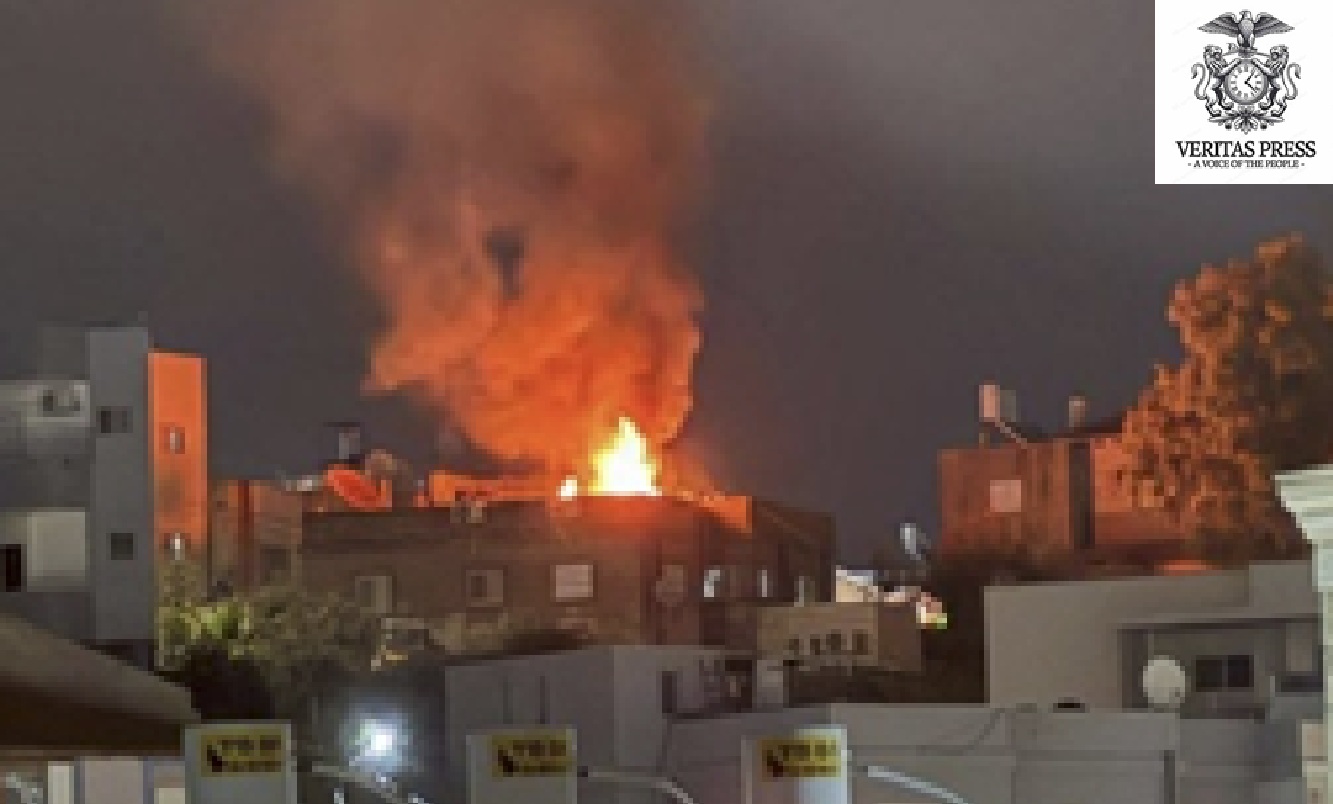
An excavator in Blida was set ablaze, while residents in Odaisseh reported a drone strike near a village water well. Local engineers said the attacks appeared “designed to disable reconstruction tools, not armed positions.”
A regional security analyst told Anadolu that these tactics form part of “a low-visibility attrition strategy”, explaining that inexpensive drones enable “continuous cross-border pressure with plausible deniability and without the political cost of manned operations.”
Humanitarian workers describe the pattern as a slow-burning assault on civilian life. One reconstruction volunteer in Tyre said, “Every time we repair a road or install a water pump, a drone appears. It’s psychological warfare as much as military.”
UN Peacekeepers Nearly Hit, UNIFIL Warns Of ‘Serious Violation’:
The danger escalated further when, on the same day as the Mansouri strike, a Merkava tank positioned on Lebanese soil fired heavy machine-gun rounds, striking the ground approximately five metres from a UNIFIL patrol.
UNIFIL said the patrol was clearly marked, unarmed, and operating in daylight conditions. The mission called the shooting a “serious violation” of Resolution 1701.
“Heavy machine-gun rounds hit approximately five metres from the peacekeepers,” UNIFIL said, warning that the incident undermined the mechanisms that prevent a return to war.
The IDF attributed the firing to “misidentification”, citing poor visibility, a claim dismissed by several peacekeeping officials who spoke anonymously. One described the explanation as “deeply unconvincing,” noting that UN vehicles are “deliberately designed to be unmistakable.”
International diplomats warn that even close calls can become new flashpoints. A European defence official monitoring the frontier told this publication: “When UN peacekeepers are nearly killed, the buffer collapses. The margin for miscalculation becomes razor-thin.”
Grief, Anger, And Fear In Al-Mansouri:
Residents of al-Mansouri describe scenes of “burning wreckage, panic and disbelief.”Social media footage shows mourners carrying Shweikh’s coffin through the village, with teachers and students openly condemning the killing.
Lebanon’s Minister of Education, Rima Karami, issued a statement calling the strike “an attack on education and civilian life,”urging international agencies to enforce protections for schools and staff.
“Teachers are not combatants. Targeting them is an assault on the future of our children,” Karami said.
These responses reflect a broader fear: that educators, farmers, engineers, and municipal workers are increasingly vulnerable to targeted killings framed as counter-militant operations.
Legal Faultlines: Transparency, Proportionality, And The Collapse Of Accountability.
Under international humanitarian law, armed forces must distinguish between combatant and civilian and ensure proportionality. In this case, three legal red flags emerge:
1. Transparency Gap
The IDF has offered no publicly reviewable evidence linking Shweikh to Hezbollah. Legal scholars note that without such evidence, public accountability, a core principle of international law, is impossible.
2. Pattern Evidence of Civilian Targeting
Clusters of attacks on civilian vehicles, reconstruction equipment, and water infrastructure suggest an operational doctrine that may violate prohibitions on targeting civilian objects.
3. UNIFIL Endangerment
Repeated breaches involving peacekeepers erode the only enforceable monitoring mechanism on the border.
Human rights groups say the situation demands an independent forensic investigation, including munition analysis, strike timing, surveillance data, and witness testimony. No such mechanism is currently active.
Strategic Motives: Tactical Pressure, Infrastructure Attrition, Political Signalling.
Analysts point to overlapping motives behind Israel’s drone campaign:
Tactical pressure on suspected Hezbollah operatives with low political risk.
Infrastructure attrition aimed at slowing reconstruction and restricting mobility.
Deterrence signalling through high-visibility assassinations.
Domestic political messaging, showing action without escalating to full-scale war.
But these motives do not override legal obligations. As one international law expert noted:
“If Israel has credible intelligence, it should publish it, or submit it to an independent review mechanism. Without that, the operation resembles punitive pressure on civilians.”
What Happens Now? The Outstanding Questions
Who investigates?
UNIFIL can document incidents but lacks enforcement. No independent fact-finding team currently has access to southern Lebanon.
Where is the evidence?
IDF claims remain unverified. Open-source investigators say key materials, video surveillance, communications logs, munition fragments, must be made available.
What about Resolution 1701?
Repeated “serious violations” suggest the ceasefire framework is disintegrating, with Security Council action stalled by geopolitical paralysis.
Recommendations: What Needs To Happen Immediately.
Independent UN fact-finding mission with full access to strike sites.
Review of UNIFIL’s protection protocols and rules of engagement.
Implementation of UNESCO/UNICEF Safe Schools guidelines across southern Lebanon.
Public release of evidence supporting any lethal targeting of alleged operatives.
Protection of civilian infrastructure through enhanced monitoring and rapid reporting.
Conclusion: A Warning Sign of a Darker Phase Ahead.
The killing of Mohammad Shweikh is not only a personal tragedy; it is a stark indicator of how far the border conflict has drifted into a grey zone where evidence is withheld, rights are suspended, and civilians are increasingly framed as legitimate targets through opaque intelligence claims. Israel’s expanding reliance on small precision drones, cheap, deniable, and politically low-cost, has produced a battlefield where lethal force is exercised with minimal transparency and virtually no external scrutiny. The steady targeting of vehicles, reconstruction machinery, water wells, and even UN peacekeepers shows a pattern not of isolated mistakes, but of a systemic erosion of the legal protections that once defined this front.
The most dangerous trend is the institutionalisation of ambiguity. When every civilian can be posthumously labelled a militant, and when no independent mechanism can verify or challenge those claims, the norms of distinction and proportionality collapse. This is not simply a series of violations; it is the construction of a new operational doctrine in which secrecy becomes both sword and shield, enabling states to strike first and explain later. Unless independent investigations are launched and accountability mechanisms revived, the precedent will be clear: states can kill first, justify later, and hide the evidence forever.
In such an environment, the erosion of law becomes self-reinforcing. UNIFIL’s warnings about “serious violations”go unanswered, humanitarian agencies are sidelined, and the Security Council remains paralysed by geopolitical deadlock. Every uninvestigated death, every unexamined strike site, further normalises a landscape where impunity is not a malfunction but a feature. And when drones can silently cross borders and eliminate individuals based on undisclosed intelligence, civilians lose any meaningful protection, not by accident, but by design.
That is the real investigative conclusion: without urgent intervention, the region will slide into a shadow conflict where educators, journalists, healthcare workers, farmers, and even peacekeepers remain permanently exposed, collateral to a war fought in the name of security but conducted without transparency. In that environment, civilians, educators, workers, and peacekeepers will continue to pay the highest price. And once the norms governing lethal force are dismantled, they cannot simply be restored. Impunity hardens, accountability disappears, and the cycle of violence becomes self-perpetuating.
The death of Mohammad Shweikh is therefore more than a tragic headline. It is a warning that the legal, moral, and institutional brakes intended to protect civilian life have failed, and unless they are rebuilt now, they may not be rebuilt at all.
Kamran Faqir is a volunteer investigative journalist and writer committed to exposing hidden truths and amplifying underreported stories. Driven by social justice, he brings sharp insight and fearless truth-telling to independent journalism. NUJ registered.
SEATTLE, TEHRAN — The U.S. Department of Homeland Security (DHS) will allow Iran’s national football team to enter the country 48 hours before their critical World Cup match against Egypt on Friday, a modest concession in a tournament where Team Melli’s travel conditions have sparked claims of oppression and competitive disadvantage.