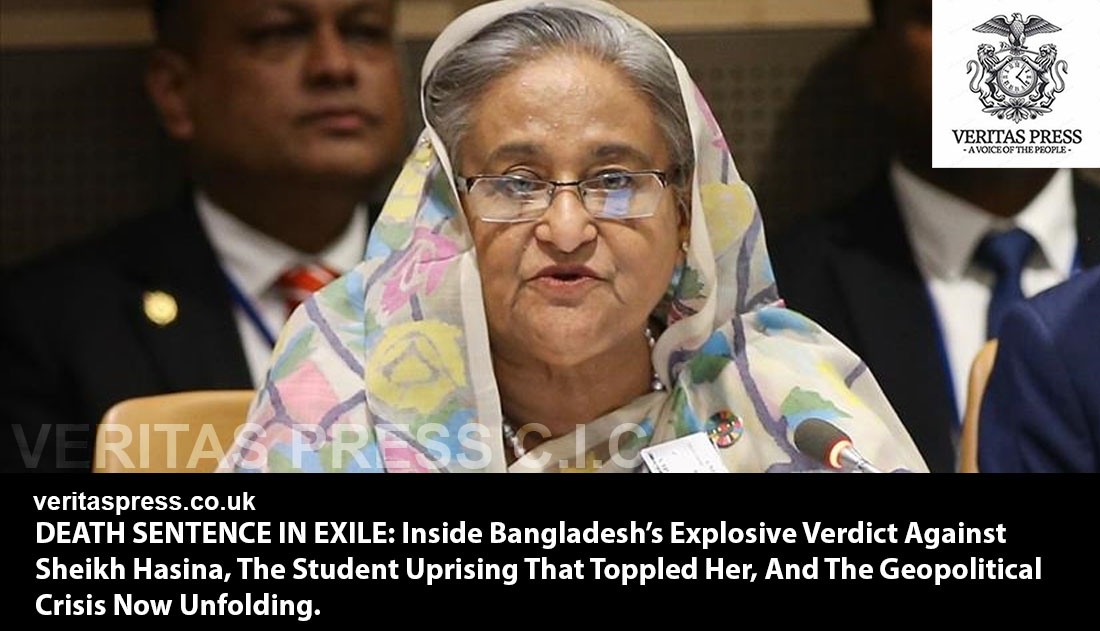
DEATH SENTENCE IN EXILE: Inside Bangladesh’s Explosive Verdict Against Sheikh Hasina, The Student Uprising That Toppled Her, And The Geopolitical Crisis Now Unfolding.
DEATH SENTENCE IN EXILE: Inside Bangladesh’s Explosive Verdict Against Sheikh Hasina, The Student Uprising That Toppled Her, And The Geopolitical Crisis Now Unfolding.
Kamran Faqir is a volunteer investigative journalist and writer committed to exposing hidden truths and amplifying underreported stories. Driven by social justice, he brings sharp insight and fearless truth-telling to independent journalism. NUJ registered.
Title: DEATH SENTENCE IN EXILE: Inside Bangladesh’s Explosive Verdict Against Sheikh Hasina, The Student Uprising That Toppled Her, And The Geopolitical Crisis Now Unfolding.
Press Release: Veritas Press C.I.C.
Author: Kamran Faqir
Article Date Published: 17 Nov 2025 at 13:20 GMT
Category: South Asia | Bangladesh | Inside Bangladesh’s Explosive Verdict Against Sheikh Hasina
Source(s): Veritas Press C.I.C. | Multi News Agencies
DHAKA — The death sentence handed to Bangladesh’s fugitive former Prime Minister Sheikh Hasina marks one of the most seismic political events in the country’s post-independence history. Delivered under sweeping security deployments, the verdict is framed by the interim government as a historic reckoning for crimes against humanity, yet shadowed by allegations of political engineering, rushed justice, and a dangerous regional fallout now unfolding between Bangladesh and India.
Hasina, who ruled Bangladesh for over 15 years, was found guilty in absentia of orchestrating the lethal crackdown on last year’s mass student uprising, a revolt that national and international monitors say killed hundreds, possibly up to 1,400 people, according to UN estimates. The uprising shattered the Awami League’s grip on power and sent Hasina fleeing by helicopter to India on 5 August 2024, where she has remained under state protection.
Now, with the Dhaka-based International Crimes Tribunal (ICT) delivering a 453-page judgment calling her the “superior commander” of the atrocities, Bangladesh stands at a crossroads: pursuing justice for victims while navigating a politically charged legal process that has already strained the internal stability of the state and ignited a diplomatic showdown with New Delhi.
This investigation examines the verdict, the evidence, the crackdown, the tribunal’s credibility, and the wider geopolitical forces now shaping the crisis.
I. A City Under Siege: Security As A Message
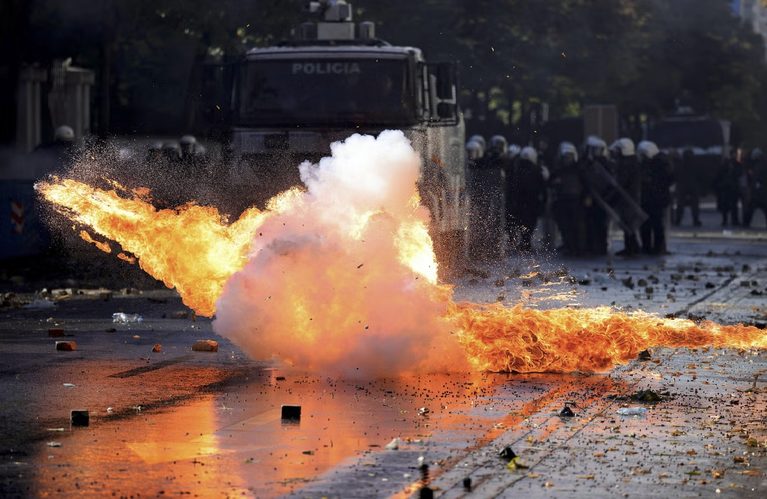
In the days leading up to the verdict, Dhaka felt like a capital bracing for war.
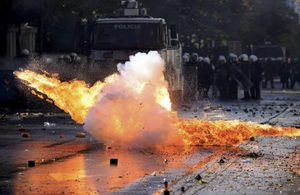
Armoured vehicles rattled through the judicial district.
Military checkpoints sealed key roads.
Nearly half of the city’s 34,000 police officers were deployed.
Mobile data was periodically throttled.
Riot units ringed the tribunal.
Authorities insisted the measures were preventive. But insiders say the massive security presence carried a second message: the state was projecting unity behind a verdict widely expected to inflame tensions.
One senior civil servant described the atmosphere to this reporter:
“This was never just a legal decision. It was a political earthquake; the government wanted to control from the moment it hit.”
II. The Verdict: “All Conditions Of Crimes Against Humanity Were Proven”
The tribunal, presided over by Justice Md Golam Mortuza Mozumder, concluded that Hasina had full knowledge of, and responsibility for, the mass killings committed during the July, August 2024 crackdown.
The judgment declared:
Hasina issued lethal orders to neutralise protesters.
She oversaw the security forces who carried out indiscriminate shootings.
She failed to prevent or punish mass killings.
Her actions constituted crimes against humanity under Bangladeshi law.
Alongside her:
Former Home Minister Asaduzzaman Khan Kamal, also hiding in India, received a death sentence.
Former police chief Chowdhury Abdullah Al-Mamun, who turned approver and admitted involvement, was sentenced to five years in prison.
The court also ordered confiscation of all property belonging to Hasina and Kamal, with the government promising compensation to the victims’ families drawn from the seized assets.
Chief Prosecutor Tajul Islam defended the process emphatically:
“Anyone in the world can come and check the transparency of this trial.”
But legal and diplomatic observers remain unconvinced.
III. The Uprising: How The Hasina Government Lost Control
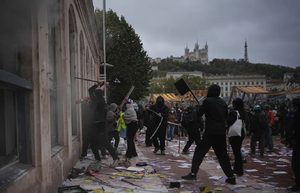
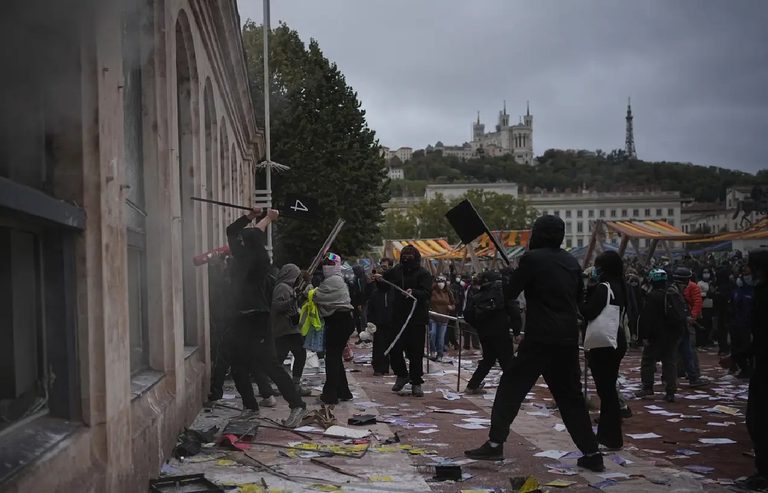
The July 2024 student-led revolt that toppled Hasina erupted after years of anger over unemployment, corruption, authoritarianism, and disappearances carried out by elite police and intelligence units. Students, labourers, professionals, and disaffected Awami League supporters poured into the streets.
According to medical workers, journalists, and military insiders interviewed for this investigation:
Live ammunition was used without adequate warning.
Protesters were shot while running away or helping the wounded.
Hospitals were instructed to suppress casualty figures.
Night raids targeted student organisers.
Several police units refused to fire on unarmed crowds.
Army commanders quietly warned Hasina that her strategy risked a fracture within the military.
One doctor at Dhaka Medical College Hospital recalled:
“We processed more gunshot wounds in two weeks than in the previous two years.”
The revolt became the largest popular uprising since the 1990 democracy movement, and ultimately broke the government’s control. As protester numbers swelled to the tens of thousands and defections spread within the security forces, Hasina fled to India under military escort.
IV. The Evidence: Damning, But Shrouded In Opaque Origins
Central to the prosecution’s case were secret audio recordings, reportedly captured by intelligence officials during the final days of the uprising.
Leaked excerpts published by Al Jazeera suggested Hasina instructed senior commanders to:
“Use lethal weapons wherever they find the agitators”
“Shoot to kill; do not let them regroup”
Yet the recordings raise critical questions:
Who authorised the recordings, and when?
Why did intelligence services loyal to Hasina secretly tape her?
Were independent forensic experts allowed to authenticate the files?
Why were foreign examiners barred for “national security reasons”?
A Dhaka-based human rights lawyer who reviewed parts of the evidence said:
“If the tapes are real, they are unequivocal. But the refusal to permit external verification undermines confidence in the prosecution.”
Witness testimony was similarly complicated, many witnesses were themselves former security officials seeking plea deals.
And crucially, Hasina had no access to counsel of her choosing, a violation of international fair-trial norms.
V. The Tribunal: Accountability Vs. Political Purge
Bangladesh’s International Crimes Tribunal has long been controversial, used previously to prosecute 1971 war crimes but criticised for political bias, inconsistent standards, and the use of the death penalty.
This new trial intensified those concerns:
1. Speed over scrutiny
Charges were drafted and filed within months, unusually fast for crimes of such scale.
2. Judicial reshuffling
Several ICT judges were reassigned or replaced shortly before the trial, raising questions over political pressure.
3. In absentia death sentences
International tribunals almost universally reject death sentences in absentia, yet Bangladesh has executed several such defendants.
4. Restricted defence rights
Hasina refused to recognise the court, calling it a “jurisprudential joke.” Her state-appointed lawyer had a limited scope to contest evidence.
Even some tribunal officials privately acknowledged to this reporter that the trial risked being perceived as a hybrid of justice and politically necessary theatre.
VI. India’s Role: From Patron To Protector
Hasina has been living under Indian government protection since August 2024. New Delhi’s position has not wavered: it will not extradite her.
India’s External Affairs Ministry issued a neutral statement saying it “noted the verdict” and remained committed to the “best interests of the people of Bangladesh”, a carefully phrased refusal to engage.
Inside India, Hasina’s son, Sajeeb Wazed Joy, said bluntly:
“My mother will never be extradited. India will ensure her safety.”
Bangladesh’s interim law minister sharply criticised Delhi:
“If India shelters someone responsible for mass killings, it must understand the hostility this creates.”
Diplomats now fear a destabilising rift:
Intelligence cooperation may collapse.
Border tensions could rise.
China may court the new Bangladeshi administration.
Anti-India sentiment inside Bangladesh is already surging.
A senior South Asian security analyst put it starkly:
“India spent 15 years betting on Hasina. Now it’s betting against Bangladesh’s public opinion.”
VII. Political Stakes: A Country Trying To Rebuild Itself
With national elections scheduled for February 2026, the verdict is not merely judicial, it is foundational.
The interim government, led by Nobel laureate Muhammad Yunus, needs to demonstrate that the system which enabled Hasina’s authoritarian turn is being dismantled. At the same time, it must stabilise a fractured state and prevent violent reprisals.
The verdict thus serves multiple political functions:
Reassuring the uprising’s victims that their struggle mattered.
Dismantling Hasina’s political machine by legally neutralising its leadership.
Signalling a new era to domestic and foreign audiences.
Reasserting control by the security establishment.
Setting a precedent that leaders cannot commit atrocities with impunity.
But critics warn that justice delivered through flawed institutions risks perpetuating cycles of vengeance rather than breaking them.
VIII. Reactions: Hope, Fury, Fear
Victims’ families
Mir Snigdho, whose twin brother Mir Mugdho was killed during the 2024 protests, said:
“We will only be satisfied when Hasina is brought back from India and the sentence is carried out.”
The opposition
BNP leadership hailed the verdict as proof that “no one can establish one-person rule again.”
Hasina’s message from exile
In a message circulated through Indian media, she said:
“Let them issue the verdict. I don’t care. God gave me life; God will take it. I will keep working for the people of Bangladesh.”
She called the tribunal a “kangaroo court”, urging Awami League supporters to “wait for the right moment.”
Rights Groups
International watchdogs warn that Bangladesh risks replacing one form of authoritarianism with another if due process is not upheld.
Conclusion: A Verdict That May Shape Bangladesh’s Future For Generations
The death sentence against Sheikh Hasina is not just a legal ruling, it is a fulcrum upon which Bangladesh’s political future now pivots.
It embodies:
A demand for accountability after an uprising that cost over a thousand lives.
A contested judicial process that bears the marks of both justice and political urgency.
A fracture in Bangladesh–India relations with potentially destabilising consequences.
A redefining of state power, civilian-military relations, and the country’s political norms.
Its legitimacy and its consequences will depend on what comes next:
Will Bangladesh pursue transparent appeals and rein in the tribunal’s excesses?
Will India choose diplomacy over protectionism?
Will the 2026 elections mark a genuine democratic rebirth, or another negotiated power transition?
Above all, this moment forces a deeper reckoning with Bangladesh’s long-standing political pathology: a state where accountability arrives only after collapse, exile, or bloodshed.
Whether this verdict becomes a milestone of justice or another chapter in the cycle of retribution will determine the trajectory of Bangladesh for decades to come.
Kamran Faqir is a volunteer investigative journalist and writer committed to exposing hidden truths and amplifying underreported stories. Driven by social justice, he brings sharp insight and fearless truth-telling to independent journalism. NUJ registered.
SEATTLE, TEHRAN — The U.S. Department of Homeland Security (DHS) will allow Iran’s national football team to enter the country 48 hours before their critical World Cup match against Egypt on Friday, a modest concession in a tournament where Team Melli’s travel conditions have sparked claims of oppression and competitive disadvantage.